Wasps in the Florida Panhandle are common around porches, rooflines, sheds, landscaping, and other sheltered areas during warm weather. One wasp crossing the yard is very different from a steady stream of insects entering a hole beside the porch or gathering beneath an eave. Knowing the differences among paper wasps, yellow jackets, and hornets can help you identify a nest, avoid disturbing an active colony, and decide when professional help is warranted.
What to Know About Wasps in the Florida Panhandle
Several types of stinging insects found around Panhandle homes are casually called wasps, but they do not all build the same nests or behave the same way. Paper wasps typically make exposed combs. Yellow jacket colonies may be hidden underground or inside protected spaces, while bald-faced hornets build enclosed nests above ground.
That makes the nest one of the most useful identification clues. The University of Florida IFAS Extension Featured Creatures resource provides Florida-specific information on insect identification and biology. From a safe distance, pay attention to the nest’s shape, its location, and whether insects repeatedly enter and leave the same spot.
You do not need a close-up look to gather useful information. An exposed comb beneath a porch ceiling suggests something different from a line of insects disappearing into the ground or an enclosed paper nest hanging from a branch.
Common Florida Panhandle Wasps and Related Stinging Insects
The easiest way to narrow down what you are seeing is to compare nest structure and location rather than relying on color alone.
| Stinging Insect | Typical Nest Clue | What You May Notice |
| Paper wasp | Open comb with exposed cells | Nest attached beneath a sheltered surface |
| Yellow jacket | Often concealed underground or in a protected space | Repeated traffic through one opening |
| Bald-faced hornet | Enclosed aerial paper nest | Hanging nest above ground |
| European hornet | True hornet found in the United States | Larger hornet associated with protected nesting sites |
Paper Wasps
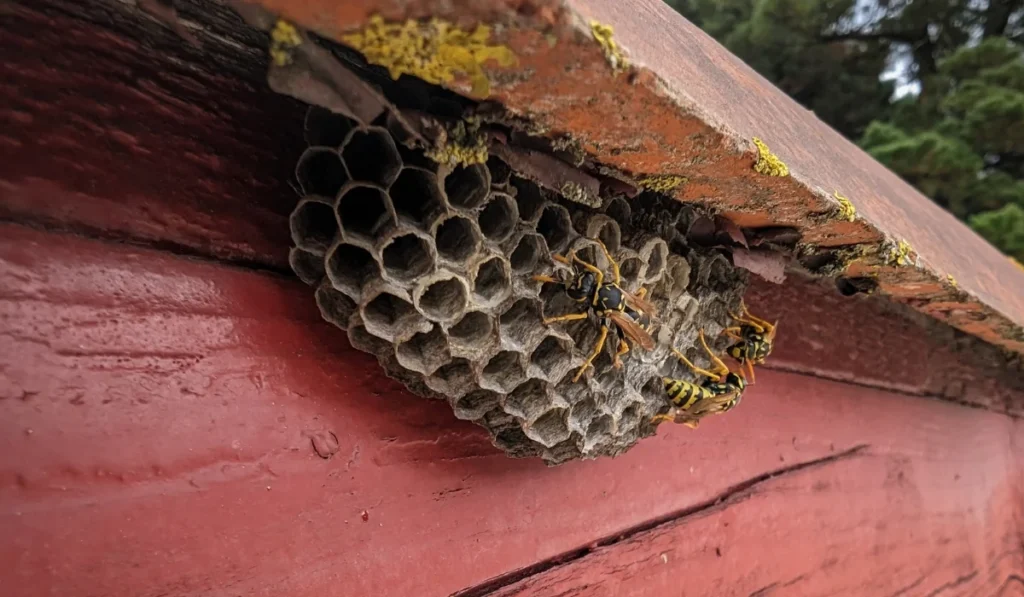
Paper wasps build open nests with visible cells. The comb often has an umbrella-like shape and may hang beneath eaves, porch ceilings, or other covered surfaces. Red paper wasps are among the wasps homeowners in the region may encounter.
These wasps form the paper-like nest material from worked wood fibers. Because the cells stay exposed, the finished nest looks very different from the enclosed structure made by a bald-faced hornet. If you spot wasps repeatedly returning to an exposed comb, give the area space rather than standing underneath it for a closer look.
Yellow Jackets
Yellow jackets can be harder to pinpoint because the colony may be out of sight. They can nest underground or use protected parts of a building, which means the first clue may be insects repeatedly traveling through the same opening.
That matters when you mow, trim shrubs, move stored items, or work near a suspected entrance. A hidden colony can be disturbed before you realize where it is. If yellow jackets are consistently entering a hole, gap, or void, avoid probing the opening or trying to expose the nest.
Hornets and Hornet-Like Wasps
Common names can cause confusion here. The bald-faced hornet is actually part of the yellowjacket group. One of its most recognizable features is an enclosed, paper-like aerial nest, rather than the open comb associated with paper wasps.
The European hornet is a true hornet found in the United States. For homeowners, the practical question is not whether you can memorize the classification. What matters is whether the colony is in an open comb, an enclosed aerial nest, or a concealed space that puts you close to active insects when you approach it.
Where Wasps Build Nests Around Panhandle Homes
Around Florida Panhandle homes, sheltered locations give wasps places to establish nests away from direct exposure. Paper wasps may attach combs beneath eaves and porch ceilings. Yellow jackets can use ground cavities or protected areas of a structure, while bald-faced hornets build enclosed nests above ground.
If you notice repeated activity, watch the route the insects take. Rooflines, soffits, porch areas, sheds, landscaping, and exterior openings can all be worth observing from a distance. A single wasp in the yard tells you very little. Several insects using the same opening over and over can point to an active colony nearby.
Location also determines how likely a nest is to become a problem. A colony next to the front door, deck, walkway, play area, or other high-use space creates more chances for accidental disturbance. Elevated nests and colonies hidden inside structural spaces can also be difficult to assess without getting too close.
Why Wasp Activity Changes During Warm Weather
Social wasp colonies develop over the warmer part of the year. A queen starts the nest, workers are produced, and the colony grows. As the number of workers increases, activity around the nesting site becomes easier to notice.
That is why a location that seemed quiet earlier in the season may look much busier later. More workers means more trips between the nest and surrounding areas. For a concealed colony, the increase in traffic may be what finally reveals the entrance.
Yellow jackets and hornets are warm-season concerns across the region, with activity extending through much of spring, summer, and fall. Rather than relying on a calendar date, pay attention to changes around your property. A sudden increase in insects using the same ground opening, roofline gap, or sheltered area deserves a closer look from a safe distance.
Wasp Stings and Safety Around the Home
A wasp flying through the yard is not the same risk as an active colony being disturbed. Yellow jackets and hornets can defend their nests aggressively, making colonies near entrances, patios, play areas, and other frequently used spaces more concerning than insects foraging away from a nest.
Stings can cause serious medical reactions in some people. The CDC’s National Center for Health Statistics recorded 788 U.S. deaths from hornet, wasp, and bee stings from 2011 through 2021, an average of about 72 deaths per year. That figure groups bees, hornets, and wasps together and should not be read as a wasp-only count.
Do not hit, open, shake, or otherwise disturb an active nest simply to identify it. If someone develops signs of a severe allergic reaction after a sting, seek emergency medical care.
What to Do When You Find a Wasp Nest
Start by confirming that insects are repeatedly returning to the same location. A paper wasp nest may be easy to see, while a yellow jacket colony can remain hidden underground or inside a protected part of the home. Watching the flight path from a distance often tells you more than trying to follow one insect up close.
Then consider how the location affects your normal routine. A nest beside a doorway or porch is harder to avoid than one well away from foot traffic. Height creates another problem. If identifying or reaching the nest requires a ladder or puts you directly beneath active insects, getting closer adds unnecessary risk.
Step-by-Step Nest Safety Guidance
If you find a suspected wasp nest, use these steps to reduce the chance of disturbing the colony:
- Keep your distance. Stop before you are directly beneath, beside, or in front of the nest entrance. Watch from farther away and note where the insects are traveling.
- Look for repeated activity. A steady flight path into the same hole, gap, comb, or hanging nest is more useful than following a single wasp.
- Keep people and pets away. If the nest is near a doorway, walkway, play area, or other frequently used space, limit traffic around that area until the situation is addressed.
- Do not block a concealed entrance. If insects are moving into a wall opening, ground hole, or other hidden space, avoid sealing or covering the entrance while the colony is active.
- Do not climb for a closer look. Avoid ladders or positions that place you directly beneath an elevated nest.
- Avoid disturbing the nest. Do not hit, shake, probe, or open a suspected nesting site to confirm what is inside.
- Get professional help when access is difficult or activity is heavy. Concealed nests, elevated nests, and colonies that react defensively are better assessed without putting yourself close to the insects.
These steps are meant to help you assess the situation without turning identification into a close-contact task. If the nest is near a part of the property you cannot reasonably avoid, professional service can help determine the next step.
Professional control makes sense when the nest is concealed, the insects are strongly defending the area, the species is unclear, or the nest cannot be reached safely. The first step is identifying what is nesting there and where the colony is located. That determines the most appropriate way to address it.
Reducing Wasp Nesting Around Your Home
You cannot keep every wasp out of a Florida Panhandle yard, but you can make it easier to catch nesting activity early. Periodically look beneath eaves, porch ceilings, sheds, and other sheltered exterior surfaces when wasps are active around the property.
Watch exterior openings as well. Repeated traffic through the same gap can indicate that insects are using the space. If you suspect an active colony inside an opening, do not seal it while insects are still moving in and out.
Around patios and outdoor eating areas, clean up food spills and keep trash containers secured. These steps will not eliminate wasps from the property, but they can reduce attractants near the places where your family spends time and make unusual activity easier to spot.
Handling Wasps Around Your Florida Panhandle Home
The nest usually tells you more than a quick glimpse of the insect. An exposed comb can point toward paper wasps. Repeated traffic into a hidden opening may indicate yellow jackets. An enclosed aerial nest can belong to a hornet-like species such as the bald-faced hornet. Where that colony sits in relation to doors, walkways, play areas, and other frequently used spaces also affects what you should do next.
If the nest is hidden, hard to reach, close to daily activity, or surrounded by defensive insects, professional service can help you avoid getting too close to the colony. Waynes Pest Control serves homeowners throughout the Florida Panhandle. You can contact Waynes about a wasp, yellow jacket, or hornet problem to have the situation assessed and determine the appropriate next step.