Wasps in Florida can create costly problems when early signs are missed. Learn what to look for, why it matters, and when to call Wayne’s Pest Control.
Key Takeaways About Florida Wasps
- Several wasp types can appear around your home, including paper wasps, yellow jackets, and mud daubers, each with distinct nesting habits and behavior worth recognizing.
- Some wasps are more aggressive than others, and certain species can sting more than once, so knowing which ones are near your property helps you stay prepared.
- Nests can be hidden in spots you might not expect, making regular inspection around your home an important step toward avoiding unwanted encounters.
- If you find an active nest on your property, contact Waynes Pest Control for help rather than attempting removal on your own.
How to Identify Florida Wasps
Knowing which wasp species you are dealing with helps you decide how to respond. Florida is home to several wasp species, and they range from solitary nest-builders to social colonies that share a single nest. The differences in behavior and nesting habits are the fastest way to tell them apart.
How to Tell Wasp Types Apart in Florida
Paper wasps and solitary wasps are among the species you may encounter. Paper wasp nests last only one season, regardless of species. Some wasp species are not particularly aggressive and typically sting only when threatened. Others are more aggressive than other species and may fly several feet to sting someone who happens to be near the nest site.
Solitary wasp species, such as those in the genus Pachodynerus, differ from communal wasps like paper wasps or social bees. According to UF/IFAS Extension, solitary wasp females lay their eggs in individual nests that are not tended to by any other individuals. Recognizing whether you are seeing solitary or social species helps you gauge the level of activity around your home.
How to Spot Wasp Activity Inside Your Florida Home
Some species will nest in wall cavities, which can bring wasp activity indoors. If you notice wasps entering or exiting a gap in an interior wall, a nest may be developing inside the cavity. Repeated sightings of wasps in the same room or hallway often point to a nearby nesting site rather than random visitors.
Where Wasp Activity Shows Up Around Florida Homes
Most species are relatively unaggressive, but they can be a problem when they nest over doorways or in other areas of human activity such as fruit trees. Some species will also nest higher up in trees, in birdhouses, or in bird nests. Watching where wasps travel repeatedly throughout the day can help you locate the nest.
Exterior Entry Points Wasps Use Around Florida Homes
Wasps look for sheltered spots to build nests. Wall cavities and gaps near rooflines give social and solitary species access to protected spaces. If a nest needs to be addressed, it is easiest to do so in the evening when wasps are inactive. For persistent wasp activity around your home, contact Waynes Pest Control to request a quote and let a service professional assess the situation.
Why Wasp Problems Develop in Florida
Understanding why wasps settle near your home helps you stay a step ahead. Several wasp species build colonies close to the structures where you live, and the areas around a Florida home can offer exactly what those colonies need to grow.
Outdoor Nesting Areas for Wasps Around Florida Homes
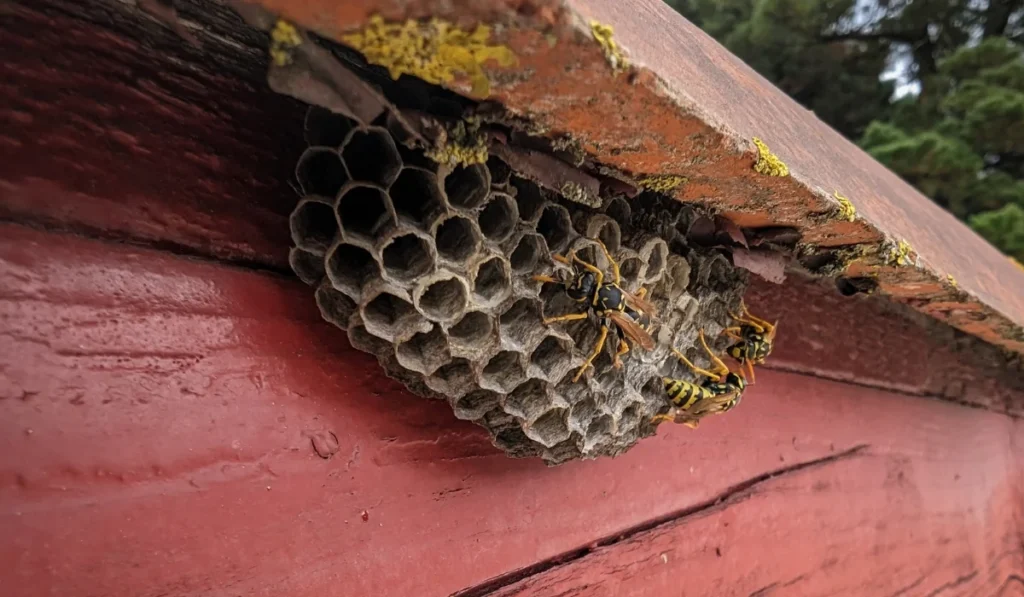
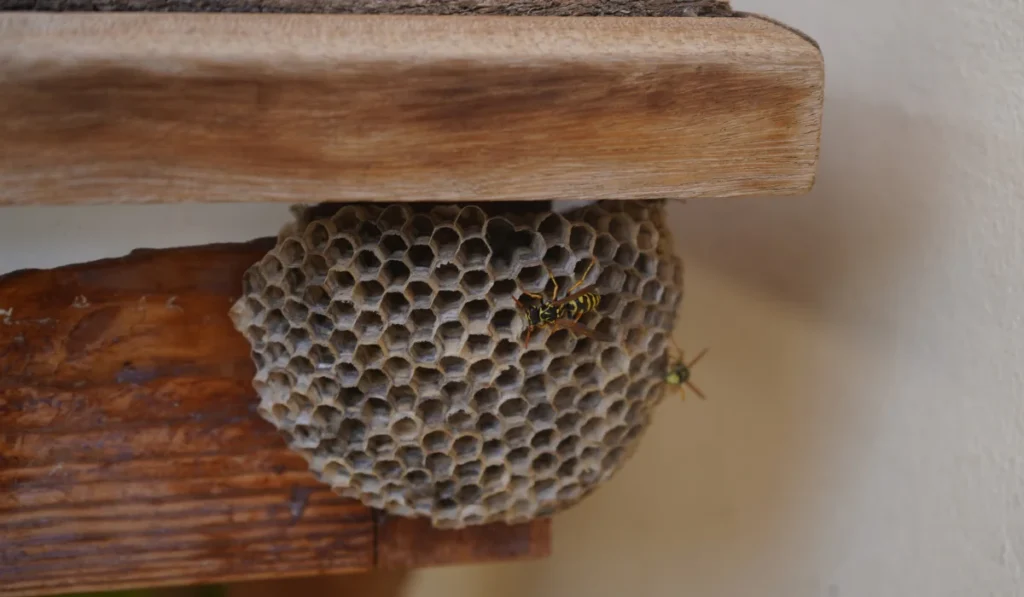
Paper wasps form small colonies tied to a single, exposed nest comb that is typically suspended from eaves or in outbuildings. Yellowjackets may nest at ground level in yards and landscaped beds. These nesting spots are often just a few feet from doorways, porches, and walkways, putting colonies in close contact with everyday activity around your home.
Food and Shelter That Attract Wasps Around Florida Homes
Sheltered overhangs, soffits, and outbuildings give paper wasp colonies a protected anchor point for their open combs. Paper wasp colonies last only a single season, and most yellowjacket colonies are also annual. However, in Florida’s mild climate, southern yellowjacket colonies sometimes persist for more than one year, growing significantly larger. The covered surfaces and undisturbed corners typical of Florida homes can look like ideal locations for a new annual colony.
How Wasps Move Around Florida Homes
Social wasps sting to defend their colony, and some yellowjacket species can become aggressive during late summer and fall, sometimes stinging unprovoked. As according to the University of Minnesota Extension, this defensive behavior intensifies as colonies reach peak size later in the season. That means wasp activity near your home can escalate quickly even if the colony started small and out of sight.
A mistake during yellowjacket nest treatment can result in hospitalization or death from excessive stings, which is why disturbing a colony without professional help is risky.
Trails and Entry Points Wasps Use in Florida
Paper wasp colonies tend to appear under eaves and inside outbuildings where the nest comb hangs in the open. Yellowjackets may use gaps at ground level or along the base of structures to access underground colonies. If you notice wasps following a repeated flight path toward a fixed point on or near your home, a colony is likely established nearby.
Rather than approaching a nest on your own, contact Waynes to have a service professional assess the situation and recommend next steps.
Risks From Florida Wasps
Wasps and stinging insects that build nests near high-traffic parts of your yard or home can turn everyday activities into a concern. Understanding the risk each situation presents helps you decide whether to leave a nest alone or call a professional like Waynes Pest Control for help.
Health Risks Linked to Florida Wasps
The primary health risk from wasps is the sting itself. Social wasps and certain bee species defend their colonies, and nests located in areas with frequent human activity raise the chance of a sting. Not every stinging insect carries the same risk, though. According to NC State Extension, ground-nesting solitary bees rarely sting, and when they do the sting is much milder than that of a honey bee or bumble bee. Social species tend to pose a greater sting risk because they actively guard their nest.
Property Damage From Wasps in Florida
Nests built in yards, flower beds, wood piles, or walls can create a nuisance that limits how you use your property. When a nest sits in an area you cannot avoid, the ongoing sting risk may make portions of your yard or exterior walls difficult to access for routine maintenance or recreation.
Food Areas and Wasp Activity in Florida Homes
Outdoor dining spaces, grills, and patios that overlap with nest locations increase encounters between your household and stinging insects. A nest in a spot with a lot of human activity creates repeated exposure, and that repeated exposure raises the overall sting risk for everyone spending time in those areas.
When to Look Closer at Wasp Activity in Florida
If you notice a nest in a high-traffic zone of your yard or along a wall and the area cannot be avoided, it may be necessary to treat the nest. A nest tucked in a seldom-used corner poses far less risk than one beside a walkway or play area.
Professional Pest Control for Wasps in Florida
Managing wasps around your Florida home takes more than a quick spray. Proper prevention, a careful inspection, and professional treatment each play a role in keeping nests from becoming a problem near doorways, patios, and other high-traffic areas. Here is what the process looks like and how Waynes can help.
How to Reduce Attractants for Wasps in Florida
Wasps look for sheltered spots to build nests, especially during warmer months. Limiting access to these areas is a practical first step.
Walk around your home and look for gaps under eaves, overhangs, porch ceilings, and similar sheltered surfaces. Keeping these areas clear and well-maintained reduces the appeal for nest-building wasps. Regular attention to these spots during warmer weather helps you catch activity before a nest grows.
Why Wasp Control in Florida Starts With Inspection
Identification matters because different wasps nest in different places. Guinea wasps, for example, are often mistaken for yellowjackets. However, yellowjackets are yellow and black and build their nests in the ground, which means the approach for each species can vary. Misidentifying a ground-nesting yellowjacket colony as a paper wasp nest overhead could lead to the wrong treatment strategy entirely.
A thorough inspection covers both elevated structures and ground-level areas. Service professionals check eaves, soffits, and other protected spots for the gray, umbrella-shaped nests typical of paper wasps, while also scanning lawns and landscaping beds for ground-nesting species like yellowjackets.
What to Expect During Professional Wasp Treatment in Florida
Professional wasp treatment starts with confirming the species and locating the nest. This step is especially important for yellowjacket nests in the ground. As the University of Minnesota Extension notes, you should not seal a yellowjacket nest opening until you know all of the yellowjackets are dead, because doing so can cause them to move into your house.
That kind of detail is why DIY attempts can backfire. A trained service professional understands how to approach each nest type without driving wasps into wall voids or living spaces. Timing, positioning, and species-specific knowledge all factor into a safer outcome for your household.
What to Expect From a Florida Wasp Control Plan
With more than 50 years of experience and over 150,000 families served, Waynes brings a careful, character-driven approach to every service call. Our service professionals inspect your property, identify the species present, and address nests based on where and how each type builds.
Because wasps nest under eaves, in the ground, and in other protected locations, a single walkthrough often reveals activity in places you might not think to check. Waynes serves Florida homeowners from local offices, so scheduling an inspection is straightforward. Contact Waynes to request a quote and get a clear picture of wasp activity around your home.
Bottom Line on Wasps in Florida
Florida homeowners share their yards with a range of wasp species, from paper wasps to yellowjackets and solitary nesters like mud daubers and cicada killers. Knowing which wasp you are dealing with matters because aggression levels and nesting habits vary widely. Some species pose a real sting risk, while others are largely no real threat. When a nest is in a high-traffic area of your property, professional removal is the safest route. Contact Waynes Pest Control for help identifying and addressing wasp activity around your home.
Frequently Asked Questions About Wasps in Florida
Can Wasps in Florida sting more than once?
Several wasp species can sting more than once, unlike honey bees. Keeping your distance from an active nest is important because multiple stings can pose a serious health risk.
How can I tell yellowjackets apart from similar Wasps?
Yellowjackets are yellow and black and often build their nests underground, though some species also construct aerial nests in wall voids, attics, or other sheltered locations. Other wasps, such as guinea wasps, are sometimes confused with yellowjackets but have different coloring and nest placement. Paying attention to nest location and body markings helps narrow down what you are seeing.
Should I seal a wasp nest opening to get rid of them?
Sealing a nest opening before all wasps inside are dead can backfire. Trapped wasps may find alternate routes and move into your living space. It is best to confirm a nest is fully inactive before closing off any entry points.
When should I call a professional for wasp removal?
Professional help is worth considering whenever a nest is near doorways, play areas, or other spots where people gather. Attempting to treat a nest on your own, especially a yellowjacket nest, carries serious risk. Waynes Pest Control can assess the situation and handle removal so you do not have to put yourself in harm’s way.