
A large spider running across your garage floor or patio can be difficult to identify in the moment. A panhandle wolf spider is a ground-hunting spider that may show up around Florida Panhandle homes where insects, shelter, and easy entry points are available. Recognizing its eye pattern, behavior, habitat, and differences from a brown recluse can help you decide whether you are seeing an occasional outdoor hunter or recurring spider activity around your home.
How to Identify a Panhandle Wolf Spider
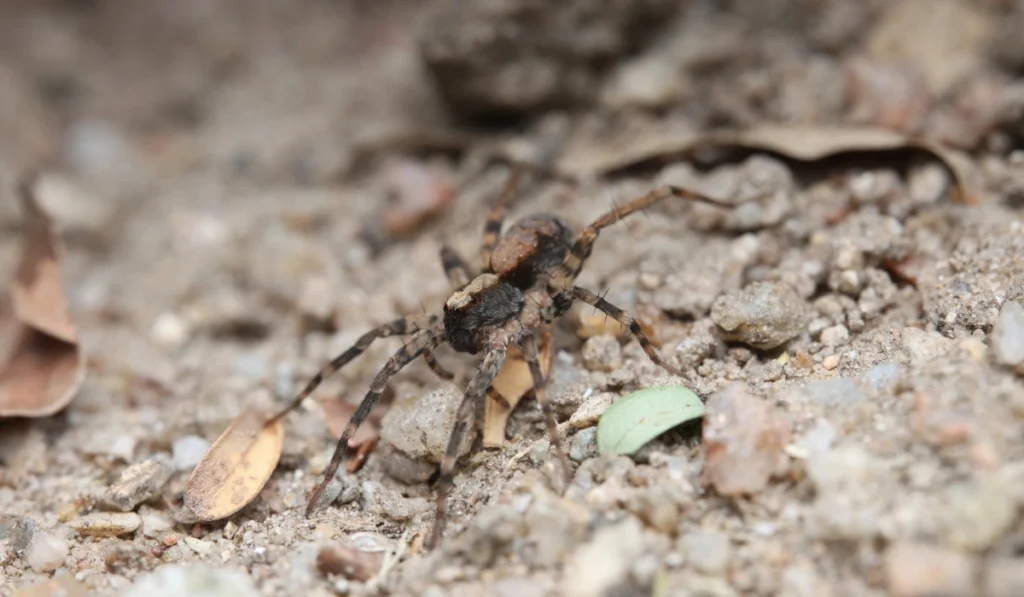
“Wolf spider” refers to a family of spiders rather than one species. The World Spider Catalog places wolf spiders in the family Lycosidae. Because this family includes many species, wolf spiders vary in size, markings, and overall appearance.
Many have brown, gray, or mottled coloring that helps them blend into soil, leaves, mulch, and other ground-level surroundings. That camouflage can make color alone a poor identification tool.
Their eyes offer a stronger clue. Wolf spiders have eight eyes, including two large, prominent eyes facing forward. You should still avoid getting close enough to inspect an unfamiliar spider by hand. A clear photograph taken from a safe distance is a better option.
Watch How the Spider Moves
Wolf spiders are active hunters. They do not depend on a large prey-catching web to catch food. Instead, they move across the ground in search of insects and other arthropods.
That hunting style helps explain why you may notice one running across a driveway, patio, garage floor, or patch of exposed soil. Speed alone does not confirm that the spider is a wolf spider, though. Other spiders can move quickly and share similar brown coloring.
If identification matters, use several clues together, including the eyes, body pattern, behavior, and location where the spider was found.
Are Panhandle Wolf Spiders Dangerous?
Wolf spiders are venomous, meaning they use venom to subdue prey. They are not hunting people and generally bite in defensive situations, such as when they are trapped against the skin, squeezed, or handled.
If you suspect a spider bite, avoid trying to identify the spider based only on the appearance of the skin. Bites, stings, and other skin conditions can produce similar reactions.
What to Do After a Suspected Spider Bite
The MedlinePlus guidance on spider bites provides general information about symptoms and medical care. Seek medical attention if pain or swelling becomes significant, symptoms worsen, or you develop an allergic reaction or another concerning symptom.
If you can safely photograph the spider involved, keep the image for reference. Do not attempt to pick up or trap an unfamiliar spider if doing so could expose you to another bite. Your symptoms and a healthcare professional’s evaluation should guide medical decisions.
Panhandle Wolf Spider vs. Brown Recluse
A panhandle wolf spider can be confused with a brown recluse because both may look brown at first glance. Their eye arrangement provides one useful difference. Wolf spiders have eight eyes, including a prominent forward-facing pair. Brown recluse spiders have six eyes arranged in pairs.
Their behavior and preferred hiding places also differ. Wolf spiders actively hunt along the ground. Brown recluse spiders are more closely associated with secluded locations such as boxes, closets, stored clothing, and other quiet spaces.
| Feature | Wolf Spider | Brown Recluse |
| Eyes | Eight, including two prominent forward-facing eyes | Six, arranged in pairs |
| Coloring | Often mottled, patterned, or striped | Usually more uniformly brown |
| Behavior | Actively hunts along the ground | Hides in secluded areas and wanders in search of prey |
| Capture web | Does not rely on a typical prey-catching web | Does not rely on a typical prey-catching web |
| Common encounter | Lawns, patios, garages, and other ground-level areas | Boxes, closets, stored items, and other secluded spaces |
Do Not Rely on the Violin-Shaped Mark Alone
The violin-shaped marking associated with brown recluse spiders can help with identification, but it should not be your only clue. The marking can vary, and other brown spiders are often mistaken for brown recluses.
Waynes’ brown recluse guidance stresses the value of correct identification because brown-colored spiders can look similar at a glance. Eye arrangement, coloring, behavior, and location provide a more useful overall picture than one marking alone.
When you still cannot identify the spider, a clear photograph or professional inspection is a better choice than guessing.
Where Panhandle Wolf Spiders Live Around Your Property
Wolf spiders spend much of their time near the ground, where they can find prey and protected places to rest. Around Florida Panhandle homes, that may include lawns, mulched planting beds, leaf litter, ground cover, rocks, logs, and other sheltered outdoor areas.
Garages and sheds can provide similar protection when doors leave gaps near the floor or stored items create undisturbed spaces. Patios, porches, and landscaping next to the foundation can also place hunting wolf spiders close to exterior doors.
Why Wolf Spiders May Wander Indoors
Because wolf spiders move while hunting, they can travel through gaps beneath doors, garage openings, cracks, and other openings near ground level.
One wolf spider inside does not automatically mean you have an indoor population. The location and frequency of sightings matter more. Spiders repeatedly appearing near the same door, room, or garage wall may point to an accessible entry route or favorable conditions nearby.
Tracking where you see them can help you focus your prevention efforts instead of treating every sighting as an unrelated event.
What Wolf Spiders Eat and How They Hunt
Wolf spiders feed on insects and other arthropods. Unlike spiders that wait for prey to become trapped in a web, wolf spiders actively search for food.
This hunting behavior also gives them a role outdoors. A wolf spider moving through your lawn or landscaping is feeding on prey found in that habitat. When several spiders appear around the same patio, doorway, or garage, insect activity in that area may help explain why they are there.
Reducing the conditions that attract prey can be more useful over time than simply removing each spider you see.
How Female Wolf Spiders Carry Their Young
Female wolf spiders have a distinctive way of caring for their young. The female carries her egg sac attached to the spinnerets at the rear of her body.
After the spiderlings hatch, they can climb onto their mother’s abdomen and remain there for a period of time. This can make the spider look as though her back is covered with tiny moving specks.
If you see a wolf spider carrying spiderlings, avoid handling or disturbing her. Give the spider space or contact a pest professional if she is inside an area where removal is necessary.
Why Wolf Spiders Keep Appearing Around Your Home
Recurring sightings are more useful than a single encounter when you are trying to figure out why wolf spiders are getting inside. A spider repeatedly appearing near a garage door may be entering through gaps along the bottom or sides. Sightings near a patio entrance may point to a worn door sweep, nearby ground cover, or insect activity around the doorway.
Exterior lighting can also draw insects toward doors and patios. Since wolf spiders hunt insects and other arthropods, areas with steady prey activity may attract hunting spiders as well.
Use the Location of Sightings as a Clue
Look for patterns before assuming you have a problem throughout the entire house. If spiders repeatedly appear in one room or near one entrance, inspect that area first.
Check for leaves or debris near doors, clutter along garage walls, vegetation pressing against the structure, and gaps where indoor and outdoor spaces meet. These conditions can provide shelter or make it easier for spiders to move inside.
This approach helps you address the route or condition behind repeated sightings rather than removing one spider at a time.
How to Keep Wolf Spiders Out of Your Panhandle Home
If you want to reduce wolf spiders indoors, begin with exclusion. Inspect exterior doors, garage doors, thresholds, and other openings close to the ground. Repair visible gaps when practical, and make sure door sweeps sit closely enough to limit easy access.
Outside, reduce shelter directly beside entrances and exterior walls. Clear accumulated leaves, remove unnecessary clutter, and keep dense vegetation from creating protected hiding areas against the structure.
These changes can also make the area less favorable for some of the insects wolf spiders hunt.
Address Insect Activity Around the House
Removing one spider handles the immediate encounter, but it does not change the conditions that brought the spider close to your home. If insects regularly gather around exterior lighting or entryways, hunting spiders may continue to visit the same areas.
The UC Statewide Integrated Pest Management Program’s spider guidance includes exclusion and habitat management among practical spider-management steps. Around your home, that can mean combining gap repairs with cleaner storage areas, landscape maintenance, and attention to other pest activity.
You do not need to remove every outdoor spider from your property. The goal is to make it harder for spiders to enter living spaces and reduce the conditions that repeatedly bring them close to the house.
When Professional Spider Control Makes Sense
One wolf spider outdoors is different from repeated spiders appearing in bedrooms, living areas, garages, or other indoor spaces. Professional spider control can be useful when sightings become frequent, you cannot confidently identify the spider, or the activity appears connected to another household pest problem.
Waynes’ year-round pest prevention service includes spiders among the common household pests it addresses. A Field Professional can inspect where spiders are showing up, look for likely entry points, and evaluate surrounding pest activity.
That broader inspection can help identify why the spiders are present rather than focusing only on the individual spider you happened to find.
Keeping Panhandle Wolf Spider Activity Under Control
A panhandle wolf spider is an active ground hunter that can live naturally in lawns, landscaping, and other outdoor habitats around your property. Accurate identification helps you distinguish wolf spiders from brown recluses, while exclusion, cleaner exterior areas, and reduced insect activity can make indoor encounters less common.
If spiders keep appearing inside your Florida Panhandle home, Waynes can help identify the pest and inspect conditions that may be contributing to the activity. You can also contact Waynes to discuss recurring spider problems and schedule service.