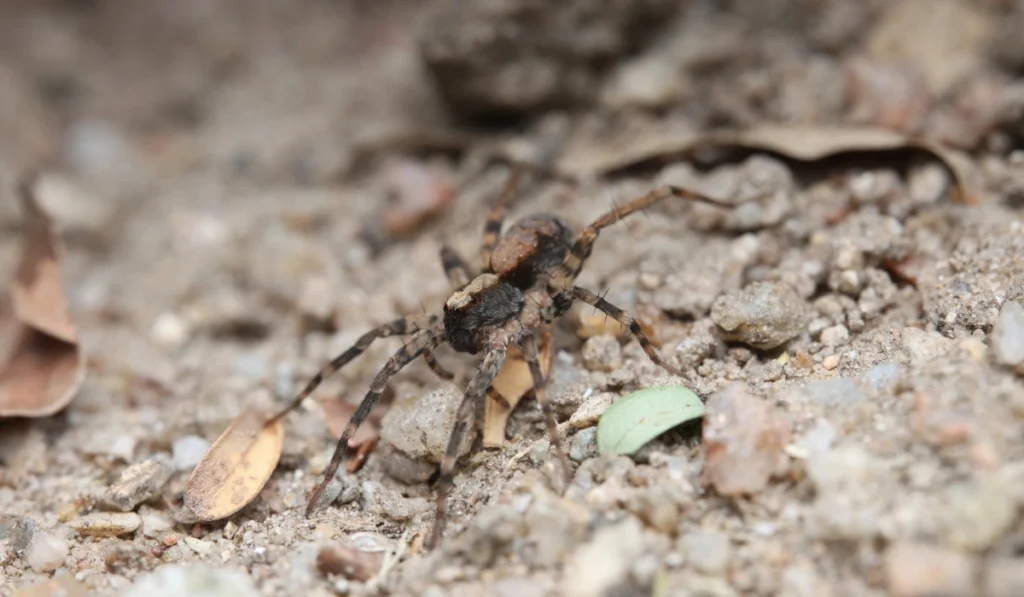

Most Florida Panhandle spiders you find around your home are not considered a serious medical threat, but some deserve extra caution. The challenge is knowing what you are looking at. Size and color alone are poor ways to judge a spider, and harmless species can be mistaken for ones of medical concern. Whether you spot a spider in the garage, behind patio furniture, or inside a storage box, knowing which encounters deserve attention can help you respond safely and reduce recurring spider activity around your home.
Are Florida Panhandle Spiders Dangerous?
Most Florida Panhandle spiders should not automatically be considered dangerous. Spiders use venom to subdue prey, but the effect of that venom on people varies by species. Many spiders found around homes are primarily a nuisance, while a smaller number require greater caution.
You may also come across the phrase “poisonous spiders in Florida.” Venomous is the more accurate term because spiders deliver venom through a bite. Widow spiders and recluse spiders receive greater medical attention, but seeing a black, brown, or otherwise unfamiliar spider does not confirm that you have found one of these species.
The circumstances of an encounter also affect the risk. A spider sitting undisturbed outdoors is different from one concealed inside a shoe, work glove, folded blanket, or storage box. When a hidden spider is pressed against the skin, a bite can occur. Avoid handling spiders you cannot identify, especially when they are tucked into areas where you need to reach.
Which Florida Panhandle Spiders Deserve More Caution?
You do not need to memorize every spider that may cross your porch or make a web near the garage. For homeowners, it is more useful to recognize spiders associated with greater medical concern and know when an identification should be left to a professional.
Black widows and brown recluses are two names homeowners frequently encounter when researching dangerous spiders in Florida. They present different identification challenges, and neither should be identified from color alone.
Black Widow Spiders
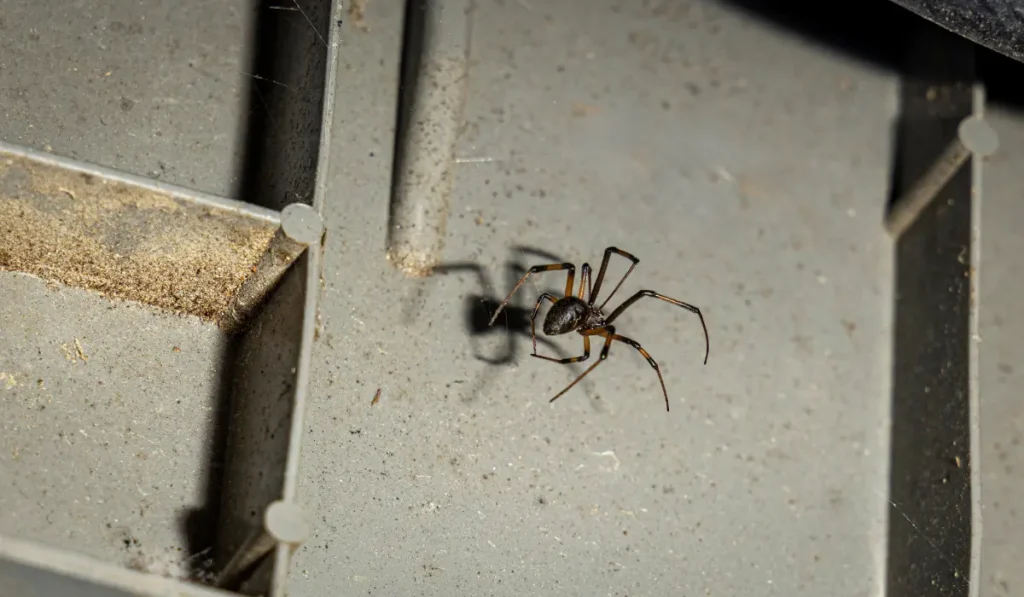
Black widow spiders are among the venomous spiders that warrant caution. If you think you have found one, avoid picking it up, reaching into its hiding place, or disturbing surrounding materials without knowing where the spider may move.
Location provides useful context. A suspected widow near stored shoes, gloves, boxes, or frequently handled belongings deserves more immediate attention than an unfamiliar spider occupying an undisturbed exterior space. When possible, take a photograph from a comfortable distance rather than trying to capture the spider.
If a suspected spider bite is followed by severe pain, muscle cramping, breathing problems, or other significant symptoms, seek appropriate medical attention.
Brown Recluse Spiders
Brown recluse spiders are particularly easy to misidentify because many unrelated spiders are brown. The violin-shaped marking commonly associated with the species is not enough by itself to confirm an identification. Waynes’ brown recluse guidance notes that the appearance of this marking can vary and that other brown spiders may be mistaken for recluses.
Brown recluses favor dark, secluded hiding places. They may be found in storage areas, closets, boxes, folded bedding, shoes, coats, and drawers. Accidental contact can happen when someone puts on an item containing a hidden spider or handles stored belongings without seeing the spider first.
A suspected bite does not confirm the presence of a brown recluse. A New England Journal of Medicine review of brown recluse bites and suspected necrotic arachnidism discusses how other medical conditions may be mistaken for recluse bites. For homeowners, that means the condition of the skin and the identity of the spider should be treated as separate questions.
How Can You Identify Dangerous Spiders in Florida?
Spider identification involves more than comparing a body color with a picture online. Shape, markings, hiding location, web placement, and geographic range can all contribute to a reliable identification. Those details are useful, but they are not a reason to get close to an unfamiliar spider.
Start with what you can observe safely. Note where the spider appeared, whether you have seen similar spiders nearby, and whether webs keep returning to the same area. A clear photograph can also give a pest professional useful information without requiring you to handle the spider.
| What You Notice | What It May Mean | What To Do |
| One unfamiliar spider outdoors | It may be an isolated encounter | Leave it alone and monitor the area |
| Spiders repeatedly appearing indoors | The area may offer shelter or insect prey | Check for clutter, webs, openings, and other pest activity |
| A suspected widow or recluse | Correct identification is more important | Photograph it from a safe distance and request identification |
| Spiders in shoes, gloves, boxes, or folded items | Hidden spiders may come into contact with skin | Inspect stored items before handling or wearing them |
| Webs returning to the same location | Conditions may continue to favor spider activity | Remove accessible webs and inspect the surrounding area |
Avoid attempting close-up identification techniques such as examining a spider’s eyes or fine markings yourself. If the spider may be medically significant, distance is more useful than a perfect photograph.
What Should You Do After a Suspected Spider Bite?
A bite mark or skin lesion cannot reliably identify the spider responsible. Even if a skin reaction resembles a photograph labeled as a spider bite, appearance alone does not establish the cause. If you believe a spider may have bitten you, focus first on the bite area and your symptoms.
1. Wash the Area
Wash the affected skin gently with soap and water. Keep the area clean, and avoid scratching or repeatedly touching it.
2. Apply a Cool Compress
Use a cool, damp cloth or a cold pack wrapped in fabric to help with discomfort and swelling. Do not place ice directly on your skin.
3. Document Any Changes
Watch the area for changes in pain, redness, swelling, or appearance. A dated photo can give you a simple record of how the area changes over time.
4. Know When Symptoms Need Prompt Attention
Do not ignore severe or worsening pain, muscle cramping, breathing difficulty, or other concerning symptoms. Mayo Clinic’s spider bite guidance provides information on symptoms and circumstances that may require medical evaluation.
5. Photograph the Spider Only From a Safe Distance
If the spider is still present, resist the urge to catch it by hand. Take a photograph only if you can do so without approaching or disturbing it.
6. Do Not Identify the Spider From the Bite
Skin changes cannot tell you which spider caused them. Address concerning symptoms based on how you feel and how the affected area is changing. Identification of the spider can be handled separately if you have a photograph or other evidence.
Why Do Spiders Come Into Panhandle Homes?
Spiders may enter homes because they find shelter and insect prey there. Garages, closets, storage rooms, crawl spaces, and boxes offer dark or undisturbed spaces where a spider can remain unnoticed.
They can also arrive with belongings. Furniture, storage containers, seasonal decorations, clothing, and other items left undisturbed can provide hiding places. Inspecting stored belongings before moving them into frequently used rooms can reduce unwanted surprises.
Recurring spider activity may also point to another pest issue. Spiders feed on insects, so an area that regularly supports insect activity can continue attracting them. Removing the spider you see may solve the immediate problem, but it does not address the conditions that brought it there.
How Can You Reduce Spider Activity Around Your Home?
Start with storage areas. Keep garages, closets, sheds, and similar spaces organized enough to inspect easily. Avoid leaving piles of boxes or unused belongings untouched for long periods, and check stored shoes, gloves, clothing, and other items before using them.
Next, look at how spiders and other pests may be getting inside. Gaps around doors, windows, vents, and other openings can provide access. Sealing practical entry points and removing reachable webs can reduce hiding places while making new activity easier to notice.
Do not overlook the insects spiders eat. If bugs regularly gather around a certain part of the house, removing spiders alone may lead to a repeating cycle. Addressing entry points, shelter, webs, and insect activity together gives you a clearer picture of why spiders continue to appear.
When Does a Spider Problem Need Professional Attention?
A single spider does not automatically mean you have an infestation. Repeated indoor sightings are more useful evidence, especially when spiders keep appearing in closets, garages, storage areas, or belongings people regularly handle. A suspected widow or recluse is another good reason to seek a reliable identification rather than guessing from color or size.
A photograph, the location where you found the spider, and a description of how often you have seen similar activity can give a pest professional useful starting information. Correct identification helps determine whether you are dealing with an isolated visitor or conditions that are allowing spiders to remain around the property.
If Florida Panhandle spiders keep turning up around your home or you have found one you cannot identify, Waynes Pest Control can assess the activity and recommend an appropriate approach for your property. You can also contact Waynes to discuss your spider concerns or schedule service.