
 Finding a spider in a closet, garage, crawl space, or storage box can raise an immediate question: Is it dangerous? When homeowners search for venomous spiders in Tennessee, they are usually trying to identify one of two medically significant spider groups, brown recluses and black widows.
Most spiders use venom to subdue prey, but that does not mean every spider poses a serious risk to people. In Tennessee, brown recluses and black widows deserve closer attention because their bites can require medical care. Knowing how these spiders look, where they hide, and how people come into contact with them can help you respond without panic or guesswork.
Accurate identification is the starting point. Several harmless spiders share a brown or dark appearance, and a skin reaction alone cannot confirm what caused it. A clear photograph, the spider’s hiding place, and its web can provide far more useful clues.
Finding a spider in a closet, garage, crawl space, or storage box can raise an immediate question: Is it dangerous? When homeowners search for venomous spiders in Tennessee, they are usually trying to identify one of two medically significant spider groups, brown recluses and black widows.
Most spiders use venom to subdue prey, but that does not mean every spider poses a serious risk to people. In Tennessee, brown recluses and black widows deserve closer attention because their bites can require medical care. Knowing how these spiders look, where they hide, and how people come into contact with them can help you respond without panic or guesswork.
Accurate identification is the starting point. Several harmless spiders share a brown or dark appearance, and a skin reaction alone cannot confirm what caused it. A clear photograph, the spider’s hiding place, and its web can provide far more useful clues.
Which Venomous Spiders in Tennessee Require Caution?
Field Guide · Tennessee
Venomous spiders in Tennessee: two names to know
Brown recluses and black widows are the two spider groups tied to medical concern in Tennessee homes. Knowing how they look, where they hide, and how their webs differ helps you tell them apart from every other spider in the garage.
1Venomous
Brown recluse
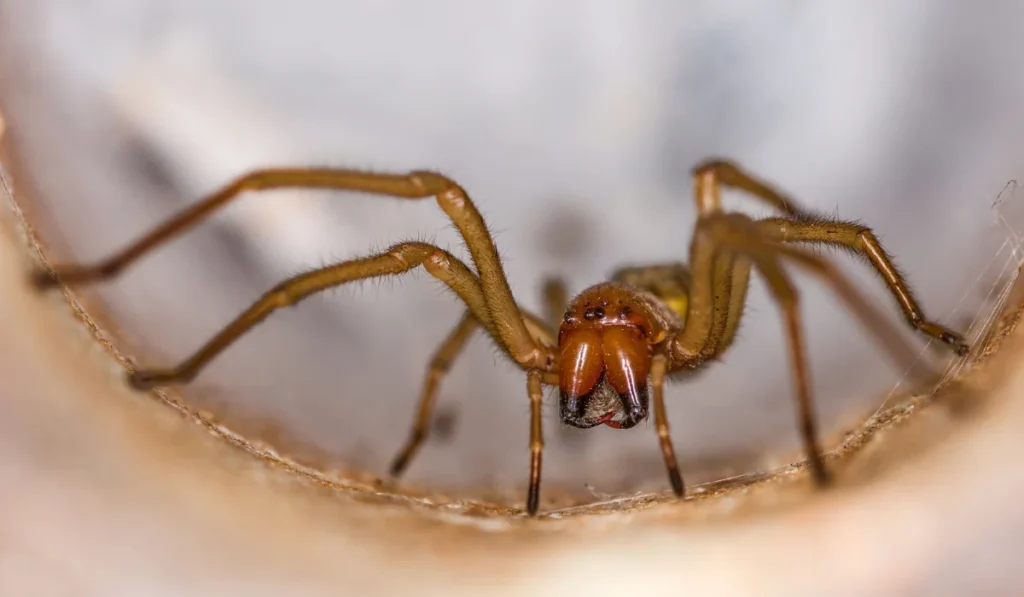
IDPale tan to brown with a flatter body and legs generally uniform in color. Adult females measure about 10 to 15 millimeters, with a leg span that may exceed 25 millimeters. Carries a variable violin-shaped marking on the back.
WhereDry, quiet indoor storage areas: closets, storage boxes, folded bedding, shoes, coats, drawers, basements, attics, crawl spaces, and beneath furniture.
NoteBuilds a small, irregular silk retreat rather than a capture web. Bites often happen when a spider gets pressed against skin inside a stored shoe, box, or folded fabric.
2Venomous
Black widow
IDDark brown or black with a rounded abdomen; the adult female may display a red or orange marking on the underside. Males and immature widows may not resemble the familiar glossy black female.
WhereSheltered outdoor or low-traffic spaces: sheds, woodpiles, stacked materials, meter boxes, and sheltered foundation areas.
NoteBuilds a strong, tangled capture web and usually stays close to it rather than wandering. A bite can cause symptoms beyond the bite site, so reactions should not be judged by the spider’s size.
Waynes helps Tennessee homeowners confirm what they’re really looking at before deciding how to respond. Every little thing matters. A LOT.
Brown Recluse Spiders in Tennessee
Brown recluse spiders are the species many homeowners first think of when discussing dangerous spiders in Tennessee. They range from pale tan to brown and have legs that are generally uniform in color. Adult females have bodies measuring about 10 to 15 millimeters, with a leg span that may exceed 25 millimeters. The violin-shaped marking on the back is widely recognized, but it is not enough for a reliable identification. The marking can vary in shape and intensity, and other brown spiders may have patterns that look similar from a distance. Eye arrangement is more useful to trained identifiers, but it is difficult for a homeowner to examine safely.Where Brown Recluses Hide
Brown recluses prefer dark, dry, quiet spaces that remain undisturbed for long periods. In Tennessee homes, common hiding places include closets, storage boxes, folded bedding, shoes, coats, drawers, basements, attics, crawl spaces, and spaces beneath furniture. They may also settle near water heaters, furnaces, bathrooms, and stairways. These locations give them shelter while placing them close to insects they can feed on. Unlike spiders that build large, visible webs for catching flying prey, brown recluses use irregular silk retreats as sheltered resting and egg-laying areas. Brown recluses usually remain hidden during the day and wander at night. They are shy and tend to flee when disturbed. Bites commonly occur when a spider becomes pressed against bare skin as someone puts on a stored shoe, moves a box, handles folded fabric, or rolls onto one in bed.Why Brown Recluse Activity Can Be Difficult to Confirm
A single sighting does not always reveal how much activity is present. Brown recluses can remain concealed in storage areas and wall voids, and they may go long periods without being seen. Finding several spiders on monitoring traps gives a pest professional more useful information than an occasional sighting in an open room. If you see a suspected brown recluse, take a clear photograph from a safe distance when possible. Record where you found it, what time of day it appeared, and whether other spiders have shown up nearby. Never pick it up with your bare hands or reach blindly into its hiding place.Black Widow Spiders in Tennessee
Black widows are the second group homeowners should recognize when learning about venomous spiders in Tennessee. The adult female is the form most people know. She has a dark, rounded abdomen and may display a red or orange marking on the underside. Color and markings can vary with species, age, and sex. Males and immature widows may not resemble the familiar glossy black female seen in identification guides. For that reason, you should consider the spider’s body shape, web, and location along with its markings.Where Black Widows Build Webs
Black widows usually select protected spaces where their webs will not be disturbed. Around a Tennessee property, they may build in sheds, woodpiles, stacked materials, meter boxes, sheltered foundation areas, and outdoor storage spaces. Their webs look irregular rather than neat and circular. The silk often feels strong, and the web may sit low to the ground or inside a protected recess where insects are likely to pass. A black widow often stays close to its web instead of wandering through open rooms. People often encounter black widows while moving firewood, lifting stored objects, cleaning a shed, or reaching into a sheltered opening. Gloves, closed-toe shoes, and a quick visual check can reduce direct contact when you handle materials that have remained untouched. A black widow bite can cause symptoms beyond the bite site. Because reactions vary, do not judge the seriousness of a bite by the spider’s size or the first appearance of the skin. Contact a medical professional or Poison Control for guidance based on the symptoms and circumstances.How Brown Recluses And Black Widows Compare
Brown recluses and black widows differ in appearance, habitat, and web-building behavior. Looking at those features together gives you a better chance of making a correct identification.| Feature | Brown Recluse | Black Widow |
| General appearance | Pale tan to brown with a flatter body | Dark brown or black with a rounded abdomen |
| Best-known marking | Variable violin-shaped mark on the back | Red or orange mark on the underside |
| Typical hiding place | Dry, quiet indoor storage areas | Sheltered outdoor or low-traffic spaces |
| Web type | Small, irregular retreat | Strong, tangled capture web |
| Common encounter | Shoes, boxes, clothing, or bedding | Woodpiles, sheds, or stacked materials |
| Main identification concern | Many brown spiders look similar | Males and young spiders may look different from adult females |