
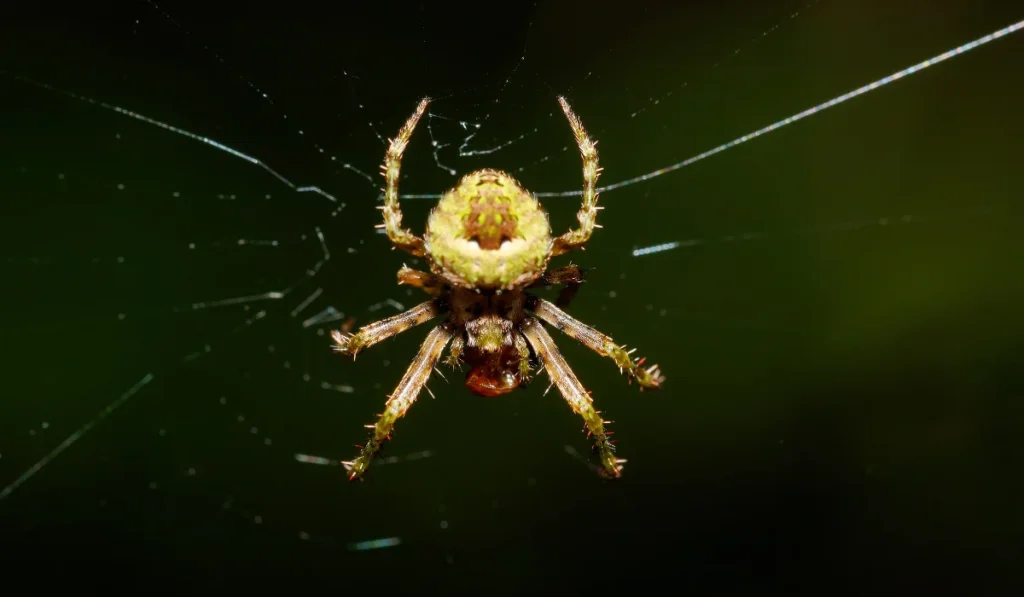
 Chattanooga’s river, trees, and warm seasons make it an excellent habitat for spiders. That’s normal across Tennessee, and most spiders help by eating insects. When you know the types of spiders in Chattanooga, TN, you can decide what to leave alone and what to manage indoors.
In Chattanooga, you’ll see several spider species. They come inside when food and shelter are readily available. Discover what draws them in and how to identify them so you can act quickly.
This guide covers the common spiders of Chattanooga, ranging from harmless helpers to two venomous species that require special care. You’ll also learn where they hide, what to do about egg sacs, and how professional pest control in Chattanooga, TN, helps prevent future problems.
Chattanooga’s river, trees, and warm seasons make it an excellent habitat for spiders. That’s normal across Tennessee, and most spiders help by eating insects. When you know the types of spiders in Chattanooga, TN, you can decide what to leave alone and what to manage indoors.
In Chattanooga, you’ll see several spider species. They come inside when food and shelter are readily available. Discover what draws them in and how to identify them so you can act quickly.
This guide covers the common spiders of Chattanooga, ranging from harmless helpers to two venomous species that require special care. You’ll also learn where they hide, what to do about egg sacs, and how professional pest control in Chattanooga, TN, helps prevent future problems.
Key Takeaways
Field Guide · Chattanooga, TN
Common spiders around Chattanooga homes
Most spiders help by eating insects. Two venomous species need special care.
1Venomous
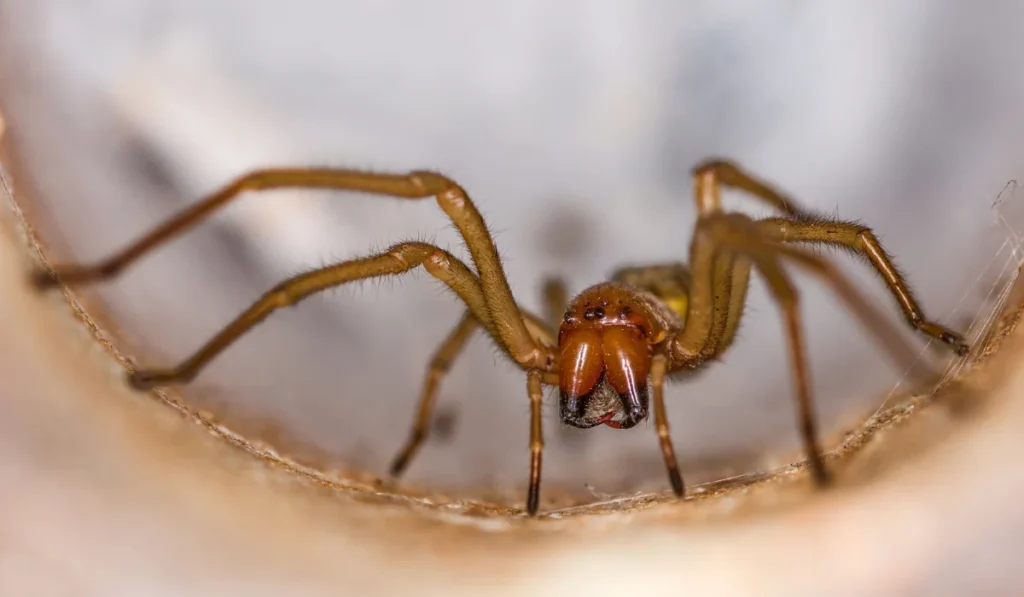
Brown Recluse Spider
IDBrown spider that hides in boxes, closets, and attics.
WhereIndoor storage areas, closets, and attics.
NoteA bite can cause intense pain and itching. Contact a medical professional if a bite worsens.
2Venomous
Southern Black Widow
IDGlossy black body with a red hourglass marking on the underside.
WhereOutside and in crawl spaces; strong, messy, low webs.
NoteWear gloves when moving stored items or firewood to avoid surprises.
3Beneficial
Common House Spider
IDBuilds messy webs near porch lights, basements, and door frames.
WhereProtected corners where insects gather; porches and basements.
NoteThe most common spider in Chattanooga homes. Egg sacs sit in sheltered corners.
4Beneficial
Wolf Spiders
IDFast ground hunters that hide under mulch, stones, and mats.
WhereGround level outdoors; occasionally wander inside.
NoteThey dash after prey and help control yard insects. Use a cup to return them outside.
5Beneficial
Orb Weavers
IDStretches a wheel-shaped web between shrubs, fences, and porch posts.
WherePorches and gardens; webs span shrubs and fences.
NoteThe yellow garden spider sits near a zigzag silk band. Let them work if out of the way.
6Beneficial
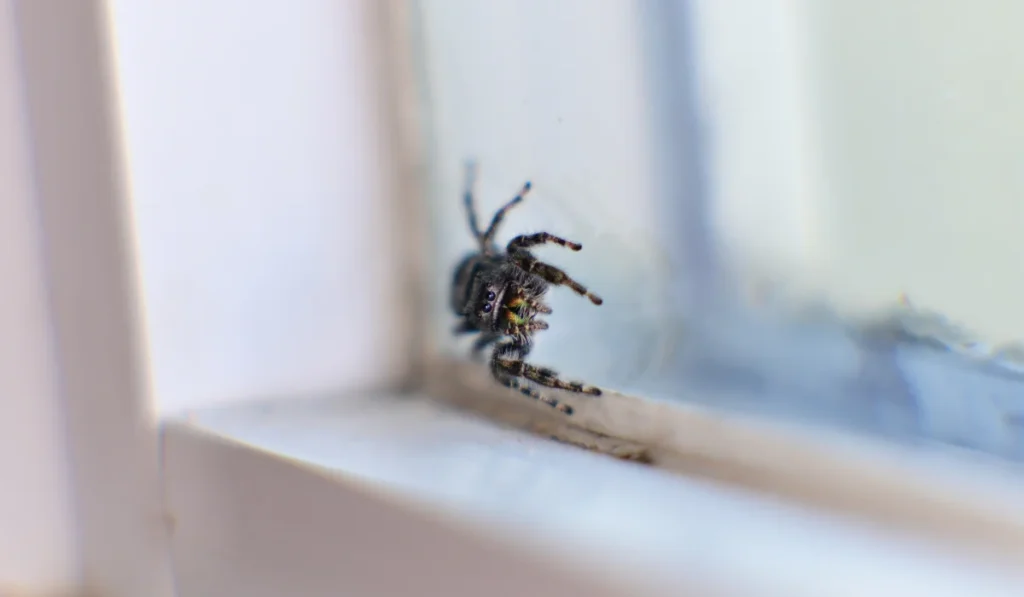
Jumping Spider
IDHas big front eyes, makes bold leaps, and does not build large webs.
WhereSunny windows and patio rails; hunts by day.
NoteIt hunts by day and helps control insects. It rarely stays indoors.
Waynes has protected Southeast families for 50 years as an EPA Pesticide Environmental Stewardship member. Every little thing matters. A LOT.
- Most common spiders help by eating insects around your home.
- Use caution with brown recluse and southern black widow.
- Tidy storage, sealed bins, and yellow bulbs cut webs and indoor sightings.
- Year-round pest control lowers activity and prevents new issues.