
Insights, Tips, and Tales

What Type of Mice Are Found In Nashville, TN?

White mosquito silhouette with a dashed curved flight path on a green background

What Type of Mice Are Found In Nashville, TN?

Deer Mouse Hearing scratching in the walls or finding tiny droppings is scary. Knowing which mice you have helps you act fast. Across Davidson County, from East Nashville to Bellevue, steady food and shelter draw mice indoors. If you can tell house mice from deer mice, you can lower health risks and pick the right control plan. This guide shows how to ID species, spot early signs, and choose solutions that work in Tennessee homes. You’ll also see easy ways to protect your home all year.

Key Takeaways

Field Guide · Tennessee

Mice and rats in Nashville homes

Nashville homes attract more than one rodent species, and house mice, deer mice, roof rats, and Norway rats each require a different control approach. Getting the ID right before acting matters.

1
Deer Mouse
Peromyscus maniculatus
Disease risk
IDBrown back with sharply contrasting pale underbelly; large rounded ears; two-tone tail
WherePrimarily outdoors; enters homes during cold snaps, nests in attics and crawl spaces
NoteDeer mice can carry hantavirus in some regions. Avoid sweeping dry droppings — particles released into the air pose an inhalation risk.
2
Roof Rat
Rattus rattus
Gnaws wiring
IDSlender body, long tail longer than head and body combined; large ears; darker coat
WhereAttics, soffits, and rooflines; travels along tree branches and overhead utility lines
NoteRoof rats work high in the structure, which means damage to wiring and insulation can go unnoticed until it’s extensive. Active at night along overhead travel routes.
3
Norway Rat
Rattus norvegicus
Disease risk
IDHeavy, blunt-nosed body; tail shorter than body length; coarser brown-gray fur
WhereGround level — foundation perimeters, crawl spaces, under sheds and debris piles; digs burrows
NoteNorway rats stay low and burrow near foundations. Droppings are noticeably larger than mouse droppings, which helps distinguish them from mice quickly.
4
House Mouse
Mus musculus
Contaminates
IDUniform grayish-brown coat with no two-tone contrast; small pointed nose; pepper-like droppings
WhereKitchens, garages, storage areas; nests behind appliances and inside wall voids
NoteHouse mice contaminate pantry shelves and stored food with droppings and urine. They breed rapidly — a small sighting can indicate a larger hidden population.
Waynes has protected Southeast families for 50 years as an EPA Pesticide Environmental Stewardship member. Every little thing matters. A LOT.
  • House mice and deer mice are the most common rodents indoors across Middle Tennessee.
  • House mice are grayish-brown and uniform, while deer mice have large ears and a pale underbelly.
  • Roof rats in attics and Norway rats at ground level are bigger than mice and need a different approach.
  • If you see fresh droppings or gnawing, act quickly and get a free quote for rodent control.

How To Identify The Types Of Rodents Around Nashville Homes

When you identify the type of mice Nashville, TN properties attract, you can target the right plan. Indoors, the most common are house mice and deer mice. Outside, you may see voles and chipmunks. In many neighborhoods, roof rats and Norway rats also appear when food and shelter are readily available. Check color, size, and behavior. Each rodent species has its own look and habits. House mice (Mus musculus) are small with a pointed nose and a uniform gray-brown coat. Deer mice have a brown top, a pale belly, and large ears. Rats are bigger, leave larger droppings, and make more noise. You’ll see a similar mix in Murfreesboro and Knoxville. If you want fast confirmation and a clear plan, call for rodent exterminators who specialize in Nashville homes. With our rodent control service in Nashville, TN, we identify the species, locate entry points, and start service on the same visit. 

House Mice Vs. Deer Mice: Look-Alikes With Big Differences

Correct identification helps you choose the proper fix.
Mouse Type Key Identifying Features Typical Locations / Behavior
House Mouse Small, quick, grayish-brown; pepper-like droppings Active in kitchens, garages, and storage areas
Deer Mouse Large ears; brown top with pale underbelly; two-tone tail Often outdoors but enters during cold snaps
Both can chew electrical wiring and stored items, so early action helps prevent a growing mouse infestation.  For quick identification and safe, professional pest control, schedule a service with our team at Waynes Pest Control. We confirm the species and build a plan that fits your home and routine.

Why Mice Move Into Nashville Homes

Use what you know about the type of mice in Nashville, TN, to predict where they hide. Understanding their behavior helps you stop rodents before they move in. Mice slip through small gaps and quiet spaces, even in tidy homes. Weather shifts or nearby construction can push them inside.
Category Details
Common Mouse Entry Points Gaps around utility lines – Worn door sweeps and garage seals – Crawl space vents and openings – Cracks in older trim or pier-and-beam foundations
Where They Nest Attics, basements, and crawl spaces – Behind kitchen appliances – Inside storage boxes and wall voids
What Attracts Them Unsealed pet food – Open cereal boxes and pantry items – Easy access to trash and bird seed

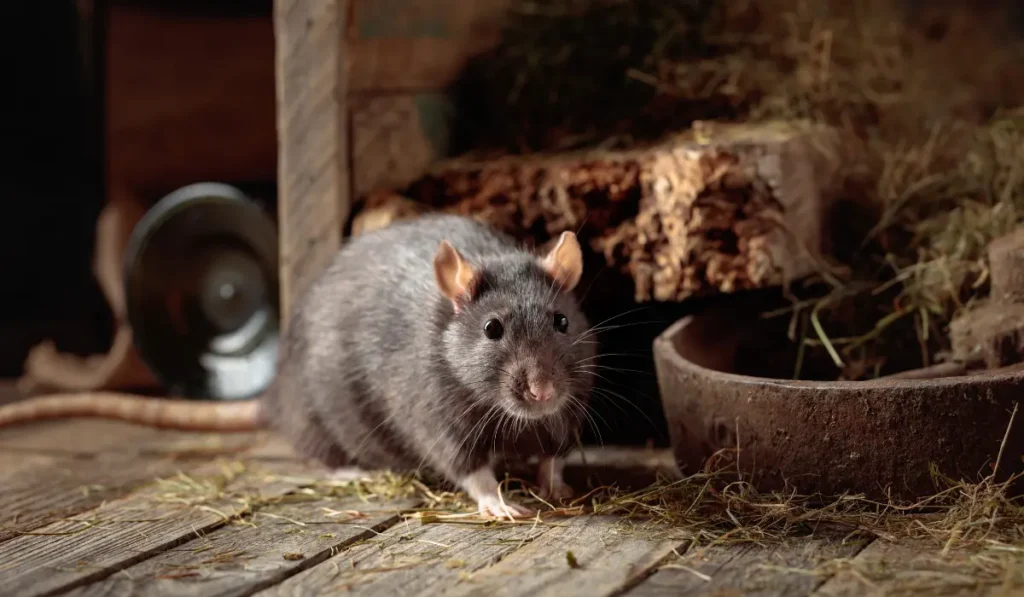
Mice Or Rats? Roof Rats And Norway Rats In Middle Tennessee

Many homeowners mix mice and rats. Proper identification is key to effective control.
Rodent Type Key Identifying Features Typical Behavior / Locations
House Mice & Deer Mice Small body size; tiny pepper-like droppings Found indoors or near structures; droppings are often the first sign
Roof Rats Slimmer bodies; long tails Active in attics and high places; travel along rooflines, soffits, and tree branches
Norway Rats Heavier bodies; larger droppings Stay low to the ground; dig burrows; stay close to foundations, sheds, and ground-level structures
We can identify the species and set a plan to stop the activity quickly through our rodent control service.

Signs You Have A Mouse Infestation

Use this quick guide to spot signs of a mouse problem in Nashville homes so you can act before it becomes a full-blown infestation.
  • Droppings under sinks, in pantry corners, and along garage walls
  • Light gnawing on baseboards, cardboard, and stored boxes
  • Musky odor in closets or pantries
  • Late-night scurrying in walls or ceilings
  • Torn insulation or shredded paper for nesting
  • Grease marks along baseboards and tight runways
  • Minor entry points around doors, utility lines, vents, or garage seals
People sometimes confuse mice with voles or chipmunks. Voles make narrow turf trails. Chipmunks leave larger, rice-sized droppings outdoors.

Health Risks From Mice In Nashville Homes

Mice bring more than noise and clutter. Their droppings and urine can contaminate pantry shelves, counters, and stored food. But you also need to know how to clean up after rodents.   Deer mice can carry hantavirus in some regions, so avoid sweeping up dry droppings, as this can release particles into the air. Many families also notice allergy or asthma flare-ups when mice nest in attics or crawl spaces, as dust and dander can spread through small gaps and vents. If you see recurring signs, use careful cleanup and act quickly to stop the source. At Waynes Pest Control, we can confirm activity, remove risks, and set a rodent plan to protect your home from rodents and hantavirus

Professional Pest Control Options In Nashville

For a lasting fix, match the plan to the mouse species. A pro inspection finds nests, travel routes, and food sources. We serve Nashville homes, apartments, and townhomes with trusted pest control services. Our team handles house mice, deer mice, roof rats, and Norway rats with indoor and outdoor service, attention to attics and crawl spaces, and follow-up visits.

Making The Right Rodent Call For Nashville Homeowners

Mice breed quickly and can cause severe damage if left unchecked. Identifying the exact type early helps you build a plan that works before they spread. At Waynes Pest Control, we provide local rodent control for Nashville homeowners using proven methods that focus on prevention and removal. Contact us today to schedule your inspection or request a free quote.

FAQs

How can I tell house mice from deer mice quickly?

House mice are small and uniform, grayish-brown. Deer mice have larger ears and a clear two-tone coat with a pale underbelly. If you see that contrast, it’s likely a deer mouse, and careful cleanup is essential.

Where do mice usually nest inside Tennessee homes?

They nest in warm, quiet places near food. Attics, basements, crawl spaces, and the areas behind kitchen appliances are the most common spots. Small gaps around doors and vents make easy entry.

Do I need a pro if I only see a few droppings?

Yes, if you see fresh droppings more than once. Early activity can grow fast, and a pro can confirm the species, seal entry points, and stop the problem before it spreads.

Rebecca Wood

Waynes has been serving customers since 1973. We have grown over the decades through a commitment to providing a world-class experience for our customers. We believe that if our employees are happy and fulfilled, they will go above and beyond in delighting our customers.

Latest from Waynes Blog

Opossum

Opossums in Florida: Habits, Risks, and ID

An opossum in Florida is usually a Virginia opossum, the state’s only marsupial. These animals are common around wooded areas, water sources, neighborhoods, gardens, sheds, crawl spaces, and yards where food or shelter is easy to find.  Opossums are mostly nocturnal and often avoid people, but they can become a nuisance when they get into…

Learn More >

tick

Ticks in Florida: Types, Season, and Prevention

In Florida, homeowners often encounter ticks around yards, trails, pets, and wooded perimeters. These animals thrive in shaded, grassy, brushy, or wooded outdoor environments, particularly where moisture, leaf litter, pets, and wildlife create ideal conditions.  Because certain ticks can transmit diseases, effective prevention is vital. Frequent sightings of ticks on clothing, pets, or outdoor recreation…

Learn More >

black carpenter ants

Carpenter Ants in Florida: Signs and Seasonal Activity

In Florida, carpenter ants are large insects that can be found both indoors and outdoors, particularly near moisture sources, trees, decaying wood, window frames, crawl spaces, attics, and plumbing leaks.  Unlike termites, they do not consume wood; instead, they often establish nests inside structural voids, soft or decayed wood, and pre-existing cavities. Spotting an occasional…

Learn More >

Florida no-see-um (biting midge) resting on human skin

Florida No-See-Ums: Identification, Bites, and Season

Biting midges, sand gnats, or sand flies, commonly known as Florida no-see-ums, are minuscule biting flies that often cause discomfort in coastal yards, patios, beaches, and marsh edges. Because of their tiny size, you might experience their small, itchy bites without ever spotting the insect itself.  These animals are particularly troublesome across coastal Florida, thriving…

Learn More >

Numerous reddish Florida fire ants swarming across a dirt mound with grass at the edges

Florida Fire Ants: Identification, Bites, and Mounds

Florida fire ants are one of the most frustrating ant problems homeowners face because they can build mounds in lawns, sting when disturbed, and return after rain or yard work.  The red imported fire ant is the species most people mean when they talk about fire ants in Florida. These ants are reddish brown to…

Learn More >

Florida millipede crawling across wet brick tile, segmented dark body with many pale legs visible

Florida Millipedes: Identification and Seasonal Habits

A Florida millipede is usually a nuisance pest, not a sign of structural damage. Millipedes live outdoors in damp places where they feed on decaying plant material, mulch, leaf litter, and rotting vegetation.  They often become noticeable after rain, heavy irrigation, or sudden moisture changes because saturated soil can push them toward patios, garages, crawl…

Learn More >

Aedes Mosquitoes

Florida Mosquitoes: Species, Season, and Bites

Florida mosquitoes are more than a backyard annoyance. They can make patios, pools, porches, and coastal yards difficult to enjoy, and some species can spread disease.  Florida has many mosquito species, but homeowners usually need to focus on a few practical questions: where they are breeding, when they are most active, and why they keep…

Learn More >

Translucent mole crab (sand flea) resting on coarse mixed-color beach sand

Sand Fleas in Florida: ID, Bites, and Season

Sand fleas in Florida can mean two different things, and that is where most of the confusion starts. At the beach, “sand fleas” often refers to mole crabs, small crustaceans that live in the surf zone and are not household fleas.  When people talk about itchy bites near beaches, marshes, patios, or coastal yards, they…

Learn More >

Ants crawling along a dirty white window sill and frame

Common Florida Insects: How to Identify Them

A Florida insect problem can look different from house to house. One home may deal with ants in the kitchen, another may see roaches in the garage, and another may notice termites, mosquitoes, fleas, or bed bugs.  Florida’s warm, humid climate can keep many pests active for long stretches of the year, so identification matters….

Learn More >

Scroll to Top