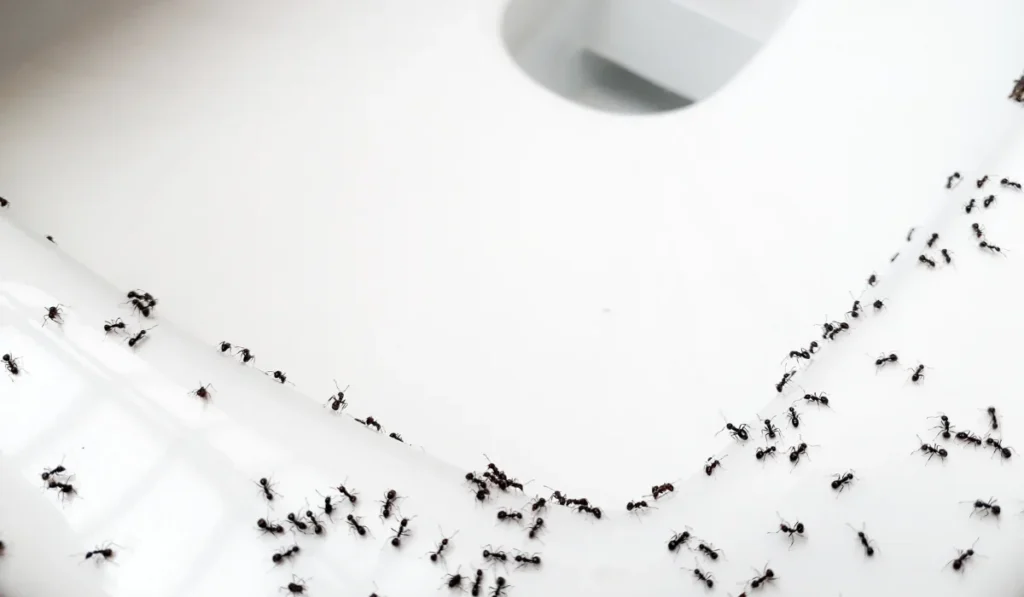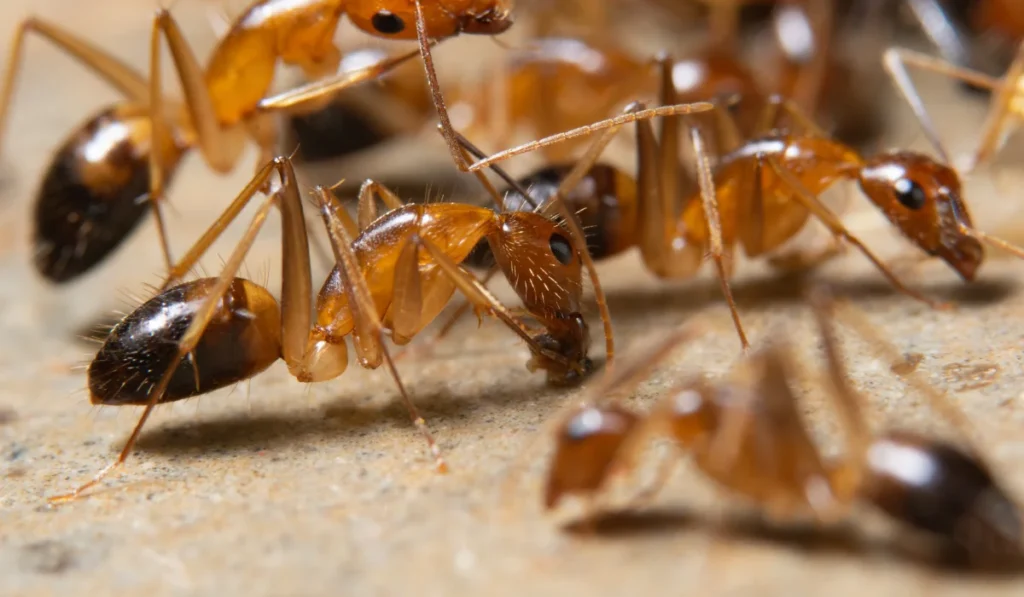

Finding large ants near a bathroom, window frame, deck, or roofline usually raises the same question: Why are they here? Carpenter ants in Florida Panhandle homes are often associated with damp or deteriorating wood, outdoor nesting sites, and nearby food and water. Unlike termites, carpenter ants do not eat wood. They excavate it to create nesting galleries. That makes recurring activity worth investigating, especially when the same ants keep showing up around moisture-prone parts of your property.
Why Carpenter Ants in Florida Panhandle Properties Become a Problem
Carpenter ants may nest indoors or outside. Trees, stumps, logs, and other wood around a yard can provide nesting sites, while workers leave the colony to search for food. Seeing an ant on a kitchen counter or exterior wall, therefore, does not necessarily mean the nest is directly behind that surface.
The University of Florida IFAS guide to Florida carpenter ants describes their nesting and foraging behavior, including their use of wood for nest sites and their movement away from the colony in search of food. For homeowners, that means the route ants take often tells you more than the place where you first notice them.
Follow The Route, Not Just The Ant
A trail along a porch, wall, or countertop shows where workers are traveling. It may not reveal where they are nesting. Ants can move through gaps around windows, doors, utility lines, and other openings while returning to a colony elsewhere on the property.
If you keep seeing ants in the same area, watch where they go. A steady route toward a tree, deck, roofline, crawl space, or damp section of the house may help narrow the search for the source.
Moisture And Damaged Wood Can Support Carpenter Ant Nesting
Moisture is one of the first conditions to check when carpenter ants keep appearing. Carpenter ants are commonly associated with damp, deteriorated, or moisture-damaged wood. The University of Minnesota Extension’s carpenter ant guidance identifies moisture-damaged wood as an area worth inspecting when carpenter ants are present around a building.
That does not mean the ants caused the water problem. A roof leak, plumbing issue, poorly sealed window, damp crawl space, or weathered exterior wood may already have affected the material before ants begin using it.
Look closely at roof edges, fascia, decks, windows, doors, plumbing areas, and crawl spaces. If ants repeatedly show up near one of those locations, the surrounding wood deserves closer attention.
Find The Water Source Before Making Repairs
Not every moisture problem leaves an obvious puddle. A slow leak may affect nearby wood long before water becomes visible inside a room.
If you find damp or deteriorated material, correct the source of the moisture before replacing or repairing the wood. Otherwise, the same condition remains in place. Fixing the leak also helps protect the surrounding material from further deterioration.
Outdoor Nesting Sites Can Bring Carpenter Ants Closer To Your Home
A carpenter ant problem does not have to start inside the house. Old stumps, dead sections of trees, fallen wood, logs, and other outdoor wood can provide nesting locations. The closer those sites are to your home, the easier it is for workers to reach decks, siding, porches, rooflines, and entry points.
Stored firewood is another area worth checking. Wood stacked directly beside the house puts a potential nesting site close to the structure. Moving firewood away from exterior walls reduces that connection and makes it easier to spot ant activity around the foundation or siding.
Removing unnecessary dead or decaying wood around the yard can also reduce potential nesting sites. The goal is not to strip the property of every piece of wood. It is to pay attention to material that stays damp, is deteriorating, or sits close to the home.
Trees And Shrubs Can Become Travel Routes
Branches touching the roof or siding can give ants a direct path from a tree to the structure. Dense shrubs against exterior walls can create similar connections.
Healthy landscaping does not need to be removed simply because carpenter ants are present. Trimming branches and vegetation away from the house, where practical, can make it harder for ants to move directly between outdoor nesting areas and the structure.
Food And Water Can Keep Carpenter Ants Coming Back
Carpenter ants use wood for nesting, not for food. They forage for other sources of nutrition, including insects and carbohydrate-rich materials. Honeydew produced by plant-feeding insects is one natural food source associated with carpenter ant activity around trees and landscaping.
Inside the home, crumbs, spills, pet food, and accessible water can give workers a reason to return. Kitchens, bathrooms, and utility areas often provide more than one of those resources in the same place.
Cleaning food residue and fixing dripping plumbing will not remove an established colony on their own. They do, however, take away resources that can support repeated indoor foraging.
Signs Of A Carpenter Ant Infestation In A Florida Panhandle Home
One carpenter ant indoors does not confirm an infestation in the structure. Repeated patterns are more useful. Watch for ants following the same route, entering the same opening, appearing around damp wood, or returning to one section of the house day after day.
Carpenter ants remove material while excavating nesting galleries. That debris is commonly called frass and may collect near an active nesting area. Its presence can help point toward a location that deserves inspection.
Winged carpenter ants can also appear as reproductive members of an established colony. Because other ants and termites produce winged forms too, identification matters before you decide what type of wood-destroying insect is present.
The University of Kentucky Department of Entomology also identifies moisture-affected structural areas, including wood near leaks, as useful places to inspect for carpenter ants. Pairing insect activity with the condition of the surrounding wood gives you a better starting point than relying on one sign alone.
Carpenter Ants Vs. Termites
Carpenter ants and termites can both be found around wood, but they use it differently. Carpenter ants excavate wood to make room for a nest. Termites consume cellulose as food.
| Feature | Carpenter Ants | Termites |
| Relationship with wood | Excavate wood to form nesting galleries | Consume cellulose as food |
| What wood provides | Nesting space | Food |
| Possible clue | Frass near a nesting area | Wood damage associated with feeding |
| Winged forms | Reproductive ants may have wings | Reproductive termites may have wings |
That difference matters when you find damaged wood, discarded wings, or insects around the same area. Visual identification is not always straightforward, so an inspection can help determine which pest is present before you decide what to do next.
How To Make Your Panhandle Property Less Attractive To Carpenter Ants
Reducing carpenter ant activity starts with the property conditions that support nesting and foraging. Instead of treating each ant sighting as a separate problem, work through the places that provide moisture, shelter, food, or access.
Fix Moisture Problems And Damaged Wood
Check rooflines, plumbing areas, windows, doors, fascia, decks, and crawl spaces for leaks or wood that stays damp. If you find moisture damage, address the source before repairing or replacing the affected material.
Give extra attention to places where ants appear repeatedly. Activity around a bathroom wall, window frame, roof edge, or crawl space can be a reason to inspect nearby wood for moisture or deterioration.
Reduce Outdoor Nesting Sites And Access Routes
Inspect the area around your home for dead wood, old stumps, damaged tree sections, landscape timbers, and stored firewood. Keep firewood away from the structure, and remove decaying wood that serves no useful purpose near the house.
Look up as well as down. Branches touching the roof or siding can create an easy route onto the building. Trim back vegetation where it maintains direct contact with the structure, especially along paths where you have already noticed ants.
Limit Indoor Food And Water Sources
Keep crumbs, spills, and pet food from becoming dependable food sources for foraging workers. Repair dripping plumbing and address recurring moisture around sinks, bathrooms, and utility areas.
These steps will not necessarily remove an established carpenter ant colony. They do make the house less useful to foraging ants and can help you determine whether activity continues because a nest or entry route still needs to be located.
Protecting Your Property From Carpenter Ants In Florida Panhandle Communities
Carpenter ants in Florida Panhandle properties are often easier to understand when you look beyond the ants themselves. Damp or deteriorating wood may provide nesting space, outdoor wood may support a colony nearby, and branches, food, or water may help workers keep returning to the structure.
If you notice repeated trails, frass, winged ants, or activity near damp wood, locating the source is more useful than reacting to each individual sighting. Waynes Pest Control can help identify carpenter ant activity and the property conditions associated with it. You can also contact Waynes about carpenter ant activity if you need help determining where the ants are coming from and what to address next.