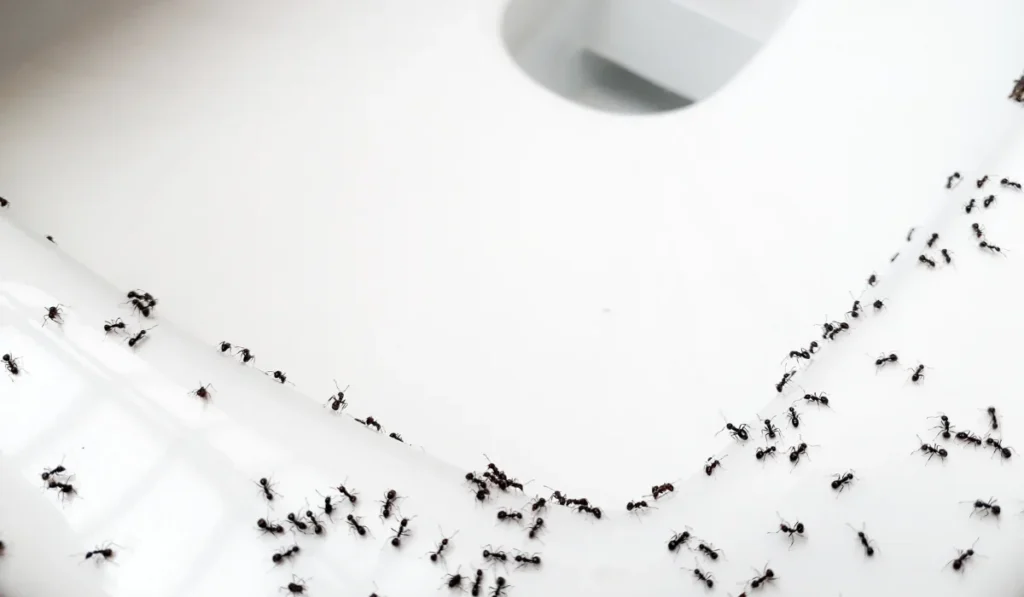
In Florida, carpenter ants are large insects that can be found both indoors and outdoors, particularly near moisture sources, trees, decaying wood, window frames, crawl spaces, attics, and plumbing leaks.
Unlike termites, they do not consume wood; instead, they often establish nests inside structural voids, soft or decayed wood, and pre-existing cavities. Spotting an occasional large ant does not necessarily indicate a major problem.
However, frequent sightings, nighttime foraging trails, indoor winged ants, or activity around damp wood warrant an inspection before an infestation expands.
Key Takeaways
- Florida carpenter ants are among the largest ants homeowners may notice.
- They often forage at night and may enter homes for sweets, moisture, or nesting sites.
- Winged carpenter ants are commonly noticed during spring swarm season.
- Moisture, tree contact, and damaged wood can make homes more attractive.
- Waynes provides ant control and pest control services in the Florida Panhandle.
What Are Carpenter Ants?
Carpenter ants belong to the genus Camponotus. The UF/IFAS guide to Florida carpenter ants explains that these ants get their common name because some species excavate nests in wood. In Florida, common carpenter ants around structures include the Florida carpenter ant and the Tortugas carpenter ant.
These ants are often easier to notice than tiny kitchen ants because of their size. Workers can vary in size within the same colony, so you may see both smaller and larger ants moving through the same area.
How to Identify Carpenter Ants in Florida
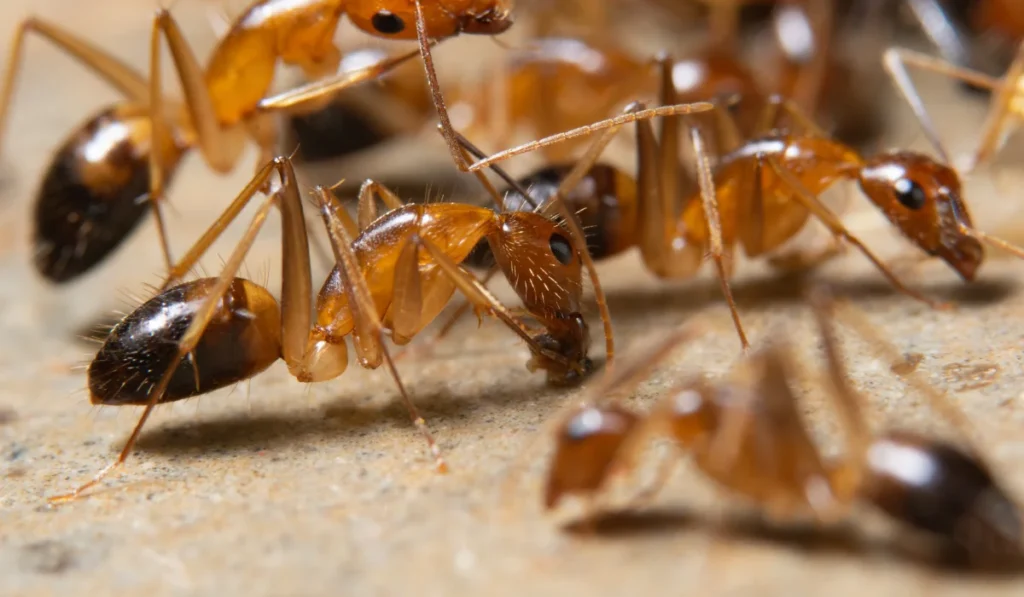
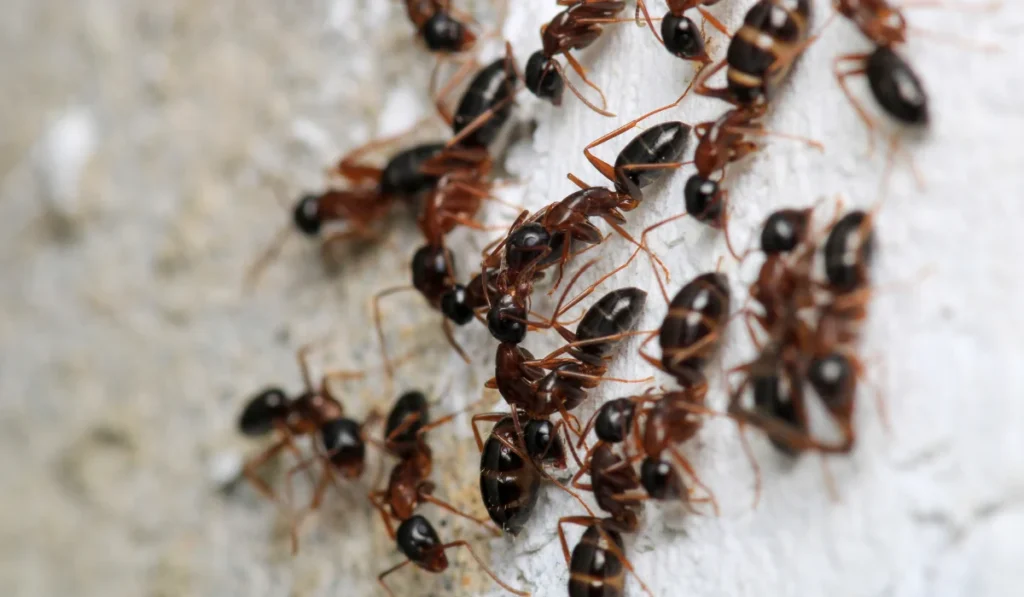
Florida carpenter ants are usually large, with a dark abdomen and reddish, rusty, or brownish coloring on the head and middle body. Winged reproductive ants may be much larger than workers and are often found near windows, doors, or lights during swarm periods.
Common identification clues include:
- Large ant size compared with many household ants
- Rusty-orange, brown, or dark body tones
- One visible node at the waist
- Evenly rounded upper thorax
- Long antennae without a clubbed tip
- Winged ants during swarm season
- Loose trails or individual ants foraging at night
Do not rely on size alone. Some ant species can look similar, and winged ants may be confused with termites. If you see winged insects indoors, save a few specimens or take clear photos for identification.
Carpenter Ants vs. Termites
Carpenter ants and termites are often confused because both may be associated with wood. Their behavior is different.
Termites eat wood and can damage it from the inside. Carpenter ants do not eat wood. They excavate or use spaces to create nesting areas, especially in softened, decayed, pithy, or pre-existing voids.
A few differences can help:
- Carpenter ants have a narrow waist; termites have a thicker, straighter waist.
- Carpenter ant wings are usually unequal in length; termite wings are more equal.
- Carpenter ants may leave coarse debris from excavation.
- Termites may leave mud tubes, discarded wings, or hollow-sounding wood.
- Carpenter ants often forage openly at night.
If you are not sure which pest you found, do not guess. Termites and carpenter ants need different inspection and treatment plans.
Signs of Carpenter Ant Activity
Carpenter ants can be subtle at first. You may see ants before you find a nest, especially if the colony is outside and workers are foraging indoors.
Watch for:
- Large ants indoors, especially at night
- Winged ants near windows, sliding doors, or lights
- Trails along wires, cables, branches, or exterior walls
- Ants near kitchens, bathrooms, or plumbing areas
- Activity near damp or damaged wood
- Small piles of coarse debris near wood voids
- Rustling sounds inside walls in heavier activity
- Ants moving between trees and the home
Carpenter ant complaints are common during spring swarm season, often between April and June, when winged reproductives may appear inside homes near window ledges and sliding glass doors.
Where Carpenter Ants Nest
Carpenter ants are opportunistic nesters. Outdoors, they may nest in soil beneath objects, dead branches, rotting logs, stumps, loose bark, trees, or wood debris. Indoors, they may use wall voids, attic spaces, crawl spaces, window frames, insulation areas, or damp wood.
Around Florida Panhandle homes, we often look for activity near:
- Tree limbs touching the house
- Moist window frames
- Leaky plumbing areas
- Humid crawl spaces
- Poorly ventilated attics
- Door and window gaps
- Wood debris near the foundation
- Stumps, logs, or stacked firewood
- Utility lines and cable routes
Carpenter ants may also use branches as bridges into a home. If trees touch the roofline, siding, or windows, ants and other pests have an easier path inside.
Why Carpenter Ants Come Inside
Carpenter ants enter homes for food, moisture, or nesting opportunities. They are attracted to sweets, honeydew from plant-feeding insects, and other insects they can feed on. Indoors, they may show up near kitchens, bathrooms, and rooms with moisture problems.
Common attractants include:
- Leaky pipes
- Damp wood
- Poor attic or crawl space ventilation
- Tree branches touching the home
- Sweet spills or food residue
- Pet food
- Trash areas
- Water-damaged window or door frames
- Firewood stored close to the home
If you keep seeing ants in the same room, the visible ants may only be part of the issue. The nest may be hidden indoors, outside, or connected through satellite nests.
Seasonal Activity in Florida
Florida carpenter ants can be active year-round, but activity often becomes more noticeable during certain seasons and weather patterns. UF/IFAS explains that winged reproductives fly in the evening or at night during the rainy season, from May through November, while spring swarm complaints often occur between April and June.
Homeowners may notice more activity:
- During spring swarm season
- After rain
- During warm, humid weather
- Around dusk or nighttime foraging
- When colonies mature and produce winged ants
- When moisture problems develop indoors
- When tree limbs or vegetation contact the home
Because Florida’s climate stays warm for much of the year, carpenter ant activity is not limited to one short window. A seasonal spike may reveal a colony that has already been active nearby.
Are Carpenter Ants Dangerous?
Carpenter ants do not sting, but they can bite if handled or disturbed. The bigger concern is what they may indicate around the home: moisture, wood decay, hidden voids, or pest access routes.
Florida carpenter ants are not the same as termites, but repeated indoor activity should still be taken seriously. If ants are nesting in damp wood or structural voids, the underlying moisture or access problem needs attention.
How to Reduce Carpenter Ant Activity
Prevention focuses on moisture control, exclusion, and habitat reduction. You do not need to remove every tree or plant, but you should reduce the easy pathways and nesting conditions around the structure.
Helpful steps include:
- Trim branches away from the roofline, siding, and windows.
- Fix plumbing leaks and moisture problems quickly.
- Replace water-damaged or decayed wood.
- Keep firewood away from the home.
- Remove old stumps, logs, and wood debris near the foundation.
- Seal gaps around windows, doors, pipes, and utility lines.
- Improve ventilation in humid crawl spaces or attics.
- Keep food residue, sweets, and pet food cleaned up.
- Watch for winged ants near windows and sliding doors.
Surface sprays may reduce the ants you see, but they do not always solve the colony. Carpenter ant control works best when the nest and access points are found.
When to Call Waynes
Call us if you are seeing large ants indoors, finding winged ants near windows, noticing activity near damp wood, or seeing ants trail between trees and your home. At Waynes, our ant control service starts with inspection. We check the property, entry points, and the conditions attracting ants so we can recommend a treatment plan based on what is actually happening.
For Florida Panhandle homeowners, our pest control services in the Florida Panhandle cover ants and other common pests with a property-focused approach that looks beyond the insects you can see.
If carpenter ants are showing up in your home or around moisture-prone areas, contact Waynes for a quote and we’ll help identify the pest, find the source, and recommend the right next step.
FAQs About Carpenter Ants in Florida
Are carpenter ants common in Florida?
Yes. Florida carpenter ants are common around structures, landscapes, trees, and homes. They are especially noticeable because they are larger than many other household ants.
Do carpenter ants eat wood?
No. Carpenter ants do not eat wood like termites. They may excavate or use wood voids for nesting, especially in softened, decayed, pithy, or damaged wood.
Why am I seeing winged carpenter ants inside?
Winged carpenter ants may appear during swarm season when mature colonies produce reproductives. Indoor winged ants near windows, doors, or lights should be inspected because the colony may be nearby.
Are carpenter ants active at night?
Yes. Florida carpenter ants often forage at night, especially around dusk and again near dawn. Nighttime sightings can be an important clue.
Does Waynes treat carpenter ants in Florida?
Yes. Waynes provides ant control and pest control services in the Florida Panhandle. We inspect first, identify the ant activity, and recommend treatment based on the colony, entry points, and conditions around your home.