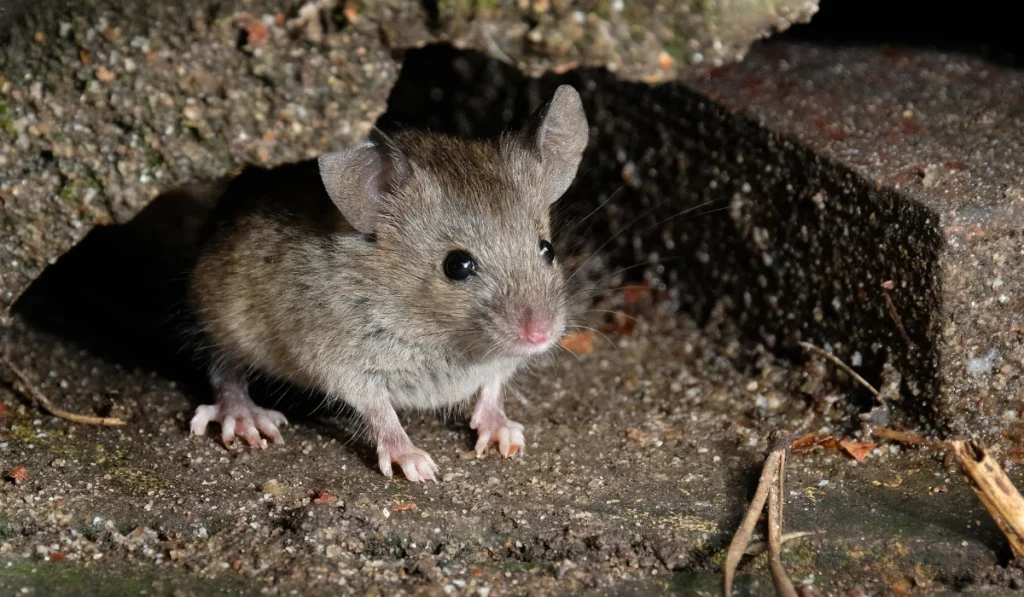

Finding mouse poop in a pantry, drawer, attic, or garage is a clear sign that a mouse has been active in your home. What the droppings cannot do is give you an exact mouse count. A single mouse may visit the same spot repeatedly, while several mice may leave smaller amounts across different rooms.
The better question is not simply, “How many droppings are there?” You need to look at where they appear, whether new droppings return after cleanup, and what other evidence is nearby. Gnawed packaging, nesting material, scratching sounds, and unusual odors can help you understand whether the activity is isolated or part of a larger mouse infestation.
This matters in homes across Alabama, Tennessee, Mississippi, and the Florida Panhandle, where mice can use gaps around doors, vents, plumbing, foundations, and rooflines to reach shelter. Reading the full pattern can help you respond before the problem spreads to more areas of your home.
What Mouse Poop Can Reveal About Your Mouse Problem
Mouse poop works more like an activity map than a headcount. Droppings can show where mice are feeding, which areas they travel through, and whether they are using one part of the home or several connected spaces.
A cluster near pet food may mark a regular feeding stop. Droppings behind a refrigerator can point to a protected route near food, warmth, or moisture. Evidence along baseboards, cabinet edges, or walls may help trace movement, even when the nest is hidden in an attic, crawl space, wall void, or storage area.
The spread of the evidence often matters more than the amount in one place. One isolated group of droppings may come from a mouse passing through. Fresh mouse droppings that return in several rooms suggest broader activity and a problem that deserves closer attention.
| What You Find | What It May Suggest | What It Cannot Confirm |
| One small cluster of droppings | A feeding stop or travel route | That only one mouse is present |
| New droppings after cleanup | Current mouse activity | The exact number of mice |
| Droppings in several rooms | A wider movement pattern | That every room contains a nest |
| Droppings with gnaw marks or nesting material | A more established infestation | The precise location of the nest |
| Old droppings with no new evidence | Past activity | That every entry point has been sealed |
A large pile is not always evidence of a large population. One mouse may return to the same protected location night after night. By contrast, smaller clusters spread through a kitchen, garage, attic, and laundry room may show that the activity extends well beyond the first place you noticed it.
Fresh Versus Old Mouse Droppings
Fresh mouse droppings can help confirm that activity is current, but appearance alone is not a dependable test. Humidity, dust, lighting, and the surface beneath the material can all affect how droppings look. Darker droppings are not automatically fresh, and lighter ones are not always old.
Do not touch, crush, or break apart droppings to judge their age. A safer method is to document the location, clean the area properly, and monitor it for new evidence. If droppings return, mice are still using that space.
This process also helps separate an old infestation from an active one. Droppings can remain in hidden corners long after mice are gone. New mouse poop appearing after cleanup gives you a much clearer reason to investigate further.
Location Patterns Matter More Than a Dropping Count
Where you find mouse poop can reveal how mice are using your home. Droppings near food often mark a feeding area. A scattered trail along a wall may follow a travel route. Evidence close to shredded paper, fabric, or insulation may point toward nesting activity.
The place where you find droppings may not be where the mouse spends most of its time. A kitchen cabinet can serve as a feeding stop even when the nest is inside a wall or in another room. Mice often move through concealed areas where cabinets, appliances, and stored belongings provide cover.
Droppings in several connected locations deserve closer attention. Evidence in the kitchen, garage, and attic may indicate movement through wall voids, plumbing openings, or utility lines. That pattern still does not provide a precise mouse count, but it shows that the problem may extend beyond a single room.
What Mouse Poop Looks Like Inside a Home
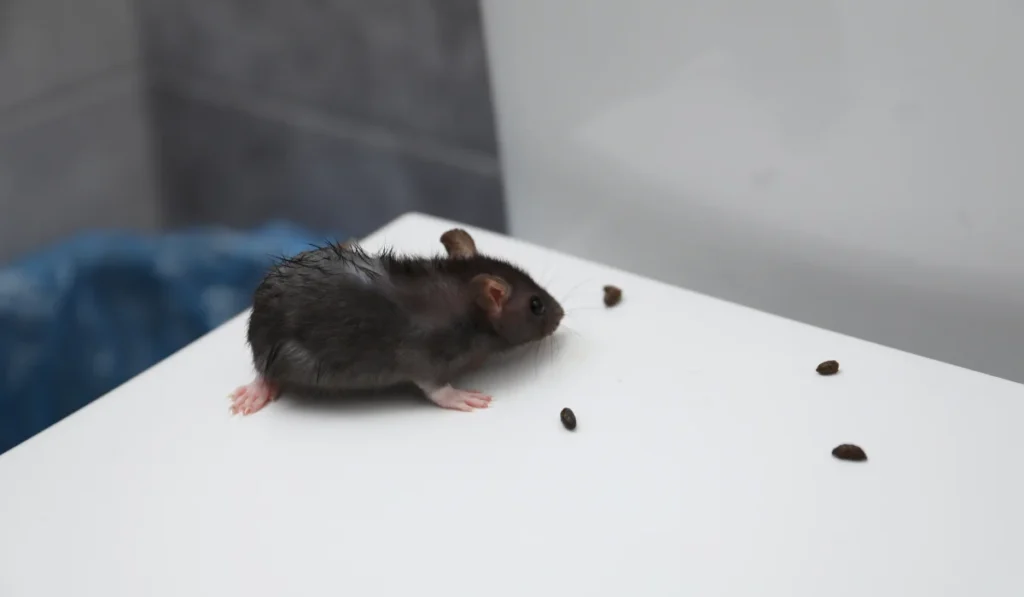
Mouse poop usually appears as small, dark, pellet-shaped material. You may find it in pantry corners, drawers, lower cabinets, under sinks, behind appliances, near stored food, or along the edges of rooms. In garages and attics, droppings often appear near boxes, insulation, stored belongings, or concealed openings.
Location gives you useful context. Mouse droppings in the kitchen may indicate access to food or water. Evidence under a sink can point to movement around plumbing. Droppings in the attic may show travel or nesting activity, though the actual entry point could be somewhere along the roofline, a vent, or an exterior gap.
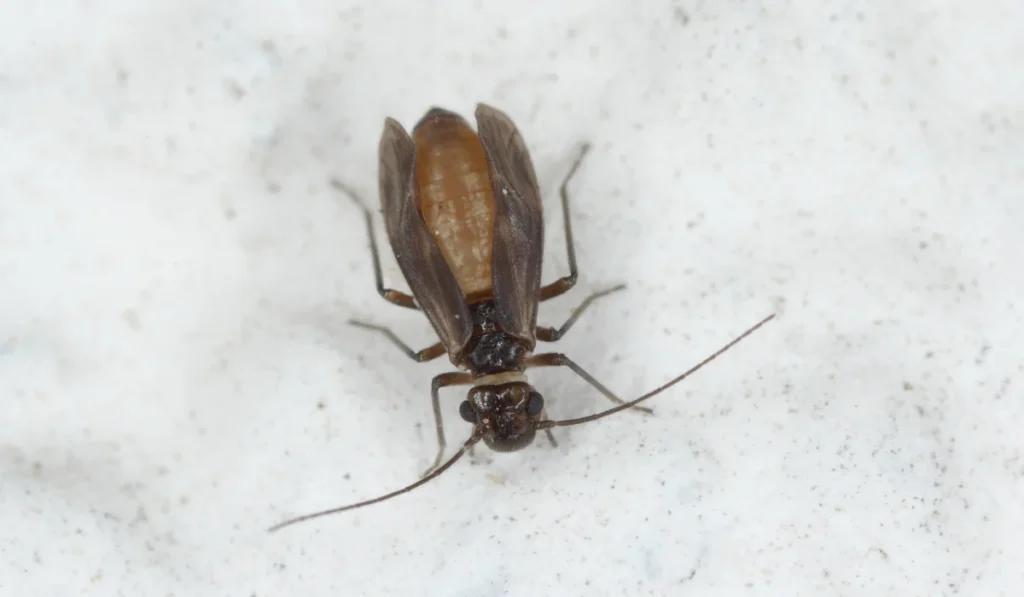
Do not rely on a photograph or size estimate alone. Old, broken, or partially hidden rodent droppings can be difficult to identify. Rat, cockroach, bat, or lizard waste may also be mistaken for mouse poop when the material is damaged or seen in poor lighting.
Other Signs That Point to a Larger Mouse Infestation
Mouse poop becomes more meaningful when it appears with other signs of a mouse infestation. Gnawed food packages, shredded nesting material, scratching sounds, grease marks, damaged containers, tracks, and unusual odors can all help show the extent of the activity.
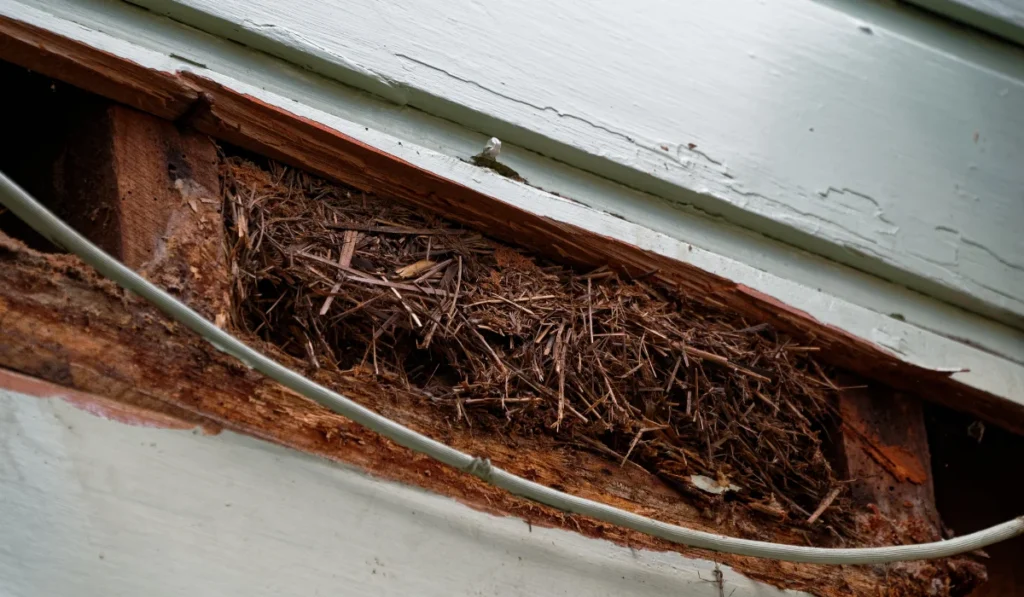
Nesting material is an especially useful clue because it suggests that mice are doing more than passing through. Shredded paper, fabric, insulation, or other soft material inside a quiet space may indicate shelter nearby. Gnawing around cabinets, doors, food containers, or storage boxes can show where mice are feeding or trying to reach another area.
Sounds can also help narrow the search. Scratching or scampering after the house becomes quiet may come from walls, ceilings, cabinets, or the attic. Noise alone cannot tell you how many mice are present, but repeated sounds in more than one part of the home can support the other evidence you find.
Food damage, droppings, nesting material, and recurring sounds create a stronger case for an established problem than any single sign. A thorough inspection brings those clues together and checks hidden spaces that are easy to miss during a quick household search.
Mouse Poop Versus Rat Poop and Other Lookalikes
Mouse and rat droppings often differ in size and shape, but those differences are not always easy to judge in a home. Young rats may leave smaller droppings, while damaged mouse droppings may look larger or less uniform than expected. Photographs can also distort size when there is no familiar object nearby for scale.
The surrounding evidence may provide more context. Larger gnaw marks, damage to sturdier containers, or heavier grease marks can suggest a different rodent. Even then, one clue should not determine the identification.
Cockroach waste, lizard droppings, and material associated with bats can also resemble mouse poop. Some lookalikes call for different cleanup or removal methods, so avoid handling unknown material while trying to identify it.
A clear photo may help a pest professional make an initial assessment. An on-site inspection provides a fuller picture by checking travel routes, nesting material, food damage, entry gaps, and the locations where evidence appears most often.
How to Clean Mouse Droppings Safely
Do not sweep or vacuum dry mouse droppings. Disturbing dry waste can spread contaminated particles into the air and across nearby surfaces. The same caution applies to rodent urine and nesting material.
Follow the CDC guidance for cleaning up after rodents before handling the area. The guidance recommends ventilating enclosed spaces when appropriate, wearing gloves, thoroughly wetting droppings and contaminated material with a suitable disinfecting solution, allowing the solution time to work, and wiping up the material instead of sweeping it.
Place the waste in a sealed bag, clean the surrounding surface, and wash your hands after removing your gloves. Keep children and pets away from the area until cleanup is complete.
Large amounts of droppings, widespread contamination, or evidence inside insulation, ducts, crawl spaces, and other hard-to-reach areas may require professional help. Cleanup removes visible waste, but it does not close entry points, remove nesting sites, or stop mice that are still active.
How to Keep Mouse Activity From Returning
Long-term mouse control starts with removing the conditions that support activity. Store food and pet food in sealed containers, clean crumbs and spills, repair moisture problems, and reduce clutter that can provide nesting material or hiding places.
Entry points also need attention. Gaps around doors, vents, rooflines, foundations, plumbing, and utility connections can give mice access to protected indoor spaces. Sealing those openings helps reduce the chance that another mouse will replace the one that was removed.
The EPA’s integrated pest management principles support combining prevention, monitoring, sanitation, exclusion, and targeted control. This approach addresses the source of the problem instead of treating visible droppings as the entire issue.
For homeowners in Alabama, Tennessee, Mississippi, and the Florida Panhandle, seasonal changes can push mice toward garages, attics, crawl spaces, and wall voids. Regularly checking stored items, food areas, utility openings, and exterior gaps can help you catch new activity earlier.
Get Help With Mouse Activity in Your Home
Mouse poop can show where mice are traveling, feeding, and returning, but it cannot reveal the exact size of the infestation. Fresh droppings in several areas, along with gnawing, nesting material, odors, or nighttime sounds, point to a problem that needs a closer look.
The team at Waynes Pest Control can inspect the areas where you found mouse droppings, look for related signs, and identify likely entry points. To schedule an inspection or discuss rodent control for your home, contact Waynes and take the next step toward stopping the activity at its source.