
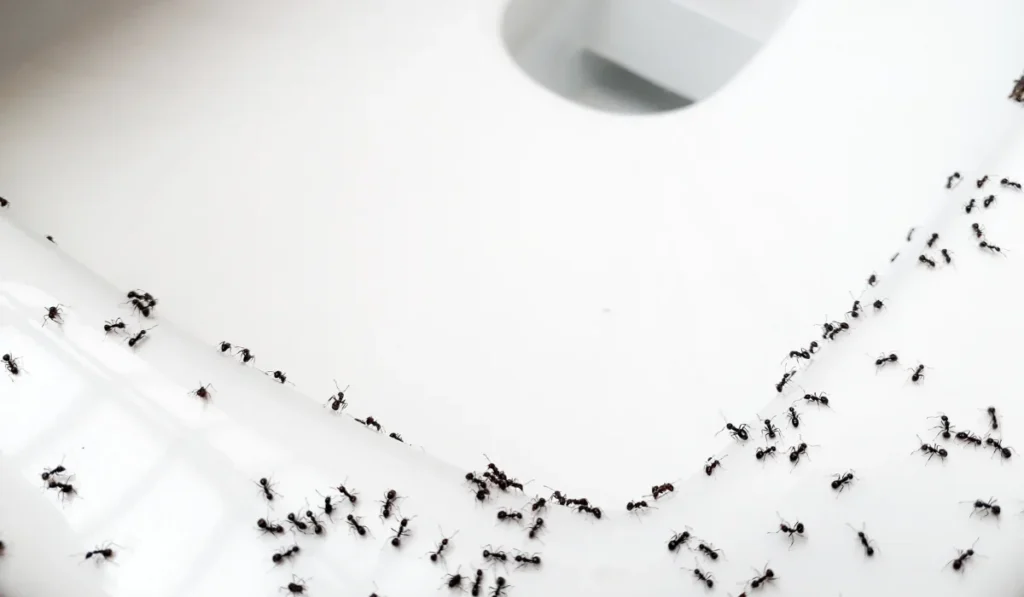
Finding tiny ants in bathroom areas around your sink, vanity, shower, or tub usually means workers have found moisture, food, or a protected route through the room. The ants you see may be traveling through gaps around plumbing, cabinets, trim, or walls rather than nesting beside the fixture itself. If you live on the Florida Panhandle, the most useful response is to identify the ant as closely as possible, trace where the workers are going, correct moisture problems, and determine whether repeated activity points to a colony elsewhere in or around your home.
What Are the Tiny Ants in Your Bathroom?
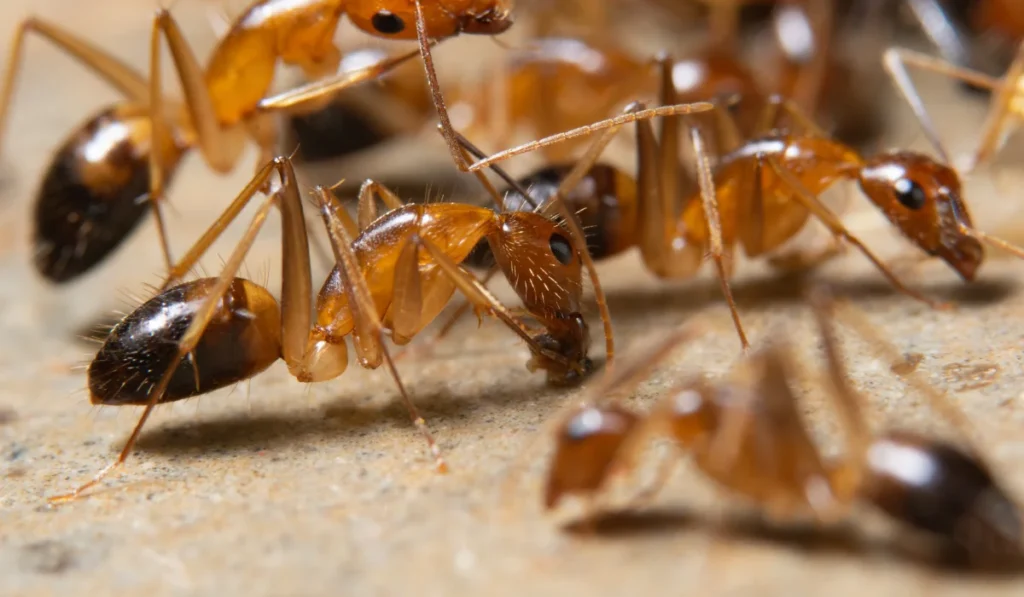
Tiny ants in bathroom spaces can be difficult to identify because several small species may look similar when moving across tile, counters, and fixtures. The room where you find them does not identify the species. Their color, body appearance, trail location, and entry point provide better clues.
The University of Florida IFAS Extension provides Florida-specific information about household ants and their biology. Ghost ants and pharaoh ants are two small species that may be encountered indoors in Florida, but bathroom location alone is not enough to identify either one.
Ghost Ants
Ghost ants can be difficult to follow on light surfaces because parts of their bodies are pale. On a white sink, tub, or countertop, the contrast can be low enough that the workers are harder to see clearly.
If you suspect ghost ants in the bathroom, spend a few minutes watching the trail before cleaning it away. Note whether workers head beneath the vanity, disappear along trim, enter an opening around plumbing, or continue toward another part of the room. A clear photo can also help with identification.
Pharaoh Ants and Other Look-Alikes
Pharaoh ants are another small indoor species that can be confused with other household ants. Other small ants may also enter Florida homes, so size and color seen from a distance do not provide a dependable identification.
The pattern of activity often tells you more than a quick look at one worker:
| What You Notice | What It May Mean | What To Check Next |
| Ants gathering near a sink | Moisture or a nearby travel route may be drawing workers | Faucet, plumbing connections, vanity, and nearby gaps |
| A trail disappearing beneath trim | Workers may be using a concealed opening | Baseboards, wall joints, and adjoining rooms |
| Ants around a drain | The drain may not be the source | Pipe penetrations, cabinet seams, and damp areas nearby |
| Activity in several rooms | The route may extend beyond the bathroom | Shared walls, plumbing areas, and exterior access points |
You do not need to identify the species on your own before asking for help. Photos and notes about the trail can give a pest professional useful information before an inspection begins.
Why Tiny Ants in Bathroom Areas Keep Appearing
Tiny ants in bathroom areas often return because the room offers moisture and sheltered routes. Water can collect around a faucet, beneath a sink, beside a shower, or inside a vanity. A slow plumbing drip or recurring damp area can keep workers coming back to the same spot.
The path into the room may be much harder to see. Ants can move through small openings where pipes enter walls, along cabinet joints, beneath trim, or through other concealed spaces. A trail that appears to start at the sink may have traveled through a wall or cabinet before reaching the surface.
Cleaning removes the workers you can see, but it may not address the route that brought them there. If the ants return, watch the trail before wiping it away. Look for the point where the workers first become visible and where they disappear again.
Look Beyond the Bathroom
If your bathroom shares a wall with a closet, bedroom, hallway, or another plumbing area, inspect those spaces too. Ants appearing in more than one location may be following connected routes through the structure.
For a bathroom on an exterior wall, check the same area outside. Utility penetrations, gaps around exterior features, and openings where materials meet can help you understand how indoor and outdoor activity may be connected.
Are the Ants Really Coming From the Bathroom Drain?
Ants clustered around a sink or tub can make it look as if they are coming directly from the drain. Their location does not prove that the colony or travel route is inside the plumbing.
The workers may instead be approaching the fixture through an opening around pipes, a cabinet seam, a crack beside the sink, or another nearby gap. Moisture around the fixture may be the destination rather than the entry point.
Inspect Around the Plumbing
Open the vanity and look around the supply lines and drain plumbing. Check for damp surfaces and gaps where pipes pass through the cabinet or wall. Cabinet corners and the junction between the vanity and wall are also worth inspecting because they are easy to miss during routine cleaning.
Use the same method when you find ants in the shower. A worker moving across tile or along the tub edge tells you where the ant is active, not where its colony is located. Following the trail can give you more useful information than assuming the nearest drain is responsible.
How to Get Rid of Tiny Ants in Bathroom Areas
Learning how to get rid of tiny ants in bathroom areas starts with conditions you can observe and correct. Moisture control, cleaning, trail monitoring, and exclusion each address a different part of the problem.
The goal is to make the bathroom less useful to foraging ants while gathering enough information to understand where the activity is coming from.
Correct Moisture Problems
Check faucets, plumbing connections, and the area beneath your sink for leaks or recurring dampness. Repair plumbing problems instead of allowing water to continue collecting. Dry wet counters and other surfaces when practical.
Pay attention to less obvious moisture as well. If one part of the vanity repeatedly becomes damp, finding the source is more useful than drying the same spot every day.
Clean the Area and Monitor New Activity
Keep the sink, countertop, vanity, tub, and surrounding surfaces clean. Remove residue from personal-care products and keep bathroom waste containers clean.
A clean surface also makes fresh trails easier to recognize. If workers return along the same route after cleaning, you have a stronger clue about which part of the room needs closer attention.
Trace the Trail Before Sealing Openings
Check around plumbing penetrations, cabinets, baseboards, and trim for openings, but do not assume every crack is part of the route. Watch the ants first and identify the areas they appear to be using.
Once a likely access point is identified, appropriate sealing may help limit entry. This is more targeted than closing random gaps while the origin of the trail remains unclear.
The U.S. Environmental Protection Agency describes integrated pest management as an approach built around identification, monitoring, prevention, and targeted control. For bathroom ants, that means considering moisture, access, and repeated activity together rather than treating only the workers visible on a countertop.
Why Florida Panhandle Homes Can Have Repeat Bathroom Ant Activity
Tiny ants in Florida homes can move between outdoor and indoor spaces wherever a structure gives them access. Plumbing penetrations, utility openings, cracks, and gaps around exterior features can create routes toward interior walls and rooms.
The Florida Panhandle’s warm, humid Gulf Coast setting also makes moisture management an ongoing part of home maintenance. A bathroom does not need standing water to have a damp area that attracts ant activity. A small leak, moisture beneath cabinetry, or recurring condensation can make one location more useful to workers searching for water.
Check the Exterior Near the Bathroom
If the affected bathroom sits along an exterior wall, inspect the same section of the house outside. Look at utility and plumbing penetrations, visible gaps, and places where exterior materials meet.
Compare those areas with what you see indoors. A trail that repeatedly disappears along the same wall may help a pest professional narrow the inspection area.
Homeowners can also use the Florida Department of Agriculture and Consumer Services as a state resource for information related to structural pest management in Florida.
When Bathroom Ants Point to a Larger Problem
An occasional ant and a trail that returns every day are different situations. Repeated activity around the same vanity, ants appearing in several rooms, or workers consistently disappearing into concealed spaces can indicate that surface cleaning is not addressing the source.
Instead of focusing on the number of ants you see at one moment, keep track of patterns:
- The same trail returns after cleaning
- Workers follow the same plumbing wall
- Ants appear in an adjoining room
- Workers repeatedly enter one concealed gap
- Activity spreads to another part of the bathroom or home
Photos are useful too. If you can safely photograph the ants and the place where the trail disappears, save the images for identification.
When Professional Identification Makes Sense
Persistent small ants in bathroom areas are a good reason to seek professional identification. Waynes includes ants among the general household pests addressed through its pest services, and the service approach depends on what the Field Professional finds at the property.
Sharing photos, trail locations, and information about recurring moisture gives the Field Professional a clearer starting point. Those details can help determine whether the activity is limited to the bathroom or connected to another area of the home.
Keeping Tiny Ants Out of Your Florida Panhandle Bathroom
Tiny ants in bathroom areas are easier to address when you focus on why the workers are there and how they are reaching the room. Check for leaks and damp areas, keep surfaces clean, follow active trails, and address appropriate entry points after you understand where the ants are traveling.
If the activity continues, Waynes can inspect the affected areas, work to identify the pest, and recommend an approach based on the conditions found at your home. For persistent tiny ants in bathroom areas on the Florida Panhandle, contact Waynes to schedule service and share where the trails appear, how often they return, and any moisture issues you have noticed.