
Carpenter ants nesting in a tree on your Huntsville property may not seem like an urgent problem. The concern grows when those colonies start foraging indoors, using branches, utility lines, or foundation gaps to bridge the gap between the tree and your home’s structure.
Knowing what draws them to trees in the first place and how they move between outdoor nests and buildings helps you catch the problem before it reaches your walls.
Key Takeaways
- Carpenter ants hollow out wood in trees to build nests rather than consuming the wood itself.
- Trees with decay, rot, or existing holes can attract carpenter ants looking for nesting sites, and nearby structures may also be at risk.
- Sawdust-like debris near a tree or along branches is one of the clearest signs of a carpenter ant colony.
- Addressing moisture and dead wood around your property can help reduce conditions that draw carpenter ants in.
How to Identify Carpenter Ants in Trees in Huntsville
Carpenter ants (Camponotus spp.) are among the larger ants you may find around your property. Knowing what they look like, how they behave, and where they prefer to nest helps you catch a problem before the damage adds up.
What Sets Carpenter Ants Apart From Other Species
Carpenter ant workers do not eat wood but excavate smooth galleries inside it to raise their young. That distinction matters because you will not find chewed-up wood fiber around a nest. Instead, look for piles of coarse sawdust or splintered wood pushed out of the galleries. Carpenter ants bite rather than sting, and workers range from one-quarter to five-eighths of an inch, making them noticeably larger than most other ant species you will encounter around a Huntsville home.
Signs of Carpenter Ant Activity Around Trees
The most reliable sign of a carpenter ant nest in a tree is a pile of coarse sawdust or frass at the base of the trunk or along a branch. Workers push this debris out of galleries as they expand the nest. Dead insects falling from a wooden surface near the tree can also point to an active colony above.
Carpenter ants seek soft, moist wood in which to establish nests, particularly wood that has already begun to decay. If you notice smooth, clean tunnels running through the grain of a fallen branch or a section of bark that has softened and separated, those galleries are a clear sign of activity.
Where Carpenter Ant Activity Shows Up Around Your Home
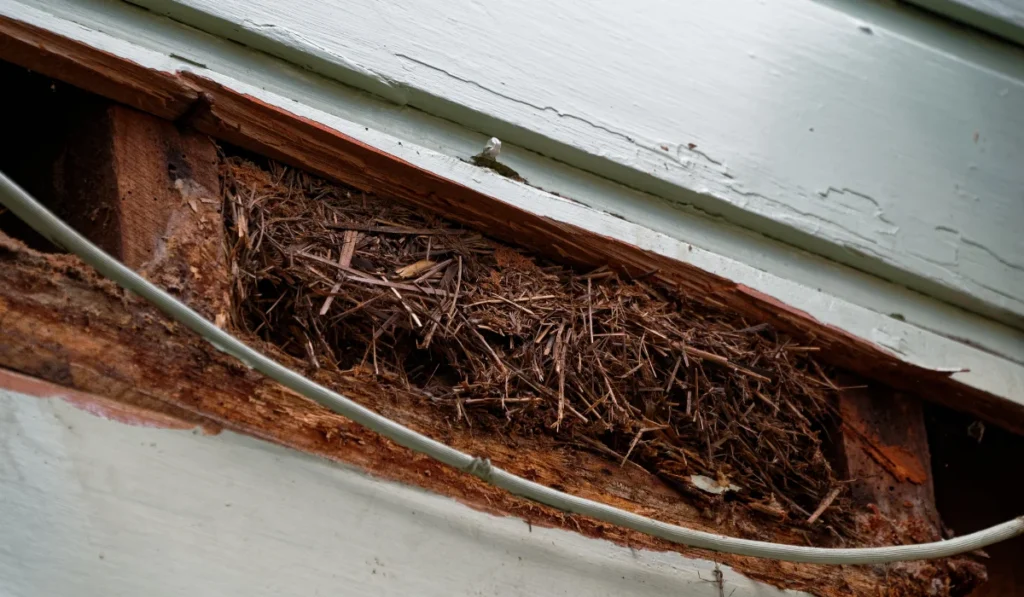
Outdoors, carpenter ants build nests in tree stumps, firewood, fence posts, and wooden retaining walls. Indoors, they may nest within water-damaged wood, insulation, crawl spaces, and attic spaces. Because they excavate cavities rather than consume wood, the damage can go unnoticed for extended periods until sawdust piles or soft spots in the wood reveal it.
Entry Points Between Trees and Your Home
Carpenter ants travel along consistent trails between their nest and food sources. Tree branches that touch or overhang your roofline give carpenter ants a direct bridge into the structure. Utility wires running from a tree toward the house serve the same purpose. Pay close attention to any weathered or decaying wood on the exterior where those branches make contact, since that is often the first place carpenter ants establish a satellite nest after moving from a tree colony.
Why Carpenter Ant Problems Develop in Trees in Huntsville
Carpenter ants in trees take advantage of wood that is already soft and weak. Carpenter ants prefer to nest in decayed, often water-damaged wood, and nests in structures are often satellites of larger outdoor colonies. A tree with a hollow trunk, rotting limbs, or old insect damage can become an ideal nesting site, particularly in Huntsville’s humid summers where wood decay accelerates near shaded areas of the yard.
What Draws Carpenter Ants to Trees
Trees weaken from moisture, disease, storm damage, and age, and carpenter ants use existing knots, cracks, holes, and old insect tunnels as entry points into those weakened areas. They do not create the initial decay but exploit it once it develops. A large hollow tree or a standing dead tree on a Huntsville property is among the most attractive nesting sites a carpenter ant colony can find.
Homes near wooded areas are particularly vulnerable. Huntsville’s tree canopy and wooded lots mean outdoor colonies are common, and once a colony establishes itself in a nearby tree, workers may forage into your home looking for food.
How Carpenter Ants Move Between Trees and Buildings
When carpenter ants are found inside a structure, the colony is either nesting inside the building or nesting outside and entering to forage. That means the tree in your yard may be the source even when you spot ants indoors. Because carpenter ants are nocturnal, movement between outdoor nests and your home often happens after dark, which is why evening inspections are more productive than daytime checks.
Because ants share food with others in the nest through trophallaxis, even a few foragers finding a way inside can indicate a larger colony nearby. Identifying the trail and the entry point is an important first step toward understanding the scope of the problem.
Risks From Carpenter Ants in Trees Near Huntsville Homes
A carpenter ant nest in a tree far from your home may pose little risk. The concern increases when you notice ant trails moving from trees toward your house or spot signs of tunneling in structural wood.
Structural Damage When Colonies Expand Indoors
Carpenter ants damage wood by digging smooth tunnels for their nests. Although they usually start in soft or decayed wood, established colonies can extend galleries into sound, dry lumber including porch columns, window sills, hollow core doors, roof framing, and crawl space timbers. By the time sawdust piles or soft spots become visible, the gallery system inside the wood may already be extensive.
Trees with branches that touch or overhang the roofline present the most direct pathway from an outdoor colony to vulnerable structural wood. A colony that starts in a decaying tree can eventually target any wooden element of your home that offers quiet, undisturbed nesting space.
When Tree-Based Colonies Become a Priority
Parts of a tree that have started to rot or weaken deserve a closer look, since carpenter ants are drawn to those vulnerable points and tend to branch out toward nearby buildings as the colony grows. Controlling carpenter ants in trees matters most when ants are actively entering your home from colonies in those trees, because that connection between outdoor nest and indoor foraging is what turns a nuisance into a structural concern.
Professional Carpenter Ant Control for Huntsville Trees
When carpenter ants nest in trees on your property, the concern goes beyond the tree itself. Understanding what attracts them, how to inspect for activity, and when to bring in a professional can help you stay ahead of the problem.
Reduce Attractants Around the Property
Removing dead trees or stumps near your home reduces the chance of hosting a colony close to your living space. Carpenter ants are especially drawn to large hollow trees and standing dead trees, so addressing those before a colony establishes itself is more effective than treating an active nest later.
Keeping branches trimmed back from the roofline and away from utility wires limits the travel routes carpenter ants use to move from a tree colony toward the structure. Wood or lumber stored in a garage or near the house can draw carpenter ant activity as well. Elevating stored wood to allow air circulation helps prevent the moisture buildup that makes the material appealing to these ants.
Why Control Starts With a Full Property Inspection
A full property inspection is the foundation of any carpenter ant control effort. Because these ants favor large hollow trees and standing dead wood, a careful look at mature or declining trees on your property reveals likely outdoor nesting sites. Inspecting the areas where tree branches meet or approach the house is equally important. Identifying contact points early helps focus control where it matters most rather than treating symptoms at the surface.
In most cases, a pest management professional is the more reliable choice than a DIY approach. The hidden nature of carpenter ant nests, including satellite nests inside walls connected to outdoor colonies in trees, makes it difficult to reach the full colony without the right inspection methods and equipment.
What to Expect During Professional Carpenter Ant Treatment
A Waynes service professional will trace ant activity from indoor sightings back to the outdoor colony, assess the scope of nesting in nearby trees, and determine the best approach to control. Treatment focuses on both the source colony and the conditions that give carpenter ants a pathway from the tree to your structure.
What to Expect From a Waynes Pest Control Plan in Huntsville
Waynes Pest Control has served more than 150,000 customers across Alabama, Mississippi, Tennessee, and the Florida Panhandle for over 50 years. As a member of the EPA’s Environmental Stewardship Program, Waynes builds every control plan around what the inspection reveals on your specific property.
A solid control plan addresses both the source colony and the conditions that invite carpenter ants onto your property. That typically means evaluating nearby trees, trimming branches that overhang or touch the house, and correcting moisture issues around stored wood. Ongoing attention to these conditions is part of keeping carpenter ants from re-establishing pathways into your home.
Bottom Line on Carpenter Ants in Trees in Huntsville
Carpenter ants in trees become a concern for your home when colonies expand from outdoor nesting sites toward your structure. Recognizing the signs early, managing wood and moisture around your property, and addressing branch contact points with the roofline are the steps that matter most. If you suspect carpenter ants are bridging the gap between a tree on your lot and your home, contact Waynes Pest Control in Huntsville for an inspection of your trees, entry points, and structure.
Frequently Asked Questions
Should I worry about carpenter ants living in a tree on my property?
Carpenter ants nesting in a tree do not always threaten your home. The concern grows when ants begin traveling from a tree colony into your structure. Monitoring activity between the tree and your home, particularly at night when carpenter ants are most active, helps you decide whether professional control is needed.
How do carpenter ants get inside a house from a tree?
Ants can follow branches, utility wires, or cracks along the foundation. Trees with limbs touching or near the roofline give carpenter ants a direct path. Trimming those contact points and sealing openings around the home can reduce that risk considerably.
Can I handle carpenter ant control on my own?
In most cases, a pest management professional is the better choice. Professionals have the experience, equipment, and treatment options to locate hidden nests and satellite colonies that homeowners typically miss. The connection between an outdoor tree colony and indoor satellite nests makes do-it-yourself efforts less likely to reach the full colony.
How can I reduce the chances of carpenter ants moving indoors?
Store wood or lumber away from the house and elevate it so air can circulate underneath. Address moisture issues in and around your home, keep branches trimmed back from the structure, and remove dead trees or stumps close to the foundation. These steps make your property a less appealing target for foraging carpenter ants looking for their next nesting site.