
If you live in Pensacola, Panama City, or another Gulf Coast community, beetles around your lawn, garage, windows, or exterior walls can be a familiar sight. Beetles in the Florida Panhandle have access to lawns, soil, vegetation, mulch, and other outdoor habitats that different species use for food, shelter, or development. Some spend their immature stages below ground, while others live outdoors and become more noticeable when they approach homes. Knowing where beetles are showing up and whether they are connected with lawn, wood, or indoor activity can help you tell an occasional visitor from a problem that needs closer attention.
Why Beetles in the Florida Panhandle Are So Common
A residential property can provide several very different beetle habitats within a small area. Turfgrass offers soil and roots, landscaped beds contain mulch and plant material, and trees and shrubs support insects that live outdoors. The beetle flying near a porch may have completely different habits from a larva developing beneath the lawn.
Weather can also change the conditions in those habitats. Rainfall affects soil moisture, plant growth, and organic material around a property, while shifts in temperature influence when many insects are active. These effects vary by species, so there is no single weather pattern that explains every beetle sighting.
For regional climate context, NOAA’s U.S. Climate Normals provides long-term temperature and precipitation information for individual weather stations. Looking at local conditions is more useful than assuming the entire state experiences the same weather at the same time.
Common Beetles Florida Panhandle Homeowners Notice
The word “beetle” covers insects with a wide range of behaviors. One species may develop beneath turf, another may spend most of its time around vegetation, and another may seek sheltered areas around buildings. Because those situations call for different responses, identification matters more than simply counting the insects you see.
UF/IFAS Featured Creatures provides Florida-focused information on insect identification, biology, and distribution. When trying to identify a beetle, pay attention to its size, shape, color, location, and the conditions around it rather than relying on color alone.
June Bugs and White Grubs
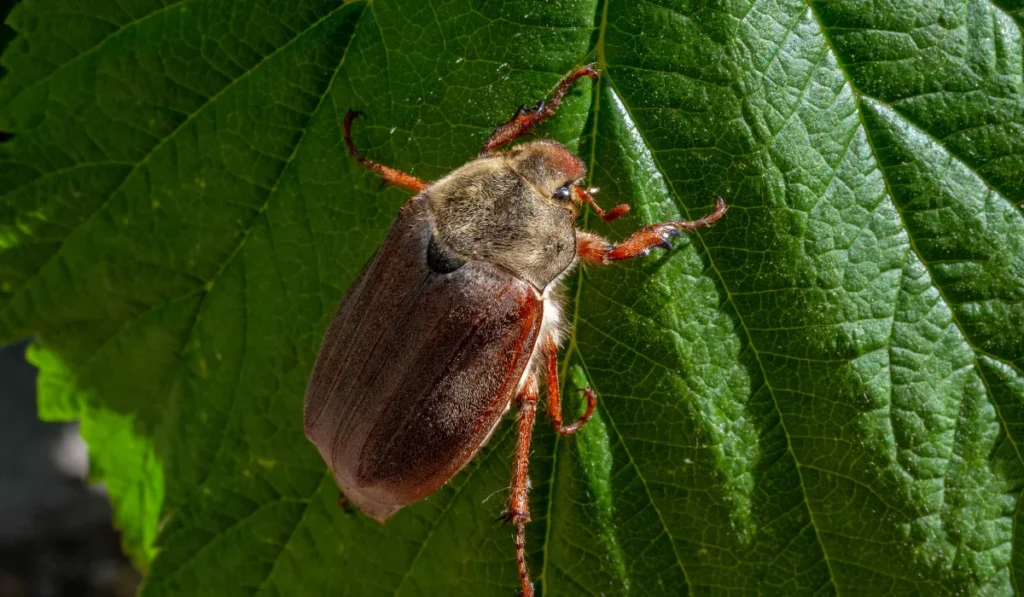
Some adult beetles seen above lawns have immature stages that develop below the soil. Waynes’ lawn guidance identifies white grubs as larvae of familiar adult beetles such as June bugs and Japanese beetles. White grubs have pale, C-shaped bodies and feed on grass roots beneath the surface.
Root feeding can weaken turf. Waynes’ guidance notes that grub-damaged areas may develop brown patches and can pull away from the soil more easily because the roots have been damaged. Birds, skunks, raccoons, armadillos, or moles may also disturb a lawn while searching for grubs.
Seeing adult beetles over the grass does not, by itself, confirm damaging grub activity. A better assessment comes from looking at the turf itself. Grass that remains healthy and firmly rooted provides a different picture from declining areas with weak roots and confirmed grubs in the soil.
Multicolored Asian Lady Beetles
Multicolored Asian lady beetles follow a different pattern. Waynes identifies them as seasonal invading insects that can gather around structures while looking for protected places during cooler periods. Outdoors, they feed on plant pests such as aphids.
When these beetles move indoors, they may appear around windows, walls, attics, and other sheltered spaces. They can use cracks and gaps around a structure to get inside, which means finding them indoors does not necessarily mean they are feeding on the house.
That distinction matters. A beetle seeking seasonal shelter presents a different issue from white grubs feeding on lawn roots or a wood-destroying beetle associated with structural materials.
Why Weather and Location Affect What You See
A sudden increase in visible beetles does not always mean a new infestation developed overnight. Wet weather can change conditions in soil, turf, mulch, and plant beds where insects are already living. Depending on the species, those changes may affect where beetles are active or how noticeable they become.
Where you find the insects is often just as informative as the weather. Beetles concentrated around an exterior doorway suggest a different source from insects repeatedly associated with weakened turf or structural wood.
| Where You Notice Beetles | What It May Indicate | What To Check |
| Brown or weakened turf | White grubs may be affecting roots | Grass roots and soil below the turf |
| Windows or walls during seasonal changes | Seasonal invaders may be seeking shelter | Screens, cracks, and exterior gaps |
| The same indoor location repeatedly | A nearby source or entry point may be present | Storage areas, materials, and openings |
| Repeated activity around wood | A wood-destroying beetle should be ruled out | Affected wood and surrounding areas |
| Near doors or garage openings | Outdoor beetles may be entering accidentally | Door sweeps, screens, and gaps |
These clues do not replace identification, but they can help narrow down what is happening. A clear photo of the beetle and notes about where it was found can also give a pest professional more useful information.
Florida Beetle Activity Changes With the Seasons
There is no single Florida beetle season because different species have different life cycles. An adult beetle may be visible above ground during one part of its development, while its immature stage lives out of sight in soil or another protected location.
White grubs are a good example. The larval stage develops beneath turf and feeds on roots, while the adult beetle is seen above ground. That means visible adult activity and below-ground lawn damage are related in some species, but they are not the same thing.
Seasonal invaders have another pattern. Multicolored Asian lady beetles may gather around structures as they look for protected shelter during cooler periods. Their presence near windows or walls should not be interpreted the same way as beetles associated with weakened turf or damaged wood.
When Beetles Around Your Home Need Attention
An occasional beetle indoors or on a porch does not tell you much by itself. Repeated sightings in the same place, visible damage, or activity tied to a particular material gives you more useful evidence.
Beetles and Lawn Damage
If your grass develops brown areas, check whether those sections remain firmly rooted. Waynes’ grub guidance notes that turf damaged by root-feeding grubs can become easier to pull away from the soil. Wildlife digging may occur where grubs are present, but digging alone does not confirm a grub problem.
Several lawn problems can produce brown or thinning grass, so avoid diagnosing the cause from appearance alone. Finding grubs beneath weakened turf provides stronger evidence than simply seeing adult beetles flying nearby.
Beetles Associated With Wood
Beetles connected with wood need to be considered separately from general household beetles. Waynes distinguishes wood-destroying insects such as powderpost beetles, old house borers, longhorned beetles, and anobiid beetles from the beetles covered under general year-round pest prevention.
If insects repeatedly appear from or immediately around wood, proper identification should come before assuming they are ordinary outdoor visitors. Small openings or powder-like material associated with the affected wood are also details worth pointing out during an inspection.
The Florida Department of Agriculture and Consumer Services Division of Plant Industry is another authoritative Florida resource for information related to plant pests and invasive species.
Repeated Indoor Beetle Activity
Beetles that keep appearing inside deserve a closer look at the surrounding area. Note whether they consistently show up near the same window, wall, storage space, or building opening. Those patterns can help determine whether insects are entering from outdoors or whether a source needs to be located elsewhere.
If possible, photograph the insect before removing it. A clear image, combined with the location of the sighting, gives a pest professional more to work with than a description such as “small brown beetle.”
How to Reduce Beetles Around Your Panhandle Home
You cannot prevent every beetle from entering your yard, but you can make it harder for them to move from outdoor habitats into your living space. Focus first on access points and the conditions immediately around the home.
1. Seal Common Entry Points
Inspect window screens, door sweeps, gaps around exterior doors, vents, and other openings. Seasonal invaders can enter through small cracks and construction gaps, so repairing worn seals and damaged screens can reduce the number of beetles that make their way indoors.
2. Keep the Area Around Your Home Maintained
Remove excessive leaf litter and plant debris that accumulates against the house. Keep landscaped areas maintained and address persistent moisture near the structure where practical. The goal is not to remove every natural insect habitat from your yard, but to reduce shelter immediately next to potential entry points.
3. Check the Lawn Before Assuming Beetles Are the Problem
Adult beetles flying above the grass do not confirm a white grub problem. Look for more specific signs, such as brown patches, weakened roots, grass that pulls away from the soil easily, and white grubs beneath the turf. Those signs provide stronger evidence that beetle larvae are affecting the lawn.
4. Track Repeated Indoor Sightings
If beetles continue appearing indoors, note exactly where you find them. Repeated sightings near the same window, storage area, wall, or doorway can help narrow down the source. Taking a clear photo can also make identification easier if professional help is needed.
5. Get the Beetle Identified When Activity Persists
Different beetles require different responses. A seasonal invader near a window, white grubs beneath the lawn, and a beetle associated with wood should not be handled the same way. When activity continues or you notice property damage, proper identification should come before deciding what action to take.
Managing Beetles in the Florida Panhandle Starts With Identification
Beetles in the Florida Panhandle show up around homes for different reasons. Some have larvae developing beneath lawns, some live around outdoor vegetation, and seasonal invaders such as Asian lady beetles may move toward buildings for shelter. Wood-destroying beetles create a separate concern altogether. The species, location, and surrounding signs determine what the activity actually means.
If beetles keep appearing around your property or you notice signs of lawn or wood damage, Waynes Pest Control can help identify the source and determine the appropriate next step. You can also contact Waynes to schedule service for persistent beetle activity in the Florida Panhandle.