
Insights, Tips, and Tales

Big Spiders in Florida Look Worse Than They Act in September

White mosquito silhouette with a dashed curved flight path on a green background

Big Spiders in Florida Look Worse Than They Act in September

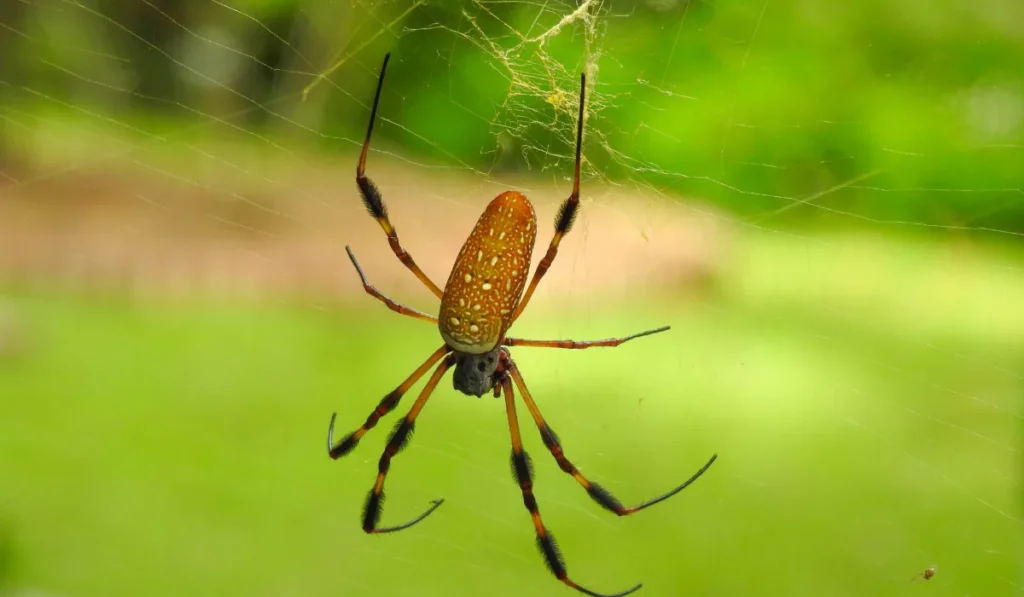
Golden silk orb-weaver

A large spider hanging across a porch, shrub, or walkway can make you stop in your tracks. In September, big spiders in Florida often seem more noticeable because several outdoor species have reached adult size and built webs large enough to stand out around homes.

Their appearance can be intimidating, but size does not always match risk. Many spiders found around Florida Panhandle homes spend their time catching insects and avoiding people. Long legs, bold markings, and wide webs can make them look far more threatening than their behavior suggests.

A closer look at the web, body shape, location, and movement can help you understand what you are seeing. Those details can also help you decide whether the spider should be left alone, moved away from a busy area, or identified by a pest professional.

Why Big Spiders In Florida Stand Out In September

Big spiders in Florida become easier to notice in September for several practical reasons. Many orb-weavers are mature by late summer, and adult females are often much larger than males. Their webs may stretch between shrubs, porch posts, tree branches, and rooflines, making the spider seem even larger from a distance.

Warm evenings also support steady flying-insect activity. Exterior lights near patios, garages, and entryways attract insects, giving web-building spiders a dependable place to feed. A spider near a light fixture is usually following prey rather than trying to get inside your home.

Storms, pruning, and regular yardwork can also change where spiders build. When vegetation shifts or a web is damaged, the spider may rebuild closer to an eave, railing, window, or walkway. This can make spider season in Florida feel more intense even when the spider has been on the property for some time.

Which Large Spiders In Florida Are You Most Likely To See?

Large spiders in Florida yards do not all behave the same way. Some remain in the center of a circular web, while others hunt across mulch, walls, garage floors, and shaded storage areas without using a web to catch prey.

The web often provides the fastest clue. A broad, wheel-shaped web points toward an orb-weaver. A spider running across the ground or wall may be a wolf spider or huntsman spider. Color helps, but it should not be the only feature you use for Florida spider identification.

Spider Where You May See It Helpful Identification Clue Typical Behavior
Golden silk orb-weaver Between trees, shrubs, eaves, and woodland edges Large female in a wide orb web with a golden tint Usually remains in or near the web
Black-and-yellow garden spider Gardens, sunny shrubs, and taller vegetation Yellow-and-black body with a zigzag silk section Often rests in the center of the web
Tropical orb-weaver Yards, fences, and vegetation Large circular web, often more visible after dark May rebuild or repair the web at night
Huntsman spider Garages, sheds, walls, and under loose bark Flattened body with legs extending sideways Runs for cover instead of using an orb web
Wolf spider Mulch, lawns, garages, and entry areas Stocky body and fast ground movement Hunts on foot and hides in sheltered spaces

Golden Silk Orb-Weavers

The golden silk orb-weaver is one of the most recognizable big spiders in Florida. You may also hear it called a banana spider, though that common name can refer to different species in other places. The female has a long body, extended legs, and a broad web that may appear yellow or golden in sunlight.

These spiders often build between trees, shrubs, and other stable outdoor supports. Their size becomes more noticeable as females mature, while males remain much smaller. The University of Florida IFAS Featured Creatures collection provides identification and behavior information for this species and other spiders found in Florida.

The accepted scientific name is Trichonephila clavipes, though older materials may use Nephila clavipes. The World Spider Catalog is a reliable reference for current spider names and classification.

Black-And-Yellow Garden Spiders

A black-and-yellow garden spider is another large orb-weaver that may appear around Florida vegetation. The female has bold yellow and black markings and often rests in the middle of a circular web. A thick zigzag section of silk may run through the center.

You may find these spiders near gardens, sunny shrubs, tall grass, and other places where flying insects pass through. Their open-web position makes them easy to spot, but they usually remain focused on catching prey. When disturbed, they may shake the web, retreat, or drop away rather than move toward you.

A garden spider in a quiet corner of the yard can remain undisturbed. When its web crosses a doorway, path, or play area, removing the web carefully may encourage the spider to rebuild in a less disruptive location.

Tropical Orb-Weavers

Tropical orb-weavers are another group found around Florida homes. Some build or repair their webs after dark, which helps explain why a large web can seem to appear overnight. By morning, the spider may be resting nearby or hidden in vegetation.

These spiders often choose spaces between plants, fence lines, branches, and exterior structures. Their coloring can vary, so web shape and nighttime activity may be more useful than body color alone. Like other orb-weavers, they depend on the web to intercept insects moving through the yard.

Repeated webs near a porch light often point to a steady food source. Adjusting the light or reducing nearby insect activity may be more effective than removing the same web every morning.

Huntsman Spiders And Wolf Spiders

Not every large spider builds an orb web. Huntsman spiders have a flattened appearance and legs that extend sideways. They may show up on walls, in garages, near sheds, or under loose bark and stored materials.

Wolf spiders spend much of their time on the ground. You may see one moving through mulch, across a garage floor, or near a doorway after dark. Their speed can feel alarming, but fast movement usually means the spider is trying to escape or reach cover.

A single roaming spider indoors may have entered through a gap or followed prey. Repeated sightings, especially in the same room or storage area, can point to favorable hiding places or a larger insect problem.

Are Big Spiders In Florida Dangerous?

Most large outdoor spiders commonly seen around Florida homes are not aggressive toward people. They use venom to subdue prey, but body size does not determine medical risk. A large orb-weaver in a garden is usually less concerning than an unidentified spider trapped in clothing, bedding, or a frequently handled storage box.

Spiders are more likely to bite when they are handled, pressed against skin, or trapped inside clothing or shoes. You can lower the chance of contact by avoiding bare-hand handling, shaking out stored items, wearing gloves during cleanup, and giving outdoor spiders room to retreat.

It also helps to use the correct term. Spiders are venomous rather than poisonous because they deliver venom through a bite. That distinction does not make handling them safe, but it helps separate ordinary spider behavior from common myths.

If someone develops severe pain, muscle cramping, trouble breathing, or a rapidly worsening reaction after a suspected bite, seek medical guidance. The Florida Poison Information Center Network provides Florida-specific poison assistance and guidance on when urgent care may be appropriate.

Avoid identifying a spider bite by the appearance of a skin mark alone. Many conditions can resemble bites, and the spider is often never seen. A clear photo taken from a safe distance may help a pest professional or medical provider evaluate the situation more accurately.

Large Brown Spiders Are Not Automatically Brown Recluses

Large brown spiders often create concern because homeowners associate brown coloring with the brown recluse. Color alone is not enough for a reliable identification. Wolf spiders, huntsman spiders, house spiders, and several other species can look brown under indoor lighting.

A violin-like marking is not dependable by itself. Proper identification may require the eye arrangement, leg characteristics, body proportions, and geographic context. Those details are difficult to assess while a spider is moving, which makes a clear photo more useful than a risky attempt to capture it.

You should also consider where the spider was found and how it moved. A stocky spider running across a garage floor differs from a spider resting in a retreat web inside a box or closet. Location and behavior do not confirm a species, but they give a pest professional more useful information.

When you suspect spider activity around storage, avoid reaching into boxes, shoes, folded clothing, or dark corners without looking first. Improve the lighting, wear gloves, and move items slowly. Professional identification is a better choice when sightings continue or the species remains uncertain.

How To Keep Large Spiders Away From Your Florida Home

Keeping large spiders away from busy areas requires more than removing the spider you can see. Spiders stay where they can find food, shelter, and stable places to build webs. Reducing those conditions around your home can make porches, garages, and entryways less attractive.

Seal Common Entry Points

Inspect screens, door sweeps, window frames, and gaps around utility lines. A worn door sweep or damaged screen can give wandering spiders and other small pests an easy path indoors. Seal openings around pipes, vents, cable lines, and exterior doors where practical.

Pay close attention to garages and doors that open toward shrubs or landscape beds. These areas often sit close to insect activity and sheltered hiding places. Closing gaps can reduce indoor spider sightings while also limiting the insects they follow.

Manage Exterior Lighting And Insect Activity

Exterior lights attract many of the flying insects that orb-weavers catch. When a light stays on beside a doorway or porch every night, spiders may build nearby because food regularly gathers in that area.

Turn off fixtures that are not needed, reposition lights farther from entrances, or choose lighting that attracts fewer insects when practical. Keep doors closed during the evening, and make sure window screens fit properly. Reducing insect activity near the structure removes one of the main reasons spiders settle there.

Trim Vegetation Away From The House

Shrubs, branches, and tall plants can provide both shelter and strong attachment points for webs. Trim vegetation away from siding, windows, rooflines, and frequently used walkways. Keep landscape beds maintained so dense growth does not press directly against the home.

You do not need to clear every plant from the property. The goal is to create separation between vegetation and the structure, especially near doors, porches, and outdoor seating. That space makes it harder for spiders to bridge the distance from shrubs to the house.

Remove Webs From High-Traffic Areas

Remove webs from doorways, porch railings, play areas, outdoor furniture, and paths where people regularly walk. A long-handled brush allows you to work from a safer distance and reach webs under eaves or around light fixtures.

Wear gloves, and check for the spider and any egg sacs before brushing the area. Avoid reaching behind shutters, decorations, furniture, or storage containers without looking first. Web removal works best when you also reduce the nearby lights, insects, and attachment points that encouraged the spider to build there.

Reduce Clutter In Garages And Sheds

Garages, sheds, and storage spaces offer quiet shelter when boxes and other items remain undisturbed. Store seasonal belongings in sealed containers, keep boxes off the floor, and remove piles of cardboard, fabric, and yard materials.

Leave enough space around walls and shelving to inspect and clean the area. Regular sweeping and vacuuming can remove webs, egg sacs, and insect debris before activity grows. A cleaner storage area gives spiders fewer places to hide and makes new activity easier to spot.

When Big Spiders In Florida Call For Professional Help

Big spiders in Florida do not always require service, especially when a single orb-weaver stays in an unused part of the yard. Professional help makes sense when spiders repeatedly appear indoors, webs block entrances, egg sacs collect near living areas, or you cannot identify the species safely.

An inspection can also reveal why activity keeps returning. Gaps around the structure, outdoor lighting, moisture, clutter, and a steady supply of insects can continue attracting spiders even after individual webs are removed.

Waynes can inspect your property, identify areas of concern, remove accessible webs around the home, and address the pest activity that supports repeated spider sightings. When large spiders keep showing up in busy spaces or inside your home, contact Waynes to schedule an inspection and get a plan suited to your property.

Rebecca Wood

Waynes has been serving customers since 1973. We have grown over the decades through a commitment to providing a world-class experience for our customers. We believe that if our employees are happy and fulfilled, they will go above and beyond in delighting our customers.

Latest from Waynes Blog

Rat and droppings on toilet bowl in bathroom. Pest control

What Mouse Poop Reveals About the Size of Your Mouse Problem

Finding mouse poop in a pantry, drawer, attic, or garage is a clear sign that a mouse has been active in your home. What the droppings cannot do is give you an exact mouse count. A single mouse may visit the same spot repeatedly, while several mice may leave smaller amounts across different rooms. The…

Learn More >

Cimex pipistrelli, European bat bug

Bat Bugs Look Almost Exactly Like Bed Bugs and That Matters

You find a small, flat, reddish-brown bug near an upstairs bedroom and assume you have bed bugs. That conclusion makes sense, but it may be wrong. Bat bugs look so much like bed bugs that a phone photo often cannot show the differences clearly. Bat bugs usually begin near bats roosting in attics, chimneys, soffits,…

Learn More >

bold jumping spiders on a window

Black Spiders in Ohio That Are Not Black Widows

Finding a dark spider in your basement, garage, or near a window can immediately raise one question: Is it a black widow? Black widows do occur in Ohio, but they are not the only spiders that can look black or nearly black. Ohio State University’s Common Spiders of Ohio field guide covers hundreds of spider…

Learn More >

Close-up of an inflamed tick bite showing redness and a small wound, highlighting the skin irritation caused by the insect

What a Tick Bite Mark Looks Like Days After the Tick Drops Off

You may notice a red spot after working in the yard, walking through tall grass, or checking your skin after a hike. When the tick is already gone, the mark can be difficult to interpret. A tick bite mark after tick falls off may be a small bump, a pinpoint scab, or a limited patch…

Learn More >

Scared Woman Spraying with Insecticide a Huge Spider Girl suffering from arachnophobia fighting domestic pests

Spider Repellent Works Differently Than the Label Suggests

You apply spider repellent along the baseboards, around the garage, or near a porch light. A few days later, another spider appears. The product may still be working in the area where you used it, but it may not be doing what you expected throughout the rest of the home. Many homeowners picture spider repellent…

Learn More >

Close-up of a brown recluse spider inside a cylindrical structure. The spider’s light brown body, long legs, and detailed cephalothorax are clearly visible. (1)

Venomous Spiders in Tennessee Come Down to Just Two Names

Finding a spider in a closet, garage, crawl space, or storage box can raise an immediate question: Is it dangerous? When homeowners search for venomous spiders in Tennessee, they are usually trying to identify one of two medically significant spider groups, brown recluses and black widows. Most spiders use venom to subdue prey, but that…

Learn More >

Psocid (Psocoptera) called also - booklice, barklice or barkflies, a well known as pests of stored products. Insects on wall. High magnification.

Booklice Thrive in Humid Southern Homes and They Are Not Lice

You may first notice booklice as tiny pale specks moving across a bathroom wall, pantry shelf, windowsill, or stack of stored books. Their name sounds alarming, but these insects are not the lice that live on people. Booklice are psocids, and they usually appear where moisture supports microscopic mold or other organic material they can…

Learn More >

Mouse in hiding looking for food in urban house garden.

Mice Are Nocturnal so Seeing One at Noon Is a Bad Sign

Seeing a mouse during the day deserves your attention because house mice are primarily nocturnal. They usually move around when a home is quieter, so a mouse crossing your kitchen, hallway, or living room at noon falls outside the activity pattern you would expect. Still, one daytime sighting does not prove that a large mouse…

Learn More >

Repairs to a weatherboard house. A rotten weatherboard has been removed exposing a rats nest made of dry grass and vegetation between the wooden uprights.

Finding a Rat Nest Means the Family Moved In Weeks Ago

Finding a rat nest in your attic, garage, crawl space, or storage area can make the problem feel sudden. It usually is not. By the time rats have chosen a sheltered location and gathered nesting material, they have already found a way into or around your home and started using the property regularly. A rat…

Learn More >

Scroll to Top