
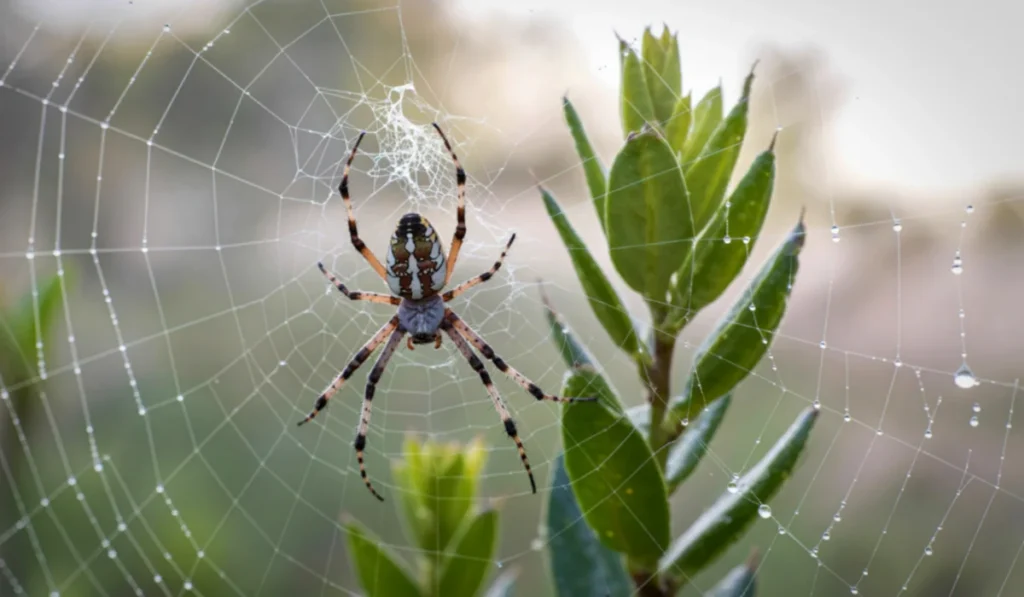
You step outside one September morning and find a wide, circular web stretched between two shrubs, across a porch opening, or beside a garden path. At the center sits a spider that looks much larger than anything you noticed earlier in the summer. Orb weaver spiders can seem to appear overnight, but their size reflects months of steady growth.
By late summer and early fall, many orb weavers have reached adulthood. Females are often much larger than males, and some develop fuller abdomens as they prepare to produce eggs. Their mature webs are also wider, stronger, and easier to see when sunlight or morning dew catches the silk.
This pattern is common across Alabama, Tennessee, Mississippi, and the Florida Panhandle. Warm weather keeps insects active, while mature spiders take advantage of shrubs, eaves, railings, and tree branches that provide good places to build. Once you understand the timing, the sudden appearance of a large garden spider becomes much less mysterious.
Why Orb Weaver Spiders Look So Large in September
Orb weaver spiders do not experience a sudden growth spurt when September begins. Many species spend spring and summer moving through several immature stages before reaching adult size near the end of the warm season. Younger spiders often stay hidden among leaves or build smaller webs that blend into the landscape.
As the spider matures, its web-building habits become easier to notice. An adult orb weaver can span a larger opening, use sturdier anchor lines, and sit in a more visible position. A spider you never saw in June may have lived in the same section of your yard at a fraction of its adult size.
Several changes happen at about the same time:
| Seasonal Change | What You Notice Around Your Home |
| The spider reaches adult size | A larger body in the center or along the edge of the web |
| The web becomes more substantial | Wide circular webs between shrubs, posts, trees, or railings |
| The female develops eggs | A fuller, rounder abdomen |
| Insects remain active | More webs near gardens, porch lights, and landscape plants |
These overlapping changes make gradual growth feel sudden. The spider has not transformed overnight. You are simply seeing it at the most visible stage of its life cycle.
Mature Females Are Often the Spiders You Notice
The large spider sitting in the web is often a female. In several familiar orb-weaver species, adult females grow much larger than males. A male may stay near the outer edge of the web, rest on nearby vegetation, or remain unnoticed because of his smaller body.
Yellow garden spiders provide a clear example. The University of Florida IFAS yellow garden spider profile documents the pronounced size difference between adult females and males. The exact difference varies among species, but this pattern explains why one spider can appear unusually large while smaller spiders nearby escape your attention.
Egg Development Can Make the Abdomen Look Fuller
A mature female may look even larger as her abdomen expands during egg development. This does not mean every round-bodied orb weaver is carrying eggs, but reproduction helps explain why some females look especially full in September.
After mating, many orb weavers produce egg sacs that protect the next generation. The timing varies by species and climate, so not every spider follows the same schedule. Still, late summer and early fall often bring together adult size, active web building, and egg development.
Why Orb Weaver Spiders Become Easier to Notice in Fall
Orb weaver spiders in fall attract attention because they build where their webs can intercept flying insects. Shrubs, fence lines, deck railings, porch columns, eaves, and tree branches provide solid anchor points. These same locations often sit along the routes moths and other insects use as they move through the yard.
Outdoor lighting can make porches and entryways productive hunting areas. Lights draw insects close to the home, and orb weavers respond by building nearby. A sheltered porch corner with several attachment points may support a new web even after you remove the previous one.
Many orb weavers build or repair their webs during the evening or overnight. You may use a walkway in the afternoon and find a complete web across it the following morning. The spider did not necessarily arrive that night. It may have moved a short distance from nearby vegetation or rebuilt after wind, rain, or human activity damaged its previous web.
Seasonal conditions also affect visibility. Warm evenings keep insects moving, while calm weather makes it easier for spiders to maintain large webs. Northern Tennessee may cool earlier than Mobile, Biloxi, or the Florida Panhandle, but September often brings mature spiders and active insect populations together across the Southeast.
Which Large Orb Weavers Might Be in Your Yard?
Orb weaver is a general name for spiders that build organized, wheel-shaped webs. They vary in color, shape, and preferred habitat, so you should use several features when trying to identify one. Color alone can be misleading because individuals within the same species may not look identical.
Yellow Garden Spiders
Yellow garden spiders are among the most recognizable large garden spiders in the region. Adult females have bold black and yellow markings and often rest near the center of the web. Some webs contain a thick zigzag section of silk, though that feature should not serve as the only basis for identification.
You may find these spiders in sunny gardens, along fences, or among tall flowers and ornamental grasses. Their size and bright coloring can look intimidating, but they usually remain focused on insects caught in the web.
Spotted Orb Weavers
Spotted orb weavers often become noticeable around homes in late summer and fall. Their coloring may include brown, tan, gray, or reddish shades, sometimes with lighter markings across the abdomen. Many stay concealed during the day and move onto the web after dark.
That behavior can make a spider seem to appear the moment you turn on a porch light. In reality, it may have spent the day resting beneath an eave, leaf, or section of siding near the web.
Marbled Orb Weavers
Marbled orb weavers have rounded abdomens with patterns that may include orange, yellow, cream, brown, or dark marbling. Their colors can vary considerably, even among spiders of the same species.
You are more likely to find them near wooded yards, dense vegetation, and landscape edges. A clear photograph showing the spider, web, and surrounding area provides more useful identification clues than a description based only on color.
Golden Silk Orb-Weavers
Golden silk orb-weavers are associated with warmer parts of the Southeast. Adult females have long legs and elongated bodies, and their large webs may show a golden tint under the right lighting.
Their size and web span can make them look imposing along wooded edges and between large shrubs. The University of Florida IFAS golden silk orb-weaver profile provides species-specific information about their appearance, habitat, and web-building behavior.
Are Orb Weaver Spiders Dangerous?
Orb weaver spiders are generally nonaggressive outdoor spiders. They spend most of their time in or near their webs and do not chase people or pets. When disturbed, many retreat, drop from the web, or move toward a protected edge.
A bite can occur if you pick up the spider, squeeze it, or trap it against your skin. Bites are uncommon because orb weavers usually avoid direct contact. You should still avoid handling any spider you cannot identify, especially around children or pets.
Orb weavers are not considered medically significant spiders in the same category as black widows or brown recluses. Individual reactions can vary, however. Seek medical care if a suspected bite causes severe pain, breathing difficulty, spreading redness, or another concerning symptom.
Orb weavers also help reduce insect activity by catching prey in their webs. A peer-reviewed study published in The Science of Nature estimated that the global spider community consumes about 400 million to 800 million metric tons of prey each year. The estimate covers all spiders rather than orb weavers alone, but the global spider prey-consumption study shows the scale of their role as insect predators.
What Should You Do About an Orb Weaver Web Near Your Home?
An orb weaver in a quiet section of your garden may not require any action. When the web sits away from doors, sidewalks, play areas, and outdoor gathering spaces, leaving it alone allows the spider to catch insects without interfering with your routine.
A web across a porch step, doorway, or path presents a practical problem. Check the area during daylight to see whether the spider is present. You can remove an unoccupied web with a broom or long-handled tool, then clear the supporting strands attached to nearby surfaces.
Avoid grabbing the spider or attempting to relocate it by hand. Repeatedly removing a poorly placed web and changing the surrounding conditions often encourages the spider to build elsewhere.
Reduce Repeated Web Building Near Entrances
Turn off exterior lights when they are not needed, or consider warmer-colored bulbs where practical. Fewer insects around an entryway may make the location less useful to a hunting spider. Lighting changes will not prevent every web, but they can reduce activity around doors and patios.
Trim shrubs and branches away from porches, windows, and heavily traveled paths. Remove recurring webs from eaves and railings, repair damaged screens, and seal accessible gaps around doors and windows. These steps make high-traffic areas less convenient without treating every outdoor spider as a threat.
When Repeated Spider Activity Needs Attention
A single orb weaver in a garden is different from recurring webs around every entrance or spiders appearing inside your home. Frequent activity may point to abundant insects, exterior lights that attract prey, vegetation touching the structure, or sheltered corners where spiders can rebuild.
Professional help makes sense when spiders continue entering the home, webs repeatedly block busy areas, or you cannot determine which species is present. Accurate identification matters because not every large brown or patterned spider is an orb weaver.
A pest professional can inspect the property, identify likely web-building sites, evaluate insect activity, and check for openings around the structure. This broader approach addresses the conditions supporting recurring spiders instead of focusing only on the web you can see.
Managing Orb Weaver Spiders Around Your Home
Orb weaver spiders do not become huge overnight in September. By this point in the season, many females have reached adult size, some have fuller abdomens connected with reproduction, and their large circular webs are much harder to overlook.
You can usually leave an orb weaver alone when its web sits in a low-traffic part of the yard. Remove webs that cross doors and walkways, reduce insect activity near outdoor lights, and avoid handling spiders you cannot confidently identify.
When webs keep returning or spider activity moves indoors, Waynes Pest Control can inspect your property and help identify the conditions attracting spiders. To schedule service or ask about recurring spider activity, contact the Waynes team for help protecting your home.