
Florida spiders are common around homes, garages, lanais, sheds, gardens, pool cages, and exterior lighting because warm weather and insect activity can support spiders throughout much of the year. Most spiders are not aggressive, and many help reduce flies, mosquitoes, moths, and other pests.
The main reason to identify them is practical: you want to know whether the spider is harmless, whether webs are becoming a nuisance, or whether a species needs more caution. In Florida, widow spiders are the main established spiders with medically significant venom.
Key Takeaways
- Most Florida spiders are harmless and help control insects.
- Orb weavers, wolf spiders, jumping spiders, huntsman spiders, cellar spiders, and southern house spiders are common around homes.
- Widow spiders are the main Florida spider group that needs extra caution.
- Brown recluse spiders are often reported in Florida, but established populations are rare in most of the state.
- Waynes provides spider pest control in Alabama, Mississippi, Tennessee, and the Florida Panhandle.
Common Florida Spiders Homeowners May See
Florida has a wide range of spider species, so identification often starts with where the spider was found, how it moves, and what type of web it makes. The UF/IFAS guide to common Florida spiders covers familiar Florida spiders across several families and notes that spiders are generally non-aggressive while helping control pest insects.
For homeowners, the most useful spider categories include:
- Web-building spiders around eaves, shrubs, lights, and lanais
- Ground-hunting spiders in garages, patios, sheds, and mulch beds
- Corner-web spiders in closets, bathrooms, and storage rooms
- Large accidental visitors that wander indoors while hunting insects
If you are unsure what you found, take a clear photo from a safe distance and avoid handling the spider.
Orb Weavers
Orb weavers are some of the easiest Florida spiders to recognize because they build organized, circular webs. You may see them around gardens, porch lights, pool cages, shrubs, rooflines, and walkways.
Common signs of orb weavers include:
- Round, wheel-shaped webs
- Outdoor web placement
- Activity near lights where flying insects gather
- Large or colorful bodies
- Webs that seem to appear overnight
Orb weavers may look intimidating, especially when a web crosses a doorway, but they are usually a nuisance because of web placement, not because they pose a serious threat.
Spinybacked Orb Weavers
Spinybacked orb weavers are small, bright spiders with a hard-looking body and pointed projections. They often build webs in shrubs, citrus trees, ornamental plants, and around exterior structures.
These spiders can be easy to identify because their bodies may look white, yellow, orange, red, or black depending on the individual. They usually stay outdoors and become noticeable when webs appear around patios, walkways, or landscaping.
Wolf Spiders
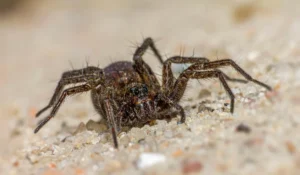
Wolf spiders are ground hunters. They do not build webs to catch prey. Instead, they run across open surfaces and hunt insects directly.
You may see wolf spiders in:
- Garages
- Patios
- Sheds
- Mulch beds
- Ground-level entryways
- Storage areas
- Around exterior doors
Wolf spiders can look alarming because they move quickly and may be fairly large. They are often brown, gray, or patterned, which can lead to confusion with other spiders. Behavior helps with identification: wolf spiders are usually seen moving across the ground instead of hanging in a web.
Jumping Spiders
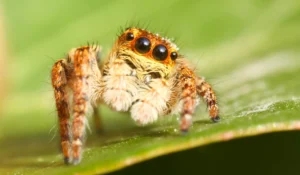
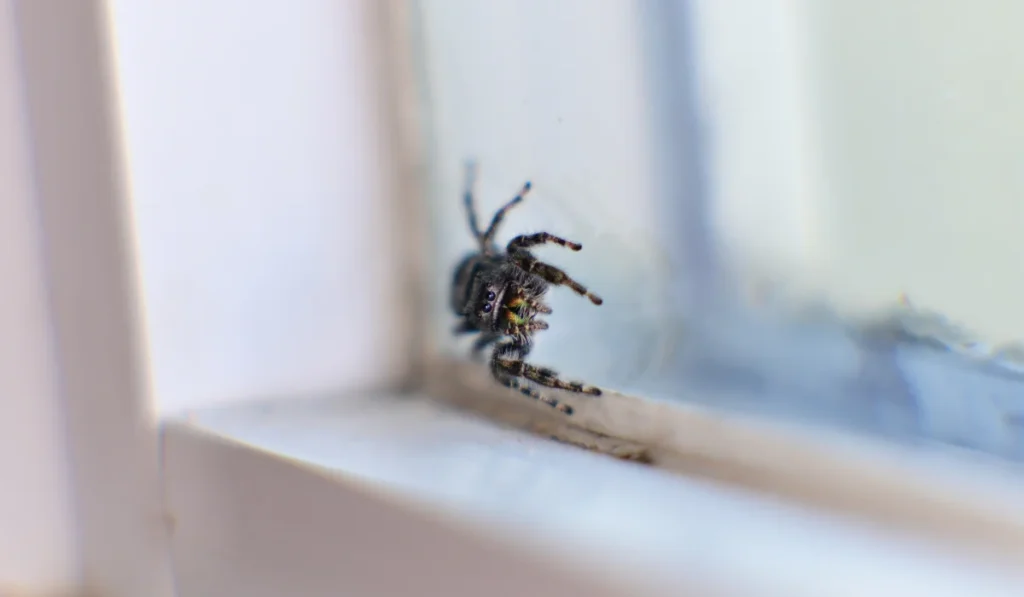
Jumping spiders are small, compact, and active. They often have noticeable front-facing eyes and move in short, quick bursts. You may spot them on windowsills, screens, patio furniture, exterior walls, or sunny indoor surfaces.
They do not build large prey-catching webs. A single jumping spider is usually not a sign of a spider infestation. In many cases, it wandered in while hunting small insects.
Pantropical Huntsman Spiders

Pantropical huntsman spiders are large, flattened spiders that can startle homeowners when they appear indoors. The UF/IFAS pantropical huntsman spider profile explains that these spiders may be found around Florida buildings in warm weather and indoors under furniture, cabinets, wall hangings, closets, and garage areas during cooler weather.
Identification clues include:
- Large size
- Flattened brown body
- Long legs that spread outward
- Fast movement
- Hiding behind or under objects
Huntsman spiders are not considered a major household danger, but they can bite if trapped or handled. The safest move is to avoid direct contact.
Cellar Spiders
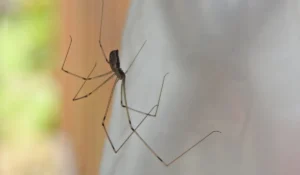
Cellar spiders have very long, thin legs and small bodies. They often build loose, messy webs in corners, closets, garages, bathrooms, sheds, and storage areas.
They are sometimes confused with “daddy longlegs,” but cellar spiders are true spiders. They are not a major threat, but their webbing can make indoor spaces feel neglected if activity builds up.
Southern House Spiders
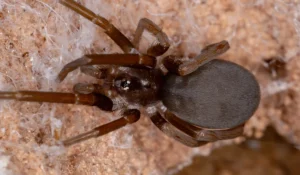
Southern house spiders are common in the Southeast and may appear around cracks, crevices, window frames, shutters, and exterior walls. Males can wander indoors and may be mistaken for brown recluse spiders because of their color and body shape.
Do not rely on color alone. Many Florida spiders are brown, and several harmless or low-risk spiders are mistaken for brown recluse spiders.
Widow Spiders in Florida
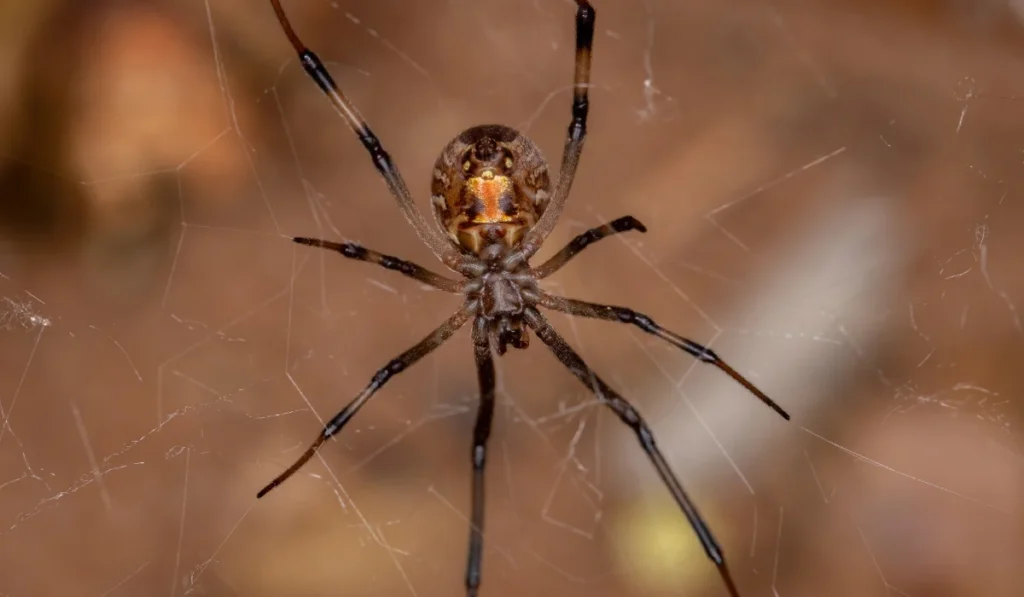
Among the various species, widow spiders require the greatest degree of caution. The Florida Department of Agriculture and Consumer Services classifies both widow and recluse spiders as the state’s primary venomous spider groups, noting that three distinct widow species are native to the Florida Panhandle, including:
- Southern black widow
- Northern black widow
- Brown widow
Widow spiders often have rounded abdomens and red, orange, or pale markings. They may build messy cobwebs in quiet, protected places such as garages, sheds, outdoor furniture, meter boxes, crawl spaces, and cluttered storage areas.
Do not handle a spider you suspect may be a widow. If someone is bitten and symptoms seem serious, contact a medical professional.
What About Brown Recluse Spiders in Florida?
Brown recluse spiders are widely feared, but they are often overreported in Florida. The UF/IFAS brown recluse spider profile explains that brown recluse spiders are frequently blamed for necrotic wounds in Florida, even though confirmed records are limited and many alleged bites are not backed by an identified spider.
That does not mean every brown spider is safe to grab. It means identification should be careful. Brown coloring, a quiet hiding spot, or a mark on the body is not enough to confirm a brown recluse.
Why Spiders Keep Showing Up Around Florida Homes
Spiders go where they can find insects, shelter, and low-disturbance places to hide. Around Florida Panhandle homes, spider activity may build around exterior lighting, landscaping, moisture, garages, and covered outdoor spaces.
Spider activity may increase around:
- Porch lights and exterior lighting
- Pool cages and lanais
- Garages and sheds
- Outdoor furniture
- Dense shrubs and ground cover
- Mulch beds
- Rooflines and eaves
- Window frames and door gaps
- Cluttered storage areas
If webs return quickly after cleaning, the issue may involve more than spiders. Insects, entry points, and harborage areas may be supporting the activity.
How to Reduce Spider Activity
Spider prevention works best when you reduce the conditions that attract both spiders and their prey. Start with the areas where you see webs, egg sacs, or repeated sightings.
Helpful steps include:
- Remove webs from eaves, corners, and outdoor furniture.
- Reduce clutter in garages, sheds, and storage areas.
- Seal gaps around doors, windows, vents, and utility lines.
- Trim shrubs and plants away from the exterior wall.
- Move stored items off the floor when possible.
- Shake out gloves, shoes, and outdoor cushions before use.
- Reduce insects around lights when practical.
- Keep pool cages, patios, and lanais cleaned regularly.
These steps are especially useful in spaces where people may accidentally disturb spiders, such as garages, sheds, closets, and outdoor seating areas.
When to Call Waynes
Call us if spider activity keeps returning, webs are building up around entry points, or you are not sure what species you found. Waynes provides spider pest control in Alabama, Mississippi, Tennessee, and the Florida Panhandle, and frequent spider sightings often mean there is also a steady insect food source nearby.
For Florida Panhandle homes, our Florida pest control services cover spiders as part of indoor pest protection through our Enviropest Home Solution. We focus on pest problems where they often begin: outside the home, around the entry points and conditions that let pests move indoors.
If spiders are taking over your garage, lanai, shed, or exterior entry points, contact Waynes for a quote and we’ll help you decide the right next step for your home.
FAQs About Florida Spiders
What spiders are common in Florida homes?
Common Florida spiders include orb weavers, wolf spiders, jumping spiders, cellar spiders, southern house spiders, huntsman spiders, and widow spiders. The exact species depends on where the spider is found, how it moves, and what kind of web it makes.
Are Florida spiders dangerous?
Most Florida spiders are not dangerous to people. Widow spiders are the main established Florida spider group with medically significant venom. Avoid handling any spider you cannot identify.
Are brown recluse spiders common in Florida?
No. Brown recluse spiders are often reported in Florida, but confirmed established populations are rare in most of the state. Many suspected brown recluse sightings turn out to be other brown spiders.
Why do I keep finding spiders in my lanai or garage?
Lanais and garages give spiders shelter, insects, and quiet web-building areas. Exterior lights, gaps, clutter, and nearby vegetation can make these areas more attractive.
Does Waynes treat spiders in the Florida Panhandle?
Yes. Waynes provides spider pest control in the Florida Panhandle, along with Alabama, Mississippi, and Tennessee. If you are in Panama City, Port St. Joe, Fort Walton Beach, or another Waynes Florida Panhandle service area, you can contact Waynes for inspection and treatment options.