
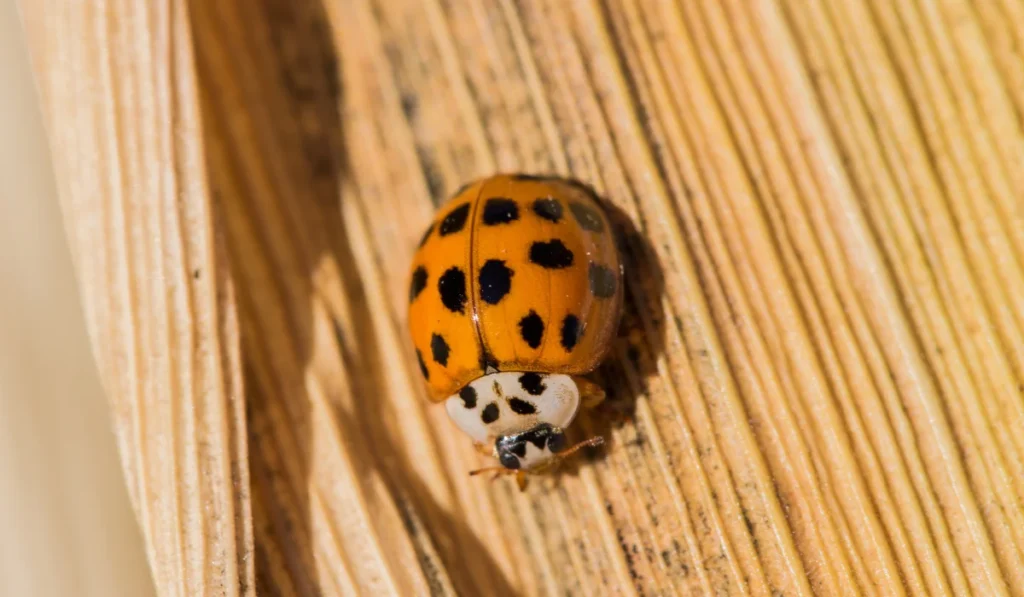
On sunny fall days, you may see orange “ladybugs” outside and then find a dozen on your windows the next morning. That’s a common problem with Asian lady beetles in Alabama. They look cute, but they crawl into warm homes to overwinter and often appear in large numbers. Activity peaks in late fall when nights cool and the sun warms siding and soffits.
The scientific name is Harmonia axyridis, known as the multicolored Asian lady beetle. These insects vary in color from yellow to orange and have a black M-shaped mark on the pronotum (the plate behind the head).
Outdoors, they help by eating aphids, but indoors, they can stain, bite, and trigger mild allergies. Many residents seek pest extermination in Alabama once pests start appearing inside. Keep Asian lady beetles in the garden, not the guest room.
Along the Tennessee Valley and near Birmingham, swarms gather on sunlit brick in October and November. Below are quick ID tips, prevention steps for Alabama homes, and what to do if they’re already inside.
Key takeaways
- Multicolored Asian lady beetle vs. native ladybugs: learn the quick identification.
- Fall is the critical window to seal crevices and use caulking outdoors.
- Safe cleanup beats squishing, which can cause black spots and odor.
- Waynes Pest Control offers a Fall Invader service that targets ladybugs and stink bugs.
Identification: Asian Lady Beetles Vs. Native Ladybugs
Quick identification helps you act fast. In Alabama, Asian lady beetles range from pale yellow to deep orange and show a black M on the pronotum. They eat aphids and other soft-bodied pests outdoors, but indoors, they can ooze yellow fluid, leave black spots, and cause mild allergies.
They lay eggs outside in spring. The larvae feed on soft-bodied prey and pupate outdoors, not in your home. Adults gather near crape myrtles, roses, and vegetables where aphids are active. When the weather cools, they swarm onto sunny south- and west-facing walls, then slip into gaps to overwinter.
| Feature | Asian Lady Beetles | Native Ladybugs |
|---|---|---|
| Marking | Black “M” behind head | No bold M |
| Indoors | Stain, nuisance | Rarely a problem |
| Outdoors | Strong aphid predator | Beneficial too |
If you are unsure, our team can confirm what you have and plan the next steps. At Waynes Pest Control, we can help you identify the beetle you’re dealing with and plan next steps with our Fall Invader service, which includes Asian lady beetle control.
Why They Invade Alabama Homes In the Fall
The multicolored Asian lady beetle is an invasive species brought in to protect crops. When temperatures cool, adults gather on sunny walls and rooflines, then slip into attic vents, window gaps, and small joints to overwinter.
Inside wall voids, a warm day can wake them, and you may see them wander toward light. They don’t reproduce indoors, but large numbers can be frustrating. They can stain, trigger allergies, and bother pets.
This pattern repeats across Alabama, from Cullman to Huntsville. Prevention before the first cold snap works best.
Want them to skip your house this year? At Waynes Pest Control, we apply targeted exterior treatments in the fall and show simple fixes to keep overwinter pests outside.
Inspection Checklist: Find Their Favorite Entry Points
Start at the roofline and work down. Focus on warm, sun-facing gaps where beetles slip inside.
- Soffits, fascia, and eave returns.
- Ridge and gable vents with loose screens.
- Siding seams and corner trim.
- Gaps at windows and doors.
- Utility penetrations for cable, plumbing, and HVAC.
- Crevices near chimneys and exterior light fixtures.
- Attic and foundation vents that need tighter screens.
- Seal gaps with quality caulk or foam.
Safe Removal And Cleanup Indoors
When beetles wander inside, don’t crush them; squashing can leave black spots and a strong odor.
- Use a bagged vacuum and empty the bag outside.
- Wipe black spots with a soapy cloth.
- Close shades at dusk and limit lights near windows.
- Catch single beetles with a container or hand vac.
- Seeing them often means they’re overwintering in walls or the attic.
- Seal gaps to stop reentry.
Outdoor Prevention That Works In North Alabama
In Alabama, the Asian lady beetle cycle follows the weather. Late September through early November is your prime window to act. Trim vegetation off siding, repair screens, and seal gaps so these beneficial insects stay in the landscape, not your living room.
The US Department of Agriculture introduced Asian lady beetles to help control crop pests like aphids, so the goal is to prevent infestations on your walls, not harm in your garden.
On suitable homes, an exterior perimeter application in the fall helps prevent beetles, kudzu bugs, boxelder bugs, and stink bugs from entering. This approach targets contact points such as eaves, window trim, and siding seams.
With our Fall Invader service across Alabama, we cover entire exteriors and, in some markets, interior touchups as needed, so overwinter pests do not move in.
Health And Comfort Concerns
Asian lady beetles do not spread human disease. But they can irritate skin and cause mild allergic reactions in sensitive people.
Pets may mouth them, which can lead to drooling or stomach upset. The yellow defense fluid they exude can stain paint and fabrics, especially light colors.
If anyone in your home has asthma or seasonal allergies, empty vacuum bags often and avoid handling beetles with bare hands. Quick cleanup and better sealing keep sightings low.
What About “Good Luck” Ladybugs And Native Species?
People see ladybugs as a symbol of good luck because they help control garden pests. Native ladybugs are part of Alabama’s natural balance and rarely bother homes. The invasive species gathers on siding, bites, and stains.
We help keep native ladybugs in the garden and the invasive species out of your home. If you prefer a gentle approach, focus on exclusion: seal crevices, fix weatherstripping, and caulk trim before cold fronts arrive.
Sealing gaps and fixing weatherstripping keeps helpful beetles working in spring without turning your den into a winter hangout. It supports native species and keeps you comfortable indoors.
Other Fall Houseguests To Watch
If Asian lady beetles find their way into your home, you will likely also see other fall invaders, such as stink bugs, boxelder bugs, and kudzu bugs, as nights turn cool.
All four behave similarly, warming on sunny walls, then sneaking inside to overwinter. The same prevention steps apply across this group, and a single fall service can address them.
For Alabama homeowners, a coordinated plan pays off. Seal, screen, and schedule fall exterior service.
Ready for fewer bugs and cleaner windowsills? Schedule a Fall Invaders Service for a whole-home exterior treatment and guidance on sealing to keep them out.
Making The Right Fall Invader Plan For Alabama Homeowners
Keeping ladybugs outdoors protects your garden and keeps your home quiet and clean. Seal entry points before the first cold snap and stay ahead of seasonal pests with a well-timed fall prevention plan.
At Waynes Pest Control, we offer professional fall pest protection across Alabama for Asian lady beetles, boxelder bugs, kudzu bugs, stink bugs, and other seasonal invaders.
Contact us today to schedule your fall inspection and keep your home pest-free this season.
FAQs
When do Asian lady beetles show up most in Alabama?
In Alabama, the highest activity occurs from late September into November, on warm, sunny afternoons following cool nights.
What is the quickest way to tell Asian lady beetles from native ladybugs in Alabama?
Look for the black M-shaped mark behind the head and variable coloration. Native ladybugs lack that strong M.
Can I treat an indoor ladybug infestation myself in Alabama?
For small numbers, vacuum and empty the bag outside. Avoid crushing to prevent black spots and odor.