
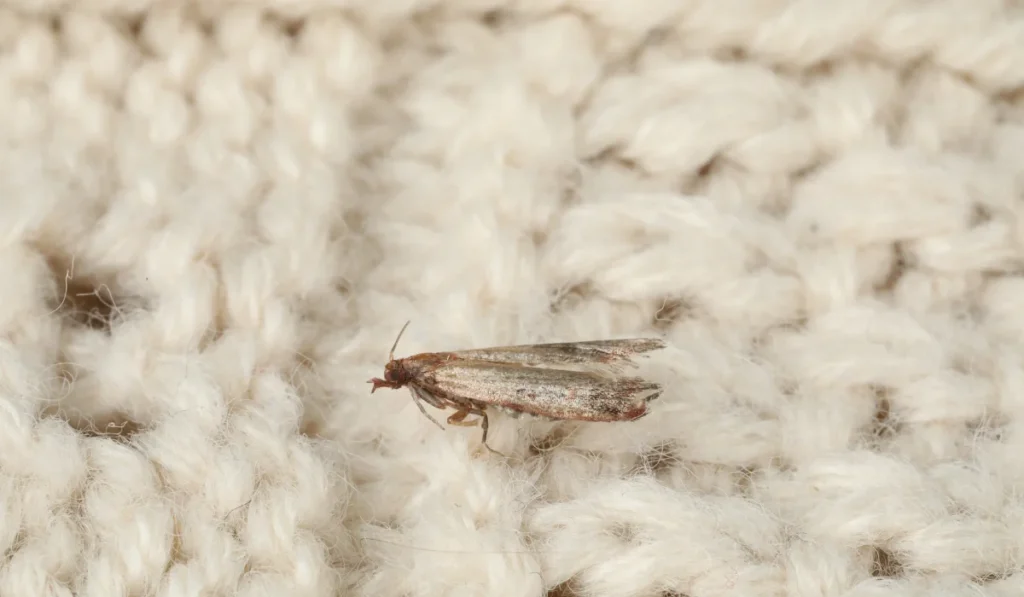
You pull a sweater from storage, shake it out, and notice several small holes near the cuff. A pale moth flutters from the box, and fine webbing clings to a fold near the collar. It may look like the problem appeared with the change of season, but the damage often began months earlier.
Clothes moths are easy to miss while coats, scarves, blankets, and sweaters sit undisturbed in dark storage areas. The adult moths are not the ones chewing through fabric. Their larvae cause the damage, often while hidden in seams, folds, carpet edges, or the corners of a closet.
If you know what to look for, you can separate clothes moths from pantry moths, carpet beetles, and outdoor moths that wandered inside. You can also clean the right areas, protect valuable garments, and reduce the chance of finding more moth holes when you unpack seasonal clothing again.
What Are Clothes Moths?
Clothes moths are small household pests whose larvae feed on materials that contain animal-based fibers and proteins. The two species most often associated with clothing damage are the webbing clothes moth, Tineola bisselliella, and the casemaking clothes moth, Tinea pellionella.
The adults do not eat fabric. Clothes moth larvae cause the damage as they feed on wool, cashmere, fur, feathers, felt, silk, rugs, and upholstered items. They may also damage blended fabrics when those materials contain natural fibers or residues such as body oils, food, lint, perspiration, or pet hair.
The University of California Integrated Pest Management guidance on clothes moths explains that these pests favor dark, quiet locations and that the larval stage is responsible for fabric damage. That is why swatting a flying moth does not solve the problem. The real work involves finding where the larvae are feeding.
Why Adult Moths Are Easy to Miss
Adult clothing moths are small and weak fliers. They often stay close to closets, storage boxes, carpet edges, or other sheltered areas instead of flying openly through a room.
Their behavior also differs from many outdoor moths that gather around porch lights. Clothes moths generally avoid bright, exposed spaces, which makes them easy to overlook until you disturb a garment or open a storage container.
A single moth does not confirm a clothes moth infestation. Fabric damage, larvae, webbing, portable cases, and shed skins provide stronger evidence than one adult flying near a closet.
Why Clothes Moths Appear When You Unpack Fall Clothing
Fall unpacking often reveals damage that developed while clothing sat untouched. Sweaters folded tightly in drawers, coats stored in spare closets, and blankets packed into boxes create quiet spaces where larvae can feed without being noticed.
Garments that go into storage without cleaning are more vulnerable. Body oils, perspiration, food residue, lint, pet hair, and shed skin can collect in cuffs, collars, pockets, and folds. Those materials may attract larvae even when the garment looks clean at a glance.
Moths in stored clothes often remain hidden in seams, linings, folds, and fabric that rests against a shelf or another item. When you unpack the garment, you finally expose the thin areas, holes, webbing, or debris that developed while it was out of sight.
In Southern homes, closets, spare rooms, and attic storage areas may stay warm for long stretches of the year. That does not mean fall causes the infestation. Fall is often simply when you discover it.
The Moths Did Not Necessarily Arrive in Fall
The timing can be misleading. A moth may fly out as soon as you open a box, but the problem may have started earlier through an infested garment, rug, upholstered item, or stored textile.
That is why the inspection should extend beyond the sweater or coat where you first noticed damage. Nearby shelves, carpet edges, storage boxes, rugs, and other natural-fiber materials may also need attention.
Signs of a Clothes Moth Infestation
Clothes moth damage often appears as irregular holes, thinned patches, bare spots, or weakened fabric. The damage may be concentrated along seams, cuffs, collars, waistbands, hems, or sections that remained folded for a long time.
Webbing clothes moth larvae may leave fine silk, feeding tubes, or loose webbing on the fabric. Casemaking clothes moth larvae carry a small silken case that can resemble a moving piece of lint or a narrow tube attached to the surface.
You may also find shed skins, small amounts of debris, or larvae tucked into fabric folds. Inspect the underside of stored garments, coat linings, pocket seams, and areas where clothing touches shelving or walls.
The University of Kentucky Entomology information on clothes moths notes that the damage is not limited to clothing. Rugs, upholstered furniture, stored blankets, felt, feathers, and other materials that contain animal-based fibers may also support feeding.
Holes alone do not prove that clothes moths are responsible. Carpet beetle larvae can damage many of the same materials, while rough storage, fabric wear, snagging, and repeated friction can create similar-looking damage.
Clothes Moths vs. Pantry Moths and Carpet Beetles
Small household moths are easy to confuse because adults may fly away from the source. A moth in a bedroom may have come from a closet, but it could also have wandered from a pantry or entered from outdoors.
Clothes moths are associated with fabrics and other animal-based materials. Pantry moths are tied to stored foods such as flour, grains, cereal, nuts, seeds, and pet food. Carpet beetle larvae can damage clothing and textiles, but they look and behave differently from clothes moth larvae.
| Feature | Clothes Moths | Pantry Moths | Carpet Beetle Larvae |
|---|---|---|---|
| Main food source | Animal-based fibers and fabric residues | Stored foods such as flour, grains, nuts, and pet food | Natural fibers, hair, lint, dead insects, and similar materials |
| Common location | Closets, rugs, upholstery, and storage boxes | Pantries, cabinets, and food packages | Carpet edges, baseboards, vents, closets, and stored fabrics |
| Damaging stage | Larva | Larva | Larva |
| Common signs | Holes, thin patches, silk, cases, or debris | Webbing, larvae, or clumped food inside packages | Shed skins, irregular fabric damage, or hairy larvae |
| Adult activity | Often stays near dark storage areas | Commonly flies around kitchens and pantries | Adult beetles may appear near windows |
| First place to inspect | Stored clothing and nearby textiles | Dry food packages | Carpet edges, vents, baseboards, and fabric storage |
The location of the evidence matters more than the location of one flying insect. If activity is concentrated near kitchen cabinets, inspect dry food packages. If you find larvae, cases, or webbing on wool clothing, rugs, or upholstery, focus on fabric storage areas.
Correct identification keeps you from cleaning the wrong part of the house. Treating a pantry will not stop larvae feeding in a wool rug, and cleaning a closet will not remove insects developing in a bag of pet food.
How to Get Rid of Clothes Moths
If you are trying to get rid of clothes moths, begin by emptying the affected closet or storage area. Remove garments one at a time and inspect each piece under good light, paying close attention to seams, folds, cuffs, collars, pockets, and linings.
Separate damaged or suspicious items from clothing that appears clear. Launder or dry clean garments according to their care labels. Cleaning can remove larvae, eggs, oils, food residue, and other material that supports feeding.
Vacuum closet shelves, floor edges, baseboards, cracks, carpet seams, and the space beneath storage furniture. Lint, pet hair, shed skin, and dead insects can collect in these areas and provide food for fabric pests. Dispose of the vacuum contents outside after cleaning.
Inspect nearby rugs, blankets, decorative pillows, upholstered furniture, and stored textiles. The damaged garment may be the first sign you notice, but the main source may be several feet away in another undisturbed item.
Clean reusable storage containers before returning clothing. Replace heavily soiled or damaged cardboard boxes because their seams can collect debris and provide hiding places.
Monitoring traps may help detect adult webbing clothes moths, but they do not remove larvae from fabric. Persistent activity, widespread damage, or repeated sightings may point to a larger problem that needs professional attention.
What to Do With Damaged Clothing
Do not return a damaged garment to storage until it has been cleaned and inspected. Follow the care label, then decide whether the item can be repaired or should be discarded.
A tailor may be able to mend small holes in wool or cashmere, especially when the damage is limited to one area. Heavily damaged items may not be worth keeping if larvae, cases, or webbing remain deep inside seams or linings.
Place discarded fabrics in a sealed bag before carrying them through the home. This helps contain larvae and debris during removal.
How to Prevent Clothes Moths in Stored Clothing
The best way to prevent clothes moths is to clean garments before long-term storage. Clothing that looks clean may still hold body oils, perspiration, food residue, lint, or pet hair.
Allow every item to dry fully before packing it away. Store clean garments in airtight containers or secure garment bags that limit access by adult moths.
Vacuum closets regularly, including shelf joints, floor edges, baseboards, and the space beneath stored items. Rotate seasonal clothing and inspect it occasionally instead of leaving it untouched for most of the year.
Avoid long-term storage of valuable wool, cashmere, or silk in open cardboard boxes. Sealed containers offer better protection and make it easier to isolate a problem if one garment was already affected.
Cedar can add fragrance to a closet, but cedar scent alone is not a complete clothes moth solution. Its aroma fades, and it does not replace cleaning, inspection, and secure storage.
Mothballs also require careful use. The U.S. Environmental Protection Agency’s household pest guidance should be followed whenever you use a registered moth-control product. Mothballs belong in tightly sealed containers and must be used according to the label, not scattered in open closets or living spaces.
Protecting Your Fall Wardrobe From Clothes Moths
Clothes moths often become visible when you unpack fall clothing, but the larvae may have been feeding for months. Finding the source takes more than removing the adult moth you happen to see.
Inspect seams, folds, rugs, upholstery, closet edges, and nearby storage containers. Clean affected garments according to their labels, vacuum the surrounding area thoroughly, and return only clean, dry clothing to secure storage.
When damage continues after cleaning or appears in several rooms, Waynes Pest Control can help identify the pest and check for overlooked sources. You can also contact the Waynes team to discuss service options for your home in Alabama, Tennessee, Mississippi, or the Florida Panhandle.