

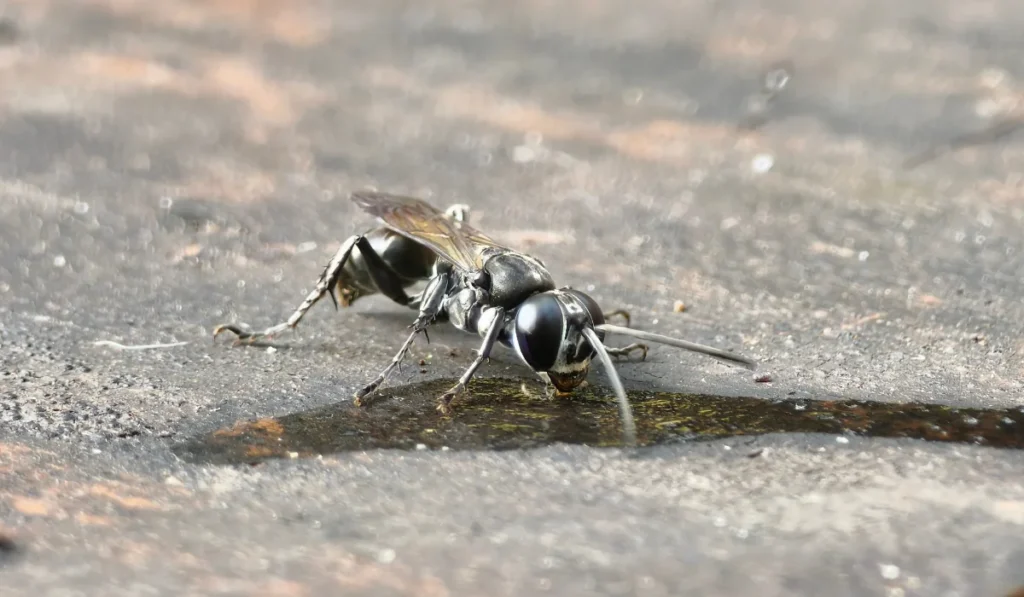
A large black wasp buzzing through your yard is enough to make most homeowners stop in their tracks. With its shiny black body, long legs, and loud flight, it’s easy to assume the insect is aggressive or preparing to sting. Across Alabama and Tennessee, it’s common for people to mistake these wasps for hornets or other defensive species and wonder whether it’s safe to stay outside.
In many cases, that intimidating insect is a great black wasp (Sphex pensylvanicus), a native species that is far less threatening than its appearance suggests. Unlike yellow jackets and paper wasps that live in colonies and defend their nests, great black wasps are solitary. They spend their time hunting prey, visiting flowers, and building individual nests underground instead of protecting hundreds of nestmates.
Learning to identify a big black wasp can help you avoid unnecessary concern while recognizing when another type of wasp may require professional attention. Understanding its behavior also highlights an important fact many homeowners don’t realize: not every wasp in your yard is a pest.
What Is the Big Black Wasp in Your Yard?
When homeowners describe seeing a large, glossy black wasp flying low across the lawn or hovering over flower beds, they’re often describing the great black wasp. This native solitary wasp is found throughout much of the eastern United States, including Alabama and Tennessee, where it is most active during the warm months of the year.
Unlike social wasps that live together in colonies, each female great black wasp works alone. She digs her own nest, hunts her own prey, and raises her offspring without assistance from other wasps. This solitary lifestyle is one of the defining characteristics of the species and explains why encounters with people rarely become aggressive.
Why It Looks So Intimidating
The great black wasp can exceed an inch in length, making it one of the largest wasps homeowners regularly encounter. Its body is entirely black with dark wings that may appear blue or violet in bright sunlight. Combined with a deep buzzing sound and quick, purposeful flight, these features often make the insect appear more dangerous than it actually is.
Much of this perception comes from comparing it to yellow jackets or hornets. Those insects often fly directly toward people when defending a nest, while great black wasps are usually focused on finding nectar, searching for prey, or locating suitable nesting sites. Their flight may seem erratic, but they are generally paying far more attention to their surroundings than to nearby people.
Are Big Black Wasps Dangerous?
The short answer is no, at least not under normal circumstances. Like many wasps, female great black wasps are capable of stinging, but they rarely do so unless they’re handled or accidentally trapped.
Because these insects don’t have colonies to defend, they lack the defensive behavior that makes yellow jackets and hornets so troublesome around homes. A solitary female has little reason to attack people simply for walking through the yard or working in the garden.
Females Can Sting, but They’re Not Aggressive
Female great black wasps use their sting primarily for hunting. They capture insects such as grasshoppers and katydids, temporarily paralyzing them before placing them in underground nesting chambers for developing larvae. This behavior is directed toward prey, not people.
A sting is most likely to occur only if the wasp is grabbed, stepped on, or becomes trapped against the skin. Simply observing one flying nearby is unlikely to result in an aggressive encounter.
Male Great Black Wasps Cannot Sting
One of the most surprising facts about this species is that male great black wasps cannot sting at all. They often patrol flowering plants or areas where females are active, which can make them appear confrontational when they hover nearby.
In reality, males are simply defending territories from rival males or searching for mates. Although their behavior may seem intimidating, they pose no stinging threat.
Why Solitary Wasps Behave Differently
Understanding the difference between solitary and social wasps helps explain why homeowners have such different experiences with various species.
Social wasps, including yellow jackets, hornets, and paper wasps, cooperate to protect a shared nest. When that nest is disturbed, many workers respond at once, increasing the likelihood of repeated stings.
Great black wasps don’t share that instinct because each female works independently. Without a colony to defend, they’re far less likely to react aggressively to normal human activity.
Great Black Wasp vs. Yellow Jacket
| Great Black Wasp | Yellow Jacket |
|---|---|
| Solitary insect | Lives in large colonies |
| Rarely aggressive toward people | Aggressively defends nests |
| Female may sting if threatened | Workers can sting repeatedly |
| Hunts insects and visits flowers | Often scavenges around food and trash |
Why Great Black Wasps Visit Your Yard
If you’ve noticed a black wasp in your yard, it’s usually there because your landscape provides food or suitable nesting conditions. Their presence isn’t a sign that your home is under attack or that an infestation is developing.
Flowering Plants Provide Food
Adult great black wasps feed primarily on nectar. Flowering shrubs, perennial gardens, native wildflowers, and ornamental landscaping all provide excellent food sources throughout the summer.
The Xerces Society recognizes solitary wasps as beneficial insects that contribute to pollination while feeding on nectar. Although bees receive most of the attention for pollination, many native wasps also play an important supporting role in healthy landscapes.
They Help Control Other Insects
Female great black wasps also serve as natural predators. Rather than feeding insects directly to their young, they capture prey and place it inside underground nesting chambers before laying an egg. When the larva hatches, it feeds on the stored prey.
According to the Missouri Department of Conservation, grasshoppers and katydids are among the insects commonly hunted by great black wasps. For homeowners, this means the wasps are helping reduce populations of insects that can feed on ornamental plants and garden vegetation.
Open Soil Makes an Ideal Nesting Site
Unlike carpenter bees that bore into wood or paper wasps that build exposed nests, great black wasps dig burrows in the ground. They prefer well-drained soil with good sun exposure, making bare patches of lawn, garden edges, and lightly vegetated areas attractive nesting locations.
Because each female creates her own nest, you won’t typically see dozens of wasps entering and leaving the same opening. A few wasps flying low over the ground are often simply females searching for suitable places to dig.
Great Black Wasps vs. Other Large Wasps
Not every large flying insect in your yard is the same, and knowing how to tell them apart can prevent unnecessary concern. Great black wasps are often mistaken for carpenter bees, cicada killers, or even yellow jackets because of their size. While these insects share some similarities, their nesting habits and behavior are quite different.
Carpenter bees have fuzzy yellow or golden hairs on their thorax, giving them a softer appearance than the smooth, glossy body of a great black wasp. They also excavate tunnels in wood, which can lead to cosmetic damage on decks, fences, and trim. Great black wasps, by contrast, nest in the ground and have no interest in boring into wood around your home.
Cicada killers are another solitary wasp that homeowners commonly misidentify. They are similar in size but have bold yellow markings across the abdomen, making them easier to distinguish once you know what to look for. Like great black wasps, cicada killers are generally non-aggressive and focus on hunting prey rather than interacting with people.
Yellow jackets present a very different situation. These social wasps build colonies that can grow throughout the summer, and they aggressively defend their nests when disturbed. If you’re seeing numerous wasps entering and leaving the same location or encountering repeated defensive behavior, you’re more likely dealing with yellow jackets than a solitary great black wasp.
Great Black Wasp vs. Other Common Yard Insects
| Insect | Nesting Habit | Behavior Around People |
|---|---|---|
| Great Black Wasp | Solitary nest in the ground | Usually ignores people unless handled |
| Carpenter Bee | Tunnels into wood | Generally docile, but may hover near nesting sites |
| Cicada Killer | Solitary nest in the ground | Rarely aggressive |
| Yellow Jacket | Large underground or structural colony | Defends the nest aggressively |
Should You Leave a Great Black Wasp Alone?
In most cases, the answer is yes. If you’ve correctly identified the insect as a great black wasp and it isn’t nesting in an area where people frequently walk or play, there’s usually no need to remove it.
Because these wasps are solitary, seeing one or two individuals does not indicate an infestation. Every female independently constructs her nest, stocks it with prey, and completes her life cycle on her own.Unlike colony-forming wasps, their numbers don’t continue growing around a single nest throughout the season.
Their presence can actually benefit your landscape. Adult great black wasps visit flowers while feeding on nectar, helping pollinate a variety of flowering plants. At the same time, females naturally reduce populations of grasshoppers and katydids by capturing them as food for their developing young. These behaviors make great black wasps one of the many beneficial insects that contribute to a balanced backyard ecosystem.
If you enjoy gardening or maintaining native plants, it’s not unusual to see great black wasps visiting flowers during the summer. Observing them from a comfortable distance is often the best approach, allowing them to continue their natural role without unnecessary disruption.
When Professional Identification Is the Right Choice
While great black wasps are generally harmless to people, it’s not always easy to identify a wasp based on appearance alone. Several species found throughout Alabama and Tennessee are similar in size or color, and some require a different response.
Professional identification is especially valuable if large wasps are repeatedly entering wall voids, gathering beneath rooflines, or flying in and out of the same location near entryways, patios, or children’s play areas. These signs are more consistent with social wasps than solitary species and may indicate an active nest that should be addressed safely.
Homeowners should also avoid attempting to remove any unidentified wasp nest on their own. Disturbing the wrong species can provoke a defensive response and increase the likelihood of multiple stings. An inspection can determine exactly which insect is present and whether treatment is necessary or whether the wasps can simply be left alone.
Knowing Which Wasp You’re Seeing Makes All the Difference
A big black wasp may look intimidating at first glance, but appearance doesn’t always reflect behavior. In many Alabama and Tennessee yards, these insects are great black wasps, solitary hunters that spend their days collecting nectar, hunting grasshoppers and katydids, and raising the next generation without the protection of a colony. They are capable of stinging, but they rarely do unless they’re directly threatened or handled.
Understanding the difference between solitary and social wasps helps homeowners make informed decisions instead of reacting out of concern. A single great black wasp visiting flowers or searching for a nesting site is very different from a colony of yellow jackets establishing a nest near your home. Knowing what you’re seeing allows you to appreciate beneficial insects while recognizing situations that truly require professional attention.
If you’re unsure whether the wasps around your home are great black wasps or another stinging species, the safest approach is to have them identified by an experienced professional. Visit Waynes to learn more about our wasp and stinging insect services.
If you’ve found a nest near your home or would like help identifying large wasps on your property, Contact Our Team to schedule an inspection with a Waynes pest professional.


