

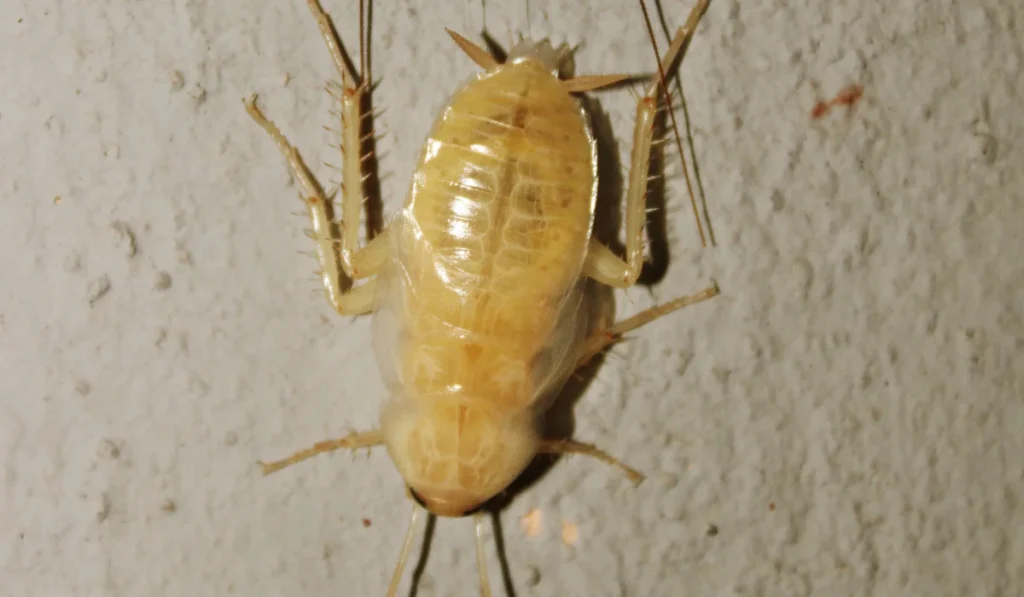
Finding a white cockroach inside your home can be unsettling. Most homeowners are familiar with the brown or tan appearance of common household cockroaches, so spotting one that is white or cream-colored often leads to questions. Some people assume they’ve discovered a rare species or an albino cockroach, but that’s not actually the case.
A white cockroach is not a different type of roach. Instead, it is a cockroach that has recently shed its outer shell as part of its normal growth process. According to the University of Kentucky Entomology Department, cockroaches appear white or cream-colored immediately after molting because their new exoskeleton has not yet hardened and darkened.
Although this pale appearance is temporary, finding a white cockroach indoors often points to something more significant. It suggests that cockroaches are actively growing and developing somewhere inside your home.
For homeowners across Alabama, Mississippi, Tennessee, and the Florida Panhandle, recognizing what a white cockroach means can help you identify an infestation early and take action before the population becomes more difficult to control.
What Is A White Cockroach?
A white cockroach is simply a cockroach that has recently completed one stage of its life cycle. Like many insects, cockroaches have a hard outer covering called an exoskeleton. Because this protective shell does not expand as the insect grows, cockroaches must periodically shed it through a process known as molting.
Immediately after molting, the cockroach’s new exoskeleton is soft, flexible, and pale in color. During this short period, the insect appears white, ivory, or cream-colored. As the new outer shell hardens, it gradually darkens until the cockroach returns to its normal brown or tan appearance.
This temporary stage often causes confusion because homeowners rarely see it. The pale color only lasts until the exoskeleton finishes hardening, which is why white cockroaches are much less commonly observed than fully developed ones. The important takeaway is that a white cockroach is not a separate species. It is simply a normal cockroach that has recently molted.
Why Seeing A White Cockroach Usually Indicates An Active Infestation
The location where you find a white cockroach is often more important than its color. Cockroaches typically molt in protected areas where they can remain undisturbed while their new exoskeleton hardens. If you discover one inside your home, it likely completed this stage nearby rather than wandering in from outdoors.
The cockroach life cycle begins when eggs hatch into immature cockroach nymphs. As they grow, these young roaches molt several times before becoming adults. Every molt briefly produces the same pale appearance. Finding a white cockroach indoors can therefore indicate that cockroach nymphs are successfully developing inside the structure, not simply passing through it.
According to Entomology Today, the German cockroach is the most common indoor cockroach found in homes. German cockroaches reproduce quickly and spend nearly their entire lives indoors where food, moisture, and shelter are readily available. Their preference for indoor environments makes them one of the most common species homeowners encounter in kitchens, bathrooms, laundry rooms, and utility areas.
Although a single white cockroach cannot reveal the size of an infestation, it should not be ignored. Molting is part of a healthy, growing population, which means additional cockroaches may be hidden nearby.
Where Cockroaches Hide Inside Your Home
Cockroaches are experts at remaining out of sight. During the day, they hide in narrow spaces where they are protected from light and disturbance. At night, they leave these harborages to search for food and water before returning to their hiding places.
Cockroaches commonly hide in cracks and crevices close to food and moisture sources. Kitchens and bathrooms provide ideal conditions because they offer both reliable water and easy access to food residue.
Common Hiding Places
Inside the home, cockroaches often hide beneath sinks, behind refrigerators, under dishwashers, behind stoves, inside cabinets, around plumbing penetrations, and beneath baseboards. They may also occupy wall voids, utility chases, crawl spaces, and storage areas where they are less likely to be disturbed.
Moisture plays an important role in where indoor cockroaches establish themselves. Small plumbing leaks, condensation around appliances, and damp utility rooms provide favorable conditions for survival. Homes with food debris, grease buildup, cardboard storage, or clutter offer additional shelter that allows cockroaches to remain hidden while staying close to food and water.
Signs Of Cockroaches
A white cockroach is only one possible sign of an infestation. Homeowners should also look for small pepper-like droppings, shed skins left behind after molting, egg cases called oothecae, and repeated sightings of live cockroaches, particularly after dark.
Because cockroaches are primarily nocturnal, daytime activity may suggest the population has grown enough that some individuals are forced out of their usual hiding places. Some infestations may also produce a lingering musty odor that becomes more noticeable as the population increases.
| White Cockroach | Typical Cockroach |
|---|---|
| Recently molted | Fully hardened exoskeleton |
| White or cream-colored | Brown or tan |
| Soft outer shell | Hard protective shell |
| Temporary appearance | Normal coloration |
| Indicates active growth | May be adult or immature |
Can A White Cockroach Affect Your Health?
The white color itself is not a health concern, but what it represents can be. If a cockroach is actively molting inside your home, it suggests there are additional cockroaches nearby that are feeding, reproducing, and leaving behind allergens.
Cockroach allergens are found in their saliva, droppings, and body parts. Exposure to these allergens can contribute to asthma and allergy symptoms in sensitive individuals. Reducing cockroach populations helps improve indoor environments by limiting these allergen sources.
Finding one white cockroach does not necessarily mean you have a severe infestation, but it does warrant a closer inspection. Identifying the source early allows homeowners to address the problem before cockroach populations become more widespread throughout the home.
How To Reduce Cockroach Activity In Your Home
Preventing a cockroach infestation begins with making your home less attractive to these pests. While good sanitation is an essential step, it works best when combined with moisture control, exclusion, and timely professional treatment if cockroaches have already become established.
Store pantry items in sealed containers, wipe up crumbs and spills promptly, avoid leaving dirty dishes overnight, and empty trash regularly. Repair leaking faucets and plumbing, dry areas beneath sinks, and eliminate standing water that provides a dependable moisture source.
Inspect the exterior and interior of your home for gaps around doors, windows, plumbing penetrations, and utility lines that may provide entry points. Reducing clutter, especially cardboard boxes and paper storage, also limits hiding places and makes future inspections easier.
Sanitation helps reduce available food sources but usually does not eliminate an infestation by itself. Cockroaches often remain hidden inside walls, behind cabinets, and beneath appliances where routine cleaning cannot reach. If you continue finding baby cockroaches, newly molted white cockroaches, or repeated nighttime sightings, professional cockroach control may be necessary to address the hidden population.
Don’t Ignore A White Cockroach In Your Home
A white cockroach may seem unusual, but it is usually evidence of normal cockroach development rather than a rare insect. Because cockroaches molt where they live, finding one indoors often means that roaches are actively growing somewhere inside the structure. Recognizing other warning signs, including droppings, shed skins, egg cases, and recurring sightings, can help you identify an infestation before it spreads.
If you’ve found a white cockroach in your home, taking action early can help prevent a small problem from becoming a larger one. Waynes Pest Control has been helping homeowners across Alabama, Mississippi, Tennessee, and the Florida Panhandle protect their homes from cockroaches and other household pests since 1973.
If you’re ready for a professional inspection or have questions about a suspected infestation, contact our team to schedule an appointment and receive a customized treatment plan for your home.


