
Tiny red bugs on your windowsills are almost always clover mites. Learn to identify them, why they invade, and how to keep them out.
Key Takeaways
Tiny red bugs found around Southeast homes
Several small red-bodied pests show up on windowsills, skin, and plants across Alabama, Tennessee, Florida, and Mississippi — and they are not all the same bug. Knowing which one you are looking at determines whether you need to act immediately or simply vacuum and move on.
- Clover mites are the most common tiny red bugs found on windows, siding, and walls across Alabama, Tennessee, Florida, and Mississippi.
- These mites have eight legs, measure less than 1 mm, and leave bright red stains when crushed against surfaces or fabric.
- They do not bite humans or pets, do not transmit diseases, and pose no structural risk to your home.
- An 18-to-24-inch vegetation-free gravel strip around your foundation is the single most effective prevention step you can take.
- If tiny red bugs appear on your skin and cause itching, you may be dealing with chiggers instead. Identification matters before you act.
What Tiny Red Bugs on Your Walls Actually Are
The tiny red bugs crawling across your windowsills, siding, and concrete are almost certainly clover mites. Clover mites (Bryobia praetiosa) are arachnids with eight legs, not insects with six. Adults measure roughly 0.75 millimeters, smaller than a pinhead, and their bright red to reddish-brown color makes them easy to spot on light-colored surfaces like window frames, walls, and concrete.
Clover mites feed on plant sap from well-fertilized grass, clover, weeds, and shrubs. They do not feed on blood. They are a nuisance pest. The only harm they cause indoors is the red stains they leave when crushed against walls, curtains, or furniture. According to the University of Connecticut Home and Garden Education Center, clover mites reproduce through parthenogenesis, meaning every individual is female and capable of producing eggs without a mate. A single population can surge into the hundreds, which explains why they seem to appear overnight in large numbers.
How to Identify Red Bugs by Size, Color, and Location
Where you find the bugs tells you as much as what they look like. Clover mites cluster on exterior walls, windowsills, and window frames on the sun-facing side of your home. Their front pair of legs is longer than the other three pairs, which helps distinguish them under a magnifying glass. Look for eight legs total, a body smaller than a pinhead, and a bright red to reddish-brown color.
The red stains are a reliable secondary identifier. When you press a clover mite against a surface, it leaves a vivid red smear. This happens on painted walls, light-colored siding, curtains, and furniture. The stain comes from the mite’s body pigment, not blood. No other common tiny red bug leaves the same mark on walls and window frames.
Other Red Bugs That Look Like Clover Mites
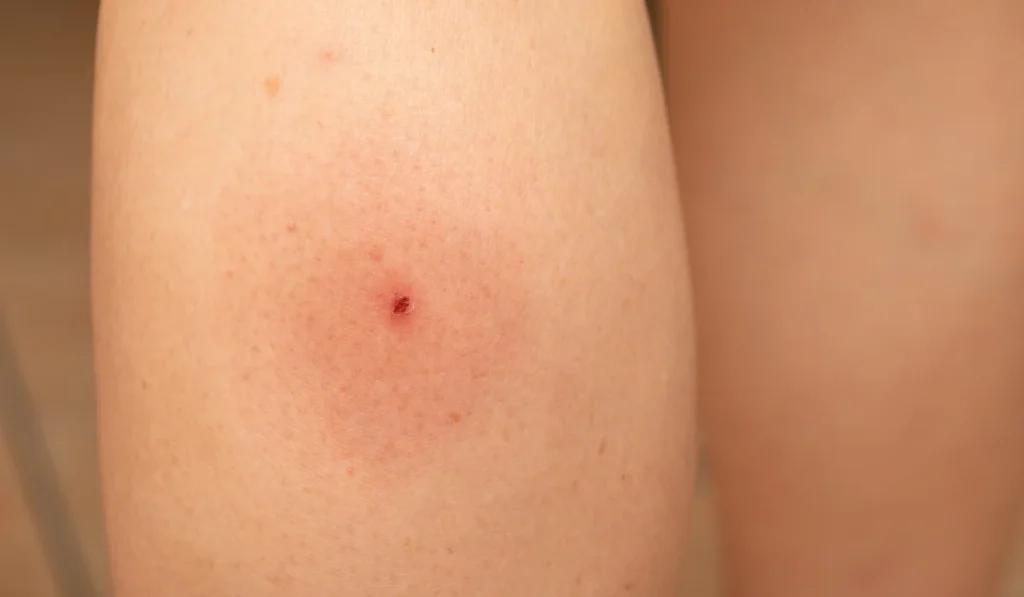
Not every tiny red bug on your property is a clover mite, and the difference matters. Chiggers (Trombiculidae larvae) also appear in the Southeast and do bite. Unlike clover mites, chiggers burrow into skin folds around ankles, waistbands, and armpits. If you spent time in tall grass and then developed intensely itchy red welts on your skin, chiggers are the more likely source, not clover mites.
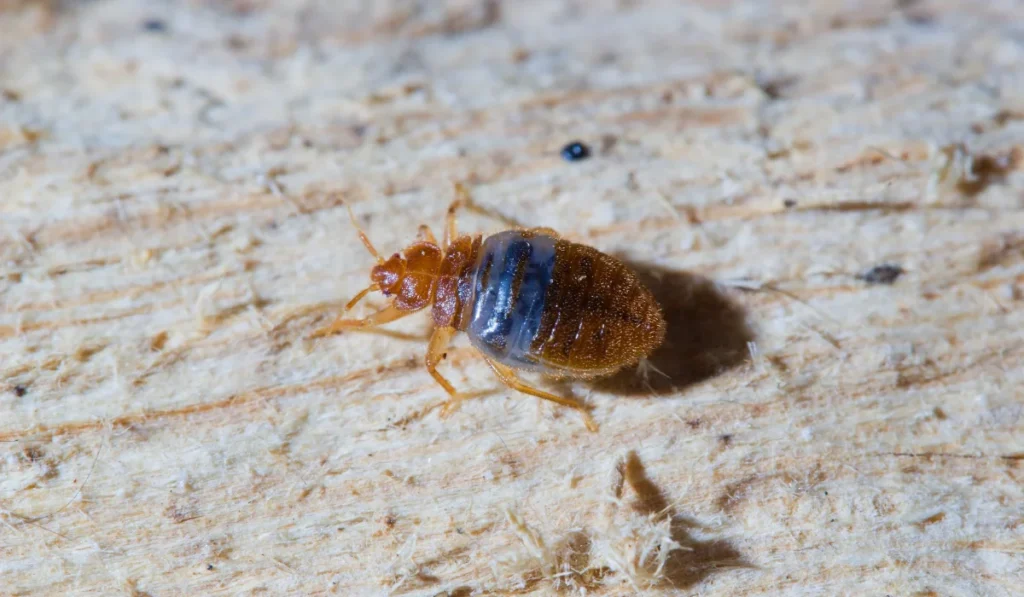
Spider mites are another look-alike. These pests concentrate on the undersides of plant leaves in sunny areas and produce fine webbing. They feed on ornamental plants and garden crops and rarely enter homes. Bed bugs are sometimes confused with tiny red bugs but are far larger, roughly the size of an apple seed, flat-bodied, and reddish-brown rather than bright red. Bed bugs hide in mattress seams and furniture cracks and feed on blood.
| Bug | Size | Location | Bites? | Red Stains? |
|---|---|---|---|---|
| Clover mite | Under 1 mm | Windows, walls, siding, foundation | No | Yes, when crushed |
| Chigger | Under 0.5 mm | Tall grass, wooded areas, skin folds | Yes | No |
| Spider mite | Under 0.5 mm | Undersides of plant leaves | No | Possible, minor |
| Bed bug | 4–5 mm | Mattress seams, furniture cracks | Yes | No (blood spots on sheets) |
Why Red Bugs Invade Homes Each Spring and Fall
Clover mites migrate toward the warm, sun-facing walls of your house when outdoor temperatures shift. In late spring, rising heat reawakens pest activity across the region, pushing them toward cooler indoor spaces. In fall and early winter, dropping temperatures drive them toward warm surfaces. Across Alabama, Tennessee, Florida, and Mississippi, peak activity runs from March through May and again from September through November, when daytime temperatures sit in the 50–75 °F range that these mites prefer. Homeowners in cooler corners of the region, especially those following seasonal pest patterns around Knoxville, often see the fall wave arrive a few weeks earlier than their neighbors farther south.
Vegetation growing against your foundation creates the primary entry route. Grass, mulch, shrubs, and weeds that touch your siding or foundation give mites a direct path to exterior walls. Heavy growth around the base of your house is the strongest predictor of a clover mite invasion indoors. A well-fertilized lawn that runs right to your foundation amplifies the problem because it supports a larger outdoor population with a ready food supply.
Entry Points That Let Little Red Bugs Inside
Clover mites enter through cracks around windows, doors, and foundation joints. They are small enough to pass through gaps invisible to the naked eye. Common entry points include poorly sealed window frames, gaps around utility pipes, cracks in foundation walls, and spaces beneath exterior doors. Once indoors, they crawl along walls, across windowsills, and onto furniture.
Their small size means standard door sweeps and weather stripping may not stop a large surge. Caulking visible cracks and maintaining tight-fitting screens on windows reduces entry, but exclusion alone may not prevent large numbers from getting inside during peak migration periods. The outdoor population is the real source, and controlling it at the foundation is more effective than sealing alone.
Seasonal Red Bug Patterns in the Southeast
Late spring is egg-laying season for clover mites across the Southeast. Females deposit eggs in cracks along foundations, beneath bark, in concrete joints, and along the edges of window frames. These eggs hatch when temperatures cool in fall, producing a second wave of indoor invasions. Homeowners who address their landscaping before spring and before fall reduce both waves at once.
During summer, extreme heat suppresses clover mite activity outdoors, though it favors other pests that thrive in hot weather. During winter, cold temperatures push surviving mites into dormancy. However, mild winter days in Alabama and Mississippi can trigger brief surges of activity on warm south-facing walls, particularly on sunny afternoons when the surface temperature rises faster than the air temperature.
How to Get Rid of Red Bugs Around Your Home
Remove all grass, mulch, and plants within 18 to 24 inches of your foundation. Replace this strip with pea gravel, rocks, or bare soil. This buffer zone cuts off the food source that sustains mites outdoors and creates a barrier they are less likely to cross. The EPA’s integrated pest management framework emphasizes habitat modification as the first line of defense against nuisance pest invasions, and the vegetation-free zone is the clearest application of that principle for clover mites.
Avoid over-fertilizing your lawn. Well-fertilized grass supports larger mite populations. If your lawn runs to your foundation and receives regular fertilizer applications, you are sustaining the outdoor population that migrates indoors. Reducing fertilizer near the foundation edge lowers the carrying capacity for mites in that zone.
Remove These Red Bugs Without Leaving Stains on Walls
Never crush clover mites against walls, curtains, or light-colored surfaces. Crushed mites leave red stains that are difficult to remove from paint, fabric, and wallpaper. Vacuum them instead using a hose attachment. Dispose of the vacuum bag or empty the canister outside immediately to prevent mites from crawling back out.
A damp cloth works for small numbers on hard surfaces. Wipe them up and rinse the cloth rather than pressing them against the surface. For mites on window frames and sills, soapy water removes both the mites and any staining before it sets. Indoors, clover mites survive only a few days without access to vegetation. They dehydrate and die without a food source, which means large indoor numbers are typically a temporary problem if the outdoor source is addressed.
When Professional Pest Control for Red Bugs Makes Sense
If little red bugs appear indoors across multiple seasons, a professional inspection identifies the species and the entry points you cannot see. A trained technician evaluates your landscaping, identifies the cracks and gaps driving indoor entry, and applies perimeter treatments along the foundation and around windows where mites concentrate. The USDA’s integrated pest management policy recommends combining habitat modification with targeted professional treatment for persistent infestations rather than relying on a single control method.
Waynes has served homes across Alabama, Tennessee, Florida, and Mississippi for over 50 years. As an EPA Pesticide Environmental Stewardship Program member since 2004, Waynes technicians apply perimeter treatments designed to minimize exposure for your family and pets while controlling mite populations at the source. After every service, post-service video reports show you exactly what was done and where. “Clover mites are one of the most misidentified pests we see,” says Shawn Hollis, President of Waynes. “Homeowners assume the worst when they see red bugs. A proper identification saves time, money, and stress.”
Bottom Line on Tiny Red Bugs Around Your Home
The tiny red bugs on your windowsills, siding, and walls are almost certainly clover mites. They do not bite, do not transmit diseases, and do not damage your home’s structure. Their only real threat is the red stains they leave when crushed. An 18-to-24-inch vegetation-free zone around your foundation, combined with caulked cracks and reduced lawn fertilization near the house, addresses the problem at the source. If bugs appear on your skin and cause itching, suspect chiggers rather than clover mites, and get a professional identification before acting.
For persistent invasions or large numbers across multiple seasons, a perimeter treatment from a professional pest control technician targets the outdoor population where it lives. Every little thing matters. A LOT. Schedule a bug identification and home exclusion inspection with Waynes to confirm what is crawling on your windows and get a prevention plan built for your property.
Frequently Asked Questions
Do clover mites cause structural damage to my home?
No. Clover mites do not damage wood, insulation, wiring, or any building material. They feed on plant sap outdoors and enter homes only as a nuisance pest. The only indoor damage they cause is the red staining that occurs when they are crushed against walls, fabric, window frames, or furniture.
Should I use a spray indoors to get rid of red bugs?
Indoor sprays are not recommended for clover mites. Without access to grass and plants indoors, clover mites die within a few days on their own. Vacuuming is the most practical removal method because it avoids the red stains that crushing causes. Perimeter treatments applied outdoors by a professional technician target the source population and reduce the number reaching your windows and walls in the first place.
Can clover mites bite me or my pets?
Clover mites do not bite humans or pets. Their mouthparts are designed for piercing plant cells and feeding on sap, not skin or blood. If you notice itching or welts after spending time outdoors in tall grass, the pest is likely a chigger rather than a clover mite. A professional identification confirms the exact species so you treat the right problem.
How long do clover mites live indoors?
Clover mites survive only a few days indoors. Without grass, plants, or other vegetation to feed on, they dehydrate and die. Vacuuming accelerates removal and prevents the red stains that occur when mites are crushed. If indoor numbers stay high for more than a week, mites are still entering from outside, and the foundation perimeter needs attention.
What attracts clover mites to my home in spring?
Clover mites are drawn to well-fertilized grass and dense vegetation growing against your foundation. Warm, south-facing and west-facing walls in spring and fall act as gathering points before mites move toward cracks and window frames to enter. Reducing heavy growth against the foundation and limiting fertilizer near the house removes the two main attractants in one step.