

Seeing a mouse during the day deserves your attention because house mice are primarily nocturnal. They usually move around when a home is quieter, so a mouse crossing your kitchen, hallway, or living room at noon falls outside the activity pattern you would expect. Still, one daytime sighting does not prove that a large mouse infestation is hiding behind your walls.
A mouse may come out during daylight when it is searching for food or water, when its hiding place has been disturbed, or when conditions around its nesting area change. The most useful response is to look for other evidence. Mouse droppings, gnaw marks, shredded nesting material, scratching noises, odors, and damaged food packaging can tell you much more than the time on the clock.
For homeowners across Alabama, Tennessee, Mississippi, and the Florida Panhandle, seeing a mouse during the day should prompt a careful inspection of the areas where mice are most likely to eat, hide, and travel. The sooner you identify where activity is happening and how mice are getting inside, the easier it is to address the problem at its source.
Are Mice Nocturnal?
Mice are nocturnal, but that does not mean they are physically unable to move during daylight hours. Waynes’ rodent guidance describes rodents as primarily nocturnal while noting that they can be seen throughout the day. In a home, mouse activity can shift based on access to food, water, shelter, and disturbances around a nesting area.
The University of California Statewide Integrated Pest Management Program’s house mouse guidance covers house mouse behavior, nesting, feeding, signs of activity, and prevention. That broader behavioral picture is useful because it shows why the question is not simply whether mice ever come out during the day. The better question is why a mouse that usually benefits from staying hidden has become visible.
Why a Mouse May Be Active During the Day
A mouse does not follow a strict nighttime schedule. If it has access to food during the day, its normal hiding place has been disturbed, or it needs to move to another sheltered area, you may see it while people are active in the home.
Competition can also affect mouse activity. If several mice are using the same food or shelter resources, an individual may leave its hiding place at a less typical time. That is one reason a daytime sighting is worth investigating, even though it cannot tell you how many mice are present.
Why Seeing a Mouse During the Day Deserves Attention
Seeing a mouse during the day is best treated as a warning to inspect, not as proof of a specific infestation size. The sighting confirms one thing with certainty: a mouse has gained access to your home or another part of the structure.
From there, look at the surrounding evidence. A single sighting with no other signs gives you less information than repeated sightings, fresh droppings appearing after cleanup, new gnaw damage, or recurring noises in the same area. Those patterns help you determine whether mouse activity is ongoing.
This distinction matters because homeowners often hear that seeing one mouse in daylight automatically means many more are hiding nearby. That conclusion cannot be made from the time of day alone. Daytime mouse activity becomes more meaningful when it appears alongside other signs of mice in the house.
| What You Notice | What It Can Tell You |
| One mouse during daylight | A mouse has access to the structure and the area should be inspected |
| Repeated daytime sightings | Mouse activity is continuing and deserves closer investigation |
| Fresh droppings after cleanup | Mice are still using the area |
| New gnaw marks or damaged packages | Mice have access to food or materials in that location |
| Recurring scratching or movement sounds | Rodents may be traveling or nesting nearby |
Signs of a Mouse Infestation to Check Next
After seeing a mouse during the day, inspect places where food, water, and shelter come together. In the kitchen, check beneath sinks, around cabinets, near pet food, behind appliances, and inside lower storage areas. In other parts of the home, pay attention to garages, attics, crawl spaces, closets, and rooms where boxes or other stored items remain undisturbed for long periods.
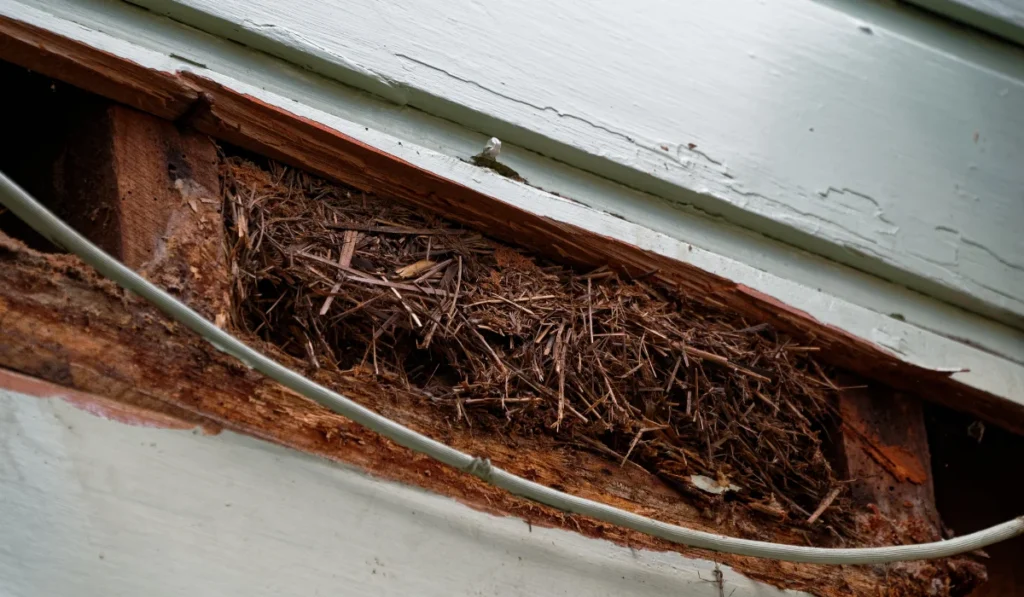
Waynes’ rodent information identifies several common signs of activity, including mouse droppings, nests, odors, scratching noises, gnaw marks, chewed containers, footprints, dirty wall marks, nesting material, and late-night sounds. Finding several of these signs in the same part of the home gives you more useful information than a single isolated clue.
Look for Patterns Across the Home
Try to determine whether the evidence connects one area to another. Fresh droppings near a pantry, for example, become more meaningful if you also find damaged packaging or signs of movement behind a nearby appliance.
Recurring scratching sounds can also help narrow your search. If the noise repeatedly comes from the same wall, ceiling area, cabinet, or utility opening, mice may be using a nearby travel route or protected space. Patterns like these help identify where an inspection should focus.
Where Mice Hide During the Day
During daylight hours, house mice usually stay in protected areas where they are less likely to encounter people or pets. Wall voids, cabinets, garages, attics, crawl spaces, storage rooms, and spaces behind appliances can all provide the cover mice seek.
These locations are especially useful when food and water are nearby. A mouse does not need to cross an entire home if it can nest close to a pantry, pet feeding area, kitchen cabinet, or another dependable resource.
Kitchens, Garages, and Storage Areas
Kitchens deserve close attention because they combine food, water, cabinets, appliances, and narrow spaces that are difficult to inspect. Look for evidence around the refrigerator, stove, dishwasher, pantry, and sink area rather than limiting your search to the place where you saw the mouse.
Garages and storage rooms can also support mouse activity. Cardboard boxes, paper, fabric, and clutter create covered areas where signs are easier to miss. Keeping these spaces organized makes new droppings, gnaw marks, and nesting material easier to spot while reducing protected hiding places.
What to Do After Seeing a Mouse During the Day
Once you see a mouse during the day, start by checking the immediate area for signs of continued activity. Secure food in closed containers, clean up accessible crumbs, protect pet food, and inspect doors, baseboards, utility openings, cabinets, and other places where mice may be entering or traveling.
Entry prevention matters because removing an individual mouse does not solve the problem if other mice can use the same opening. Waynes’ rodent guidance emphasizes preventing entry and reducing access to food, water, and shelter as key parts of rodent prevention.
Handle Mouse Droppings Carefully
If you find mouse droppings, urine, or nesting material, use proper cleanup procedures rather than sweeping through the area without precautions. The CDC’s guidance for cleaning up after rodents provides public-health recommendations for handling contaminated areas and reducing exposure during cleanup.
After the area has been cleaned appropriately, continue watching it. Fresh droppings, new chew damage, recurring noises, or another mouse sighting can show whether activity is continuing. Monitoring after cleanup helps separate old evidence from signs that mice are still present.
When a Daytime Mouse Sighting Calls for Professional Mouse Control
Professional mouse control makes sense when sightings continue, evidence appears in several rooms, fresh droppings return after cleanup, or you hear repeated activity inside walls or ceilings. It can also help when you cannot identify how mice are getting into the structure.
A thorough rodent inspection looks beyond the mouse you happened to see. It focuses on entry points, travel routes, feeding areas, shelter, and signs of nesting. That approach is especially helpful when mouse activity is occurring in wall voids, attics, crawl spaces, or other areas that are difficult to reach.
Waynes provides year-round rodent control with follow-up service for rodent concerns, along with Smart Pest monitoring options for homes where activity has been detected. Professional service can help identify where mice are active and address the conditions that allow them to keep returning.
Take a Daytime Mouse Sighting Seriously
Seeing a mouse during the day is a reason to investigate your home, but it is not a reliable way to estimate how many mice are present. Because mice are primarily nocturnal, daylight activity stands out. The clearest picture comes from combining the sighting with evidence such as mouse droppings, gnaw marks, nesting material, recurring noises, damaged food packages, and repeated activity.
Pay attention to where the mouse appeared, what resources are nearby, and whether you can find signs of a travel route or entry point. When seeing a mouse during the day is followed by fresh evidence elsewhere in the home, addressing both the current mouse activity and the way rodents are getting inside gives you a stronger long-term solution.
If you are seeing repeated mouse activity or finding signs of a mouse infestation, Waynes Pest Control can help identify the source of the problem and determine the right next steps for your home. Contact Waynes to schedule service and get help addressing mice before the activity becomes more difficult to manage.