
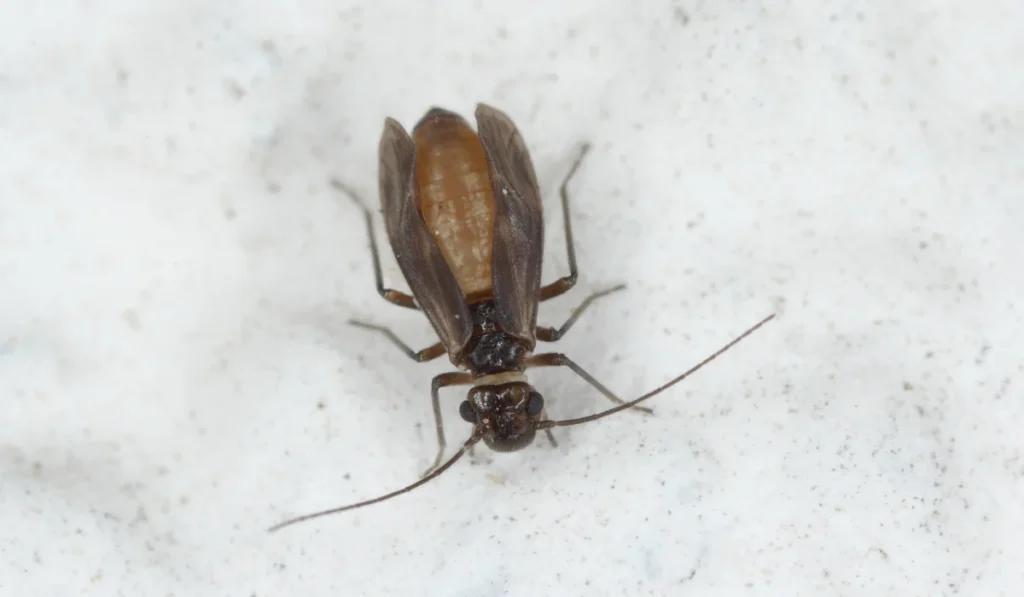
You may first notice booklice as tiny pale specks moving across a bathroom wall, pantry shelf, windowsill, or stack of stored books. Their name sounds alarming, but these insects are not the lice that live on people. Booklice are psocids, and they usually appear where moisture supports microscopic mold or other organic material they can eat.
That makes booklice in homes especially relevant across Alabama, Mississippi, Tennessee, and the Florida Panhandle. Warm weather, frequent rain, damp crawl spaces, plumbing leaks, bathroom moisture, and air-conditioning condensation can all create favorable conditions. Even a clean home can develop a localized problem when one room or storage area stays humid.
Removing visible insects is only part of the solution. To get rid of booklice and keep them from returning, you need to identify the pest correctly, find the moisture source, dry affected materials, and improve airflow where needed.
What Booklice Are and Why They Are Not Lice
Booklice belong to a group of insects commonly called psocids. Many indoor species are only about 1 to 2 millimeters long, which makes them easy to mistake for dust, mold mites, or other tiny household pests. They often appear pale gray, tan, or nearly translucent and have soft bodies with heads that look large in proportion to their size.
Despite their common name, booklice do not live in human hair, attach themselves to pets, or feed on blood. The name comes from their tendency to appear around books, paper, cardboard, bindings, and other stored materials. In those locations, they feed on microscopic mold, fungi, starches, and organic residue rather than on people.
The University of Minnesota Extension guidance on psocids describes them as nuisance insects associated with damp conditions. That distinction matters because treatments intended for head lice will not address a booklice problem. The source is usually in the building or among stored belongings, not on a person or animal.
Booklice Compared With Similar Pests
Several small pests can appear in the same rooms as booklice. Their location, movement, and food source offer better clues than color alone.
| Pest | Common Location | Main Food Source | Lives on People | Jumps |
| Booklice | Damp books, cardboard, walls, cabinets, and pantry shelves | Microscopic mold, fungi, and starches | No | No |
| Head lice | Human scalp and hair | Blood | Yes | No |
| Springtails | Damp surfaces, soil, drains, and window areas | Fungi and decaying organic matter | No | Often |
| Termites | Soil, wood, and structural materials | Cellulose | No | No |
Booklice also do not build mud tubes or consume sound structural wood the way termites do. If you see wood damage, discarded wings, or mud-like material near a foundation or wall, the problem may involve a different pest and should be identified promptly.
Why Booklice Thrive in Humid Southern Homes
Booklice thrive when moisture allows microscopic fungal growth to develop on paper, cardboard, wood surfaces, wallpaper paste, or other organic materials. You may not see obvious mold staining. A thin layer of growth can still provide enough food for psocids to gather and reproduce.
The EPA guide to mold, moisture, and your home recommends keeping indoor relative humidity below 60 percent and, when practical, between 30 and 50 percent. Maintaining a drier indoor environment helps limit mold growth and removes one of the main conditions that support booklice. Lower humidity does not make visible activity disappear at once, especially when moisture remains inside materials or hidden spaces.
Moisture Sources to Check Around the House
In Southern homes, moisture can collect in places that do not feel obviously wet. Bathrooms with weak exhaust fans, laundry rooms with limited airflow, damp closets, window condensation, plumbing leaks, and air-conditioning drain problems may all create localized booklice activity. Rooms above or beside a humid crawl space can also remain damp even when the rest of the home feels comfortable.
Storage habits can add to the problem. Cardboard boxes left in a garage or utility room absorb moisture from the air, while books pressed tightly against an exterior wall receive little ventilation. Pantry shelves near a sink or dishwasher may stay humid enough to support booklice, particularly when paper packaging or spilled food residue is present.
Recently built or renovated homes may also develop temporary psocid activity while paint, plaster, flooring materials, wood, or enclosed spaces continue to dry. This does not automatically mean that the home has a construction defect. It does mean you should check whether moisture is lingering in one part of the structure.
Where Booklice Hide and How to Identify Them
Booklice usually gather where humidity, organic material, and limited airflow overlap. Common locations include bathroom walls, windowsills, kitchen cabinets, pantry shelves, bookcases, cardboard boxes, wallpaper seams, and the edges of damp closets. They may also appear near a past leak after the surface looks dry but nearby materials still hold moisture.
Look at both the insect and the surrounding area. Small white bugs on walls near a shower, window, or air vent may be booklice, but the same description can fit other pests. Booklice do not jump like springtails, and they do not have the broader body shape associated with bed bugs or young cockroaches.
Why Accurate Identification Matters
Tiny pests are difficult to identify without magnification. Mold mites, springtails, pantry pests, and cockroach nymphs may occur in similar rooms or near the same moisture sources. Treating the wrong pest can waste time while the original problem continues.
A clear photograph can help, especially when it includes a familiar object for scale. You can also collect a specimen in a sealed container rather than crushing it. Professional identification is a sensible next step when the insects keep returning, appear in several rooms, or cannot be separated from another household pest.
Are Booklice Harmful to People, Pets, Books, or Food?
Booklice do not bite people or pets, feed on blood, or live on the body. They are generally considered nuisance pests rather than a direct health threat. Their presence can still be frustrating, especially when large numbers become visible on shelves, walls, or stored belongings.
Seeing booklice may point to excess moisture, but it does not prove that your home has an extensive or hazardous mold problem. Think of them as a reason to inspect the area more closely. Check humidity levels, condensation, plumbing, ventilation, and any materials that have been exposed to water.
What Booklice Can Affect
Booklice may gather around books, cardboard, paper labels, wallpaper paste, and stored products because those materials can hold mold or starchy residue. They are not known for eating sound structural wood. Any visible damage to paper products may come from dampness, mold, or another pest rather than the booklice alone.
If you find booklice in a pantry, inspect food packages for moisture, damaged seals, webbing, larvae, or other signs of contamination. Discard items that are wet, moldy, open, or questionable. Clean and dry the shelf before returning food in tightly sealed containers.
How to Get Rid of Booklice
The first step in booklice control is finding the moisture source. Check under sinks, around toilets, beside tubs and showers, near windows, and around heating and cooling equipment for leaks or condensation. Improve ventilation, use bathroom and kitchen exhaust fans, and run a dehumidifier in rooms where humidity remains high.
A small hygrometer can help you track conditions in the affected room. A reading from another part of the house may not show what is happening inside a damp closet, bathroom, or storage area. If humidity rises after rain, bathing, cooking, or air-conditioning use, look for a drainage, ventilation, or condensation issue that still needs attention.
Dry and Inspect Affected Materials
Move damp books, papers, and boxes to a dry area with good airflow. Do not transfer wet cardboard directly into another closet because you may move both moisture and booklice with it. Replace water-damaged boxes, clean shelving, and leave enough space around stored items for air to circulate.
Vacuuming or wiping up visible insects may reduce the number you see, but cleaning alone will not fix a continuing leak. Booklice activity should decline as the room and affected materials dry. The process may take longer when moisture remains inside walls, beneath flooring, or within tightly packed belongings.
Inspect the area again over the following days and weeks. Continued activity may point to another damp location nearby or an incorrect pest identification. A recurring problem in a bathroom, pantry, bookcase, or storage room deserves a closer look at both the insects and the moisture conditions.
Keeping Booklice Out of Your Southern Home
Booklice are not human lice, but they can reveal that one part of your home is staying too damp. Accurate identification, lower indoor humidity, better ventilation, leak repairs, and careful storage can remove the conditions that support them. Paying close attention to the first room where they appear often helps you find the source faster.
When tiny insects continue returning or you cannot tell whether you are dealing with booklice, springtails, pantry pests, or another insect, Waynes can help you determine the next step. You can contact Waynes to schedule professional pest identification and service recommendations for your home.