
Finding a rat nest in your attic, garage, crawl space, or storage area can make the problem feel sudden. It usually is not. By the time rats have chosen a sheltered location and gathered nesting material, they have already found a way into or around your home and started using the property regularly.
A rat nest cannot tell you the exact day the animals arrived. It can, however, show that you are dealing with more than a rat that wandered through once. Droppings, gnaw marks, odors, travel marks, damaged food containers, and scratching noises can help show how established the activity has become.
If you live in Alabama, Tennessee, Mississippi, or the Florida Panhandle, finding a rat nest should prompt a closer look at the entire structure. The goal is to determine where the rats are traveling, what is supporting them, and how they are getting inside.
What a Rat Nest Tells You About an Infestation
A rat nest in a house shows that rodents have found a location suitable for shelter. That matters because rats do not need to remain visible to use your home regularly. They can spend much of their time in concealed areas and travel out to find food or water.
You also cannot determine the size or exact age of a rat infestation from the nest alone. The more useful approach is to look at the nest together with other signs of rats. Fresh droppings, new gnawing, damaged food packaging, recurring noises, and visible travel routes can provide a broader picture of current activity.
Read the Evidence Around the Nest
Different signs answer different questions. A nest points to a sheltering area, while other evidence can help identify where rats travel and what they are using around the property.
| Sign | What It May Indicate |
| Nesting material | A sheltered area rats are using or have used |
| Rat droppings | Rodent activity near feeding, nesting, or travel areas |
| Gnaw marks | Repeated access to food, materials, or openings |
| Grease or dirty wall marks | A frequently used travel route |
| Scratching or scampering sounds | Movement in concealed areas |
| Damaged food containers | Access to a dependable food source |
No single sign tells the entire story. When several appear in the same part of the home, the case for an established rat problem becomes much stronger.
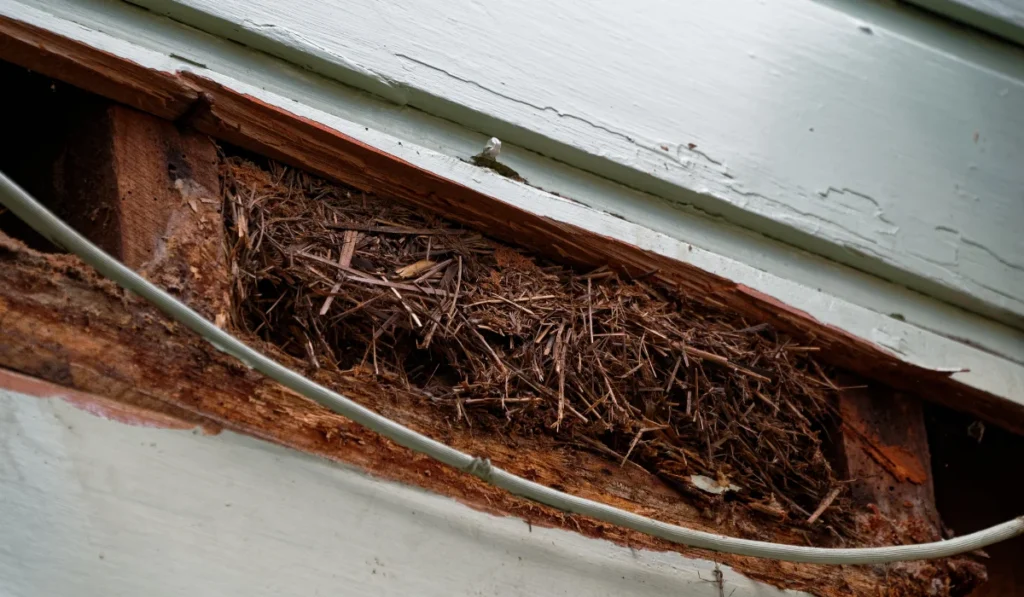
What Does a Rat Nest Look Like?
If you are trying to determine what a rat nest looks like, focus less on finding a perfectly shaped nest and more on finding concentrated nesting material in a protected location. Rats can use soft or easily shredded material available nearby, especially in areas that receive little regular disturbance.
A pile of debris by itself does not confirm rats. Look for rat droppings, gnaw marks, odors, damaged containers, or evidence of repeated travel nearby. Those surrounding clues can help separate a rodent nesting area from ordinary insulation, paper, cardboard, or stored household material.
Check the Space Without Disturbing It
The area around a suspected nest may tell you more than the nest itself. Check nearby walls, shelves, food storage areas, utility openings, and structural gaps for signs of movement. Scratching or scampering sounds can also point to activity behind walls, above ceilings, or beneath floors where you cannot see the animals directly.
Avoid immediately pulling apart or sweeping through a suspected nesting site. Rodent areas can contain droppings, urine, and contaminated debris, so cleanup requires more care than ordinary household dusting.
Where Do Rats Nest in Southern Homes?
Where rats nest depends in part on the species and the opportunities a home provides. Waynes commonly encounters Norway rats and roof rats, and their activity may lead professionals to inspect different parts of a structure.
Homes across Alabama, Tennessee, Mississippi, and the Florida Panhandle offer plenty of potential shelter. Attics, crawl spaces, garages, wall voids, storage areas, rooflines, utility penetrations, and protected exterior spaces can all deserve attention when signs of a rat infestation appear.
Attics and Elevated Areas
Rats in an attic may go unnoticed until you hear movement overhead or discover droppings among stored belongings. Attics can provide cover near insulation, roof openings, vents, and other protected areas that homeowners do not inspect often.
The University of Florida IFAS is a useful regional authority on rat biology and structural rodent problems, including roof rats in warm climates. That regional perspective is especially relevant for homes in the Florida Panhandle and other parts of the Southeast where exterior vegetation and roof access can influence where rodents travel.
Crawl Spaces, Walls, and Lower Areas
Rats in crawl spaces can be equally difficult to detect because those areas are often dark, protected, and rarely visited. Rats may also use wall voids and other concealed structural spaces, leaving sounds or droppings as the first visible clues.
Alabama Cooperative provides regional guidance on rodent identification, habitat, and management. Using species behavior together with the physical evidence in your home can help narrow down where rats are nesting and where they are getting inside.
Why Baby Rats Change the Timeline
Finding baby rats changes what the nest can tell you. An adult rat may enter a structure while searching for food or shelter. Young rats in a nest show that the site has supported breeding activity, which means the adults were already using the property before you discovered the litter.
That does not give you an exact move-in date. It does show why homeowners often find a rat problem later than they expect. Before young rats appear, adults must have access to the property, occupy suitable shelter, and remain there long enough for reproduction to occur.
Do Not Estimate the Population From One Nest
Questions such as how fast rats reproduce or how many rats live in a nest are understandable, but a single nest cannot give you a reliable population count. The number of rats present depends on the species, available shelter, food and water, survival, and whether other nesting areas exist elsewhere in the structure.
For a homeowner, theoretical population projections are less useful than determining whether rats are still active. Fresh evidence, monitoring, inspection, and identification of entry points provide a better basis for deciding what needs to happen next.
What Should You Do After Finding a Rat Nest?
After finding a rat nest, resist the urge to treat the visible material as the entire infestation. Removing a nest may clean up one location, but it does not identify how rats entered, whether animals remain inside, or whether another nesting site exists.
Start by examining the surrounding area without spreading debris. Look for rat droppings, gnawed packaging, damaged openings, odors, and routes between the nesting area and likely sources of food or water. Keep children and pets away from contaminated areas until cleanup can be handled correctly.
Follow Safe Rodent Cleanup Practices
The Centers for Disease Control and Prevention provides guidance for cleaning areas contaminated by rodents. Its recommendations are designed to reduce exposure when dealing with rodent urine, droppings, and nesting material.
That means a suspected rat nest should not be treated like ordinary dirt. Follow current CDC rodent cleanup guidance rather than immediately sweeping or vacuuming dry contaminated debris. If the affected area is extensive, difficult to reach, or still shows active rodents, professional help may be the safer and more practical choice.
Find and Correct Rat Entry Points
Once the immediate area is addressed, shift your attention to how the rats reached it. Check rooflines, vents, utility penetrations, crawl-space access points, damaged materials, garage areas, and other gaps that could provide entry.
Food and water sources matter too. Accessible pet food, stored pantry goods, garbage, and other dependable resources can encourage rodents to remain close to the home. Correcting those conditions supports rat removal by making the property less accommodating after current activity is addressed.
Keeping Rats From Moving Back In
Effective rodent control should address both the rats already present and the conditions that allowed them inside. Catching one animal or removing one rat nest will not solve an open access point that other rodents can use later.
A professional inspection can help identify nesting sites, travel routes, food and water sources, and likely rat entry points. Rodent exclusion then focuses on closing those access areas so removal is paired with prevention rather than handled as a one-time response.
If you find a rat nest or keep noticing droppings, gnawing, scratching, or other rodent activity around your home, the team at Waynes Pest Control can help evaluate what is happening throughout the property. You can contact Waynes to schedule an inspection and get a plan for addressing active rats and reducing the chance that they return.