
 Finding a spider in your bathroom, garage, closet, or storage box can make you wonder whether it belongs there and whether it poses a risk. Spiders in Mississippi homes often settle where they can find shelter, quiet hiding places, and a steady supply of insects. One spider near a door or window may have wandered inside, while repeated sightings in closets, attics, or storage areas deserve closer attention.
Most household spiders avoid people and spend their time hunting other pests. Their appearance can be unsettling, but a dark color, long legs, or quick movement does not automatically mean the spider is dangerous. The bigger challenge is telling common house spiders apart from the few species that call for greater caution.
You do not need to identify every spider on sight. A basic understanding of body shape, markings, web style, and hiding places can help you decide whether to leave it alone, remove it safely, or contact a pest professional.
Finding a spider in your bathroom, garage, closet, or storage box can make you wonder whether it belongs there and whether it poses a risk. Spiders in Mississippi homes often settle where they can find shelter, quiet hiding places, and a steady supply of insects. One spider near a door or window may have wandered inside, while repeated sightings in closets, attics, or storage areas deserve closer attention.
Most household spiders avoid people and spend their time hunting other pests. Their appearance can be unsettling, but a dark color, long legs, or quick movement does not automatically mean the spider is dangerous. The bigger challenge is telling common house spiders apart from the few species that call for greater caution.
You do not need to identify every spider on sight. A basic understanding of body shape, markings, web style, and hiding places can help you decide whether to leave it alone, remove it safely, or contact a pest professional.
Common Spiders in Mississippi Homes
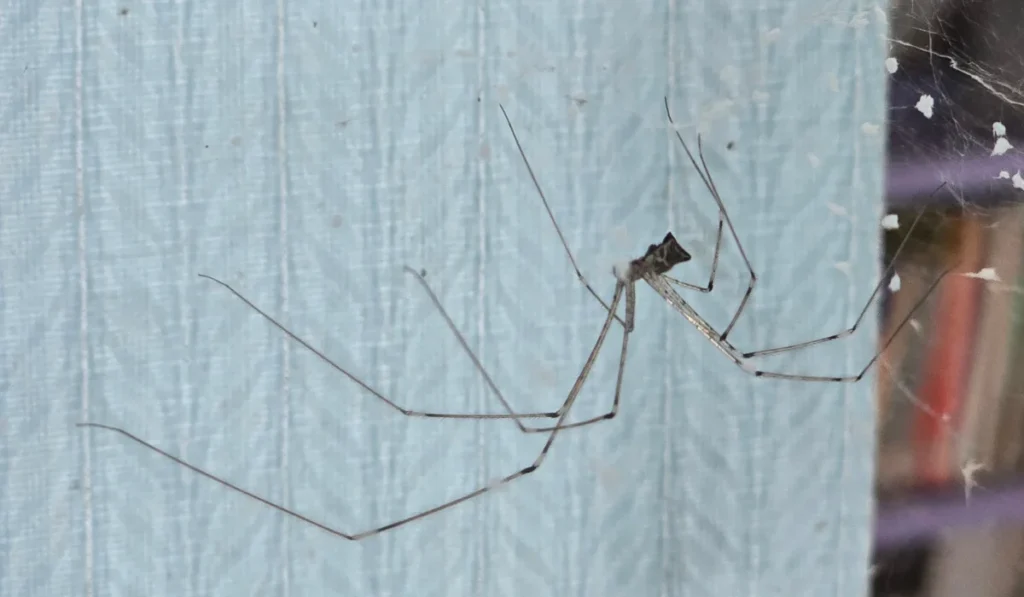
Common spiders in Mississippi homes include both web builders and active hunters. Web-building spiders remain close to their silk structures and wait for insects to become trapped. Hunting spiders move across floors, walls, porches, and landscaping while searching for prey. Cellar spiders and cobweb spiders often appear in garages, utility areas, basements, and ceiling corners where their webs remain undisturbed. Orb-weavers usually stay outdoors, building organized circular webs near shrubs, trees, porches, and exterior lights. Jumping spiders and wolf spiders rely less on prey-catching webs, so you are more likely to see them moving across an open surface. Many harmless spiders are brown, gray, or black. Their color may also look different depending on age, lighting, and natural variation. Because of that overlap, color alone is one of the least reliable ways to identify a spider. Location provides useful context. A large spider crossing a garage floor may be an active hunter that entered through an open door. A spider found repeatedly in stored clothing, shoes, cardboard boxes, or undisturbed closets deserves a more careful look.How to Identify Mississippi House Spiders
Field Guide · Mississippi
Spiders in Mississippi homes: which ones need a closer look
Most spiders found around Mississippi homes are common web builders or hunters that avoid people. A few markings and habits separate them from the two that call for real caution.
1Venomous
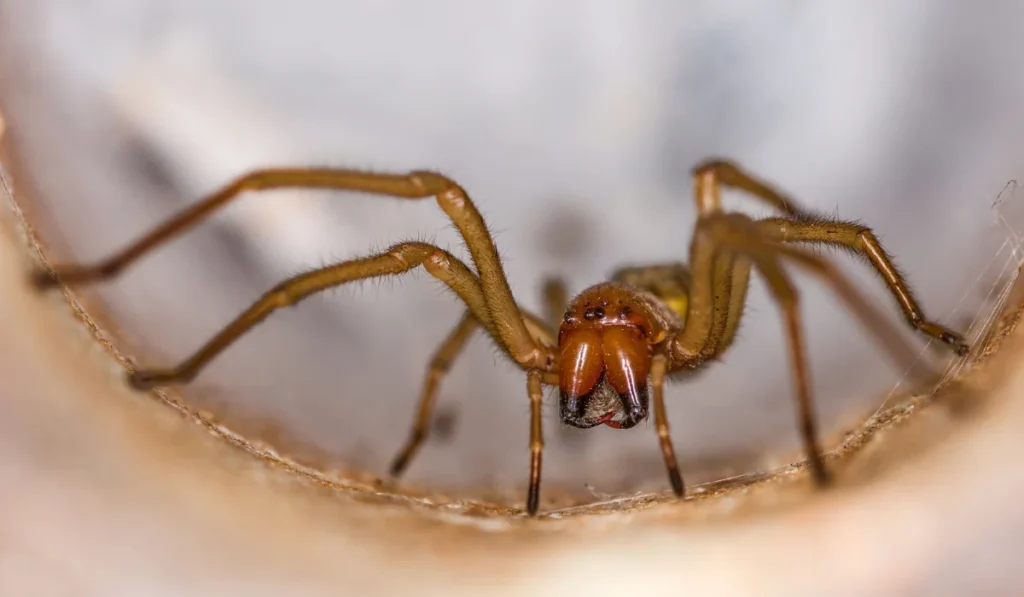
Brown recluse
IDPale tan to brown with legs that appear fairly uniform in color, often with a violin-shaped marking on the upper body, though the marking alone is not a reliable identifier.
WhereClosets, stored boxes, folded bedding, shoes, coats, drawers, furniture, attics, crawl spaces, and utility areas near water heaters.
NoteUsually retreats when disturbed. A bite is more likely when one becomes trapped against skin, such as inside a shoe or beneath bedding.
2Venomous
Black widow
IDGlossy, dark body with contrasting markings on the underside of the abdomen; builds an irregular, tangled web rather than a circular one.
WhereSheds, garages, meter boxes, woodpiles, crawl spaces, outdoor storage, and protected gaps around equipment.
NoteA black spider is not automatically a black widow. Males and young spiders can look different from adult females.
3Low concern
Cellar spiders
IDSmall body with very long legs, building a loose, undisturbed web.
WhereGarages, utility rooms, and ceiling corners.
NoteStays close to its web waiting for insects rather than moving across open surfaces.
4Low concern
Orb-weavers
IDRounded abdomen paired with an organized, circular web with visible spokes.
WherePorches, shrubs, trees, and exterior lights.
NoteUsually stays outdoors rather than moving indoors.
5Low concern
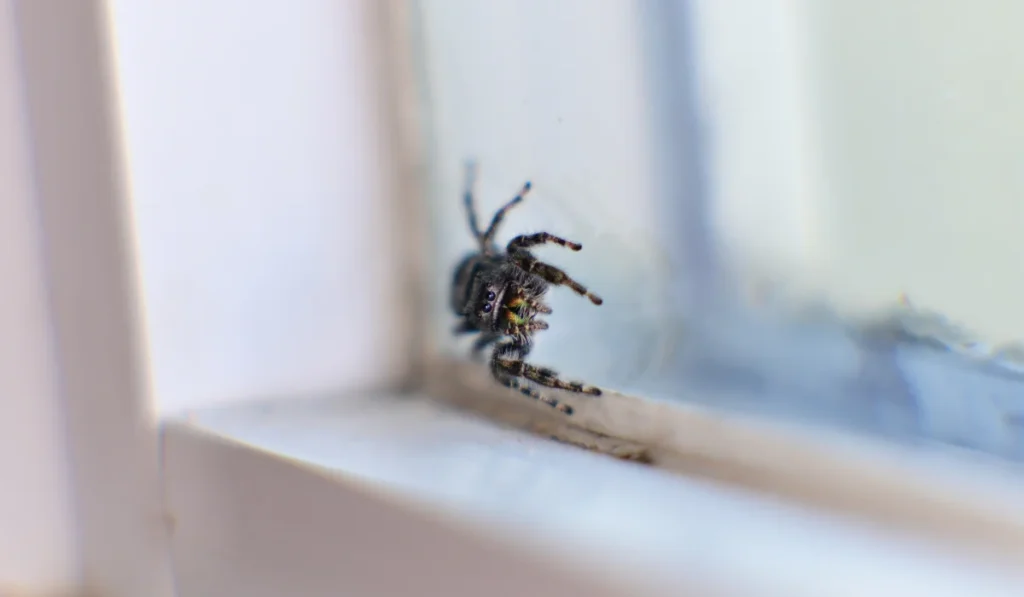
Jumping spiders
IDCompact body with prominent front-facing eyes and quick, darting movement.
WhereWindows, walls, and patios.
NoteRelies on quick movement rather than a prey-catching web.
6Low concern
Wolf spiders
IDSturdy body built for fast ground movement, with no prey-catching web.
WhereFloors, garages, and landscaping.
NoteMoves across open surfaces hunting rather than waiting in a web.
Waynes can help you tell common house spiders from the ones that deserve caution. Every little thing matters. A LOT.
| Spider Group | Common Location | General Recognition Clues | Typical Level of Concern |
| Cellar spiders | Garages, utility rooms, ceiling corners | Small body, very long legs, loose web | Low |
| Orb-weavers | Porches, shrubs, trees, exterior lights | Circular web, rounded abdomen | Low |
| Jumping spiders | Windows, walls, patios | Compact body, quick movements, prominent front-facing eyes | Low |
| Wolf spiders | Floors, garages, landscaping | Sturdy body, fast ground movement, no prey-catching web | Low |
| Brown recluse or black widow | Closets, boxes, sheds, crawl spaces, sheltered storage | Requires closer review of body form, markings, and web | Greater caution |