

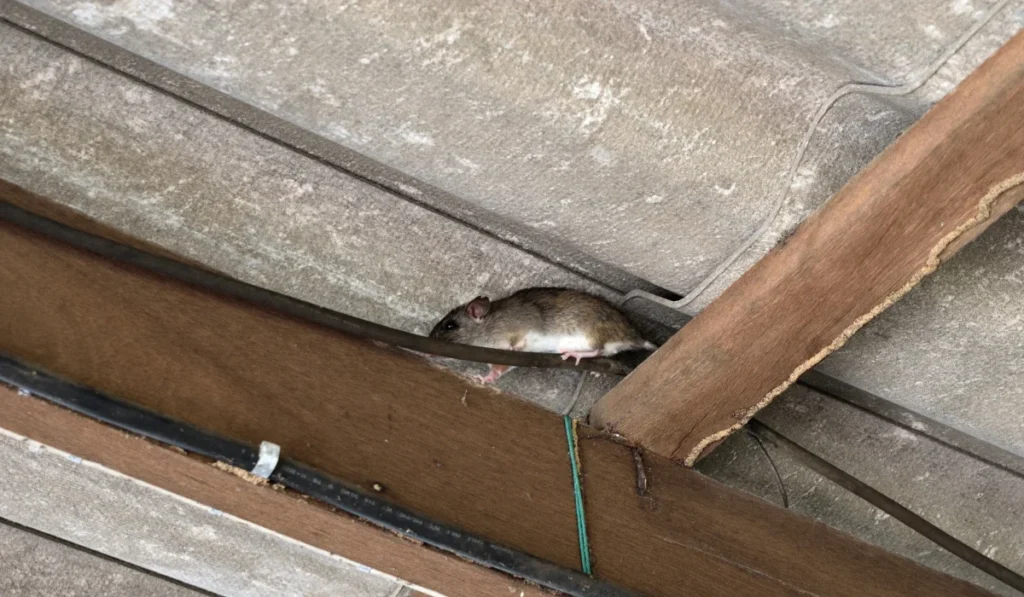
Hearing scratching in the attic or seeing gnaw marks in the garage? You may have roof rats. In Nashville, these climbers slip through gaps, nest in rafters, and raid pet food. If you ignore them, they spread, chew wiring and insulation, and put kids and pets at risk.
Roof rats, also called black rats or ship rats, thrive where food and water are easy to find. They run along eaves and gutters, use tree branches to reach the roofline, and hide in garages, crawl spaces, and attics. From East Nashville to Bellevue, they enter homes for meals and warmth.
This guide explains the risks to kids and pets, how to spot roof rat activity, and how to keep rats out. You’ll also learn when prevention is enough, when exclusion matters most, and how the pros remove rats before they cause damage.
Key Takeaways
- Roof rats can spread pathogens, such as typhus, through fleas and droppings.
- Look for rat droppings, greasy runways, and chewing on electrical wiring and stored pet food.
- Seal gaps, trim tree branches, and remove standing water to reduce food and water sources.
- Professional rat control in Tennessee pairs rodent removal with exclusion to close entry points.
Are Roof Rats Dangerous To Pets And Children In Nashville?
Roof rats do more than annoy. They make messes and cause damage that disrupts daily life. They stain surfaces with droppings and urine, leave rub marks on walls, and shred insulation for nests.
You may hear them in ceilings at night, see gnaw marks on bins, or find chewed openings near vents and eaves. Around kids and pets, that means clutter, odors, and ruined belongings.
Clean with care. Rat droppings can make people sick. Do not dry sweep. Lightly mist droppings and nesting material, wipe them up, and double-bag the waste.
Wash hard surfaces with soapy water and, if you have one, finish with a HEPA vacuum. After you clean, close entry points to prevent rats from returning.
If you need assistance in identifying, eliminating, and cleaning up after roof rats, our rodent control service in Nashville, TN, can help. Our specialists will inspect, remove, and seal entry points to protect your family.
How To Spot A Roof Rat Infestation In Nashville Homes
Roof rat activity often starts quietly. Listen for late-night scampering in walls and ceilings. Check for droppings along baseboards, in garages, and near stored pet food. Watch for rub marks, gnaw marks on bins, and chewed openings near vents or eaves. These signs can mean roof rats or Norway rats.
Outside, check gutters, tree branches that touch the roof, and roof edges for access. Inside, scan rafters and crawl spaces for shredded insulation and nests. Roof rats have large ears, a slim body, and a scaly tail. Fleas on pets or itchy mite bites on family members can also signal the presence of nearby rodents.
Is it a roof rat problem or another critter? Our team at Waynes Pest Control can identify the species, then recommend rat control or wildlife exclusion as needed for Nashville properties.
Health Risks Roof Rats Pose To Families
Roof rats can affect your family’s health. Their droppings and urine contaminate kitchens, playrooms, and pet areas, and can spread salmonella and leptospirosis. Scratches or bites may expose people to rat-bite fever.
When nests or feces are disturbed, airborne particles can raise the risk of hantavirus in some settings. Rats also carry fleas and mites that bite kids and pets, causing itching and secondary infections.
Reduce exposure by ventilating, damp-wiping surfaces, bagging debris, and washing hands. Avoid dry sweeping or vacuuming loose droppings. If anyone develops fever, stomach upset, or a rash after contact with rodents, call a medical professional.
If you want to protect your home from rodents and hantavirus, our team at Waynes Pest Control is ready to help.
Simple Prevention Steps For Nashville Homeowners
Start by removing food and water. Store pet food in sealed bins, secure trash, fix leaks, and dump standing water in buckets and plant saucers. Clean up droppings with a damp method, then keep spaces dry and tidy. Trim tree branches two to three feet from the roof to block roof rat routes.
Next, seal gaps. Use caulk and steel mesh for small holes, and inspect eaves, vents, and roof returns. Focus on quarter-size openings or larger. Check the door from the garage into the home. If you go the DIY route, use exclusion first for better long-term results.
Safe, Effective Rat Control Options In Tennessee
When prevention is not enough, bring in rat control tailored to your home. We will inspect attics, crawl spaces, and rafters, identify travel routes, and place equipment based on rat behavior.
Roof rats travel 50 to 150 feet from their nests to food, so correct placement and follow-up matter. The plan should also cover sanitation, clean up of rat droppings, and monitoring to confirm results.
At Waynes Pest Control, we offer rodent control through our Year-Round Pest Prevention and Smart Residential Pest programs. Services include inspection, exterior barriers, and scheduled follow-ups.
You can also benefit from recurring pest control through targeted treatments to achieve effective, long-lasting control. Smart Pest adds connected devices that improve detection for mouse and rat activity.
These programs cover rodents across our service areas and protect homeowners year-round.
Regional Rat Facts: Nashville And Middle Tennessee
In Nashville, roof rats and Norway rats are common around dense neighborhoods and older homes with mature trees.
Norway rats (brown rats) prefer lower levels and burrows, while roof rats (ship rats) climb and nest high. Signs of Norway rats in Nashville homes include scurrying sounds and fresh burrows near patios.
Both species reproduce fast, so a small problem can become a severe infestation without quick action. Beyond health risks, rats chew building materials and can damage wiring, which creates fire hazards.
Exclusion and ongoing monitoring make sense across Tennessee, especially before cooler months drive pests inside.
Making The Right Rat Control Choice For Your Nashville Home
Roof rats multiply quickly and can turn a minor issue into costly repairs if ignored. The longer they stay, the harder they are to remove.
At Waynes Pest Control, our team can assess your home, remove activity, and secure entry points to keep rodents from returning.
Want a safer, cleaner home? Contact us today to schedule your inspection or request a free quote.
FAQs
What do roof rats look like compared to Norway rats?
Roof rats have large ears, a scaly tail, and a slimmer body than brown rats. They climb well and nest high, while Norway rats burrow low. Both reproduce quickly, so early rat control and exclusion are essential for Nashville homeowners.
Where do roof rats usually enter a house?
Common entry points include gaps at eaves and vents, overhanging tree branches, and openings around garages and crawl spaces. Rats can fit through quarter-sized holes, so seal gaps with caulk and mesh to block access.
What professional help is available in Nashville?
Waynes Pest Control provides inspection, rodent removal, and exclusion to seal entry points, plus Year-Round Pest Prevention and Smart Pest options. Services are available across the Nashville and Tennessee markets for property owners who want lasting results.


