Insights, Tips, and Tales

Palmetto Bugs in Florida: What They Are and Why

White mosquito silhouette with a dashed curved flight path on a green background

Palmetto Bugs in Florida: What They Are and Why

Palmetto Bug The name “palmetto bug” does not refer to a single specific species. In Florida, it is a general term used for several large outdoor cockroaches, including the American and smokybrown cockroaches.  Although these animals normally live outside, they can find their way into homes, storage areas, crawl spaces, garages, and patios. They are naturally drawn to warmth, moisture, organic matter, and shelter.  If they repeatedly show up indoors, the issue is typically driven by entry points, exterior conditions, or a nearby roach population rather than a single stray bug.

Key Takeaways

  • Palmetto bug is a common name for several large cockroaches in Florida.
  • American, smokybrown, and other large outdoor roaches may be called palmetto bugs.
  • They often live in mulch, leaf litter, woodpiles, palm debris, drains, garages, and damp areas.
  • Indoor sightings usually happen when roaches find gaps, moisture, or shelter.

What Are Palmetto Bugs?

A palmetto bug is a cockroach, but the name can refer to more than one large roach. The UF/IFAS cockroach management guide explains that larger cockroaches such as American, Australian, brown, and smokybrown roaches are often called palmetto bugs. That name is especially common in Florida because large roaches often live around palms, mulch, leaf litter, tree holes, damp landscaping, and outdoor structures. They are not the same as German cockroaches, which are smaller indoor roaches that can reproduce quickly in kitchens and bathrooms.

Common Palmetto Bugs in Florida

Field Guide · Florida Panhandle, FL

Palmetto bugs vs. German cockroaches in Florida

“Palmetto bug” covers several large outdoor roaches. Knowing which one you’re seeing — and whether it’s actually a German cockroach — changes how urgent the problem is.

1
German cockroach
The indoor lookalike that actually matters most
Rapid breeder
IDSmaller, tan-colored roaches, unlike the large outdoor palmetto bugs.
WhereKitchen cabinets, sinks, dishwashers, refrigerator motors, drawer tracks, bathroom vanities, and shared walls in apartments.
NoteCan reproduce quickly indoors. Small roaches, daytime activity, egg cases, or droppings near kitchen appliances point to this rather than an occasional palmetto bug.
2
American cockroach
One of the large roaches Floridians call palmetto bugs
Nuisance
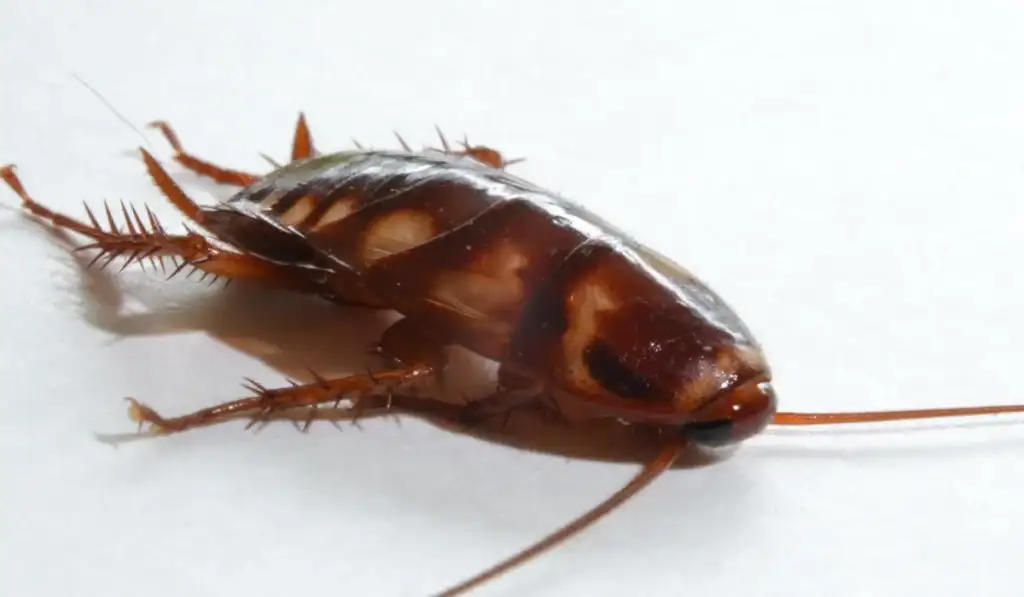
IDLarge reddish-brown roaches with a pale marking behind the head.
WhereDrains, utility areas, crawl spaces, garages, and commercial spaces.
NoteDrawn to warm, damp places and can move through unsanitary areas, leaving odors and droppings behind.
3
Smokybrown cockroach
A strong-flying outdoor roach tied to rooflines and trees
Nuisance
IDLarge, shiny, dark brown roaches and strong flyers.
WhereAttics, rooflines, eaves, gutters, tree holes, mulch beds, woodpiles, exterior lights, garages, and patios.
NoteMoves between trees, rooflines, and structural gaps, so its presence is often tied to exterior conditions.
4
Australian cockroach
American cockroach lookalike found around landscaping
Low concern
IDSimilar to the American cockroach, but with yellow markings near the edges of the wings.
WhereLandscaping, potted plants, greenhouses, firewood, and moist outdoor spaces.
NoteCommon in warm, humid areas and mostly an outdoor presence around the home.
Waynes provides pest control services in the Florida Panhandle, including roach identification and control. Every little thing matters. A LOT.
Properly identifying palmetto bugs is essential, as some species are mostly outdoor invaders while others pose a more significant threat as indoor pests.

American Cockroach

American cockroaches are large reddish-brown roaches with a pale marking behind the head. They are often found in warm, damp places and may move through drains, utility areas, crawl spaces, garages, and commercial spaces.

Smokybrown Cockroach

Smokybrown cockroaches are large, shiny, dark brown roaches. They are strong flyers and are often associated with warm, humid outdoor areas. They may show up around:
  • Attics
  • Rooflines
  • Eaves
  • Gutters
  • Tree holes
  • Mulch beds
  • Woodpiles
  • Exterior lights
  • Garages and patios
Because they can move between trees, rooflines, and structural gaps, smokybrown roaches are often connected to exterior conditions.

Australian Cockroach

Australian cockroaches can look similar to American cockroaches, but they usually have yellow markings near the edges of the wings. They are common in warm, humid areas and may be found around landscaping, potted plants, greenhouses, firewood, and moist outdoor spaces.

Why Palmetto Bugs Come Inside

Palmetto bugs usually enter homes because they are looking for moisture, shelter, or cooler protected areas. They may also be carried inside with firewood, boxes, plants, outdoor gear, or stored items. Common entry points include:
  • Gaps under exterior doors
  • Garage door edges
  • Torn screens
  • Cracks around foundations
  • Utility openings
  • Gaps around pipes
  • Attic vents
  • Crawl space openings
  • Open doors or windows
A single palmetto bug indoors may be accidental. Repeated sightings near the same door, garage, bathroom, laundry room, or utility area usually mean there is an exterior source or entry point nearby.

Why Florida Homes Attract Palmetto Bugs

Florida’s warm, humid climate gives outdoor roaches many places to survive. Around homes, palmetto bugs are often tied to damp organic material and protected hiding spaces. They may be attracted to:
  • Thick mulch
  • Leaf piles
  • Palm fronds
  • Firewood
  • Compost areas
  • Leaky outdoor spigots
  • Poor drainage
  • Clogged gutters
  • Dense shrubs
  • Pet food left outside
  • Trash bins that are not sealed
These conditions do not mean a home is dirty. Outdoor roaches can live near well-maintained homes if moisture, shelter, and food sources are available.

Are Palmetto Bugs Dangerous?

Palmetto bugs are not dangerous in the way a venomous pest would be, but they are still a pest concern. Roaches can move through unsanitary areas, produce odors, leave droppings, and contaminate surfaces. Inside a home, they may be found near:
  • Bathrooms
  • Kitchens
  • Laundry rooms
  • Garages
  • Utility rooms
  • Drains
  • Storage areas
  • Trash areas
Roaches can also aggravate allergy and asthma symptoms in sensitive people. That is one reason repeated indoor sightings should not be ignored.

Palmetto Bug or German Cockroach?

This distinction matters. Palmetto bugs are usually large outdoor roaches. German cockroaches are smaller, tan roaches that often live and reproduce indoors. German cockroaches are usually found near:
  • Kitchen cabinets
  • Sinks
  • Dishwashers
  • Refrigerator motors
  • Drawer tracks
  • Bathroom vanities
  • Shared walls in apartments
If you are seeing small roaches, roaches during the day, egg cases, droppings, or activity near kitchen appliances, the issue may be more serious than an occasional palmetto bug.

How to Reduce Palmetto Bugs Around Your Home

The best prevention strategy starts outside. Large outdoor roaches are often drawn to damp, sheltered areas near the structure. Helpful steps include:
  • Move firewood away from the house.
  • Keep mulch pulled back from doors and foundation edges.
  • Remove leaf litter, palm debris, and rotting plant material.
  • Store outdoor items off the ground when possible.
  • Seal gaps around doors, vents, and utility lines.
  • Replace worn door sweeps.
  • Repair torn window and door screens.
  • Keep garage doors closed when not in use.
  • Fix leaks and reduce standing water.
  • Keep trash and pet food sealed.
These steps can reduce the conditions that bring palmetto bugs close to the home and help limit indoor sightings.

When to Call Waynes

Call us if palmetto bugs keep showing up indoors, you are seeing large roaches around garages or patios, or activity continues after cleaning and sealing.  Waynes provides pest control services in the Florida Panhandle for common household pests, including roaches, and our approach focuses on indoor protection and the outside conditions that allow pests to move toward the home. If you are seeing roaches in your kitchen, bathroom, garage, patio, or storage areas, contact Waynes for a free quote and we’ll help identify the roach, find the source, and recommend the right next step.

FAQs About Palmetto Bugs in Florida

Are palmetto bugs the same as cockroaches?

Yes. “Palmetto bug” is a common name used for several large cockroaches in Florida, including American cockroaches, smokybrown cockroaches, and similar outdoor roaches.

Why do palmetto bugs come into my house?

They usually enter homes looking for moisture, shelter, or access to protected areas. Gaps under doors, torn screens, garage edges, utility openings, and damp exterior conditions can all make entry easier.

Do palmetto bugs infest homes?

Some large outdoor roaches may wander indoors without establishing a major infestation. However, repeated sightings should be inspected because moisture, entry points, or nearby outdoor populations may be supporting the activity.

Are palmetto bugs harmful?

They are mainly nuisance pests, but they can contaminate surfaces, leave droppings, create odor, and aggravate allergy or asthma symptoms in sensitive people.

Does Waynes treat palmetto bugs in Florida?

Yes. Waynes provides pest control services in the Florida Panhandle, including roach control. We can inspect the activity, identify the species, and recommend steps based on what is happening around your home.

Rebecca Wood

Waynes has been serving customers since 1973. We have grown over the decades through a commitment to providing a world-class experience for our customers. We believe that if our employees are happy and fulfilled, they will go above and beyond in delighting our customers.

Latest from Waynes Blog

Opossum

Opossums in Florida: Habits, Risks, and ID

An opossum in Florida is usually a Virginia opossum, the state’s only marsupial. These animals are common around wooded areas, water sources, neighborhoods, gardens, sheds, crawl spaces, and yards where food or shelter is easy to find.  Opossums are mostly nocturnal and often avoid people, but they can become a nuisance when they get into…

Learn More >

tick

Ticks in Florida: Types, Season, and Prevention

In Florida, homeowners often encounter ticks around yards, trails, pets, and wooded perimeters. These animals thrive in shaded, grassy, brushy, or wooded outdoor environments, particularly where moisture, leaf litter, pets, and wildlife create ideal conditions.  Because certain ticks can transmit diseases, effective prevention is vital. Frequent sightings of ticks on clothing, pets, or outdoor recreation…

Learn More >

black carpenter ants

Carpenter Ants in Florida: Signs and Seasonal Activity

In Florida, carpenter ants are large insects that can be found both indoors and outdoors, particularly near moisture sources, trees, decaying wood, window frames, crawl spaces, attics, and plumbing leaks.  Unlike termites, they do not consume wood; instead, they often establish nests inside structural voids, soft or decayed wood, and pre-existing cavities. Spotting an occasional…

Learn More >

Florida no-see-um (biting midge) resting on human skin

Florida No-See-Ums: Identification, Bites, and Season

Biting midges, sand gnats, or sand flies, commonly known as Florida no-see-ums, are minuscule biting flies that often cause discomfort in coastal yards, patios, beaches, and marsh edges. Because of their tiny size, you might experience their small, itchy bites without ever spotting the insect itself.  These animals are particularly troublesome across coastal Florida, thriving…

Learn More >

Numerous reddish Florida fire ants swarming across a dirt mound with grass at the edges

Florida Fire Ants: Identification, Bites, and Mounds

Florida fire ants are one of the most frustrating ant problems homeowners face because they can build mounds in lawns, sting when disturbed, and return after rain or yard work.  The red imported fire ant is the species most people mean when they talk about fire ants in Florida. These ants are reddish brown to…

Learn More >

Florida millipede crawling across wet brick tile, segmented dark body with many pale legs visible

Florida Millipedes: Identification and Seasonal Habits

A Florida millipede is usually a nuisance pest, not a sign of structural damage. Millipedes live outdoors in damp places where they feed on decaying plant material, mulch, leaf litter, and rotting vegetation.  They often become noticeable after rain, heavy irrigation, or sudden moisture changes because saturated soil can push them toward patios, garages, crawl…

Learn More >

Aedes Mosquitoes

Florida Mosquitoes: Species, Season, and Bites

Florida mosquitoes are more than a backyard annoyance. They can make patios, pools, porches, and coastal yards difficult to enjoy, and some species can spread disease.  Florida has many mosquito species, but homeowners usually need to focus on a few practical questions: where they are breeding, when they are most active, and why they keep…

Learn More >

Translucent mole crab (sand flea) resting on coarse mixed-color beach sand

Sand Fleas in Florida: ID, Bites, and Season

Sand fleas in Florida can mean two different things, and that is where most of the confusion starts. At the beach, “sand fleas” often refers to mole crabs, small crustaceans that live in the surf zone and are not household fleas.  When people talk about itchy bites near beaches, marshes, patios, or coastal yards, they…

Learn More >

Ants crawling along a dirty white window sill and frame

Common Florida Insects: How to Identify Them

A Florida insect problem can look different from house to house. One home may deal with ants in the kitchen, another may see roaches in the garage, and another may notice termites, mosquitoes, fleas, or bed bugs.  Florida’s warm, humid climate can keep many pests active for long stretches of the year, so identification matters….

Learn More >

Scroll to Top