
Insights, Tips, and Tales

Carpet Beetles Do the Damage That Moths Usually Get Blamed For

White mosquito silhouette with a dashed curved flight path on a green background

Carpet Beetles Do the Damage That Moths Usually Get Blamed For

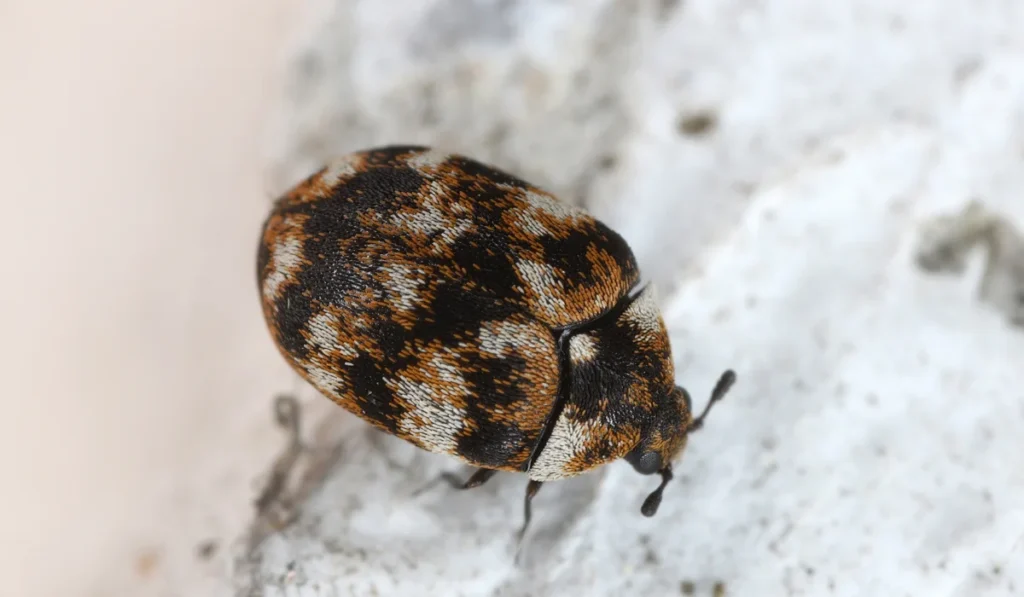
Varied carpet beetle (Anthrenus verbasci). Beetle on the apartment wall.

You pull a wool sweater from the closet and find several small holes near the cuff. Clothes moths may seem like the obvious cause, but carpet beetles can leave similar damage. In many homes, carpet beetle larvae feed quietly in dark, undisturbed areas while adult beetles appear somewhere else.

Carpet beetles do not limit their feeding to carpet. Their larvae may damage wool rugs, stored clothing, upholstered furniture, blankets, and other items made with animal-based fibers. They can also survive on pet hair, lint, feathers, and dead insects hidden beneath furniture or along room edges.

Whether you live in Alabama, Mississippi, Tennessee, or the Florida Panhandle, correct identification matters. Before replacing damaged belongings or cleaning every closet, you need to determine which pest is present, where it is feeding, and what is supporting the infestation.

How Carpet Beetles Damage Fabrics and Furnishings

Carpet beetle damage comes from the larval stage, not the adult beetle. The larvae feed on materials that contain animal proteins, including wool, fur, hair, feathers, and some leather-based goods. They may also feed on blended fabrics when those items contain natural animal fibers or have food residue, perspiration, or body oils on them.

The name “carpet beetle” can make the problem sound limited to flooring. In reality, larvae may feed on wool clothing, area rugs, felt, upholstered furniture, stored blankets, decorative feathers, and other animal-based materials. The University of Minnesota’s carpet beetle guidance explains that larvae can damage a wide range of household products made with these materials.

Why the Larvae Cause the Damage

Adult carpet beetles do not chew holes in clothing or rugs. You may notice them near windows because they are attracted to light, but that does not mean the window area is where the damage began. The larvae often remain in protected spaces where they can feed without frequent disturbance.

This separation between adult activity and larval feeding can make a carpet beetle infestation hard to trace. You might find an adult on a windowsill while larvae remain under a sofa, inside a closet, beneath the edge of a wool rug, or behind a baseboard. A useful inspection needs to cover both visible activity and concealed food sources.

Carpet Beetles vs. Clothes Moths: Identifying the Culprit

Carpet beetles and clothes moths can both damage natural fibers, so the condition of the fabric alone may not identify the pest. Either problem can create holes, thin areas, or irregular patches of missing material. The better clues are the larvae, shed skins, webbing, cases, and the location where the damage appears.

Carpet beetle larvae are often brownish or tan and covered with noticeable hairs or bristles. As they grow, they shed their outer skins. These dry larval skins may collect beneath furniture, inside closets, along baseboards, or near damaged materials. Finding several shed skins in one area strongly suggests that larvae have been active nearby.

Clothes moth larvae leave different evidence. According to the University of California Integrated Pest Management guide to clothes moths, one common species produces silk webbing as it feeds, while another carries a small protective case. Carpet beetle larvae do not create those silk feeding tubes or portable cases.

Sign Carpet Beetles Clothes Moths
Damaging stage Larva Larva
Common evidence Bristly larvae and shed skins Silk webbing, tubes, or cases
Adult behavior Often seen near windows or flowers Usually stays near fabrics and avoids bright light
Common feeding areas Textiles, lint, pet hair, dead insects, and old nesting material Stored animal-fiber clothing and household textiles
Best way to confirm Find larvae, shed skins, or the hidden source Find larvae, webbing, or cases near damaged material

Adult behavior offers another clue. Adult clothes moths tend to remain in dim areas near suitable fabrics, while adult carpet beetles are more likely to appear near windows or travel outdoors around flowers. Still, one adult insect does not prove which pest damaged an item. Inspect the fabric and the surrounding area before drawing a conclusion.

Signs of a Carpet Beetle Infestation

A carpet beetle infestation may first appear as holes in clothes, bare patches on a rug, or damage along upholstered furniture seams. The feeding can seem scattered because larvae move through hidden edges and protected spaces. They may damage the underside of a rug while leaving the most visible surface largely unchanged.

Fabric and Furniture Damage

Damage often appears in areas that receive little movement or cleaning. Carpet beetle larvae may feed along rug borders, beneath furniture, inside folded clothing, or near seams and cuffs. On upholstered furniture, the damage may remain hidden along the underside or within folds until the fabric begins to thin.

Because several fabric pests can create similar holes, the damage pattern should not be your only clue. Check the affected item closely, then inspect nearby materials and concealed areas for larvae or other evidence.

Shed Skins and Live Larvae

Shed skins are one of the most useful signs of carpet beetle activity. These hollow skins may look like small, dry insect shells with bands of hair. You may find them beneath furniture, inside drawers, along baseboards, or near damaged fabrics.

Live carpet beetle larvae may also appear in these areas. They often move slowly and may be brownish or tan with a hairy or bristled appearance. Finding several larvae or shed skins in the same location can help narrow down the feeding source.

Adult Beetles Near Windows

Adult carpet beetles often appear near windows when they move toward light. The University of Kentucky’s carpet beetle resource explains that indoor sources can include lint, pet hair, dead insects, and old bird or animal nesting material. The damaged sweater in your closet may be only one part of the problem.

Check areas that rarely receive a thorough cleaning. Inspect beneath heavy furniture, around rug edges, behind baseboards, inside floor vents, near pet bedding, and in storage containers holding natural-fiber items. Attics, wall voids, light fixtures, and areas near abandoned bird or rodent nests may also contain materials that support larvae.

Why Carpet Beetles Show Up in Southern Homes

Carpet beetles can enter through small openings around doors, windows, vents, and rooflines. Adults may also arrive on cut flowers or other items brought indoors. Once inside, they seek suitable places to lay eggs near materials that can feed developing larvae.

Entry Points Around the Home

Small gaps around windows, doors, rooflines, and vents can provide access to adult beetles. Open windows and doors may also allow them indoors during normal household activity. Once inside, adults may move toward light while larvae develop in a different part of the home.

Finding adult beetles near a window does not always reveal where the infestation began. A broader inspection may be needed to locate the materials supporting the larvae.

Hidden Food Sources

Homes across Alabama, Mississippi, Tennessee, and the Florida Panhandle can contain many food sources that support carpet beetle larvae. Pet hair may collect beneath furniture, seasonal clothing may remain undisturbed for months, and dead insects may build up inside attics, light fixtures, or window spaces. Bird or rodent nesting material near a structure can create another hidden source.

A well-kept home can still develop carpet beetle activity. The problem often starts with small, overlooked accumulations rather than obvious dirt. A narrow gap beneath a cabinet may hold hair and lint, while a forgotten box of wool clothing may provide both food and shelter.

Why Surface Cleaning May Not Be Enough

Vacuuming open floor space helps, but it does not address debris under furniture, inside storage containers, or behind difficult-to-reach edges. Larvae can remain active in areas that are rarely disturbed, even when the rest of the home receives regular cleaning.

Lasting control depends on finding and removing the source. That may mean inspecting stored textiles, cleaning beneath appliances, checking floor vents, or addressing old nesting material in an attic or other concealed area.

How to Get Rid of Carpet Beetles

Getting rid of carpet beetles requires more than cleaning the one item that shows damage. You need to inspect nearby materials, remove suitable food sources, and clean the hidden areas where larvae may be feeding.

Inspect Nearby Fabrics and Furnishings

Start by examining every item near the damaged material. Check clothing, rugs, blankets, furniture, and stored goods made with wool, fur, feathers, or other animal-based fibers. Pay close attention to seams, folds, cuffs, rug edges, furniture undersides, and the corners of storage containers.

Expand the inspection beyond the first damaged item. Carpet beetle larvae may be feeding several feet away in a closet corner, beneath a sofa, or around accumulated debris near a vent.

Clean Hidden Areas Thoroughly

Vacuum cracks, closet corners, baseboards, floor vents, and spaces beneath furniture. Remove accumulated lint, pet hair, dead insects, and loose debris. Empty the vacuum outdoors after cleaning so larvae, shed skins, or other material do not remain inside the home.

Move lightweight furniture when possible and inspect the edges of rooms where dust and hair collect. Focus on areas that receive little foot traffic because carpet beetle larvae prefer protected locations.

Clean and Store Vulnerable Items

Clean washable clothing and bedding according to the care label. Delicate wool items, rugs, and upholstered materials may require professional cleaning. Once items are clean and fully dry, place them in tightly sealed storage containers instead of open cardboard boxes or loosely closed bags.

Do not assume that discarding one damaged item will solve the problem. The larvae may be feeding on a separate source nearby, such as pet hair under an appliance or dead insects in an attic. Keep inspecting until you locate the area with the most larvae, shed skins, or damaged material.

When Professional Carpet Beetle Control Makes Sense

Professional help may be appropriate when activity appears in several rooms, larvae return after cleaning, or the source is inside an inaccessible area. It also makes sense when you cannot tell whether the damage came from carpet beetles or clothes moths.

A trained pest professional can identify the insect, inspect concealed spaces, and determine which conditions are supporting the activity. That prevents you from focusing on one damaged item while the real source remains hidden elsewhere in the home.

Protecting Your Home From Carpet Beetle Damage

Carpet beetles can cause the same kinds of fabric damage that homeowners often blame on clothes moths. The clearest answer comes from the evidence around the item, not from the holes alone. Bristly larvae and shed skins point toward carpet beetles, while silk webbing or portable cases suggest clothes moth activity.

Regular cleaning, careful storage, and prompt inspection can reduce the risk of further carpet beetle damage. When larvae keep appearing or the feeding source remains hidden, Waynes can help identify the pest and inspect the areas supporting its activity. Contact Waynes to schedule service and protect your clothing, rugs, furniture, and other valued belongings.

Rebecca Wood

Waynes has been serving customers since 1973. We have grown over the decades through a commitment to providing a world-class experience for our customers. We believe that if our employees are happy and fulfilled, they will go above and beyond in delighting our customers.

Latest from Waynes Blog

Upward view at paper wasp nest

Do Wasps Die in the Winter When Alabama Barely Freezes

If you spot a wasp near your porch or window on a warm December afternoon, you may wonder: do wasps die in the winter, or does Alabama stay warm enough for them to remain active? The answer depends on the type of wasp and its role within the colony. Most worker wasps and males do…

Learn More >

Black Widow Spider (1)

Only Two Poisonous Spiders in Alabama Deserve Your Worry

People often search for information about poisonous spiders in Alabama, but venomous is the more accurate term. Poison causes harm when it is swallowed, inhaled, or absorbed. Venom enters the body through a bite or sting. Most spiders found around Alabama homes are not a serious threat to people. They would rather avoid you, and…

Learn More >

Varied carpet beetle (Anthrenus verbasci). Beetle on the apartment wall.

Carpet Beetles Do the Damage That Moths Usually Get Blamed For

You pull a wool sweater from the closet and find several small holes near the cuff. Clothes moths may seem like the obvious cause, but carpet beetles can leave similar damage. In many homes, carpet beetle larvae feed quietly in dark, undisturbed areas while adult beetles appear somewhere else. Carpet beetles do not limit their…

Learn More >

A Packrat looks over the edge of a red sandstone ledge as it reaches down to get a drink of clear spring water in the desert of Southern Utah, USA.

Pack Rats Really Do Steal Shiny Things and They Live in the South

Pack rats have earned one of the most memorable reputations in the rodent world. The name brings to mind an animal sneaking away with coins, bottle caps, foil, or other shiny objects. There is truth behind that reputation, but the real behavior is broader. Pack rats collect all kinds of materials, including objects that have…

Learn More >

Two ultrasonic pest repellents. Device for repelling mosquitoes and flies. Housing protection against insects, mice and rats

Most Rodent Repellents Quit Working the Moment It Gets Cold

A cold front moves through, and a few nights later you hear scratching above the ceiling or find droppings near the garage wall. Reaching for peppermint pouches, an ultrasonic device, or another store-bought mouse deterrent feels like a simple response. Rodent repellents can change activity in a limited area, but they rarely solve the reason…

Learn More >

Wooden mousetrap with a piece of yellow cheese on a dark background, close up, top view. Rodent trap

Where to Place Mouse Traps: Placement Matters More Than Bait

A well-baited mouse trap can sit untouched for days when it is placed in the wrong spot. The problem is often not the trap or the bait. It is the route. Knowing where to place mouse traps helps you intercept mice where they already travel instead of expecting them to cross an open room. House…

Learn More >

Pale clothes moth resting on a cream knitted sweater, showing frayed wing edges and nearby fabric fibers

Moths in the Closet Appear Right as You Unpack Fall Clothes

You pull a sweater from storage, shake it out, and notice several small holes near the cuff. A pale moth flutters from the box, and fine webbing clings to a fold near the collar. It may look like the problem appeared with the change of season, but the damage often began months earlier. Clothes moths…

Learn More >

Large black wasp drinking from a small puddle on a rough, weathered surface

The Big Black Wasp in Your Yard Looks Scarier Than It Acts

A large black wasp buzzing through your yard is enough to make most homeowners stop in their tracks. With its shiny black body, long legs, and loud flight, it’s easy to assume the insect is aggressive or preparing to sting. Across Alabama and Tennessee, it’s common for people to mistake these wasps for hornets or…

Learn More >

Person on bed scratching red, irritated welts on forearm and upper arms consistent with bed bug bites

Bed Bug Bites Often Come Home From Dorms and Fall Travel

College move-in season, football weekends, fall vacations, and holiday travel all have something in common. They increase the chances of bringing home more than luggage and souvenirs. Because bed bugs are expert hitchhikers, they can travel unnoticed on backpacks, suitcases, clothing, and bedding. For many families, the first indication of a problem is discovering bed…

Learn More >

Scroll to Top