
Huntsman spiders in Florida can look startling because they are large, fast, and often appear indoors in places people do not expect. The species most often discussed in Florida is the pantropical huntsman spider, also called the giant crab spider.
It has a flattened brown body, long legs, and a habit of hiding under furniture, behind wall hangings, inside closets, and in garages. Huntsman spiders are not usually a major household danger, but repeated sightings can point to entry points, clutter, or insects attracting spiders close to the home.
Key Takeaways
- Pantropical huntsman spiders are large, flattened, fast-moving spiders found in Florida.
- They may hide under furniture, behind wall hangings, in closets, and in garages.
- They do not build webs to catch prey; they hunt insects directly.
- Huntsman spiders can bite if trapped or handled, but they usually try to escape.
- Waynes provides spider pest control in the Florida Panhandle.
What Does a Huntsman Spider Look Like?
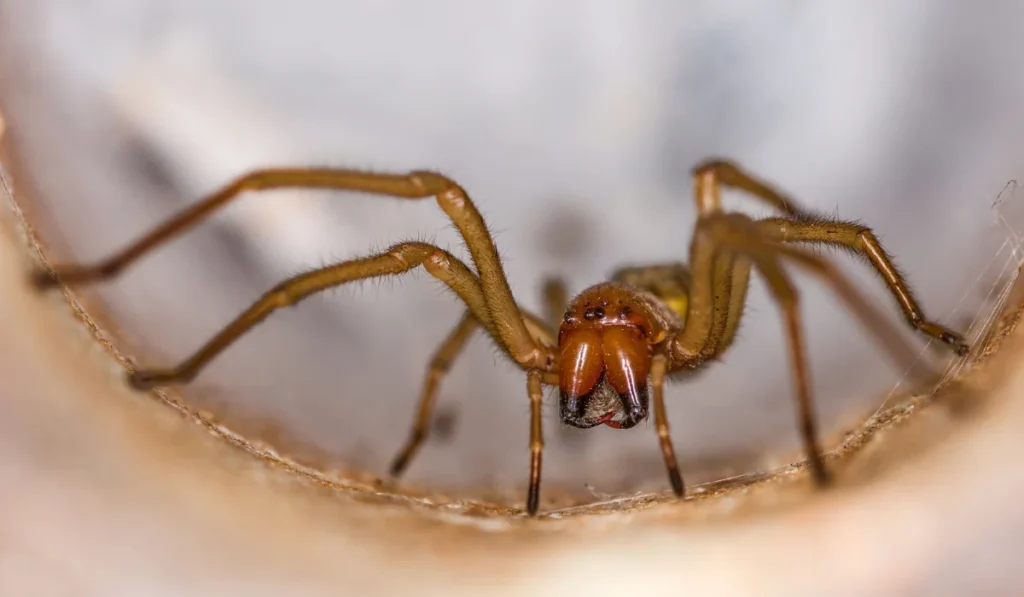
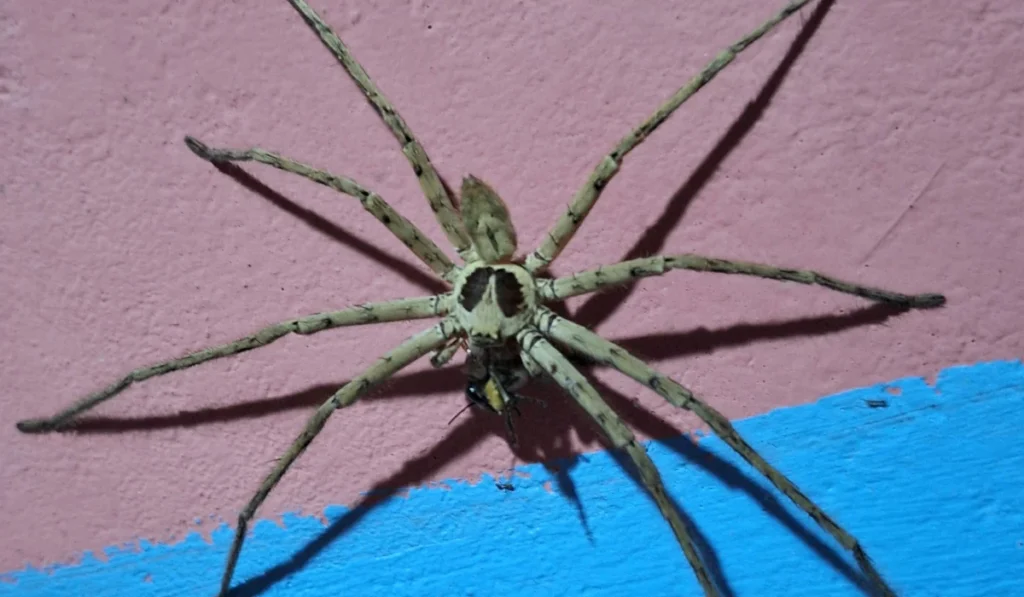
The pantropical huntsman spider, Heteropoda venatoria, is a large brown spider with a flattened body and long legs that spread outward. The UF/IFAS pantropical huntsman spider profile notes that in Florida, this spider can be distinguished from other large running spiders by its flattened brown body and black spots around the strong bristles on its legs.
Common identification clues include:
- Large size
- Flattened brown body
- Long legs held out to the sides
- Fast sideways or crab-like movement
- Dark spots on the legs
- Little obvious patterning on the top of the body
- Hiding behind or under objects
People sometimes call huntsman spiders “giant crab spiders” because of their flattened shape and leg position. That nickname can be confusing because several spider groups have crab-like movement or shape, so the body form and habitat matter more than the nickname.
Where Huntsman Spiders Hide in Florida Homes
Huntsman spiders are active hunters. They do not wait in a sticky web for insects. Instead, they move quickly and hide in protected places when they are not hunting.
In Florida homes, they may be found around:
- Garages
- Closets
- Cabinets
- Furniture
- Wall hangings
- Storage boxes
- Attics
- Sheds
- Outdoor structures
- Patio or porch areas
UF/IFAS notes that during warm weather, pantropical huntsman spiders may be found in and around human structures, while colder weather can push them indoors into protected areas such as closets and garages. That pattern is one reason Florida homeowners may suddenly notice one inside after it has been hiding nearby.
Why Huntsman Spiders Come Indoors
A huntsman spider indoors is often looking for shelter or prey. Florida’s warm, humid conditions support insects year-round, and spiders follow food sources. If a huntsman spider is in a garage, closet, shed, or storage room, it may be hunting roaches, crickets, moths, flies, or other insects.
They may enter through:
- Garage door gaps
- Torn screens
- Open doors
- Utility openings
- Cracks around doors or windows
- Boxes, plants, or items brought inside
- Gaps around rooflines or soffits
One spider may be accidental. Repeated sightings suggest it is worth checking for entry points, clutter, and insect activity nearby.
Are Huntsman Spiders Dangerous?
Huntsman spiders can bite if they are trapped, pressed against skin, or handled, but they are not considered one of Florida’s main medically significant spider concerns. The UF/IFAS guide to common Florida spiders explains that widow spiders are the only spiders native to or established in Florida with medically significant venom, while brown recluse claims in the state are often uncertain or linked to rare, limited records.
That does not mean you should pick up a huntsman spider. Avoid handling any spider you cannot identify. Use a container, broom, or vacuum if you need to remove one safely. If someone is bitten and symptoms seem unusual or severe, contact a medical professional.
Huntsman Spider or Brown Recluse?
Huntsman spiders can be mistaken for other brown spiders because they are large, fast, and may hide indoors. Brown recluse spiders are also widely feared, but in Florida they are often overreported.
The UF/IFAS brown recluse spider profile explains that brown recluse spiders are frequently blamed for necrotic wounds in Florida, even though confirmed records are limited and many alleged bites are not backed by an identified spider.
A huntsman spider usually looks flatter, larger, and more spread out than a brown recluse. Its legs extend outward, and it moves quickly across walls, floors, or hidden surfaces. Still, do not rely on color alone. Many Florida spiders are brown.
Signs Huntsman Spiders May Be Active Nearby
Because huntsman spiders do not build prey-catching webs, you may not see the usual corner webs that come with other spiders. Instead, activity may show up as repeated sightings in sheltered spaces.
Signs to watch for include:
- Large brown spiders running across walls or floors
- Sightings in garages, closets, or storage areas
- Spiders hiding behind wall décor or furniture
- Activity near boxes, stored items, or outdoor gear
- More insects in the same areas
- Gaps or damaged screens near repeated sightings
The absence of webs does not rule out huntsman spiders. Their hunting style is different from orb weavers, cellar spiders, and cobweb spiders.
How to Reduce Huntsman Spider Activity
Reducing huntsman spiders starts with reducing the places they hide and the insects they hunt. Focus on garages, closets, sheds, and exterior entry points first.
Helpful steps include:
- Seal gaps around doors, windows, vents, and utility lines.
- Replace worn door sweeps.
- Repair torn window and door screens.
- Reduce clutter in garages, closets, and sheds.
- Store boxes off the floor when possible.
- Shake out gloves, shoes, and outdoor gear before use.
- Move firewood and stored items away from exterior walls.
- Reduce insects around exterior lighting when practical.
- Vacuum corners, baseboards, and hidden areas behind furniture.
These steps can also help reduce roaches, crickets, moths, and other insects that may draw hunting spiders indoors.
When to Call Waynes
Call us if huntsman spiders keep showing up indoors, you are seeing large spiders around garages or storage areas, or you are not sure what species you found. Waynes provides spider pest control in Alabama, Mississippi, Tennessee, and the Florida Panhandle, and frequent spider sightings often mean there is also a steady insect food source nearby.
For homeowners in the Panhandle, our Florida pest control services help address spiders and other common pests by focusing on the conditions that let pests move toward and into the home.
If huntsman spiders are showing up in your garage, closets, shed, or living space, contact Waynes for a free quote and we’ll help identify what is active and what needs to change around your property.
FAQs About Huntsman Spiders in Florida
Are huntsman spiders common in Florida?
Pantropical huntsman spiders are found in Florida, especially in and around structures where they can hide and hunt insects. They are not usually the most common spider homeowners see, but their size makes them memorable.
Do huntsman spiders build webs?
No. Huntsman spiders do not build webs to catch prey. They are active hunters that run down insects and hide under or behind objects when resting.
Why did I find a huntsman spider in my garage?
Garages give huntsman spiders shelter, insects, and easy entry through door gaps or stored items. Repeated sightings may mean there are entry points or insect activity nearby.
Are huntsman spiders the same as brown recluse spiders?
No. Huntsman spiders and brown recluse spiders are different. Huntsman spiders are usually larger, flatter, and more spread out, while brown recluse spiders are often overreported in Florida.
Does Waynes treat huntsman spiders in Florida?
Yes. Waynes provides spider pest control in the Florida Panhandle. We can inspect the activity, look for entry points and insect sources, and recommend the right next step for your home.