 Alabama has four main types of hornets and wasps that sting: baldfaced hornets, European hornets, yellowjackets, and paper wasps. Here’s what to know.
Key Takeaways
- Only the European hornet is a true hornet in Alabama. Baldfaced hornets, yellowjackets, and paper wasps are all wasps, though they share the same sting threat.
- Baldfaced hornets and yellowjackets defend nests with large colonies and can sting repeatedly. Stay at least 10 feet from any active nest.
- European hornets are larger than most stinging insects in Alabama and are the only species active after dark.
- Paper wasps build open umbrella-shaped nests under eaves, inside attics, and along rooflines where homeowners frequently disturb them.
- Nests found near entry points or high-traffic areas warrant professional pest control. DIY removal of large nests carries real sting risk.
Which Hornets and Wasps Live in Alabama Yards
Four stinging insect species account for most hornet and wasp encounters in Alabama: the baldfaced hornet, the European hornet, eastern yellowjackets, and paper wasps. Only the European hornet qualifies as a true hornet, but the others are close enough in behavior and sting severity that most homeowners treat them the same way. Each builds nests in different locations, reaches peak aggression at different times of year, and poses its own removal challenges. Alabama’s warm, humid climate extends the active season for all four species. Nests that start small in spring can reach hundreds or thousands of individuals by late summer and early fall. According to the Alabama Cooperative Extension System, stinging insects like these become most aggressive when colonies are at peak size and foraging activity increases heading into autumn.How Stinging Insects Build Nests in Alabama
All four species chew wood fibers into a paper-like pulp to construct their nests. Queens overwinter alone and begin building in spring. Early nests are golf ball size with a handful of workers. By late summer, colonies can number in the thousands, and the nests can reach the size of a basketball or larger. The species differ primarily in where they choose to build and how aggressively they defend the structure. Underground nesting is common among yellowjackets, who take over abandoned rodent burrows or loose soil near tree roots. Baldfaced hornets prefer aerial sites: tree branches, shrubs, and building overhangs. European hornets nest inside hollow trees or inside walls and attics. Paper wasps favor protected locations with good exposure, including eaves, window frames, and porch ceilings. Understanding where each species nests helps you spot a problem before it becomes a large colony requiring professional pest control.Baldfaced Hornets and Yellowjackets in Alabama: What to Watch For
How Baldfaced Hornets Build Large Nests in Alabama
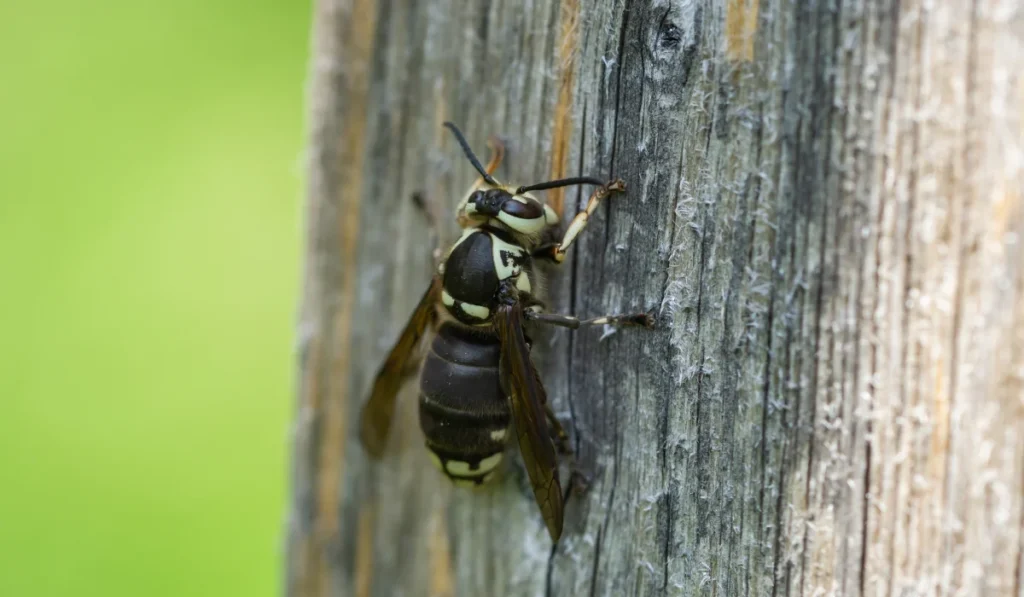
Baldfaced hornets are among the most aggressive stinging insects in Alabama and construct some of the most recognizable nests in the region. Their gray, papery nests hang from tree branches, shrubs, and building eaves. A mature nest can hold 400 to 700 workers by early fall. The colony produces painful stings when threatened, and workers can sting repeatedly without losing the stinger. Attempting to remove a large nest without protection is how most sting incidents happen. Baldfaced hornets are primarily predators. They feed on caterpillars, spiders, and other insects, which makes them incidental garden pest controllers during summer months. Their value as predators does not reduce the sting risk near an active nest. White markings on the face and thorax distinguish baldfaced hornets from yellowjackets, which carry yellow bands on a black body. Colonies die off in winter, and only mated queens survive to start new nests in spring.How Eastern Yellowjackets Nest Underground in Alabama
Eastern yellowjackets are the stinging insects most likely to surprise Alabama homeowners because they nest underground and in wall voids where the colony stays out of sight until it is large. Accidentally stepping near a ground nest or running a lawn mower over the entrance provokes a violent response. Yellowjackets can sting multiple times, and large colonies send dozens of workers at once when threatened. Late summer and early fall mark the peak danger period for eastern yellowjackets. By August and September, colonies reach maximum size, food sources thin out, and workers become more aggressive while foraging. Fallen fruit, open garbage cans, and pet food left outside all draw yellowjackets to areas close to your home. Sealing trash cans, picking up fallen fruit, and bringing pet food inside are the most practical steps to reduce encounters before nests become established.European Hornets and Paper Wasps in Alabama Homes
Why European Hornets Are the True Hornet in Alabama
The European hornet is the only true hornet species present in Alabama. It is larger than a yellowjacket, reaching about one inch in length, with a reddish-brown body and yellow bands. European hornets are notable for one behavior that sets them apart from other stinging insects: they remain active at night. Outdoor lights attract the insects they feed on, which brings European hornets into contact with people after dark in ways other wasp species do not. European hornets build nests inside hollow trees, attics, and inside walls. A colony inside a wall void can expand through the fall and cause structural damage as the nest grows. They strip bark from shrubs and small trees to gather wood fibers for nest construction, which can kill young plants. If you notice bark damage on ornamental shrubs or hear buzzing inside a wall at night, a European hornet colony is a likely cause. Nests inside structures should be addressed by professional pest control rather than sealed shut, which traps the colony and forces workers into living spaces.Where Paper Wasps Build Nests in Alabama Homes
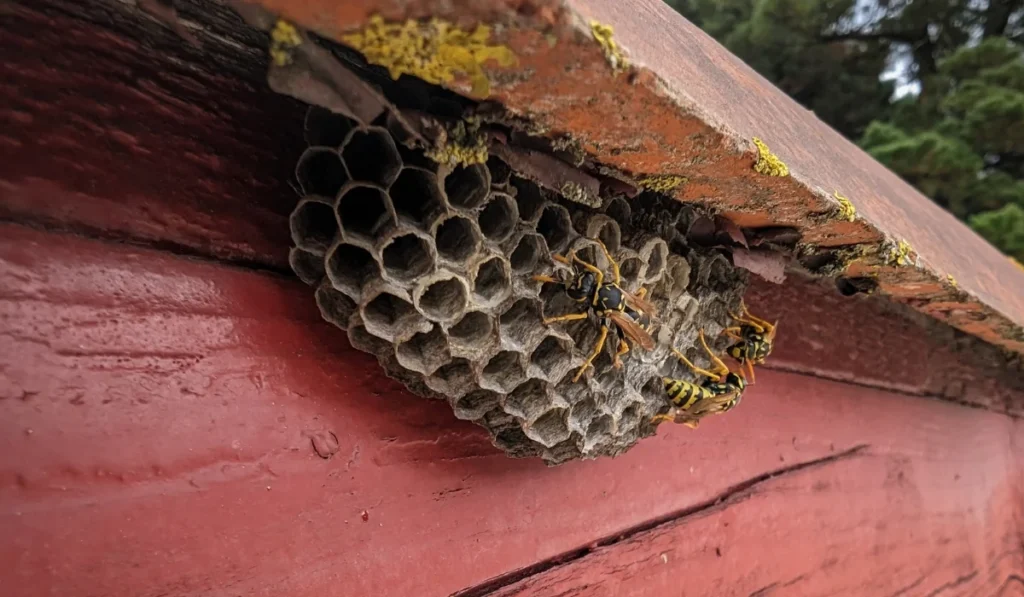
Paper wasps build small, open-celled nests shaped like an upside-down umbrella that hang from eaves, porch overhangs, window frames, and attic vents. Each nest holds fewer individuals than a yellowjacket or baldfaced hornet colony, typically 20 to 75 wasps. Paper wasps are less aggressive than their relatives and will not sting unless the nest is disturbed. The problem is location: nests built around doorways, windows, and rooflines put homeowners in regular proximity to the colony. Paper wasps feed on caterpillars and other garden pests, making them useful in vegetable gardens and ornamental beds. Their nests near entry points are what typically creates conflict. Knocking down a small nest in early spring before the colony builds up is straightforward. By mid-summer, a larger paper wasp colony warrants more care. Nests in attics, inside wall gaps, or tucked behind shutters and siding are better handled by a pest control professional who can access and treat the harborage without creating a sting hazard.Stinging Insects in Alabama: Identification at a Glance
Field Guide · Alabama
Hornets and wasps in Alabama yards
Four stinging species show up around Alabama homes, plus two look-alikes that get blamed for their trouble. Knowing the size, markings, and nest location tells you what you are actually dealing with.
1Aggressive
Eastern yellowjacket
IDAbout ½ inch, black and yellow banded body.
WhereUnderground burrows, abandoned rodent tunnels, and wall voids, often hidden until the colony is large.
NoteColonies reach maximum size by August and September, and workers grow more aggressive while foraging as food sources thin out. Can sting multiple times, and large colonies send dozens of workers at once when threatened.
2Aggressive
Baldfaced hornet
IDAbout ¾ inch, black body with white facial and thorax markings, distinguishing it from the yellow-banded yellowjacket.
WhereAerial nests hanging from tree branches, shrubs, and building eaves.
NoteA mature nest can hold 400 to 700 workers by early fall. Workers can sting repeatedly without losing the stinger.
3Destructive
European hornet
IDAbout one inch, reddish-brown body with yellow bands, larger than a yellowjacket.
WhereHollow trees, attics, and inside wall voids.
NoteThe only species active at night, drawn to insects near outdoor lights. A colony inside a wall void can expand through fall and cause structural damage, and workers strip bark from shrubs and small trees, which can kill young plants.
4Can sting
Paper wasp
ID¾ to 1 inch, orange or reddish-brown body with yellow bands, builds open umbrella-shaped nests.
WhereEaves, porch overhangs, window frames, and attic vents.
NoteEach nest holds 20 to 75 wasps, fewer than a yellowjacket or baldfaced hornet colony. Feeds on caterpillars and other garden pests, and will not sting unless the nest is disturbed.
5Low concern
Cicada killer wasp
IDNearly two inches long, one of the largest wasp species in the region.
WhereBurrows dug in loose soil to provision larvae with paralyzed cicadas.
NoteSolitary rather than colonial. Males cannot sting, and females rarely sting unless handled.
Waynes technicians inspect the full property to locate active hornet and wasp harborage before building a treatment plan. Every little thing matters. A LOT.
| Species | Size | Markings | Common Nest Locations | Aggression Level |
|---|---|---|---|---|
| Baldfaced hornet | About ¾ inch | Black body with white facial markings | Trees, shrubs, and eaves | High |
| European hornet | 1–1.5 inches | Reddish-brown body with yellow bands | Hollow trees, attics, and wall voids | Moderate to high |
| Eastern yellowjacket | About ½ inch | Black and yellow bands | Underground burrows and wall voids | Very high |
| Paper wasp | ¾–1 inch | Orange or reddish-brown body with yellow bands | Eaves, overhangs, and attic vents | Low to moderate |