
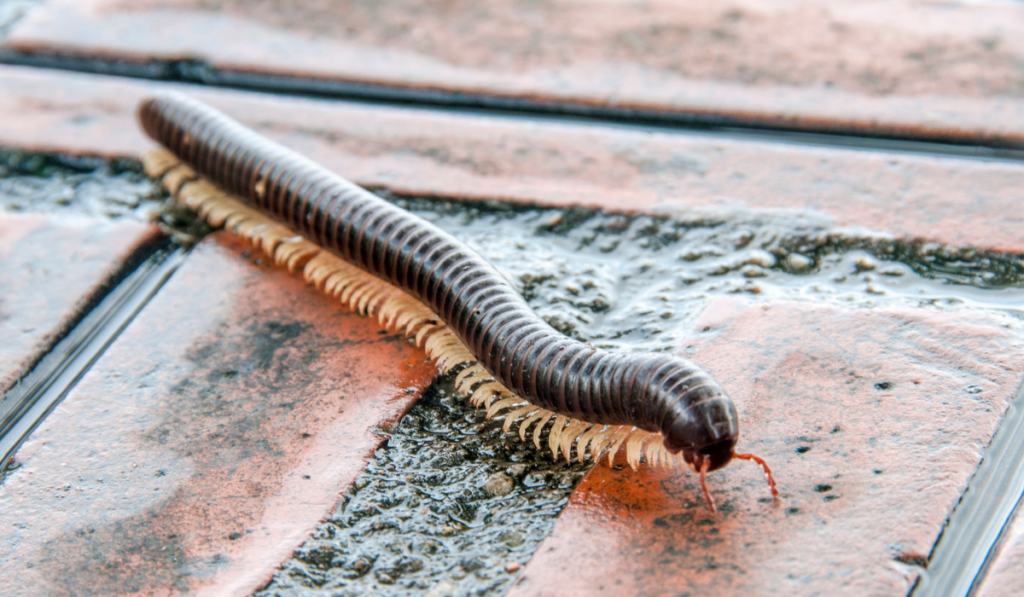
A Florida millipede is usually a nuisance pest, not a sign of structural damage. Millipedes live outdoors in damp places where they feed on decaying plant material, mulch, leaf litter, and rotting vegetation.
They often become noticeable after rain, heavy irrigation, or sudden moisture changes because saturated soil can push them toward patios, garages, crawl spaces, doorways, and foundation edges.
If you are finding millipedes inside again and again, the issue usually starts outside with moisture, organic debris, and small entry points around the home.
Key Takeaways
- Millipedes are arthropods, not insects.
- They have long, cylindrical bodies with many segments and two pairs of legs on most body segments.
- Florida millipedes usually live outdoors in moist mulch, leaf litter, soil, and decaying vegetation.
- Indoor activity often increases after heavy rain or moisture changes.
What Does a Florida Millipede Look Like?
Millipedes are often called “thousand-leggers,” but they do not actually have a thousand legs. They have long, wormlike bodies with many segments and short antennae. Most body segments have two pairs of legs, which helps separate them from centipedes.
The UF/IFAS guide to pillbugs, centipedes, millipedes, and earwigs explains that millipedes are cylindrical arthropods that coil tightly when disturbed and may release a foul-smelling fluid.
Common identification clues include:
- Long, rounded body
- Many body segments
- Two pairs of legs on most segments
- Short antennae
- Slow movement
- Curling into a coil when disturbed
- Brown, black, reddish, or dark coloring
- Activity in damp outdoor areas
Millipedes move slowly and do not hunt other pests. If the animal is fast, flat, and has one pair of legs per body segment, it is more likely a centipede.
Millipede or Centipede?
Millipedes and centipedes are often confused because both have many legs. Their behavior is different.
Millipedes are slow-moving scavengers. They feed mostly on decaying plant material and prefer damp, dark places. Centipedes are faster predators that hunt insects and spiders.
The easiest homeowner-level differences are:
- Millipedes are rounded and slow.
- Centipedes are flatter and faster.
- Millipedes have two pairs of legs on most body segments.
- Centipedes have one pair of legs per body segment.
- Millipedes often curl up when disturbed.
- Centipedes usually run away quickly.
That distinction matters because millipede problems usually point to moisture and outdoor organic material, while centipede sightings may also suggest other insects are present.
Where Millipedes Live Around Florida Homes
Millipedes need moisture to survive. Around Florida homes, they are usually found in shaded, damp places where decaying plant material is available.
Common hiding places include:
- Mulch beds
- Leaf litter
- Compost areas
- Grass clippings
- Rotting fruit
- Soil under potted plants
- Boards or stones on the ground
- Dense ground cover
- Crawl space edges
- Shaded foundation areas
A UF/IFAS Extension Indian River County article on millipedes around Florida homes notes that millipedes often feed on decaying vegetation such as leaf litter, tree mulch, compost, grass clippings, and rotting fruit. These are the same conditions that can bring them close to the structure.
Why Millipedes Come Inside After Rain
Millipedes usually do not want to live indoors. They enter by accident when outdoor conditions become too wet, too dry, or otherwise unfavorable.
After heavy rain, the soil and mulch around the home may become saturated. Millipedes may move upward or toward drier shelter, then slip through small gaps around doors, sliding glass doors, garage edges, foundation cracks, or window frames.
Waynes’ guide to millipede season after rain explains that this type of activity can affect homes across Alabama, Tennessee, Mississippi, and the Florida Panhandle when wet soil pushes millipedes toward structures.
When Is Millipede Season in Florida?
Florida millipedes can be active for much of the year because warm weather and moisture support outdoor arthropod activity. Homeowners usually notice them most when moisture changes suddenly.
Millipedes may become more visible:
- After heavy rain
- After several days of irrigation
- During humid periods
- When mulch stays wet
- When soil near the foundation becomes saturated
- When leaf litter builds up near the home
- During seasonal movement from outdoor habitat
- When outdoor conditions push them toward drier shelter
In the Florida Panhandle, activity may spike after summer storms or extended rainy periods. A few millipedes after rain may be normal. Large numbers inside or repeated activity in the same rooms usually point to conditions that need attention.
Are Millipedes Dangerous?
Millipedes are not dangerous to homes, furniture, food, people, or pets in the way many homeowners fear. They do not bite, sting, chew wood, or damage structures like termites.
They can still be unpleasant indoors. When disturbed, some millipedes release a defensive fluid that can smell bad and may stain surfaces. Avoid crushing them on floors, walls, or carpets. Use a vacuum, broom, dustpan, or container instead.
If someone has skin irritation after handling a millipede, wash the area with soap and water. Contact a medical professional if irritation is severe or unusual.
Why Millipedes Keep Returning
Repeated millipede sightings usually mean the outdoor source has not been addressed. Indoor treatment alone may remove the ones you see, but new millipedes can keep entering if the conditions outside stay favorable.
Common causes include:
- Wet mulch against the foundation
- Heavy leaf litter near doors
- Poor drainage around the home
- Overwatered landscaping
- Damp crawl space areas
- Worn door sweeps
- Gaps around sliding glass doors
- Cracks near foundations or thresholds
- Potted plants kept close to entry points
The UF/IFAS guide to pests associated with mulch and moisture notes that millipedes feed on decaying organic matter, live in mulched areas, and may migrate from swampy areas of Florida. That is why moisture and debris management are central to prevention.
How to Reduce Millipedes Around Your Home
Millipede prevention starts outdoors. The goal is to make the area near the structure less damp, less cluttered, and harder to enter.
Helpful steps include:
- Pull mulch back from the foundation.
- Remove leaf piles and grass clippings near the home.
- Avoid overwatering landscaping.
- Improve drainage near patios, doors, and foundation edges.
- Replace worn door sweeps.
- Seal cracks around doors, windows, vents, and utility openings.
- Store firewood and boards off the ground.
- Move potted plants away from doorways.
- Use a vacuum or broom for indoor millipedes instead of crushing them.
When to Call Waynes
Call us if millipedes keep entering after rain, gather along foundation walls, show up in garages or crawl spaces, or return after you remove them. Waynes provides pest control services in the Florida Panhandle for common household pests, and our process starts with inspection, entry-point checks, and a plan built around your home.
For pests that fall outside the most common service categories, our other pest services include millipedes and other occasional invaders that can become a nuisance around the home.
If millipedes are showing up indoors or collecting around doors, patios, or garage edges, contact Waynes for a free quote and we’ll help identify the source and the right next step.
FAQs About Florida Millipedes
Are millipedes common in Florida?
Yes. Millipedes are common in Florida because the state’s warm, humid conditions support the damp outdoor habitats they prefer. They are often found in mulch, leaf litter, soil, compost, and shaded areas.
Why do millipedes come inside after rain?
Heavy rain can saturate soil and mulch, pushing millipedes toward drier areas. They may then enter through gaps around doors, garage edges, sliding doors, foundations, or window frames.
Do millipedes bite?
No. Millipedes do not bite or sting. They may release a foul-smelling defensive fluid when disturbed, so avoid crushing or handling them.
How do I get rid of millipedes indoors?
Use a vacuum, broom, dustpan, or container to remove them. Then focus on outdoor moisture, mulch, leaf litter, drainage, and entry points so new millipedes are less likely to enter.
Does Waynes treat millipedes in Florida?
Yes. Waynes provides pest control services in the Florida Panhandle, and its other pest services include millipedes. We can inspect activity, check entry points, and recommend prevention or treatment based on the conditions around your home.