Yellowjackets come out in early spring when temperatures hold above 50 °F, and colonies reach peak size between August and September. In Alabama, Tennessee, Florida, and Mississippi, queens begin building yellow jacket nests as early as March. By late summer, a single colony can house 1,000 to 4,000 workers. Knowing this cycle puts you ahead of the problem before stings start.
Key Takeaways
Yellow jacket season in the Southeast
This calendar tracks the yellow jacket colony cycle. Queens emerge in early spring and colonies build through summer. Size and sting risk peak in late summer and early fall. Darker shields mean heavier activity.
- Queens come out of overwinter shelter in early spring, often as early as March in the Southeast.
- Worker populations build steadily through summer and peak in August and September.
- Most yellowjacket nests sit underground or inside wall voids, making them hard to spot until the colony is large.
- Sting incidents rise in early fall as food sources decline and workers become more aggressive.
- Professional pest control provides the safest path for yellow jacket nest removal during peak season.
When Do Yellowjackets Come Out in Spring
How Queens Come Out and Start Each New Colony
Mated queens are the only yellowjackets that survive winter. They overwinter tucked beneath tree bark, inside rock walls, or in abandoned mammal burrows. Once spring temperatures climb and stay above 50 °F, each queen emerges and begins searching for a nest site on her own. In the Southeast, that window opens as early as March.
The queen builds the first few cells of a new nest herself and lays the first generation of eggs. Those eggs hatch into larvae, which she feeds until they develop into adult workers. The process takes several weeks, so early spring nests stay small and largely hidden.
How Workers Come Out and Build the Colony Through Late Spring
Once the first generation of workers hatches, colony growth accelerates. Workers take over foraging, nest construction, and larval feeding while the queen focuses on laying eggs. By late spring, a colony may hold 30 to 50 workers. The nest expands inside the chosen shelter, whether that is a ground cavity, a wall void, or a gap in your home’s foundation.
Workers forage for two things at this stage: protein from other insects to feed the larvae, and sugars from nectar and flowers to fuel their own flight. They fly in and out of a single entrance, which is often the first visible sign of a nearby nest.
When Yellow Jackets Come Out at Peak Season in Summer
When Do Yellow Jackets Come Out Most: July–September
Colonies reach maximum size between August and September, often housing 1,000 to 4,000 workers. Research on seasonal colony phenology published in the Western North American Naturalist confirms that peak foraging traffic and colony size align with late summer, with some perennial colonies generating traffic rates ten times higher than average. In the Southeast, warm summers and mild falls extend this window further than in northern states.
Workers spend summer split between two foraging tasks. Early summer foraging focuses on protein — other insects, larvae, and any available human foods left in the open. As the season progresses, workers shift toward sugary foods: fruit, nectar, open drinks, and anything sweet near your yard. This is why yellowjackets seem to appear out of nowhere at late-summer cookouts.
How Yellow Jackets Come Out in Early Fall Before the Season Ends
Sting incidents rise sharply in early fall as natural food sources decline. The colony reaches its maximum size just as wild fruit, flowers, and insect prey begin to disappear. Workers become more aggressive around trash cans, outdoor meals, and dumpsters because competition for food intensifies. September is the month most pest control professionals consider the highest-risk period for stings.
By late September, new queens and males leave the nest to mate. All workers and the original queen die after the first hard frost. Only the newly mated females survive, finding sheltered areas to overwinter and start the cycle again the following spring. The nest itself does not get reused. Each spring, new queens build fresh nests from scratch.
Where Yellowjacket Nests Come Out Around Your Home
Underground Nests That Come Out of Abandoned Burrows
Most yellowjacket nests in the Southeast sit underground. Workers build inside abandoned mammal burrows, beneath landscape timbers, and under dense mulch. You may notice wasps flying in and out of a single entrance hole in the ground, often near a garden bed, a walkway, or a lawn border. The nest itself can be the size of a football by late summer.
Ground nests near high-traffic areas carry the highest sting risk. Vibrations from lawn mowers, foot traffic, or digging near the entrance can trigger a defensive swarm. Yellowjackets do not lose their stinger after one use, and they can sting repeatedly, making a surprise encounter near a ground nest genuinely dangerous.
Structural Nests That Come Out Inside Walls and Voids
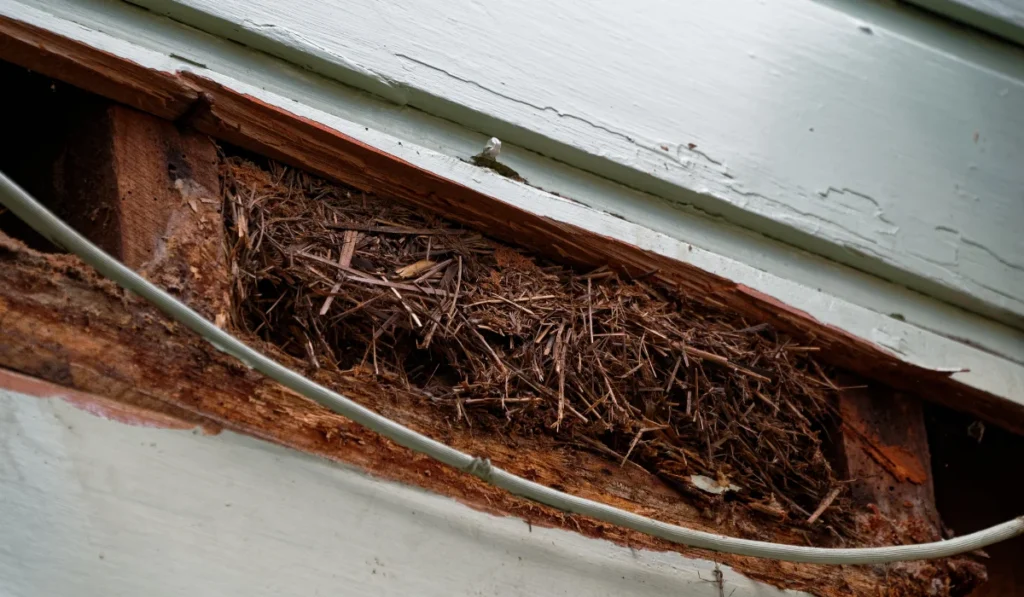
Yellowjackets also build nests inside walls, attics, and other structures. Rock walls, tree stumps, gaps around utility lines, and wall voids all provide shelter. Unlike paper wasps, which hang umbrella-like nests from eaves in open view, yellowjackets build enclosed nests hidden inside structures. You may hear buzzing inside a wall before you see a single insect near the entrance.
Structural nests are harder to treat than ground nests because the colony expands inside the wall cavity. By late summer, a wall nest can contain thousands of workers. Attempting to seal the entrance without treating the colony first often drives workers deeper into the wall or forces them to chew through interior surfaces, including drywall.
When Do Yellow Jackets Come Out: Pre- and Post-Peak Control
Prevention Steps That Come Out Ahead of Nesting Season
Reducing food and shelter around your home lowers the chance that yellowjackets nest nearby. Most prevention work takes less than an afternoon and pays off through the entire season. The EPA’s integrated pest management framework supports a prevention-first approach, addressing conditions that attract pests before colonies establish.
- Keep trash cans sealed with tight-fitting lids and empty them on a regular schedule.
- Pick up fallen fruit from trees before it sits on the ground.
- Cover food and drinks during outdoor meals, especially sugary items.
- Fill abandoned ground holes that could shelter a new colony in spring.
- Inspect walls, eaves, and your foundation for entrance gaps each March before queens come out.
- Remove standing wood debris, tree stumps, and ground-level shelter near the home.
When Yellow Jackets Come Out: Call Pest Control for Nest Removal
Treating a yellow jacket nest yourself during peak season carries real risk. A colony holding thousands of workers will defend against any perceived threat, and yellow jacket venom can trigger severe reactions. Multiple stings raise the danger for anyone, not only those with known allergies. The USDA’s integrated pest management guidance recommends professional intervention for stinging pests near occupied structures.
A pest control professional locates the nest entrance, confirms the species, and applies targeted treatments designed to reduce the colony. Technicians treat active nests at night, when all workers have returned inside, increasing contact with the colony. This timing matters. Treating during the day, when thousands of foragers are in the field, leaves a large portion of the colony untouched and the nest active the following morning.
Waynes has served more than 150,000 families across Alabama, Tennessee, Florida, and Mississippi for over 50 years. As a member of the EPA Pesticide Environmental Stewardship Program since 2004, Waynes follows application protocols designed to minimize exposure for your family and pets. Every little thing matters. A LOT.
If you spot yellowjackets flying in and out of a single point near your home, do not block the entrance or disturb the nest. Contact Waynes for a pest control inspection and let a trained technician handle yellow jacket nest removal.
How to Identify Yellowjackets Before They Come Out in Force
Come Out Ahead: Telling Yellowjackets From Other Wasps
Yellowjackets are frequently confused with paper wasps, bald-faced hornets, and other stinging insects, but their behavior and nests differ significantly. Vespula maculifrons, the eastern yellowjacket, is the most common species across the Southeast. They measure roughly half an inch long with bold yellow and black banding on the abdomen and no visible waist pinch at rest. Workers move in quick, darting patterns rather than the slower hovering of paper wasps.
Paper wasps build open umbrella-like nests from eaves and branches, with cells visible from below. Bald-faced hornets build large gray paper nests that hang from trees or structures. Yellowjackets build enclosed nests inside ground cavities, wall voids, and sheltered areas, which is why their populations often go unnoticed until the colony reaches maximum size in late summer or early fall.
Signs a Yellow Jacket Nest Has Come Out Near Your Property
The most reliable sign of a nearby nest is a steady line of wasps flying to and from a single point. Unlike random foraging insects, nesting yellowjackets follow predictable flight paths to the same entrance repeatedly. Watch for this pattern along fence lines, near ground-level openings, around utility connections, and along the base of your home’s exterior walls.
Other signs include audible buzzing inside a wall, dead workers near a window or baseboard inside the home, and an increase in yellow jacket activity around outdoor food or trash that appeared suddenly rather than building over time. Any of these signals warrants a closer look before the colony grows larger through the remaining summer weeks.
Frequently Asked Questions
When are yellowjackets most active during the day?
Yellowjackets forage during daylight hours, with the highest activity in the warm afternoon. They return to the nest at night. Pest control professionals treat nests after dark because the full worker population is inside, which increases the contact a treatment makes with the colony.
Can yellowjackets return after a nest is treated?
A treated nest does not regrow. Workers and the original queen die out, and the nest itself is abandoned. However, new queens may choose a nearby site the following spring. Sealing entry points in walls and foundations and removing ground-level shelter lowers the chance of a new yellow jacket problem forming in the same area.
What attracts yellowjackets to a yard in late summer?
Yellowjackets seek protein and sugary foods. Open trash cans, fallen fruit, pet food left outdoors, and uncovered drinks are the most common attractants. As natural food sources decline in early fall, workers become bolder around human food. Keeping food covered and trash sealed is the most direct way to reduce yellow jacket activity around outdoor spaces.
Is it possible to have a yellowjacket nest inside a wall?
Yes. Wall voids are a common nesting site for yellowjackets in the Southeast, particularly in older homes with gaps around utility lines, vents, or deteriorating siding. A wall nest is harder to treat than a ground nest because the colony expands inside the cavity. Professional treatment before attempting to seal the entrance prevents workers from being driven deeper into the structure.