
A well-baited mouse trap can sit untouched for days when it is placed in the wrong spot. The problem is often not the trap or the bait. It is the route. Knowing where to place mouse traps helps you intercept mice where they already travel instead of expecting them to cross an open room.
House mice often move beside walls, cabinets, appliances, stored boxes, and other sheltered edges. These routes connect nesting areas with food and water. In Southern homes, attached garages, crawl spaces, utility openings, and attic access points can create several protected pathways through a structure.
Effective mouse control starts with reading the evidence. Droppings, gnaw marks, rub marks, nesting material, and nighttime sounds can help you identify active travel lanes. Once you know where mice are moving, you can position traps correctly, check them safely, and address the entry points that allowed the problem to begin.
Why Mouse Trap Placement Matters More Than Bait
The best place to put mouse traps is directly in a mouse’s normal path. A trap may sit only a few feet from a baseboard and still miss the route completely if it is placed in the center of the floor. Mice tend to stay close to protected edges as they move between shelter, food, and water.
The University of California Statewide Integrated Pest Management Program’s house mouse guidance supports placing control devices where signs of mouse activity appear. This approach treats a trap as an interception point rather than a lure. Think of it like placing a gate across a driveway. The gate only works when it blocks the route being used.
Bait can encourage a mouse to investigate once it reaches the trap, but it cannot correct poor placement. A small amount of bait on a trap beside an active wall route can outperform a heavily baited trap in open space. Start by identifying the runway, then choose the trap and bait.
How To Find Active Mouse Travel Routes
Before deciding where to put mouse traps, inspect the areas where mice are most likely to move. Focus on baseboards, appliance gaps, lower cabinets, storage areas, and openings around pipes or wires. The goal is to identify a repeated route instead of reacting to one isolated sign.
Follow Droppings And Gnaw Marks
Mouse droppings often provide the clearest starting point. Check behind appliances, beneath sinks, inside cabinets, and along pantry walls. A concentration of droppings in one area may indicate a regular feeding route or a nearby hiding place.
Gnawed food packaging can help you trace where mice enter a pantry or cabinet. Look for small openings in bags, boxes, and containers, then inspect the nearest wall edges and gaps. Place traps along the path between the damaged food and the closest sheltered area.
Look For Rub Marks And Nesting Material
Dark rub marks can form where mice repeatedly travel beside walls, pipes, or narrow openings. These marks are more useful when they appear with droppings or gnawing because several signs together provide stronger evidence of an active route.
Shredded paper, fabric, cardboard, or insulation may indicate nesting activity. A nest is not always visible, but loose material near a quiet corner, wall void, appliance, attic edge, or storage box can help narrow the search.
Listen For Nighttime Activity
Scratching inside a wall, movement above the ceiling, or rustling behind a cabinet may reveal activity that is difficult to see during the day. Pay attention to where the sound begins and whether it follows the same path from night to night.
Pets can also draw attention to hidden movement. A dog or cat that repeatedly watches one appliance, closet, or section of wall may be reacting to sounds or scents behind the surface. Inspect that location for droppings, gaps, and nearby wall routes before placing a trap.
Connect The Signs Into One Route
Do not assume one dropping identifies the nest. Look for a pattern connecting shelter with food and water. Droppings behind the refrigerator, damaged packaging in the pantry, and a gap around a nearby pipe may describe one complete route.
Fresh evidence should guide your placement decisions. If signs appear in several locations, you may have more than one runway or activity zone. Treat each area separately and continue monitoring until new droppings, noises, and gnaw marks stop appearing.
Where To Place Mouse Traps Room By Room
Where to place mouse traps depends on your home’s layout and the evidence you find. Kitchens, pantries, garages, utility rooms, attics, crawl spaces, closets, and storage areas often provide food, shelter, or access.
The goal is not to put a trap in every room. Place traps where signs of mice or likely travel lanes support the decision. This keeps the setup focused and makes each trap easier to monitor.
| Area | Strong Placement Locations | Signs To Look For |
| Kitchen and pantry | Behind appliances, beneath sinks, beside cabinet edges, near pipe openings | Droppings, gnawed packages, rub marks |
| Garage and utility room | Along walls, near door corners, beside stored boxes, around utility lines | Nesting material, gnaw marks, tracks |
| Attic and crawl space | Near joists, wall edges, duct openings, and plumbing penetrations | Disturbed insulation, droppings, scratching |
| Living areas and closets | Behind furniture, inside quiet corners, near baseboard gaps | Noises, pet attention, shredded material |
Kitchen And Pantry Placement
Kitchens provide food, water, warmth, and several concealed routes. Place mouse traps along wall edges behind the refrigerator, stove, dishwasher, or other large appliances when you find signs there. Check beneath the sink, beside plumbing penetrations, behind cabinet toe kicks, and along pantry walls.
Do not place a trap several feet into the open floor simply because it is easy to see. A mouse may travel behind a row of cabinets without entering the exposed area. Position the trap directly on the sheltered edge instead.
Remove crumbs and store food in sealed containers before setting traps. This does not replace trapping, but it reduces competing food sources and makes your placement strategy more focused.
Garage And Utility-Room Placement
An attached garage can connect outdoor entry points with the interior of your home. Inspect garage-door corners, worn seals, wall gaps, utility penetrations, water-heater closets, and the transition between the garage and living space.
Stored boxes and equipment can create protected runways along walls. Mice may move behind these items without crossing the open floor. Place traps near fresh droppings, gnaw marks, or nesting material, then reduce clutter so you can inspect the area more clearly.
Utility rooms deserve the same attention. Openings around plumbing, dryer vents, wiring, and drain lines can create access points or protected travel lanes.
Attic And Crawl-Space Placement
In attics and crawl spaces, focus on wall edges, joists, plumbing lines, duct openings, and areas with droppings or disturbed insulation. Traps should rest on stable surfaces and remain accessible for regular inspection.
Avoid burying traps beneath insulation or placing them so far into a tight space that you cannot retrieve them safely. If activity appears deep inside a wall, inaccessible attic section, or narrow crawl space, a professional inspection may be safer and more effective than repeated trial-and-error placement.
Living Areas And Bedrooms
Mice may enter bedrooms, closets, and living areas when food, clutter, or wall openings are present. Inspect behind furniture, inside quiet closet corners, and near gaps around baseboards or pipes.
Use traps in occupied rooms only when the evidence supports placement. Keep them out of walkways and away from children and pets. In busy areas, a protected trap setup may provide a safer option while still covering the active route.
How To Set Mouse Traps Along Walls Correctly
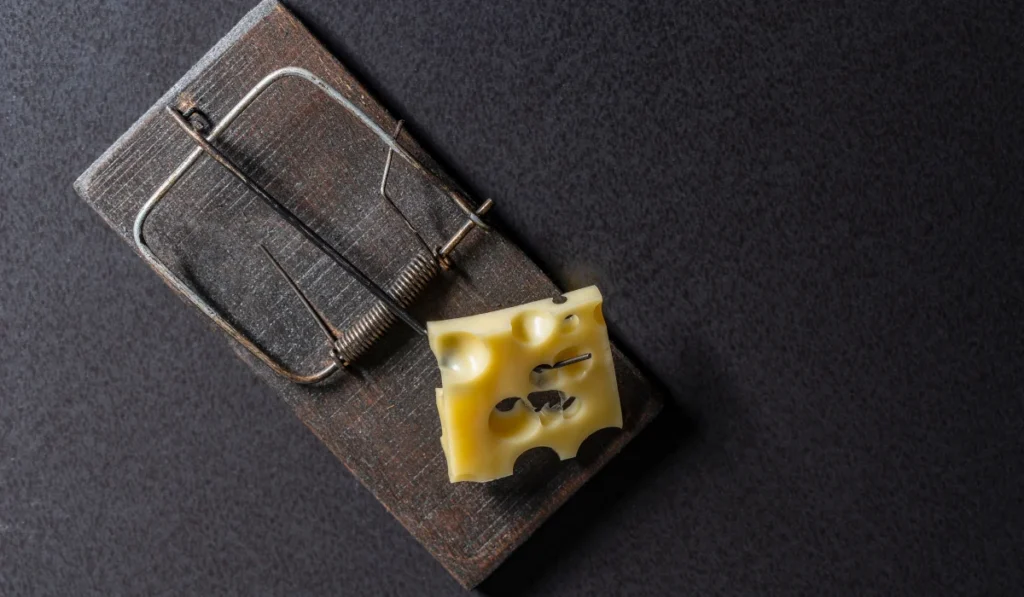
Proper orientation is part of successful mouse trap placement. For a standard snap trap, place the trap perpendicular to the wall so it forms a “T.” Position the trigger or baited end closest to the wall. A mouse following the baseboard then encounters the trigger first.
The Centers for Disease Control and Prevention’s rodent-control guidance also recommends setting traps where droppings, nesting material, gnawing, or other rodent signs appear. Correct orientation matters, but it cannot make up for placing a trap outside an active route.
Use several traps when activity appears along a long wall or in more than one nearby location. One trap provides only one interception point. A focused group of traps can cover several likely routes without requiring you to guess which path a mouse will use.
Check traps regularly and follow the manufacturer’s directions. Keep them away from children and pets, and use protected placements where needed. Every trap should remain accessible enough to inspect and service safely.
Common Mouse Trap Placement Mistakes
A mouse trap may fail even when it is baited and working correctly. Placement mistakes often prevent mice from encountering the trigger, while poor monitoring allows active routes to go unnoticed.
Placing Traps In Open Areas
One common mistake is putting a single trap in the middle of a kitchen, basement, or garage. Open space may seem convenient, but it often sits outside the sheltered routes mice prefer.
Move the trap to a wall edge near confirmed activity. Behind appliances, beside cabinets, and along storage areas are usually better choices than the center of the floor.
Focusing Too Much On Bait
Another mistake is spending more time choosing mouse trap bait than studying the room. Bait matters less when a trap sits outside an active route.
Droppings, gnaw marks, rub marks, and nesting debris provide more useful placement information than bait preference alone. Identify where mice are moving first, then add a small amount of bait according to the trap manufacturer’s instructions.
Moving Traps Too Quickly
Some homeowners move traps after one quiet night. That can make it harder to determine which routes are active, especially when mice have other food sources nearby.
Keep the area clean, inspect for fresh signs, and give each placement time to provide useful information. Adjust the trap when the evidence changes, not simply because it remained empty overnight.
Using Too Few Traps
One trap cannot cover several activity zones. Signs behind the stove, inside the pantry, and near a garage entry door may represent separate routes.
Place traps in each confirmed area rather than expecting one device to handle the entire home. A focused group of traps provides better coverage along the edges mice are already using.
Ignoring Safety And Accessibility
A trap should not sit where a child or pet can reach it. It also should not be hidden so deeply behind insulation, boxes, or equipment that you cannot inspect and retrieve it safely.
Choose protected locations that still allow regular checks. In occupied rooms or tight spaces, a covered trap setup or professional placement may be a better option.
Trapping Without Sealing Entry Points
Capturing a mouse does not repair the opening that allowed it inside. Worn door sweeps, pipe gaps, vent openings, and foundation cracks can continue admitting mice after the trap has done its job.
Pair trapping with exclusion, sanitation, and monitoring. Closing entry points and reducing access to food, water, and nesting material helps prevent the same problem from returning.
When Mouse Traps Are Not Enough
Mouse traps are one part of a broader control plan. Repeated captures, daytime sightings, fresh droppings in several rooms, or ongoing sounds inside walls may point to a larger mouse infestation. In those situations, adding more bait without inspecting the structure will not solve the underlying problem.
The Environmental Protection Agency’s integrated pest management resources emphasize reducing access to food, water, shelter, and entry. For mice, this means sealing openings, repairing damaged door sweeps, screening vents, closing gaps around utility lines, storing food securely, and reducing clutter.
Rodent-contaminated areas also require careful cleanup. Follow current public-health guidance rather than sweeping or vacuuming dry droppings. Trapping, sanitation, exclusion, and monitoring should work together.
A pest professional can help when activity continues despite careful placement. An inspection can identify hidden travel routes, nesting areas, entry points, and conditions that keep mice active inside the home.
Protecting Your Southern Home From Mice
Knowing where to place mouse traps gives you a better chance of intercepting mice before they move deeper into your home. Follow the signs, place traps beside active wall routes, position the trigger end correctly, and use enough traps to cover each activity zone.
Long-term mouse control also depends on closing entry points and reducing access to food, water, and nesting material. Homeowners across Alabama, Tennessee, Mississippi, and the Florida Panhandle can turn to Waynes Pest Control for help identifying the conditions behind a rodent problem. To schedule an inspection or discuss ongoing mouse activity, contact the Waynes team.