
Ticks in Tennessee are active nearly year-round, with peak season from early spring through fall. Here’s what to expect and how to protect your family.
Key Takeaways
- Tennessee ticks are active in every season except hard freezes, with peak activity from March through October.
- Four species are most common in the state: the lone star tick, American dog tick, black-legged tick (deer tick), and brown dog tick.
- Rocky Mountain spotted fever and Lyme disease are the two most serious tick-borne illnesses in Tennessee.
- Wearing protective clothing, using EPA-registered repellents, and checking your body after outdoor activities are the most effective prevention steps.
- Professional perimeter treatment reduces tick pressure around your home, especially in wooded and grassy yards.
When Ticks in Tennessee Are Most Active by Season
Tennessee’s tick season runs roughly from March through October, with the highest risk in late spring and early summer. Warm winters push some activity into January and February. A hard freeze slows ticks down, but the state rarely stays cold long enough to stop them entirely. If the temperature climbs above 40 °F, ticks begin searching for a blood meal.
Spring brings the most dramatic surge. As temperatures rise in March and April, adult ticks that overwintered become active, and nymphs from the previous year’s eggs hatch. Nymphs are the most dangerous stage because they are small enough to go unnoticed on skin for days. Summer heat pushes adults into lower vegetation, but nymphs remain active through July. Fall sees another adult surge as ticks prepare to overwinter. Understanding this cycle helps you know when your risk is highest and when to stay vigilant.
How Tennessee’s Climate Drives Tick Activity Year-Round
Ticks do not hibernate in the way many insects do. They slow down in cold weather and resume activity whenever temperatures warm. Tennessee’s humid climate, mixed forests, and mild winters create nearly ideal conditions for tick survival across all four seasons. The state’s geography matters too. East Tennessee’s mountain terrain, Middle Tennessee’s rolling farmland, and the coastal-adjacent lowlands of West Tennessee each support different tick populations at different densities.
Ticks find hosts by a behavior called questing. They climb to the tips of grass blades or low shrubs and wait with their front legs extended, latching onto any warm-blooded animal that brushes past. Grassy fields, wooded areas, and the edges where lawn meets woodland are prime questing zones. According to UT Extension, Tennessee homeowners spending time outdoors in these transition zones face the greatest tick exposure risk, particularly in spring and early fall.
Tick Species Commonly Found in Tennessee Homes and Yards
Four species account for most tick encounters in Tennessee. Each has its own preferred habitat, active season, and disease risk. Knowing which species you are dealing with helps you understand what illnesses to watch for after a bite.
How Lone Star Ticks Bite and Spread Disease in Tennessee
The lone star tick is the most commonly found tick in Middle Tennessee and across much of the state. Adults and nymphs are active from early spring through late fall. The lone star tick is aggressive. It chases hosts instead of waiting to be brushed against. It can transmit ehrlichiosis, tularemia, and alpha-gal syndrome, a red-meat allergy triggered by a sugar compound in the tick’s saliva. The adult female is easily recognized by a single white dot on her back.
Why American Dog Ticks Are a Rocky Mountain Spotted Fever Risk in Tennessee
The American dog tick, also called the wood tick, is most common in open grassy fields and along hiking trails. It is the primary carrier of Rocky Mountain spotted fever in Tennessee, a bacterial infection that can become life-threatening without prompt treatment. Adults are active from early spring through summer. The American dog tick does not transmit Lyme disease. It is larger than most other species and easier to spot on skin, but it still requires careful removal.
Where Black-Legged Ticks Transmit Lyme Disease in Tennessee
The black-legged tick, also called the deer tick, is the species that can transmit Lyme disease. It is found most often in East Tennessee, where forested terrain and white-tailed deer populations support its life cycle. Adults are active in fall and early spring.
Nymphs are active from late spring through summer and are responsible for most Lyme disease transmissions because they are roughly the size of a poppy seed. Not every black-legged tick carries the Lyme disease bacterium, but any bite from one warrants monitoring for symptoms.
How Brown Dog Ticks Survive Indoors in Tennessee Year-Round
The brown dog tick differs from the other three species in one critical way: it can complete its entire life cycle indoors. This means infestations can persist year-round inside your home, particularly in kennels and areas where pets rest. Brown dog ticks feed on dogs but will bite humans. They are common across Tennessee and are a leading cause of tick activity in homes that do not have yard-level tick control.
Tick-Borne Illnesses to Watch for After Bites in Tennessee
Tennessee reports some of the highest case counts nationally for Rocky Mountain spotted fever and ehrlichiosis, according to CDC surveillance data. Both diseases are transmitted by ticks found statewide, and both require prompt medical treatment. Symptoms typically appear within three to fourteen days of a bite and may include fever, rash, headache, and flu-like symptoms. If you develop a rash after a tick bite, especially a spotted or bull’s-eye pattern, contact a physician immediately.
Lyme disease presents differently. Early symptoms include a bull’s-eye rash at the bite site, fatigue, and fever. If untreated, it can progress to joint pain, neurological symptoms, and heart problems over several weeks.
The CDC notes that early antibiotic treatment resolves most cases when started within the first few weeks of infection, making prompt identification of symptoms critical. Rocky Mountain spotted fever and Lyme disease are both reportable diseases in Tennessee, tracked by the state health department to monitor regional infection rates.
Ehrlichiosis produces fever, headache, chills, and muscle aches. Alpha-gal syndrome, caused by lone star tick bites, does not cause infection but triggers delayed allergic reactions to red meat, including beef, pork, and lamb. Reactions can range from hives to anaphylaxis. If you notice unusual allergy symptoms after meals following a tick bite, mention it to your doctor.
How to Protect Your Tennessee Family from Tick Bites Outdoors
Stopping a tick before it attaches removes the disease transmission window entirely. The steps below address the most common exposure scenarios for Tennessee homeowners spending time in wooded areas, grassy fields, or their own backyards.
- Wear long sleeves and pants tucked into socks when walking in wooded or grassy areas.
- Apply EPA-registered repellents containing DEET, picaridin, or permethrin-treated clothing before outdoor activities.
- Walk in the center of trails and avoid brushing against vegetation on the edges.
- Check your entire body after spending time outdoors, paying attention to the scalp, behind the ears, under the arms, around the waist, and behind the knees.
- Shower within two hours of returning indoors to remove unattached ticks before they find a bite site.
- Put clothing in a dryer on high heat for at least ten minutes to kill any ticks that survived the wash.
- Check pets after outdoor time. Brown dog ticks especially use pets as a transport route into your home.
How to Remove a Tick Attached to Skin in Tennessee
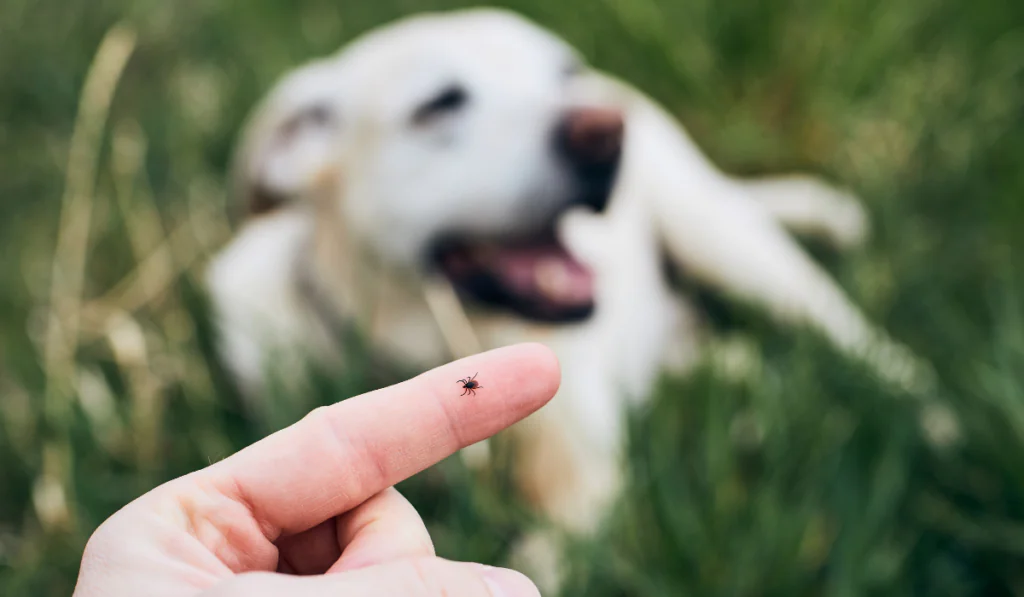
Remove a tick as quickly as possible after you find it attached to your skin. The longer a tick remains attached, the greater the risk of disease transmission. Use fine-tipped tweezers to grasp the tick as close to the skin’s surface as possible. Pull upward with steady, even pressure. Do not twist or jerk. Do not use petroleum jelly, heat, or nail polish remover. Those methods can cause the tick to release fluids into the bite site, increasing infection risk.
After removal, clean the bite area with rubbing alcohol and wash your hands with soap and water. Save the tick in a sealed container or bag if possible. Note the date of the bite. Monitor the site for a rash and watch for fever or flu-like symptoms over the following two weeks. If symptoms develop or the tick was attached for more than 36 hours, contact your doctor and mention the bite.
Yard Control Steps That Reduce Tick Risk in Tennessee Homes
Reducing tick habitat around your home lowers the chances of bringing ticks indoors on clothes or pets. Most residential tick encounters happen within the first ten to fifteen feet of the lawn-to-woodland border. Keeping that transition zone managed makes a measurable difference.
- Keep grass mowed short. Ticks thrive in tall grass where humidity stays high close to the ground.
- Remove leaf litter, brush piles, and wood piles from the yard perimeter. These are prime tick harborage areas.
- Trim back shrubs and low-hanging branches along walkways and play areas.
- Create a gravel or wood-chip barrier between lawn and wooded areas. Ticks avoid dry, sunny surfaces.
- Move firewood storage away from the house and off the ground.
These steps reduce tick habitat but do not replace professional perimeter treatment. Waynes, a member of the EPA Pesticide Environmental Stewardship Program since 2004, follows an integrated pest management approach targeting tick-prone zones around the yard perimeter, wooded edges, and areas where pets spend time. Regular exterior treatment during peak tick season, from March through October, keeps tick pressure manageable across your property.
When to Call Waynes for Tick Control in Tennessee
If you are finding ticks on family members or pets regularly, the problem extends beyond personal prevention measures. Consistent tick encounters mean the population around your home has grown enough that habitat reduction alone will not resolve it. Professional treatment targets the zones where ticks rest, quest, and reproduce, reducing exposure before ticks ever reach your door.
Waynes serves homeowners across Tennessee with perimeter tick control as part of a broader pest protection plan tailored to your property. Waynes technicians inspect your property, identify the highest-risk zones, and apply targeted treatment to yard edges, wooded buffers, and pet areas.
If you have a brown dog tick problem indoors, that requires a different approach than yard-level control. An inspection will identify whether the infestation is coming from outside or has established itself in the home’s interior. Either way, Waynes can build a plan around what your property actually needs.
Waynes has spent 50 years protecting over 150,000 families, and that experience confirms every yard is different. Tick pressure in East Tennessee’s forested hollows is not the same as tick pressure in a suburban Middle Tennessee backyard. Every little thing matters. A LOT. The right treatment plan starts with the right inspection.
Bottom Line on Ticks in Tennessee Year-Round
Tennessee’s climate keeps ticks active for most of the year. Spring and early summer bring the highest risk, but fall adults and year-round brown dog ticks mean there is no month where you can stop paying attention entirely.
Lone star ticks, American dog ticks, black-legged ticks, and brown dog ticks are all present across the state, each carrying different disease risks. Rocky Mountain spotted fever, Lyme disease, ehrlichiosis, and alpha-gal syndrome are the primary tick-borne illnesses to watch for after any bite.
Protecting your family means layering personal prevention, smart yard management, and professional perimeter control. If ticks have become a recurring problem in your yard, schedule an inspection with Waynes. We will assess the tick pressure specific to your property and put a plan in place that covers you through every season.
Frequently Asked Questions
When do ticks come out in Tennessee for the first time each year?
Most years, tick activity picks up in Tennessee between late February and mid-March when daytime temperatures consistently reach above 40 °F. The lone star tick and American dog tick are typically first to emerge. In unusually mild winters, limited tick activity can persist through January and February, so there is no true off-season in Tennessee’s warmer regions.
Is Lyme disease a real risk from tick bites in Tennessee?
Lyme disease is present in Tennessee, but it is less common here than in the upper Midwest or Northeast. The black-legged tick, which can transmit Lyme disease, is primarily found in East Tennessee’s forested areas. Nymphs active from late spring through summer are the life stage most likely to transmit the disease. Any bite from a black-legged tick warrants monitoring for the bull’s-eye rash and fever that signal early infection.
How long does a tick need to be attached before it can transmit disease?
Transmission time varies by disease. For Lyme disease, a black-legged tick generally needs to be attached for 36 to 48 hours. Rocky Mountain spotted fever can potentially be transmitted in a shorter window, sometimes within a few hours of attachment. This is why checking your body promptly after outdoor activities and removing ticks as quickly as possible is so important regardless of how long you think the tick has been attached.
Can ticks survive indoors through a Tennessee winter?
Brown dog ticks can survive and reproduce entirely indoors year-round. They do not need to go outside to complete their life cycle. A brown dog tick infestation inside your home will not resolve on its own over winter. If you are finding ticks on your dog inside the house during cold months, a professional inspection is the right next step to identify the extent of the infestation and treat it appropriately.
What should I do after finding a tick attached in Tennessee?
Remove the tick using fine-tipped tweezers, grasping as close to the skin’s surface as possible and pulling straight up with steady pressure. Clean the bite site with rubbing alcohol, soap, and water. Save the tick if possible, note the date, and monitor yourself for fever, rash, or flu-like symptoms over the next two to three weeks. Contact a physician if any symptoms develop or if the tick appears to have been attached for more than 36 hours.