
Several types of crickets in Florida can show up around homes, garages, landscaping, and lawns, and identifying the one you are seeing matters because they do not all create the same problem. House and field crickets may turn up around structures, camel crickets favor sheltered areas, and mole crickets live primarily in soil, where their activity can affect turf. By looking at appearance, location, and behavior together, you can get a better idea of what is around your Florida Panhandle property and whether prevention or professional service makes sense.
Common Types of Crickets in Florida
Crickets share some recognizable features, including long antennae and strong hind legs, but their body shape and preferred habitat can vary. A quick look at where you found the insect can often tell you as much as its color.
| Cricket Type | Common Appearance | Where You May Find It | Primary Concern |
| House cricket | Usually tan to light brown | Garages and sheltered areas around structures | Indoor nuisance and chirping |
| Field cricket | Often darker in color | Lawns, landscape beds, patios, and foundations | Occasional indoor entry |
| Mole cricket | Broad body with digging forelegs | Soil and turf | Tunneling and lawn damage |
| Camel cricket | Humpbacked body with very long legs | Dark, damp, sheltered areas | Indoor nuisance activity |
House Crickets
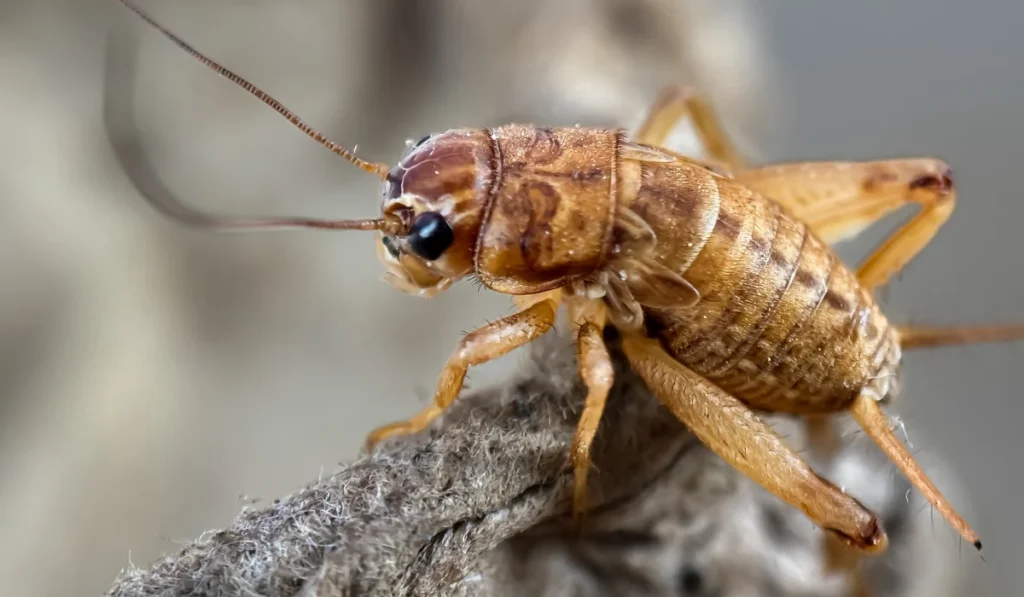
House crickets, Acheta domesticus, have long antennae, enlarged hind legs, and a lighter appearance than many field crickets. Their tan to light-brown coloring can help narrow down an identification, especially when the insect is found in a garage or another protected part of the property.
When a house cricket gets indoors, you may hear it before you find it. Chirping can carry from behind stored belongings, appliances, or other sheltered spots, which can make the source difficult to pinpoint. If you keep seeing or hearing crickets in the same area, inspect nearby doors and openings rather than judging the size of the problem from the sound alone.
Field Crickets
Field crickets are primarily outdoor insects, and many belong to the genus Gryllus. They are commonly darker than house crickets and may be found around lawns, landscape beds, patios, and foundations.
Several field cricket species can look similar, so color alone is not enough for a confident species-level identification. Where the cricket was found provides useful context. A dark cricket beside a patio or in landscaping is a different situation from an insect repeatedly appearing in an interior room.
Field crickets can also enter homes through available openings. One cricket near a doorway does not necessarily mean crickets are established inside. It may have simply moved in from the surrounding yard.
Mole Crickets
Mole crickets stand apart from other types of crickets in Florida because they are built for digging. Their broad front legs have a shovel-like appearance, and they spend most of their time below the soil surface rather than moving through rooms or hiding behind household items.
Their underground activity makes them a lawn concern. Mole crickets can tunnel through the upper layers of soil, loosen turf, dislodge grass, and feed on plant material. Waynes’ Florida Panhandle service information also identifies soft, sandy areas as favorable mole cricket habitat, which makes checking both the turf and soil useful when unusual lawn damage appears.
Mole crickets should therefore be approached differently from a cricket that wandered into a garage. The University of Florida IFAS Extension provides Florida-focused information on turf pests and insect management that can help homeowners better understand problems affecting lawns.
Camel Crickets
Camel crickets have a humpbacked body and unusually long legs, giving them a noticeably different shape from house or field crickets. They tend to occur in dark, protected locations where moisture and shelter are available.
Because they look so different from a familiar field cricket, homeowners sometimes notice their jumping behavior before recognizing them as crickets. Finding one in a sheltered area does not suggest the same type of turf problem associated with mole crickets.
With camel crickets, location is especially useful for identification. A long-legged, humpbacked cricket in a protected space points toward a different issue than a digging cricket found in the lawn.
How to Identify Crickets Around Your Florida Home
Reliable cricket identification comes from comparing several clues instead of focusing on one feature. Start with the legs and overall body shape. House and field crickets have the familiar long-legged cricket profile, while mole crickets have broad forelegs designed for digging. Camel crickets have a more pronounced humpbacked appearance.
Next, consider where you found the insect. A cricket in turf, one hiding in a sheltered damp area, and one repeatedly appearing beside an exterior door each provide different habitat clues. Color can help support the identification, but it should not be the deciding factor by itself.
For closer visual comparisons, the University of Florida Entomology and Nematology Department’s Featured Creatures collection provides identification resources for insects found in Florida. If you need professional help, take a clear photo that shows the cricket’s body, legs, and coloring. That gives a pest professional more useful information than a description such as “black cricket” or “brown cricket.”
Why Crickets Show Up Around Florida Panhandle Properties
Many crickets already live outdoors in lawns, landscape beds, and other areas around the home. Seeing one near your house does not automatically mean you have an indoor cricket problem.
Outdoor crickets can move through gaps beneath doors or other openings around the structure. Garages and protected spaces provide places to hide, while damp areas may suit cricket species that prefer moisture. Landscaping and debris close to the house can also provide cover near exterior walls.
Pay attention to where the activity begins. Repeated sightings near one door can point you toward an entry point that needs attention. Activity concentrated in the lawn suggests that looking at the turf and soil may be more useful than searching inside the house.
What Cricket Sounds Can Tell You
Chirping is often what makes a cricket noticeable, even when the insect itself remains hidden. Male crickets in several familiar groups use sound as part of their mating behavior, but hearing a cricket does not usually give a homeowner enough information to identify an exact species.
The location of the sound can still help. Chirping that consistently comes from landscaping beside the house suggests a different starting point than noise coming from a garage or another protected part of the structure. Narrowing down the location can help you inspect nearby hiding places and possible entry points.
Use sound as one clue rather than the entire identification. Body shape, habitat, and where the cricket is active give you a clearer picture of what you are dealing with.
Which Types of Crickets in Florida Can Cause Problems?
The types of crickets in Florida do not create one universal pest issue. House and field crickets are often a nuisance when they repeatedly enter a home or produce persistent chirping from a hidden location.
Repeated indoor sightings can also signal an opening that allows outdoor insects to enter. Finding and correcting that access point is more useful than treating every cricket as evidence of a large indoor population.
Why Mole Crickets Are Different
Mole crickets need separate attention because their activity occurs primarily in soil and turf. Tunneling can loosen soil and disturb grass, while their feeding can contribute to lawn damage.
Waynes’ mole cricket information notes that these insects spend much of their time underground and travel through the upper portion of the soil. They can be difficult to see even when their activity is affecting the lawn.
If you notice turf problems along with tunneling, small areas of disturbed soil, or other signs of underground activity, proper identification should come before choosing a response. Indoor exclusion methods will not address a pest living in the lawn.
How to Keep Crickets Out of Your Florida Panhandle Home
If crickets are entering the structure, begin with the places they can use to get inside. Check door sweeps, gaps around exterior doors, and visible openings around the home. Closing accessible gaps can reduce opportunities for outdoor crickets to move into garages and living areas.
Look at conditions near the foundation as well. Vegetation touching the house, accumulated debris, and damp sheltered areas can give insects places to remain close to entrances. Keeping these areas orderly also makes cricket activity easier to spot.
Exterior lighting can concentrate nighttime insect activity around porches and doors. If you repeatedly notice crickets near one entrance, consider whether unnecessary lighting in that area can be reduced or repositioned. When the activity is centered in turf, focus instead on identifying the lawn pest and the areas showing damage.
When Cricket Activity Needs a Closer Look
A single outdoor cricket and repeated cricket activity are not the same situation. If you keep finding crickets inside, continue hearing activity in a hard-to-reach area, or cannot determine how they are entering, a closer inspection can help identify the source.
Lawn symptoms also deserve a different type of inspection. Suspected mole cricket activity calls for looking at the turf and soil rather than concentrating on doors and wall openings.
Professional identification is particularly useful when the insect does not match the common characteristics you expect. Starting with the correct cricket helps keep the response focused on the part of the property where the problem actually exists.
Choosing the Right Approach for Florida Crickets
Knowing the main types of crickets in Florida makes it easier to separate an occasional outdoor visitor from a recurring household nuisance or a turf pest. House crickets tend to be lighter in color, many field crickets are darker and live outdoors, camel crickets have a distinctive humpbacked shape, and mole crickets are built for digging in soil.
Focus on three practical clues: what the cricket looks like, where you found it, and where the activity continues. Those details can point you toward an entry issue around the house or a lawn problem that requires a different response.
If crickets continue showing up inside or you suspect mole cricket activity in your lawn, Waynes Pest Control can help identify what is happening around your Florida Panhandle property. You can also contact Waynes to schedule service and share where you are seeing, hearing, or finding signs of cricket activity.