Several stinging insect species share Tennessee backyards, and they behave very differently from one another. Some are highly defensive near their nests, others are largely indifferent to people, and a few play beneficial roles in the garden that make removal counterproductive. Telling them apart before you decide how to respond is the most important first step, and it starts with body shape, coloring, nest location, and behavior.
Key Takeaways
Field Guide · TennesseeStinging insects in Tennessee backyards
Several stinging insect species share Tennessee backyards each season, and they behave very differently from one another. Telling them apart by body shape, coloring, and nest location is the first step before deciding how to respond.
1Yellowjacket
Vespula / Dolichovespula spp.
IDBlack antennae, distinctly narrow waist, bold yellow-and-black banding
WhereUnderground burrows, wall voids, attic spaces accessed through exterior gaps
NoteThe most consistently aggressive stinging insect in Tennessee yards. They can sting repeatedly and will pursue anyone who disturbs a nest — underground nests are easy to step on accidentally, which is why this species accounts for a disproportionate share of backyard stings.
2Bald-Faced Hornet
Dolichovespula maculata
IDLarger than a yellowjacket, white-and-black coloring with white facial markings
WhereEnclosed paper nests in trees and attached to structures, often several feet off the ground
NoteClosely related to yellowjackets and similarly defensive. Nests grow substantially from spring through late summer; a colony disturbed at peak size produces a rapid, multi-sting response.
3Carpenter Bee
Xylocopa virginica
IDBumble-bee-sized but with a smooth, shiny black abdomen instead of a fuzzy one
WhereCedar trim, fascia boards, deck railings, and pergola beams — returns to the same wood each season
NoteFemales bore circular galleries into exposed wood for nesting; cumulative use over multiple seasons weakens structural members. Males hover territorially but cannot sting; females rarely do unless handled.
4Carpenter Ant
Camponotus spp.
IDLarge, uniformly black ant — noticeably bigger than common pavement ants
WhereOutdoor stumps, firewood, fence posts; indoors in moisture-damaged wood, crawl spaces, and attics
NoteCarpenter ants hollow out wood to create nesting galleries rather than eating it, weakening structural members over time. An indoor sighting — especially in spring — almost always indicates moisture-damaged wood somewhere in the structure.
5Fire Ant
Solenopsis invicta
IDReddish-brown body; identified most reliably by raised, dome-shaped mounds in open sunny soil
WhereOpen, sunny areas — lawns, roadsides, landscaping borders; less common in Middle Tennessee than further south
NoteDisturbing a mound produces a rapid, painful defensive response from many workers simultaneously. Less prevalent in Tennessee than in the Deep South, but established in parts of the state.
6Paper Wasp
Polistes spp. / Polistes dominula
IDSlimmer and longer-bodied than yellowjackets; legs hang visibly during flight; European variety has orange-tipped antennae
WhereOpen-celled paper nests under eaves, on porch ceilings, and inside outbuildings
NoteConsiderably less defensive than yellowjackets — stinging typically requires direct disturbance of the nest. They feed on other insects, which provides some incidental pest control in garden areas.
7BeneficialIDLarge, fuzzy body with yellow-and-black banding — the fuzz distinguishes it from carpenter bees
WhereGround-level abandoned rodent burrows; sites shift year to year since bumble bees do not reuse established locations
NoteColonies are annual and end with cold weather. Bumble bees are not aggressive unless a nest is directly threatened, and they play a meaningful role in pollinating garden plants.
- Several stinging insects appear in Tennessee backyards each season. Telling them apart starts with noting body shape, coloring, and where they build their nests.
- Social species such as yellowjackets and bald-faced hornets may defend a nest aggressively. Solitary species are generally far less likely to sting.
- Standard insect repellent applied to skin or clothing will not deter stinging insects. Avoiding nest areas and reducing food attractants outdoors are more practical steps.
- Many bees and wasps pollinate plants or feed on pest insects. Correct identification helps you decide whether removal is actually needed.
How to Identify Stinging Insects in Your Tennessee Backyard
Catching a quick glimpse of a flying insect rarely gives you enough to work from. Focusing on a few consistent physical traits and nest characteristics makes identification more reliable.
University of Tennessee Extension provides identification resources for stinging insects common to Middle and East Tennessee yards, including paper wasps, yellowjackets, bumble bees, and carpenter bees.
Yellowjackets are the species most likely to cause problems in a Tennessee backyard. They have black antennae, a distinctly narrow waist, and bold yellow-and-black banding. They are aggressive near the nest and can sting multiple times. Paper wasps are slimmer and longer-bodied than yellowjackets, with legs that hang noticeably during flight. European paper wasps have orange-tipped antennae, while native paper wasps tend toward brown coloring. Both build open-celled paper nests in sheltered spots, but paper wasps are considerably less defensive than yellowjackets.
Bald-faced hornets are related to yellowjackets but are larger, with white and black coloring and white markings on the face. They build enclosed paper nests above ground, often in trees or attached to structures, and are aggressive when their nest is disturbed. Some wasp species build nests from mud or vegetable matter rather than paper, which helps narrow down the species when the insect itself is hard to get a clear look at.
Bees: Bumble Bees, Honey Bees, and Carpenter Bees
Bumble bees are large, fuzzy, and typically yellow and black. They nest in the ground, often in abandoned rodent burrows. A colony runs from spring through fall before cold weather ends it, with only a few females surviving to overwinter and start fresh colonies the following year. Bumble bees are not aggressive unless their nest is directly threatened.
Carpenter bees look similar to bumble bees but have a smooth, shiny black abdomen rather than a fuzzy one. They bore circular holes into exposed wood to create nesting galleries rather than living in social colonies. Males hover near nest sites and may act territorial, but they cannot sting. Females can sting but rarely do.
Honey bees are smaller and more uniformly golden-brown than bumble bees. They are the only species in Tennessee that builds large, permanent colonies with wax comb. A licensed beekeeper is often the right contact for a honey bee swarm or established colony rather than a pest control company, since these pollinators are worth preserving when removal is practical.
Ants: Carpenter Ants and Mound-Building Species
Not all stinging insects fly. Carpenter ants are large, black ants that build nests outdoors in stumps, firewood, fence posts, and wooden retaining walls. They can also nest indoors in water-damaged wood, insulation, crawl spaces, and attic spaces. Fire ants, while less common in Middle Tennessee than in the Deep South, are present in parts of the state and build raised mounds in open, sunny soil. Disturbing a fire ant mound produces a rapid, painful defensive response.
Signs of Nest Activity Around Your Home
Steady insect traffic toward a single spot on an eave, soffit, or wall opening often points to a nearby nest. Ground-level openings along foundations and landscaping borders can reveal nest entrances for yellowjackets and bumble bees that would otherwise go unnoticed. Round bore holes in wood surfaces and sawdust-like debris beneath eaves or railings indicate carpenter bee activity. Enclosed paper nests in tree branches overhead and open-celled paper nests under overhangs are the clearest visible signs of wasp colonies in the yard.
Why Stinging Insects Appear in Tennessee Backyards
Stinging insects establish near Tennessee homes when they find the right combination of shelter, food, and nesting sites. Understanding what draws them to your yard helps you identify them more accurately and focus prevention where it will have the most effect.
Where Different Species Nest
Yellowjackets nest underground in abandoned rodent burrows or in wall voids and attic spaces when they access a structure. Their underground nests are easy to step on accidentally, which is one reason this species accounts for a disproportionate share of backyard stings. Bald-faced hornets build enclosed paper nests in trees and on structures, starting small in spring and growing substantially by late summer. Paper wasps favor protected horizontal surfaces under eaves, on porch ceilings, and inside outbuildings.
Bumble bees take over ground-level rodent burrows and do not typically reuse the same site from year to year. Carpenter bees return to the same wood repeatedly, which is what makes cumulative damage a concern over multiple seasons. Carpenter ants move between outdoor nesting sites in stumps and firewood and indoor spaces when moisture-damaged wood is accessible.
What Draws Stinging Insects Toward Your Home
Paper wasps, yellowjackets, and hornets all feed on other insects and sugary food sources. Outdoor food and drink, open garbage, and ripe or fallen fruit bring foraging wasps closer to the areas where you spend time. Ant nest sites often concentrate near plants that harbor honeydew-producing insects such as aphids, which serve as a reliable food source. Sheltered spots along your home’s exterior, including gaps under eaves, roof edges, and inside outbuildings, give social wasp species exactly the protected nesting surface they look for each spring.
How Colony Activity Changes Through the Season
Social wasp colonies are annual. A queen starts a new nest each spring, the colony grows through summer as worker numbers increase, and foraging activity peaks in late summer and fall when food sources become more competitive and the colony reaches maximum size. That late-season pressure is when yellowjackets become most aggressive around outdoor food and most likely to enter structures. Bumble bee colonies follow a similar seasonal arc before cold weather ends them. Ground-nesting sites may shift from year to year since bumble bees do not return to established locations.
How Stinging Insects Use Entry Points Near the Structure
Yellowjackets and paper wasps use gaps under eaves, openings around soffits, and cracks near roof edges to access wall voids and attic spaces. Once inside, they can build large nests in areas that are difficult to reach without professional equipment. Carpenter ants follow moisture-damaged wood and utility penetrations from outdoor nesting sites into crawl spaces and attics. Watching for consistent flight paths toward a specific exterior point is the most reliable way to locate a nest that is not immediately visible.
Risks of Stinging Insects in Tennessee Backyards
The risks stinging insects pose vary considerably by species. Social species that defend large colonies carry a different level of concern than solitary bees that rarely sting. Knowing which insect you are dealing with helps you judge whether and how urgently to act.
Sting Risk by Species
Yellowjackets are the most consistently aggressive stinging insects found in Tennessee backyards. They can sting repeatedly and will pursue someone who disturbs their nest. Bald-faced hornets are similarly defensive and will sting on contact when a nest is approached. Paper wasps are less likely to sting unless the nest is directly threatened, and most solitary bees and wasps will not sting unless handled.
Standard insect repellent applied to skin or clothing provides no deterrence against stinging insects. Avoiding known nest areas and keeping outdoor food contained are the most practical precautions while you work on identification and control.
Structural Damage from Carpenter Bees
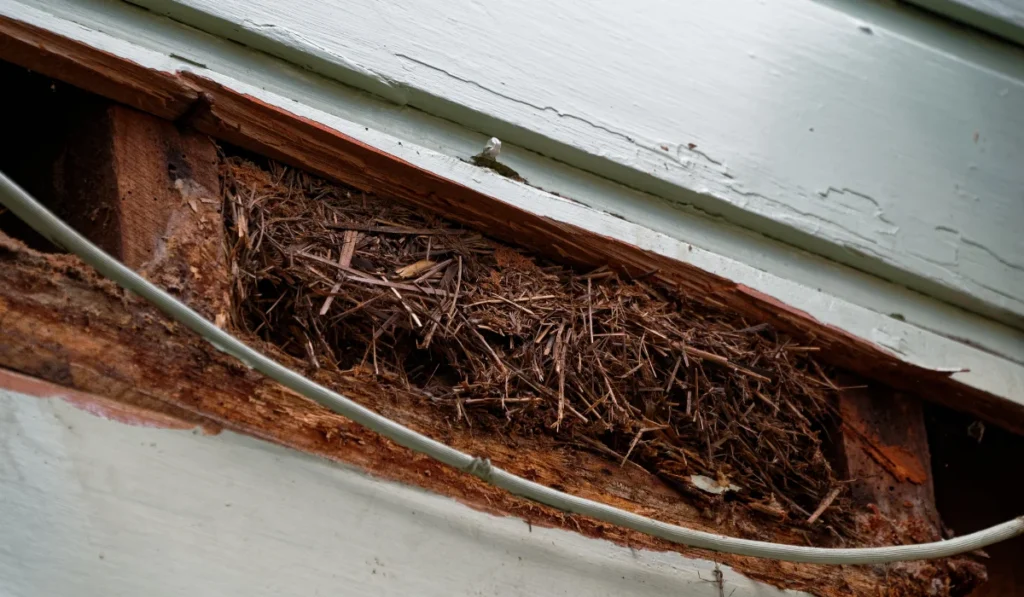
Carpenter bees cause the most direct structural damage of any stinging insect in Tennessee yards. They bore circular galleries into exposed wood for nesting, and repeated use of the same structural wood over multiple seasons weakens the material. Cedar trim, fascia boards, deck railings, and pergola beams are particularly vulnerable. The damage is cumulative and worth addressing before galleries expand through a significant section of wood.
Carpenter Ant Damage
Carpenter ants do not eat wood but hollow it out to create nesting galleries, and that excavation weakens structural members over time. Indoor infestations almost always indicate moisture-damaged wood somewhere in the structure. Finding large black ants inside a home, particularly in spring when colonies are most active, is worth investigating further rather than treating as a simple nuisance.
Outdoor Living Spaces and Food Areas
Yellowjackets and paper wasps are drawn to outdoor cooking and dining areas, especially late in the season when their colony’s food competition increases. Open food and sugary drinks near a patio or grill make stinging encounters more likely during the periods when these insects are already at their most defensive. Keeping outdoor food covered and disposing of garbage promptly reduces how much foraging activity overlaps with the areas you use most.
Professional Stinging Insect Control in Tennessee
Correct identification is the foundation of any stinging insect control plan. The right response depends entirely on which species is present, where the nest is located, and whether removal is actually warranted. A professional approach starts by confirming those details before any treatment begins.
Reducing What Draws Stinging Insects In
Keeping vegetation trimmed and reducing clutter near structures removes sheltered spots that paper wasps, yellowjackets, and guinea wasps use for nest attachment. Guinea wasps are small yellow-and-brown wasps that tuck nests into equipment housings, dense shrubbery, and protected areas around buildings, which makes them easy to overlook during a casual exterior inspection. Removing open food and drink containers from outdoor areas during peak foraging periods reduces the overlap between nest activity and your outdoor living space. Sealing gaps under eaves and around soffits limits the access points social wasps use to establish colonies inside wall voids and attics.
Why Inspection Comes First
Treatment decisions depend on knowing exactly what species is present and where all nest sites are located. A nest tucked into dense shrubbery, inside an equipment housing, or inside a wall void can be easy to miss without a thorough exterior inspection. Identifying the species also determines whether a nest should be removed at all. Honey bees, bumble bees, and some solitary wasps play beneficial roles and may not require treatment when their nest is not near high-traffic areas.
Inspection also helps distinguish look-alikes. Bumble bees, paper wasps, and bald-faced hornets can resemble more aggressive species when seen briefly, and an incorrect identification leads to the wrong response. A trained professional can confirm what you are dealing with quickly and accurately.
What Professional Treatment Involves
Professional treatment begins with confirming the species and locating all active nest sites on the property.
The EPA’s residential pest control guidance notes that certain insecticides used for stinging insect control are only available to licensed professionals and carry risks to honey bees and other beneficial insects when misapplied. A licensed professional selects the right product for the species present while reducing unintended harm to pollinators that may be nesting or foraging nearby.
Waynes service professionals bring more than 50 years of family-owned experience to every visit. Every little thing matters. A LOT.
What a Stinging Insect Control Plan Covers
A control plan typically includes ongoing monitoring of previously active nest sites and recommendations for reducing future nesting opportunities around your property. Your service professional will walk you through what was found during the inspection and explain what was done during treatment. With 15 locations serving families across Tennessee and neighboring states, Waynes is positioned to follow up and keep your backyard comfortable through the season.
Bottom Line
Identifying stinging insects in your Tennessee backyard starts with body shape, coloring, nest location, and defensive behavior. Some species nest underground, others build paper nests above ground, and a few may establish inside structures where they are hard to find without a thorough inspection. Because responses range from doing nothing to professional removal, correct identification matters before you approach a nest. If you are unsure what you are dealing with, contact Waynes Pest Control for help identifying the insects around your home and determining the right next step.
Frequently Asked Questions
How Can I Tell Different Stinging Insects Apart in My Yard?
Look at body shape, coloring, and where the insect is nesting. Ground-level nests, above-ground paper nests, and nests inside structures each point toward different species. Antennae color, waist shape, and whether the abdomen is fuzzy or smooth are the physical details that most reliably separate common Tennessee species from one another. Observing how defensive the insect is near the nest area can also help narrow down what you are seeing.
Are All Stinging Insects in My Backyard Aggressive?
No. Yellowjackets and bald-faced hornets are the most aggressive species commonly found in Tennessee yards, particularly when their nest is disturbed. Paper wasps are more tolerant. Bumble bees, carpenter bees, and most solitary wasps are unlikely to sting unless handled directly. Correct identification helps you gauge the actual risk before deciding how close to get.
Will Bug Spray Keep Stinging Insects Away?
Standard insect repellent applied to skin or clothing provides no deterrence against stinging insects. Keeping outdoor food covered, disposing of garbage promptly, and avoiding known nest areas are more practical precautions while you work on identification and control.
Should I Remove a Nest on My Own?
Attempting to remove a nest without confirming the species first carries real sting risk, particularly with yellowjackets and bald-faced hornets, which respond aggressively to nest disturbance. A trained professional can confirm the species, locate all nest sites, and select the right treatment approach for your situation while reducing harm to pollinators that may be active nearby.