
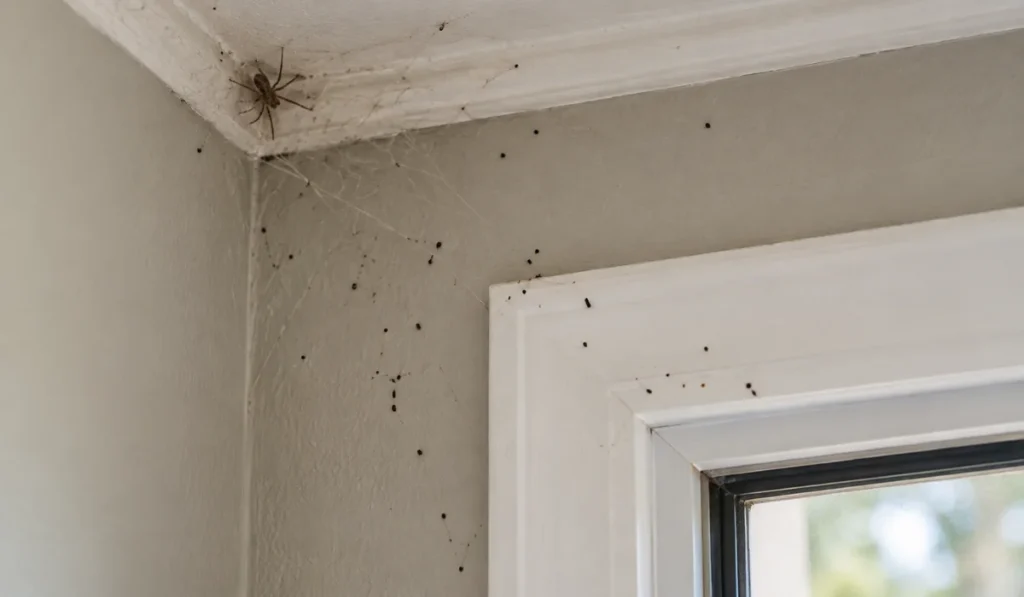
Spider poop on walls can help you locate the places where spiders rest, hunt, or wait for prey after dark. These marks often appear as small brown or black spots beneath ceiling corners, window frames, light fixtures, webs, or ledges. They do not reveal an exact hiding place by themselves, but they can point you toward an area with repeated spider activity.
That distinction matters. A few dark spots may come from spiders, flies, cockroaches, moisture, or ordinary dirt. The pattern, location, and nearby signs usually tell you more than the color alone. Once you know what to look for, you can clean the surface, inspect the surrounding area, and make the space less attractive to spiders.
In homes across Alabama, Tennessee, Mississippi, and the Florida Panhandle, spiders often settle where shelter and food overlap. Garages, attics, closets, crawl spaces, porches, and window areas can provide both. Understanding why the marks appear is the first step toward keeping them from returning.
What Spider Poop on Walls Looks Like
Spider droppings often look like small dark spots, splashes, or short streaks. Some marks dry into a round dot, while others run slightly down the wall. You may find them on painted walls, ceilings, trim, siding, floors, windowsills, or furniture beneath an active web.
The pattern is usually irregular. A cluster of spots below the same ceiling corner or window frame suggests that a spider has spent time above that area. Marks beneath a porch light or garage overhang may also point to a regular hunting location, especially when webbing is present nearby.
Spider poop stains do not identify the spider species. Many spiders use similar resting areas, and the droppings themselves do not contain enough visible information for identification. A clear photo of the spider, web, and surrounding area will be much more useful.
How Spider Droppings Compare With Other Marks
Several common household problems can leave dark marks that resemble spider droppings. Before you clean the area, take a closer look at the shape of the spots and what is happening nearby.
| Type of Mark | Common Appearance | Likely Location | Helpful Clues |
| Spider droppings | Dark spots, splashes, or short drips | Beneath webs, ledges, corners, and lights | Silk, shed skins, egg sacs, or nearby insects |
| Fly spots | Many tiny specks | Windows, ceilings, lights, and food areas | Frequent fly activity |
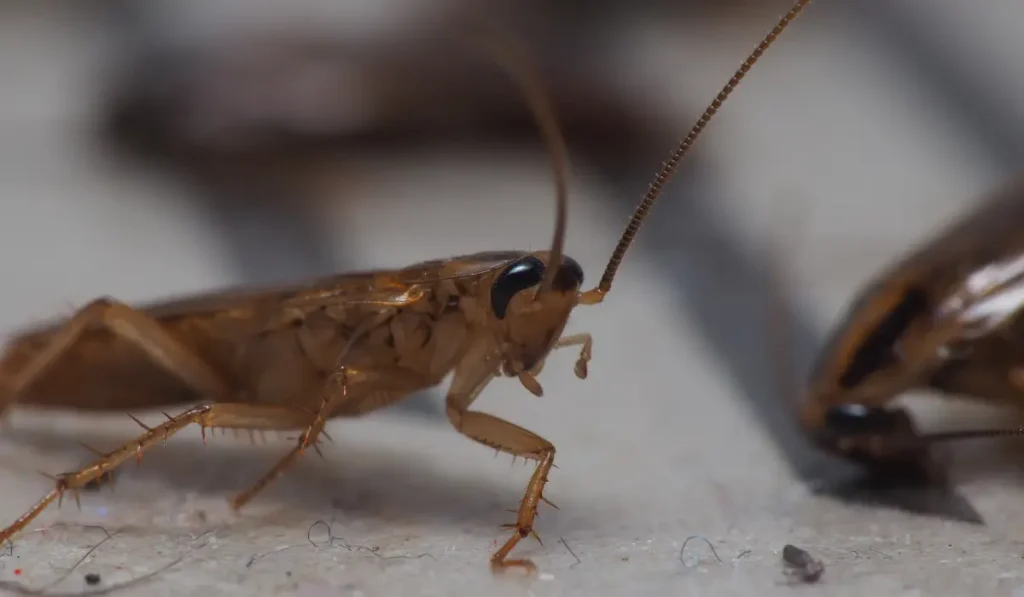
| Cockroach droppings | Pepper-like particles or dark smears | Cabinets, appliance gaps, drawers, and cracks | Shed skins, egg cases, or live roaches |
| Moisture staining | Broad patches or spreading discoloration | Bathrooms, ceilings, and areas near leaks | Condensation, damaged paint, or a musty smell |
The Alabama Wildlife Federation provides regional information that can help you compare spiders commonly found around Southern homes. Its identification resources are more reliable than trying to name a spider from a wall stain.
Why Spider Poop Appears Near Nighttime Activity
Spider poop on walls often collects where spiders spend time hunting or waiting for insects. Web-building spiders may stay close to one web for long periods. Hunting spiders may leave a hidden retreat and move across walls, floors, ceilings, or stored items in search of prey.
Outdoor lighting can increase this activity around porches, garages, and doors. Flying insects gather near bright fixtures, giving spiders a steady place to feed. When dark spots keep appearing below a porch light or window corner, the nearby insect activity may be the reason spiders continue using that space.
Indoor lights can create a similar pattern around windows after sunset. Insects move toward the light, and spiders may settle near frames, curtains, blinds, or ceiling corners where prey is easy to reach. Cleaning the stains without reducing the insects may only solve the problem for a short time.
What the Marks Can Tell You
Recurring stains show that a spider has used the area more than once. They can help you narrow your inspection to the wall, ceiling, window, or ledge directly above them. Fresh marks after cleaning are an even stronger sign that the area remains active.
The marks cannot prove that a spider stays in one location all night. A spider may wait beside a web for part of the evening, move elsewhere to hunt, and return to a protected crack before daylight. Treat the droppings as a map of activity rather than proof of an exact nest.
The marks also cannot tell you whether the spider presents a concern. Body shape, markings, leg structure, web type, and location all matter. Do not place your hands into dark cracks, boxes, wall openings, or clutter while trying to find the spider.
How to Inspect the Area Around Spider Droppings
Start with the surface directly above the stains. Look for web strands, tangled silk, egg sacs, shed skins, cracks, gaps, or ledges where a spider could rest. Check ceiling trim, curtain rods, window frames, door casings, shelves, utility openings, and the backs of wall decorations.
In storage areas, inspect boxes, folded fabrics, seasonal decorations, shoes, and furniture that has remained undisturbed. Spiders often choose protected places where cleaning and foot traffic are limited. Closets, garages, attics, crawl-space openings, and basement corners deserve extra attention when droppings return.
Brown recluse spiders provide one regional example of nighttime movement. Waynes’ service information notes that they tend to rest in dark, secluded areas during the day and wander in search of prey at night. They may use closets, stored boxes, attics, crawl spaces, wall voids, and areas beneath furniture. That behavior should not be applied to every spider, and droppings alone do not confirm a brown recluse.
Check for Insect Activity
A spider stays where it can find food. Small flies, moths, beetles, or other crawling insects may support spider activity even when you rarely see the spider itself. Several webs around a light fixture or window often indicate that prey is gathering there.
Photograph the area before you remove the marks. A dated picture gives you a reference point when you inspect the same location later. You can then tell whether the stains are old, whether new ones have appeared, and whether a web has been rebuilt.
How to Clean Spider Poop Off Walls
Cleaning spider poop stains starts with choosing a method that fits the surface. Remove nearby webbing and loose debris with a vacuum attachment, soft brush, or dry microfiber cloth. Wear gloves, avoid touching the residue directly, and wash your hands when you finish.
Test your cleaning method in a hidden spot first. Paint finish, age, and condition affect how well a wall handles moisture and pressure. Flat paint and older ceiling paint can show scuffs, shiny patches, or discoloration more easily than washable finishes.
Painted Walls and Ceilings
For washable painted walls, dampen a soft cloth with water and a small amount of mild soap. Blot the stain gently instead of scrubbing it. Follow with a clean, lightly damp cloth, then dry the area.
Use very little moisture on ceilings and flat-painted surfaces. Too much water can leave a ring, soften the finish, or soak into drywall. Stop if the paint begins to lift, change color, or develop a polished-looking spot.
Older spider poop stains may leave some discoloration after the residue is gone. Scrubbing harder can damage the surface without removing the remaining mark, so a gentle approach is usually better.
Trim, Windows, and Exterior Siding
Sealed trim and window frames may tolerate light wiping better than flat-painted walls. Use a soft cloth and a cleaner approved for the finish. Keep moisture away from unfinished wood, open joints, and gaps that lead into the wall.
For siding, follow the manufacturer’s care instructions. Use a nonabrasive cloth or soft brush, and avoid harsh scrubbing that could dull or scratch the surface. Never mix household cleaners.
How to Keep Spider Droppings From Returning
Keeping spider droppings from returning requires more than wiping the wall. You need to reduce shelter, limit access, and address the insects that give spiders a reason to stay.
Remove webs as soon as you find them, then inspect the same area over the next several days. Fast web rebuilding or fresh stains suggest that a spider remains nearby or that the location still offers good hunting conditions.
Reduce Hiding Places and Entry Points
Keep closets, garages, attics, and storage rooms organized. Use sealed containers instead of open cardboard boxes where practical, and keep stored items off the floor. Shake out shoes, clothing, and decorations that have remained untouched for long periods.
Repair damaged screens and worn weatherstripping. Seal accessible gaps around windows, doors, vents, pipes, and utility lines with materials suited to the surface. These repairs can reduce entry for spiders and the insects they hunt.
Reduce Insects Near Doors and Windows
Clean insects and old webbing from light fixtures, window frames, and doorways. When practical, turn off unnecessary exterior lights after use or position lights farther from entrances. Fewer insects near a doorway means fewer feeding opportunities for spiders.
The University of Kentucky Department of Entomology identifies web removal, habitat management, and entry reduction as useful parts of spider prevention around buildings. The UC Statewide Integrated Pest Management Program also provides homeowner guidance on spider behavior and practical prevention.
When Recurring Spider Activity Needs Professional Help
A few isolated marks may only require cleaning and monitoring. Repeated droppings, frequent web rebuilding, numerous sightings, or activity in hard-to-reach areas can point to a broader issue. Professional help is also useful when you cannot identify the spider or safely inspect the space where activity is occurring.
A complete inspection should look beyond the visible stain. Spiders often remain where shelter and prey overlap, so effective control may involve web removal, attention to entry points, and treatment of the insects attracting them.
Learn more about Waynes Pest Control when spider activity keeps returning around your home. You can also contact Waynes to schedule an inspection and get help identifying the source of the problem. Addressing both the spiders and the conditions supporting them gives you a better chance of keeping spider poop off your walls.