Rats and mice are both common in Huntsville homes, but they behave differently, nest in different locations, and require different control approaches. Treating a rat problem like a mouse problem wastes time and leaves the infestation in place. Knowing which rodent you are dealing with before you act is the most practical starting point, and the evidence each pest leaves behind makes that identification more straightforward than most homeowners expect.
Key Takeaways
Field Guide · Huntsville, ALRats vs mice in Huntsville
Droppings, gnaw marks, and nest spots tell rats and mice apart. The right ID guides the right response.
1Rats (Norway and roof)
Larger rodents, blunt or pointed droppings up to three quarters of an inch
IDSubstantially larger than mice, with blunt snouts and thick, heavy bodies (Norway) or slimmer, agile builds (roof). Rat droppings are larger and blunt-ended.
WhereNorway rats burrow near foundations and crawl spaces. Roof rats nest in attics, wall voids near the roofline, and tree canopy.
NoteRats are cautious around new objects and may avoid traps for a week. They chew through plastic, pipes, and wood framing.
2House mouse
Small rodent, rice-sized pointed droppings
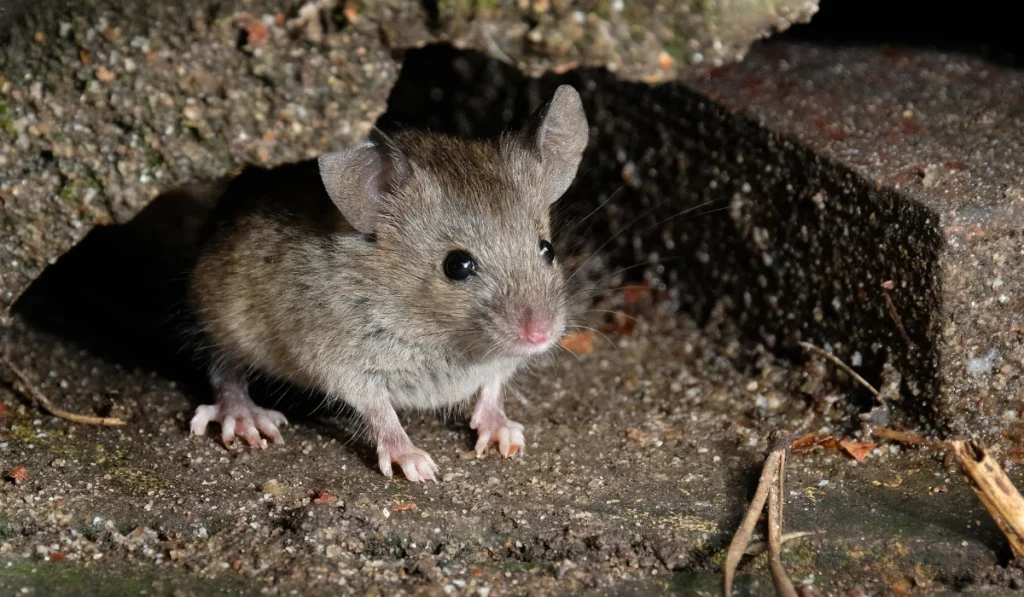
IDSmaller, with pointed snouts, large ears relative to the body, and thinner tails. Droppings are about the size of a grain of rice and pointed at both ends.
WhereNests close to food, often within 30 feet of where they feed, in wall voids, behind appliances, or inside stored goods.
NoteMice are curious and usually approach new objects within the first night, which makes them easier to catch quickly.
- Rats and mice leave different physical evidence. Droppings, gnaw marks, nest locations, and behavior around new objects all point toward one species or the other.
- Roof rats nest above ground in attics and trees. Norway rats burrow near foundations. Mice are smaller and tend to stay closer to food sources, often nesting within 30 feet of where they feed.
- Even a single rodent or a small amount of evidence warrants attention. Populations grow quickly once a food source and shelter are established inside a structure.
- Waynes Pest Control has served more than 150,000 families across Alabama with over 50 years of experience addressing rodent activity in homes like yours.
How to Tell Rats and Mice Apart in Huntsville
Rats and mice leave different clues around your home, and learning to read those clues accurately is the first step toward the right response.
Alabama Cooperative Extension provides identification resources for commensal rodents common to North Alabama homes, including the house mouse, Norway rat, and roof rat.
Physical Differences Between Rats and Mice
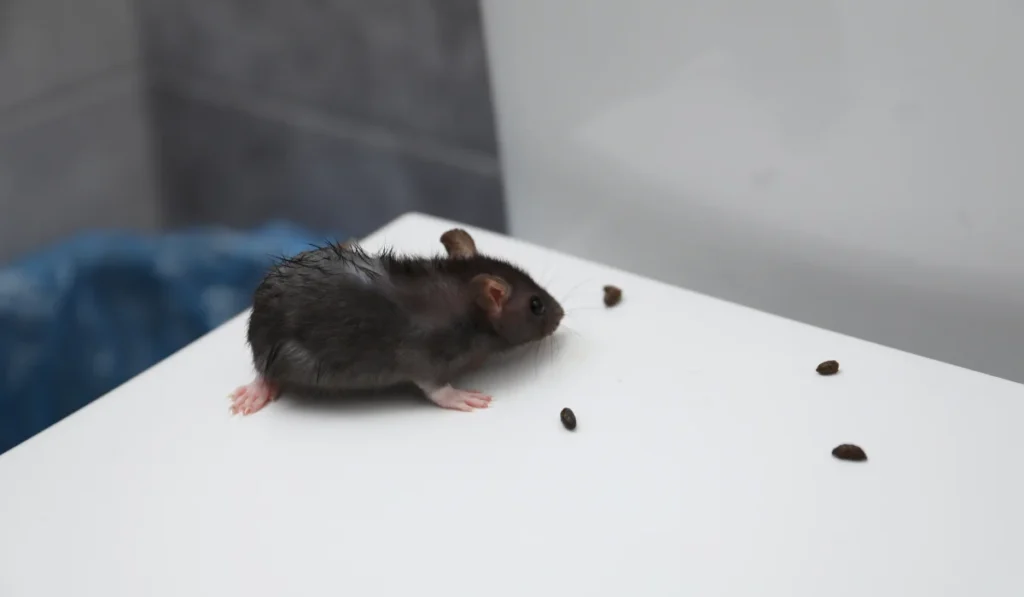
Size is the most immediate difference. Adult Norway rats are substantially larger than mice, with blunt snouts, small ears relative to their head size, and thick, heavy bodies. Roof rats are slimmer and more agile than Norway rats but still considerably larger than mice. Mice have more pointed snouts, large ears relative to their body, and thinner tails. These proportional differences are noticeable even at a quick glance.
Droppings confirm the species clearly.
Mouse droppings are small, roughly the size of a grain of rice, and pointed at both ends. Rat droppings are larger and blunt-ended. Norway rat droppings can be up to three quarters of an inch long. Finding droppings near food storage areas, under sinks, or along baseboards gives you one of the most reliable identifiers available without handling either animal.
Behavioral Differences That Help Identification
Mice are curious. They typically approach and investigate unfamiliar objects, including traps, within the first night. That curiosity makes them easier to catch quickly with a well-placed trap. Rats are neophobic, meaning they are cautious around new objects in their environment. A rat may avoid a freshly placed trap for a week or more before approaching it. If you see droppings and gnaw marks but traps produce no results in the first several days, rats are more likely than mice.
Gnaw marks also differ. Mice leave small, clean gnaw marks on packaging and soft materials. Rats leave larger, rougher marks and can chew through harder materials including plastic containers, lead pipes, and wood framing when motivated by a food source or nesting opportunity.
Signs of Activity Inside Your Home
Droppings concentrated near food storage areas, in drawers, in cupboards, and under sinks point to active rodent presence. The size of those droppings identifies the species. Gnaw marks on food packaging confirm activity and give you additional sizing context. Grease stains along baseboards and walls, left by the oils in a rodent’s coat as it repeatedly follows the same route, indicate an established travel path rather than a casual intrusion. Finding those stain trails helps you locate where the rodent is moving between its nest and its food source.
Where Each Species Nests
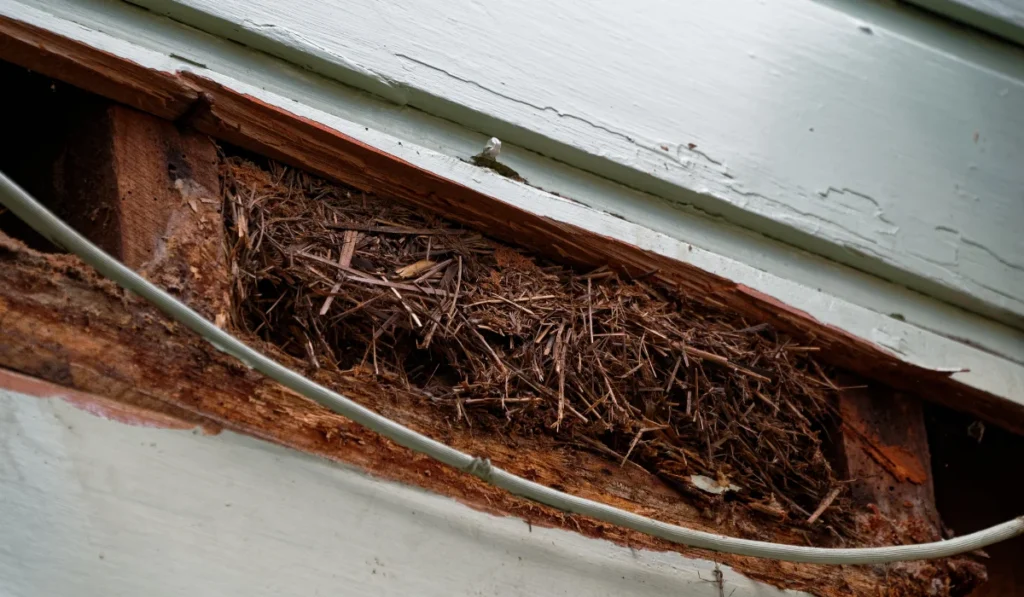
Roof rats climb and nest above ground. Attics, wall voids near the roofline, and dense tree canopy close to the structure are their preferred locations. Norway rats burrow. They nest in soil near foundations, under slabs, and in low areas of the structure such as crawl spaces. Mice nest close to food, typically within 30 feet of where they feed, and may establish nests inside wall voids, behind appliances, or inside stored goods in cabinets and closets. Nest location confirms species more reliably than most other indicators.
Exterior Entry Points
Mice can squeeze through any gap roughly the size of a dime. Rats need more space but will gnaw openings wider when motivated. Both species use gaps around utility penetrations, cracks along the foundation, poorly fitted doors and windows, and openings where pipes and wires enter the structure. Walking the perimeter of your home and looking for these entry points is one of the most productive steps you can take before winter temperatures push rodents toward structures.
Why Rodent Problems Develop in Huntsville Homes
Rodent activity around Huntsville homes traces back to accessible food, reliable shelter, and gaps in the building envelope that give pests an easy path inside. Understanding what draws each species toward your home helps you focus prevention where it will have the most effect.
Where Rats and Mice Nest Near Your Home
Norway rats often establish burrows in soil within a few feet of foundation walls, putting them within easy foraging range of your home’s exterior. Roof rats use tree canopy, dense shrubs, and utility lines as travel routes toward your roofline. Mice establish nests in debris piles, dense ground cover, and any sheltered spot within easy reach of a food source. Outdoor nesting sites this close to the structure make winter indoor activity almost predictable once food and entry points are available.
What Draws Rodents Into Your Home
Food is the primary draw. Pet food left in open bowls for extended periods, pantry items stored in cardboard or paper packaging, birdseed, and accessible garbage all give rodents a reliable food source that makes staying worth the risk of being near people. Removing or securing those sources reduces the incentive considerably. Any consistent food source near or inside the home can shift a foraging visit into a full nesting situation if shelter is also available nearby.
How Rodents Move Through a Structure
Both rats and mice follow consistent routes between their nests and food, running along walls, pipes, and structural edges rather than crossing open floor space. Grease stains accumulate along these established pathways. When a food source is removed or a nesting area is disturbed, rodents explore nearby areas for alternatives, which can shift activity to different parts of the property without eliminating the underlying problem. That behavioral pattern is why sealing entry points alongside removing food sources produces more lasting results than either step alone.
Hidden Food Sources That Sustain Activity
Some food sources are harder to manage than visible pantry items. Dead insects accumulating in wall voids, a carcass in an inaccessible area, or rodent food caches hidden inside walls can all sustain activity even after surface-level cleanup. Rodents sometimes stash nuts, pet food, and seeds inside wall voids, creating hidden reserves that keep them returning to the same areas of your home long after the original attractant has been addressed.
Risks of Rats and Mice in Your Huntsville Home
Both rats and mice bring health risks and property damage, but the specific concerns differ enough by species that identification shapes how you respond and how urgently.
Health Risks
The EPA identifies the house mouse and Norway rat among the most problematic pests affecting homes and public health, with disease risks transmitted through direct contact with droppings and urine, consumption of contaminated food or water, and inhalation of dust from dried rodent waste. Any area where rodent activity is confirmed deserves thorough cleaning alongside pest control treatment, not just the removal of visible droppings.
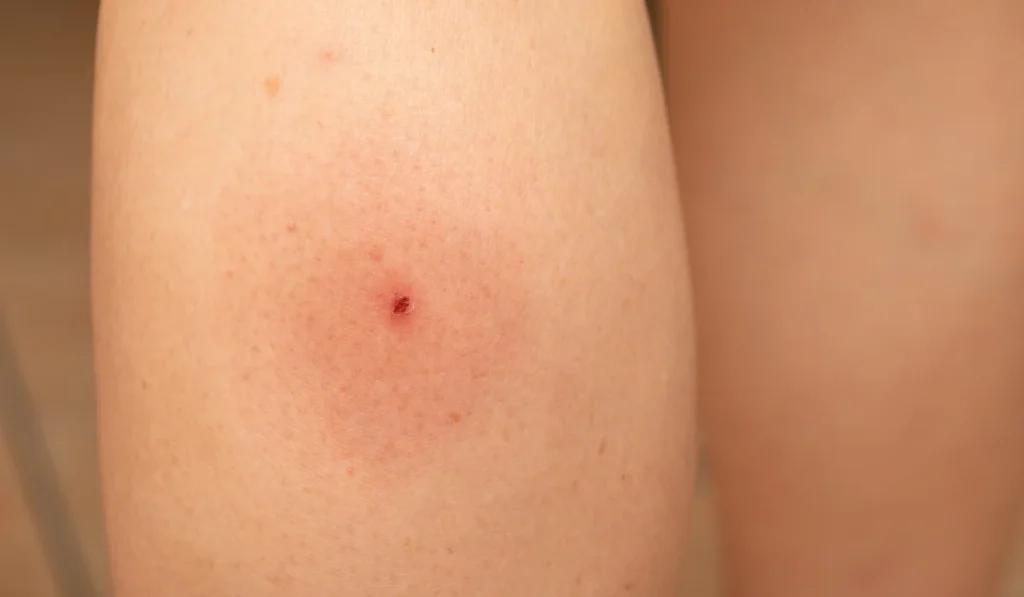
Rodent mites are an additional concern. When a rodent host dies or young leave a nest, mites move in search of a new host and may bite people. An active infestation near or inside the structure can produce mite activity in living areas that goes unnoticed until the rodent problem itself is identified and addressed.
Property Damage
Rodents gnaw constantly to keep their teeth worn down, and the areas near their established travel routes absorb the most damage over time. Wiring inside wall voids, insulation in attics and crawl spaces, food packaging in pantries, and structural wood near entry points are all at risk. Vehicle wiring in garages is a particular concern when rodents are active indoors during winter. The longer an infestation goes unaddressed, the more cumulative the damage becomes in the areas rodents use regularly.
Food Storage and Kitchen Areas
Kitchens, pantries, and storage rooms are where rodent contact with food surfaces creates the most direct sanitation concern. Rodents follow walls and pipes to locate resources, which means the edges of cabinets, the area behind appliances, and the interior of lower pantry shelves are the highest-contact surfaces in any kitchen with rodent activity. Moving pantry items into hard-sided sealed containers removes both the food source and the soft packaging that rodents use for nesting material.
When to Investigate Further
Fresh droppings, gnaw marks on packaging, grease stains along baseboards, or scratching sounds from inside walls at night are all signs worth following up on. Mice are curious and will approach a new object within hours. If traps sit untouched for several days despite clear evidence of activity, the behavioral pattern points toward rats rather than mice. Adjusting your response based on that distinction saves time and leads to a more focused control approach.
Professional Rodent Control in Huntsville, AL
A clear identification guides the right prevention steps, inspection priorities, and control methods. What works reliably for mice and what works for rats differ enough that treating the wrong species wastes effort and leaves the actual problem in place.
Reducing What Draws Rodents In
Removing accessible food and water is the most important prevention step. Store pantry items in hard-sided sealed containers. Keep pet food bowls empty between feeding times. Address leaky faucets and standing water near the foundation. Remove debris piles, stacked firewood, and dense ground cover from the perimeter of the home to eliminate outdoor nesting sites within foraging range of the structure.
Sealing entry points alongside food source removal is what makes prevention durable. Gaps around utility penetrations, cracks along the foundation, and poorly fitted doors and windows all need attention. Screens over crawl space vents and soffit openings close off access routes that are easy to overlook during a casual exterior walkthrough.
Why Inspection Comes First
An inspection of droppings, gnaw marks, grease trails, nest locations, and entry points determines the scope of the infestation and which species is driving the activity. Rats and mice require different trap placement, different bait strategies, and different expectations for how quickly results appear. Identifying the species before placing a single trap makes the control plan more targeted and the outcome more predictable.
Crawl spaces and attics are the areas most often missed during a homeowner walkthrough and most often where activity is concentrated. A trained professional can evaluate those spaces safely and give you an accurate picture of what is actually present before treatment begins.
What Professional Treatment Involves
Professional rodent control combines tamper-resistant bait stations, snap traps, and exclusion work tailored to the species identified during inspection.
The EPA’s residential pest control guidance recommends that any rodenticide bait be placed inside a tamper-resistant station made of durable plastic or metal, positioned where children and pets cannot reach it. A professional selects the right product for the species present and positions traps and stations along the routes rodents actually use rather than in locations that seem logical but produce no results.
Trap placement and monitoring are as important as product selection. Rats require different placement strategy than mice, and adjusting the approach as conditions change is part of what professional service provides that a single DIY application cannot replicate.
What a Rodent Control Plan Covers
A complete plan combines inspection, targeted treatment, exclusion work, and ongoing monitoring. Sealing entry points identified during inspection supports the treatment and limits reinfestation. Regular follow-up maintains awareness of any new activity so it can be addressed before it grows.
Waynes Pest Control has served more than 150,000 families across Alabama with over 50 years of experience. Every little thing matters. A LOT. A rodent infestation in your Huntsville home deserves that level of attention from the first inspection through ongoing prevention.
Bottom Line
Telling rats and mice apart in your Huntsville home starts with the physical and behavioral evidence each species leaves behind. Droppings size, gnaw mark scale, nest location, and how quickly rodents approach unfamiliar objects all point toward one species or the other. That identification shapes every step that follows. If you find signs of rodent activity and want a professional assessment, contact Waynes Pest Control for identification and a control plan tailored to your home.
Frequently Asked Questions
How Can I Tell Whether I Have Rats or Mice?
Droppings size is the most reliable starting point. Mouse droppings are small and pointed, roughly the size of a grain of rice. Rat droppings are larger and blunt-ended. Nest location, gnaw mark size, and how quickly rodents approach new objects in their environment all add supporting evidence. Roof rat activity concentrates in attics and elevated spaces. Norway rat activity concentrates near the foundation and in crawl spaces. Mouse activity stays close to food sources, often within 30 feet of where they feed.
Should I Set Traps if I Find Droppings?
Finding droppings justifies both setting traps and removing accessible food sources nearby. The species you identify from the droppings shapes where you place traps and what bait you use. Mice approach new objects quickly. Rats may avoid a new trap for several days or longer, so patience and accurate placement matter more than product choice alone.
Do Rats and Mice Nest in the Same Places?
Not typically. Roof rats favor elevated spaces such as attics and wall voids near the roofline. Norway rats burrow near foundations and nest in crawl spaces and low areas of the structure. Mice nest close to their food source and may establish in wall voids, behind appliances, or inside stored goods. Nest location is one of the most reliable ways to confirm which species is present when droppings alone leave room for doubt.
When Should I Call a Professional?
If signs of activity persist despite prevention efforts, if you are unsure which species is present, or if activity is concentrated in crawl spaces or attics that are difficult to inspect safely, a professional assessment is the most reliable next step. Waynes can evaluate your home, identify the species, and recommend a control plan based on wha