
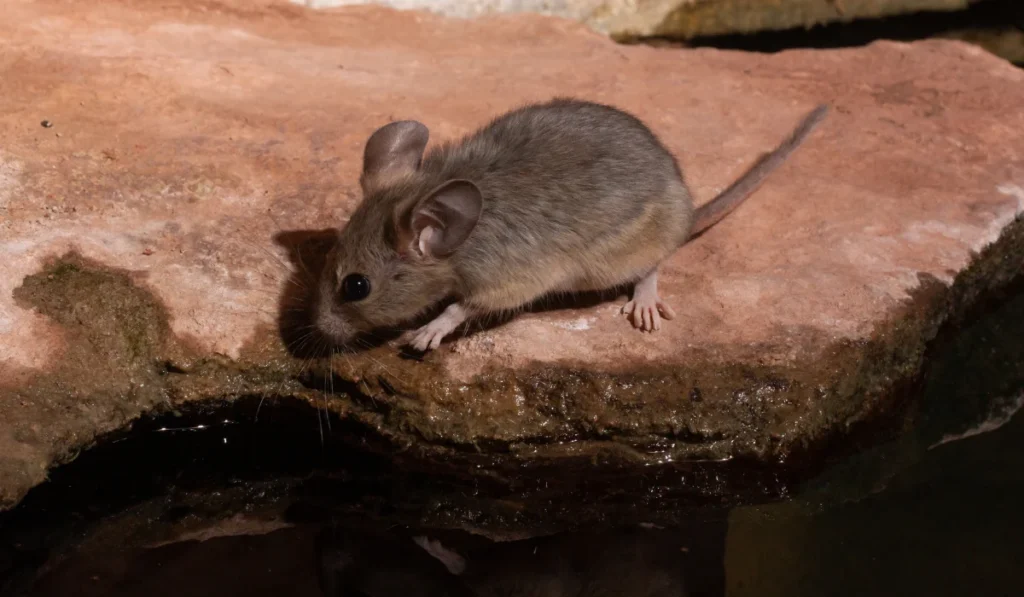
Pack rats have earned one of the most memorable reputations in the rodent world. The name brings to mind an animal sneaking away with coins, bottle caps, foil, or other shiny objects. There is truth behind that reputation, but the real behavior is broader. Pack rats collect all kinds of materials, including objects that have no shine at all.
These animals are woodrats, and collecting is part of how they build and maintain their nesting areas. A woodrat may carry sticks, leaves, seeds, bones, paper, fabric, and human-made objects back to its shelter. When something unusual disappears from a garage, shed, or storage area and later turns up in a rodent nest, it is easy to see how the “shiny thief” story took hold.
Pack rats are also not limited to the desert Southwest. Woodrats occur in parts of the eastern United States, including portions of the South. If you live in Waynes’ service area, knowing how pack rats differ from roof rats, Norway rats, mice, and other rodents can help you respond to signs around your home without making assumptions from a single clue.
Do Pack Rats Really Steal Shiny Things?
Pack rats really do carry objects, and some of those objects may be shiny. The part that needs clarification is the idea that shine itself is what makes an object attractive. Woodrats are collectors, but the verified research does not establish that they specifically seek out metal, jewelry, or reflective items over everything else.
Instead, these rodents gather materials from the places where they live. A bottle cap, scrap of foil, wrapper, piece of fabric, or other small household object may end up alongside sticks and plant material. That mixed collection is much closer to actual pack rat behavior than the image of a rodent searching your home for valuables.
The University of Michigan Museum of Zoology’s Animal Diversity Web profile of the eastern woodrat is a useful species-level source for understanding woodrat biology and behavior. It also helps separate scientific natural history from the folklore that has grown around the name “pack rat.”
Why Pack Rats Collect So Many Objects
Collected material often becomes part of a nest or midden. A pack rat midden is an accumulation of materials associated with the animal’s shelter. Depending on what is available nearby, that collection can contain natural debris as well as human-made objects.
This is one reason the shiny-object story is so memorable. Finding a coin or bottle cap in a nest stands out much more than finding leaves or twigs. The unusual item becomes the story, while the ordinary materials around it receive less attention.
For homeowners, the more useful lesson is that an odd collection of materials near a sheltered area can be one clue among several. It should not be treated as proof of a pack rat by itself.
What Is a Pack Rat?
A pack rat is a woodrat, not simply any rat that hoards or collects things. Woodrats belong to the genus Neotoma. That distinction matters because a pack rat is not the same animal as a roof rat or Norway rat.
The eastern woodrat, Neotoma floridana, is one of the species associated with the eastern United States. When you are talking about pack rats in the South, species and location matter. Wildlife does not follow state lines neatly, and the presence of a woodrat in one part of a state does not mean the species occurs everywhere in that state.
Around homes, that distinction becomes practical. Waynes’ rodent information identifies roof rats, Norway rats, house mice, and white-footed deer mice among the rodents homeowners may encounter. Several species can leave similar evidence, so proper identification should consider more than one sign.
| Feature | Pack Rat / Woodrat | Roof Rat | Norway Rat |
| Basic identity | Woodrat in the genus Neotoma | A different rat species | A different rat species |
| Collecting objects | A well-known behavior | Not its defining behavior | Not its defining behavior |
| Signs around structures | May overlap with other rodents | May include droppings, gnawing, and nesting signs | May include droppings, gnawing, and nesting signs |
| Best identification approach | Consider the animal, habitat, nest, and other signs together | Consider multiple signs | Consider multiple signs |
Pack Rats Can Live in Parts of the South
Pack rats are strongly associated with western landscapes in popular culture, but woodrats are not confined to the West. The eastern woodrat is relevant when discussing woodrats in the eastern United States, including portions of the South.
That does not mean every large rodent you encounter in Alabama, Tennessee, Mississippi, or the Florida Panhandle is a pack rat. Local habitat and species distribution matter. A rodent seen near a wooded property may be different from one nesting in a dense residential neighborhood, and appearances can be misleading when you only catch a brief glimpse.
This is why regional identification deserves more attention than the nickname alone. If you hear movement in an attic or find a nest in a shed, the evidence may point to a woodrat, roof rat, Norway rat, mouse, squirrel, or another animal. The fact that pack rats can occur in the South does not make them the automatic answer.
What Does a Pack Rat Nest Look Like?
A pack rat nest may stand out because of the amount and variety of material gathered around it. The associated midden can contain vegetation, sticks, and other items collected from the surrounding area. When the animal lives near people, human-made materials may become part of that accumulation as well.
The presence of foil, plastic, paper, or fabric in a pile is not enough to identify a pack rat. Other rodents and wildlife can disturb or collect materials, too. Look at the larger pattern around the site, including droppings, gnaw marks, nesting material, tracks, and the location of the activity.
Where you find the signs can also provide useful context. Activity around a garage, attic, crawl space, shed, storage area, or exterior gap may point toward an animal using the structure for shelter. The goal is to identify the animal from several pieces of evidence rather than relying on one unusual object.
Is That a Pack Rat or Another Rodent?
A pack rat vs. rat comparison can become confusing because several rodents leave similar signs behind. Droppings, gnawing, scratching sounds, nesting material, chewed containers, and changes in pet behavior may all indicate rodent activity without telling you exactly which species is responsible.
Waynes’ rodent guidance lists these kinds of signs when evaluating possible rat or mouse problems. That makes the location and pattern of activity especially useful. Ask where the signs appear, how often you notice them, and whether there are visible gaps or damaged areas nearby.
The distinction between a pack rat vs. roof rat is more than terminology. A pack rat is a woodrat, while a roof rat belongs to a different group of rats. Because their behavior and preferred shelter can differ, assuming every rodent in an attic is the same species can lead you toward the wrong solution.
When possible, avoid disturbing a nest before the animal has been identified. Photos of the animal, droppings, entry points, and nesting material can give a pest professional more useful information than a description such as “large rat” or “something scratching in the wall.”
How to Keep Pack Rats and Other Rodents Out of Your Home
Whether the animal turns out to be a pack rat, roof rat, mouse, or another rodent, prevention starts with limiting access to your home. Waynes’ rodent guidance emphasizes reducing the food, water, and shelter rodents can use while also addressing the openings that allow them inside.
Seal Common Rodent Entry Points
Inspect areas where building materials meet, including vents, doors, utility openings, rooflines, foundations, and other exterior transitions. Damaged screens, loose materials, or unsealed gaps can give rodents a route into attics, crawl spaces, garages, and other protected areas.
Pay close attention to spots where you already see signs of activity. Droppings, gnaw marks, nesting material, or repeated noises near the same part of the house may help narrow down where a rodent is entering or sheltering.
Reduce Food, Water, and Shelter
Rodents are more likely to remain around a property when they have easy access to basic resources. Store food in secure containers, keep pet food from sitting out unnecessarily, and clean up spills or crumbs that may provide a steady food source.
Clutter can also create protected hiding and nesting areas. Garages, sheds, storage rooms, and other low-traffic spaces deserve attention, especially when boxes, fabric, paper, or other materials sit undisturbed for long periods.
Use Rodent Exclusion to Address the Cause
Rodent exclusion focuses on correcting the conditions that allow animals to enter instead of dealing only with the rodent you happen to see. The USDA APHIS Wildlife Services program is an authoritative resource on wildlife management and approaches used to reduce conflicts between people and nuisance wildlife.
Removing one animal without addressing how it entered can leave the same route open for another. A thorough inspection should look at both current rodent signs and the structural conditions that may be supporting continued activity.
Get the Right Rodent Identified Before It Settles In
The old story about pack rats stealing shiny things has a real basis, but the truth is more useful than the legend. Woodrats collect many kinds of objects, and shiny household items can be part of that collection. A missing bottle cap or piece of foil, however, cannot identify the animal living around your home.
If you notice droppings, gnaw marks, nesting material, scratching sounds, or suspected rodent entry points, accurate identification should come before assumptions. Waynes Pest Control serves homeowners across Alabama, Tennessee, Mississippi, and the Florida Panhandle with rodent control and other home services. If you are seeing signs of pack rats or another rodent around your property, contact Waynes to have the activity evaluated and determine the right next step.