
Finding a cockroach indoors does not always mean you have the same type of problem. Some cockroaches in the Florida Panhandle live mainly outdoors and occasionally enter homes, while German cockroaches are closely associated with indoor environments. Knowing which species you are seeing, where it tends to hide, and what other signs are present can help you tell an occasional visitor from an infestation and focus your next steps where they matter most.
Why Cockroaches Are Common in the Florida Panhandle
Cockroaches need access to food, water, shelter, and suitable hiding places. Around Florida Panhandle homes, those resources can be found in kitchens, bathrooms, garages, utility areas, landscaping, leaf litter, mulch, and other protected spaces. Outdoor species that settle near a house may enter through doors, gaps around pipes, or other openings.
A large cockroach indoors does not always mean it is breeding in your home. Some larger species spend much of their time outside and may wander indoors while looking for moisture, shelter, or food. Where you find the cockroach and whether you continue seeing others can help clarify what is happening.
German cockroaches require a different response. Waynes identifies them as a year-round pest that favors warm, humid areas, especially kitchens and bathrooms. They can also be carried into buildings in grocery bags, cardboard boxes, cartons, and secondhand appliances. That means a German cockroach problem is not simply a sign that a home needs more cleaning.
Types of Cockroaches Florida Panhandle Homeowners May See
Several types of cockroaches in Florida can show up around residential properties. Identifying the species helps you understand where it is likely coming from and whether indoor activity deserves closer attention.
| Cockroach Type | Common Appearance | Common Locations | What an Indoor Sighting May Suggest |
| German cockroach | Small, tan to light brown, with two dark stripes behind the head | Kitchens, bathrooms, cabinets, appliances | Indoor activity should be investigated |
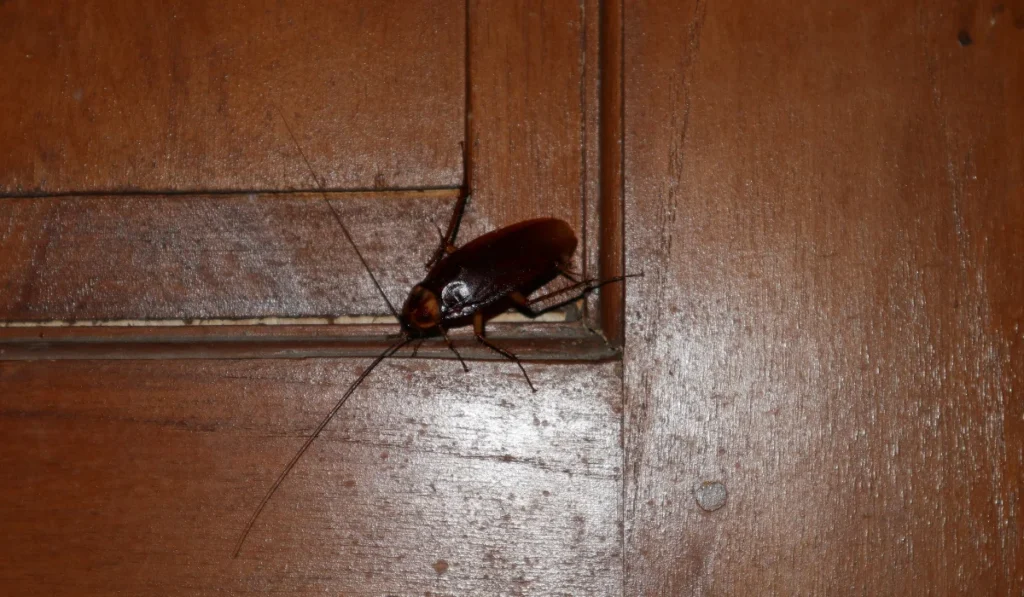
| American cockroach | Large and reddish-brown | Damp areas, drains, utility spaces, outdoor habitats | The roach may have entered from a damp or outdoor area |
| Smokybrown cockroach | Large and dark brown | Trees, leaf litter, mulch, other moist exterior areas | Outdoor habitat near the house may be contributing |
German Cockroaches
German cockroaches are especially important to recognize because they are strongly associated with buildings where people live, prepare food, or store supplies. Adults are tan to light brown with two dark, nearly parallel stripes behind the head. Waynes’ preparation guidance places adults at about one-half to five-eighths of an inch long.
Kitchens and bathrooms provide many of the conditions German cockroaches use. You may find activity around sinks, dishwashers, stoves, refrigerators, cabinets, and plumbing. Cracks and other protected spaces near food and moisture can give them places to remain hidden.
Boxes, grocery bags, cartons, and used appliances can also transport German cockroaches from one location to another. The University of Florida IFAS German cockroach resource provides Florida-specific information on identifying the species and understanding its biology.
American Cockroaches
American cockroaches are much larger than German cockroaches and have a reddish-brown appearance. They are associated with damp environments, including drains, utility areas, sewer environments, and sheltered outdoor locations.
Seeing one American cockroach inside does not prove that a population is established in your house. A large roach may have entered from outdoors or another damp area through an available opening. Repeated sightings, especially in the same location, give you more useful information than one isolated encounter.
The UF/IFAS American cockroach guide can help you distinguish this species from smaller cockroaches that are more closely associated with indoor infestations.
Smokybrown Cockroaches and “Palmetto Bugs”
Smokybrown cockroaches are another larger species you may encounter around Florida homes. They are associated with moist exterior habitats such as trees, leaf litter, mulch, and other protected areas around structures.
You may hear large Florida cockroaches called “palmetto bugs,” but that nickname does not identify one specific species. Identifying the actual cockroach is more useful when you are trying to determine why it is appearing indoors.
If larger outdoor cockroaches keep entering the house, inspect the conditions around the structure as well as the rooms where you find them. Exterior shelter, moisture, and accessible openings can all contribute to recurring indoor sightings.
When a Cockroach Sighting Points to an Infestation
One roach does not tell you everything you need to know. The species, location, frequency of sightings, and other evidence all help determine whether you may have an established roach infestation.
Signs can include repeated sightings, cockroach droppings, shed material, egg cases, and activity around appliances, plumbing, or food storage areas. Waynes notes that German cockroach droppings may look like small, dark, pepper-like material. With heavier activity, dark staining or a musty odor may also appear in areas where German cockroaches gather.
Pay close attention to location. Repeated German cockroach sightings beneath a sink, around a dishwasher, behind a refrigerator, or inside cabinets deserve closer inspection because those areas can combine food, water, warmth, and shelter. An isolated large cockroach near an exterior doorway may point more strongly toward an entry problem.
How Cockroaches Can Affect Your Home and Health
Cockroaches can create concerns beyond their appearance. As they move through unsanitary areas and then across household surfaces, they can contribute to contamination around food preparation and storage areas. If you are seeing activity in the kitchen, cleaning food-contact surfaces and protecting stored food should be part of your response.
Cockroach material can also affect people who are sensitive to indoor allergens. According to the U.S. Environmental Protection Agency’s guidance on asthma triggers, cockroach body parts and droppings can contribute to indoor allergens and may trigger asthma symptoms in sensitive people.
A single sighting does not automatically create a medical concern, but recurring activity deserves attention. Addressing food, moisture, hiding places, and the source of the infestation is more useful than focusing only on the insects you happen to see.
How to Make Your Florida Panhandle Home Less Attractive to Cockroaches
Reducing cockroach activity means limiting the resources they use. The most effective household habits focus on moisture, food, shelter, and the ways cockroaches can enter or be carried inside.
Reduce Moisture and Food Sources
Repair plumbing leaks and check beneath sinks and around appliances for damp conditions. Keep sinks and drains clean, and pay attention to bathrooms and utility spaces where moisture may remain available.
Store pantry goods and pet food in closed containers. Clean crumbs, grease, and food residue from surfaces, and empty garbage regularly. When practical, clean beneath and behind stoves and refrigerators, where debris can collect outside your normal line of sight.
Reduce Hiding Places and Accidental Transport
Clutter can provide protected spaces where German cockroaches remain concealed. Cardboard boxes, paper bags, and stored materials deserve attention in kitchens, garages, and utility areas.
Because German cockroaches can hitchhike in boxes and used appliances, inspect those items before bringing them into your living space. Secondhand kitchen appliances deserve particular attention because they contain protected seams and compartments.
Waynes’ German cockroach preparation guidance also recommends reducing clutter, keeping food in sealed containers or refrigerated storage, maintaining plumbing, cleaning appliances and food-contact surfaces, and keeping garbage containers covered. These steps remove resources that can help an indoor population persist.
Address Outdoor Habitat and Entry Points
When larger outdoor cockroaches repeatedly appear indoors, look at the exterior of the house as well. Leaf litter and other sheltered material near the structure can provide habitat, while openings around doors, pipes, and utility penetrations may provide a way inside.
Reducing nearby shelter and closing practical entry points can help limit repeated indoor activity from outdoor species. The goal is to address both sides of the problem rather than removing one roach at a time.
Why German Cockroach Problems Can Take Time to Resolve
German cockroach control often requires more than removing the adults you can see. Waynes’ customer preparation guidance says the process can take about three weeks to two months because of cockroach biology. That makes preparation, sanitation, and follow-up an important part of the process.
During that time, keep food stored properly, clean food-contact areas, reduce clutter, and repair plumbing problems that provide moisture. Waynes also instructs customers not to use bug bombs, aerosols, or other roach-control methods before or after professional service because they can interfere with the treatment approach.
The work inside the home matters because German cockroaches can remain concealed around cabinets, appliances, plumbing, and other protected spaces. Professional service addresses the infestation, while reducing food, water, and shelter makes those spaces less supportive of continued activity.
Taking Control of Cockroaches in the Florida Panhandle
Cockroaches in the Florida Panhandle do not all point to the same problem. A large outdoor roach may have entered through a gap or from nearby exterior habitat, while repeated German cockroach sightings in a kitchen can indicate an established indoor issue. Correct identification gives you a better starting point.
You can reduce recurring activity by managing moisture, storing food securely, reducing clutter, inspecting boxes and used appliances, and addressing openings around the home. When German cockroaches continue to appear or you cannot identify where larger roaches are entering, a professional inspection can help determine the species and the conditions supporting the problem.
Waynes Pest Control serves homeowners across its service area, including the Florida Panhandle. If recurring cockroach activity needs professional attention, you can contact Waynes Pest Control to discuss what you are seeing and arrange service.