
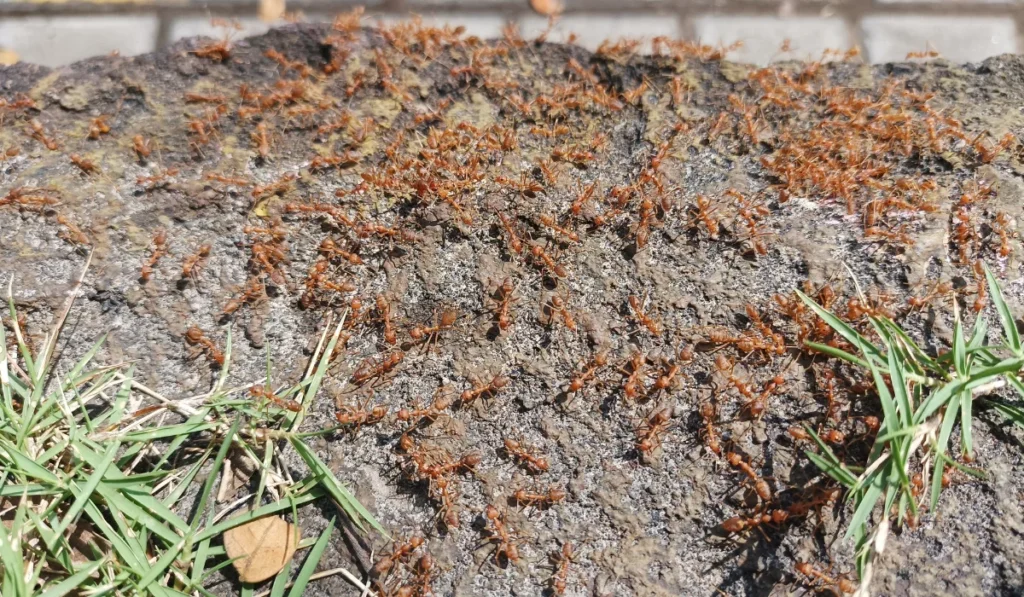
Florida fire ants are one of the most frustrating ant problems homeowners face because they can build mounds in lawns, sting when disturbed, and return after rain or yard work.
The red imported fire ant is the species most people mean when they talk about fire ants in Florida. These ants are reddish brown to black, aggressive around their nests, and common in sunny lawns, landscaped areas, parks, fields, and along sidewalks or driveways.
If you are finding mounds where kids play, pets walk, or people mow, the safest next step is identification and professional control.
Key Takeaways
- Red imported fire ants are the most notorious fire ants found in Florida.
- Fire ants are small, reddish brown to black, and aggressive when their mound is disturbed.
- Mounds may appear in lawns, landscaped areas, around trees, and under pavement or structures.
- Fire ant stings can cause burning pain, itching, and raised pustules.
What Are Florida Fire Ants?
Although Florida hosts more than one fire ant species, the notorious red imported fire ant is most frequently linked to painful stings and yard mounds. Specifically, the state is home to two separate species: the widespread red imported fire ant and the much rarer native or tropical fire ant.
Red imported fire ants are invasive and can be difficult to manage because colonies may be large, defensive, and hard to eliminate without the right approach.
How to Identify Fire Ants
Fire ants are small, but their behavior often makes them easier to identify than their size. If you disturb a mound and ants rush out quickly, that is a strong clue.
Common identification traits include:
- Reddish brown to black coloring
- Small workers, often about 1/8 to 1/4 inch long
- Workers of different sizes in the same colony
- Two-segmented “waist”
- Aggressive movement when the nest is disturbed
- Stinging behavior
- Soil mounds in sunny or open areas
The UF/IFAS Gardening Solutions fire ant guide describes red imported fire ants as reddish brown to black and aggressive, with workers about 1/8 to 1/4 inch long.
What Fire Ant Mounds Look Like
Fire ant mounds are usually built from loose soil. They may look like irregular dirt piles rather than neat anthills, and they often lack a clear central opening. Fire ants use underground tunnels to move in and out, so the mound surface may not show a visible entrance.
Mounds may appear in:
- Lawns
- Pastures
- Parks
- Garden beds
- Sidewalk edges
- Driveway cracks
- Around trees and stumps
- Under pavement
- Near buildings
- Around utility housings or electrical equipment
Florida’s sandy soils can affect mound size and shape. UF/IFAS notes that fire ants can build visible dirt mounds, but Florida’s sandy soils may prevent the large mounds seen in states with more clay-heavy soils.
Why Fire Ants Build Mounds in Lawns
Fire ant mounds are part of the colony’s nest system. The mound helps regulate temperature, protect the colony, and connect to underground tunnels. Sunny, open lawns are common sites because the soil warms quickly and gives the colony space to expand.
Fire ants may become more visible after:
- Rainfall
- Irrigation
- Soil disturbance
- Yard work
- Warm, sunny weather
- Mowing
- Landscaping changes
After rain, colonies may rebuild or move soil, making mounds more noticeable. That is why a yard can seem clear one week and covered with mounds the next.
Fire Ant Bites and Stings
People often say “fire ant bites,” but the painful part usually comes from the sting. Fire ants can bite to grip the skin, then sting. If a mound is disturbed, many workers may rush out and sting quickly.
Typical reactions may include:
- Burning pain
- Redness
- Itching
- Swelling
- Raised pustules after the sting
- Multiple sting marks if several ants were involved
Fire ant stings can cause painful burning, pustules, and intense itching. Some people may have allergic reactions. If someone has trouble breathing, dizziness, swelling away from the sting area, or other severe symptoms after a sting, call emergency medical help right away.
Why Fire Ants Are a Problem for Pets and Kids
Fire ant mounds are easy to step on by accident. That creates a problem for children, pets, and anyone walking barefoot or sitting in the grass. Dogs may sniff or paw at mounds, and kids may disturb them without knowing what they are.
Higher-risk areas include:
- Play areas
- Fence lines
- Dog runs
- Patios
- Pool edges
- Walkways
- Sports areas
- Lawns used for outdoor seating
If you see mounds in places where people or pets spend time, do not wait for someone to get stung before addressing the activity.
Where Fire Ants Nest Around Florida Homes
Fire ants prefer warm, open, sunny areas, but they can nest in more than just lawns. Around Florida Panhandle homes, they may use soil, pavement edges, landscaping, and protected exterior spaces.
Common nesting areas include:
- Turfgrass
- Mulch beds
- Garden edges
- Sidewalk cracks
- Driveway edges
- Around tree roots
- Along fence lines
- Under landscape stones
- Near irrigation boxes
- Around outdoor electrical equipment
Fire ants can also forage far from the mound. Seeing ants near food, trash, pet bowls, or outdoor seating does not always mean the nest is right next to the activity.
Fire Ant Season in Florida
Florida fire ants can be active for much of the year because the climate supports outdoor ant activity. Homeowners often notice more movement and mound-building during warm periods, after rain, or when soil moisture changes.
Activity may increase:
- In spring as temperatures rise
- After summer rain
- During humid weather
- After lawn irrigation
- After mowing or soil disturbance
- In fall during warm conditions
UF/IFAS notes that red imported fire ant mating flights can occur between spring and fall, usually on warm, sunny days after rain. That helps explain why new colonies and mound activity can appear after weather changes.
How to Reduce Fire Ant Problems Around Your Yard
Fire ant prevention is partly about making high-use areas less inviting and catching activity early. Because colonies can be large and defensive, avoid disturbing mounds with bare hands, feet, or yard tools.
Helpful steps include:
- Check lawns before children or pets play outside.
- Wear shoes when walking through grass.
- Keep pet food and outdoor food cleaned up.
- Inspect around patios, fences, and play areas after rain.
- Avoid disturbing mounds before they are identified.
- Keep vegetation trimmed where mounds are hard to see.
- Watch for activity around electrical or utility boxes.
- Call for help when mounds appear in high-traffic areas.
Do not pour gasoline, bleach, or household chemicals on fire ant mounds. Those methods can damage soil, harm people or pets, and fail to solve the colony problem.
When to Call Waynes
Call us if fire ant mounds are showing up in your lawn, play areas, pet spaces, walkways, or landscaped beds. Fire ants can sting quickly when disturbed, and surface-level treatment is not always enough when colonies are active underground.
Waynes provides pest control services in the Florida Panhandle for common household and yard pests. Our ant control service starts with an inspection of your property, entry points, and the conditions attracting ant activity so we can recommend the right treatment plan.
If fire ants are making your yard harder to use safely, contact Waynes for a quote and we’ll help you choose the next step.
FAQs About Florida Fire Ants
Are fire ants common in Florida?
Yes. Fire ants are common in Florida lawns, landscapes, parks, pastures, and sunny open areas. The red imported fire ant is the species most associated with painful stings and visible mounds.
What do fire ant mounds look like?
Fire ant mounds usually look like loose, irregular dirt piles. In sandy Florida soil, they may be flatter or less obvious than mounds in heavier clay soils.
Do fire ants bite or sting?
Fire ants can bite to grip the skin, but the painful reaction usually comes from the sting. Multiple ants may sting if a mound is disturbed.
Are fire ant stings dangerous?
Most stings cause localized pain, itching, swelling, and pustules. Some people can have allergic reactions. Seek emergency medical help if symptoms are severe or involve breathing trouble, dizziness, or swelling away from the sting area.
Does Waynes treat fire ants in Florida?
Waynes provides pest control and ant control services in the Florida Panhandle. If fire ant mounds are appearing around your lawn, play areas, pets, or walkways, we can inspect the activity and recommend a treatment plan.