
Fire ants in Panhandle yards can appear even when you keep your property clean and your lawn well maintained. Their activity depends on several conditions, including soil moisture, available food, open or disturbed ground, weather, and opportunities for new colonies to form. Knowing how those factors work together can help you understand why mounds appear, why activity often becomes more noticeable after rain, and which parts of your property deserve closer attention.
What Draws Fire Ants in Panhandle Yards?
Food is only one piece of the picture for fire ants in Panhandle properties. A food spill near your patio can bring foraging workers into that area, while soil and weather conditions influence where colonies can establish and remain active.
That difference helps explain why removing one food source may reduce ants around a porch without affecting a mound elsewhere in the lawn. Fire ants use the property for both foraging and nesting, and the conditions that support those activities are not always the same.
| Property Condition | How It Relates to Fire Ant Activity |
| Moist or irrigated soil | Can provide workable soil conditions during dry periods |
| Open or disturbed ground | Can provide suitable areas for nest establishment |
| Accessible outdoor food | Can attract workers that are already foraging nearby |
| Rain after a dry period | Can coincide with mound activity and reproductive flights |
Moisture and Soil Conditions
Soil moisture can influence fire ant activity. During a dry stretch, irrigated portions of your lawn may retain moisture longer than surrounding ground. Watering does not cause a fire ant infestation by itself, but moisture can contribute to conditions that support a colony.
Rain can also change what you see above ground. Fire ants move soil as they maintain their nests, so fresh mound material may become more visible as ground conditions change. A mound noticed after rainfall may have come from an established colony that was already present below the surface.
Open and Disturbed Ground
Imported fire ants commonly occupy lawns and other managed outdoor areas. UF/IFAS Entomology and Nematology provides research-based information about imported fire ants and their presence in residential and other outdoor environments.
Around your home, recently worked landscape beds, graded soil, and maintained turf can all provide places where fire ant nests may develop. A carefully maintained property can still offer suitable ground, so recurring activity should not be treated as a sign that your yard is neglected.
Why Fire Ants Are Common Across the Florida Panhandle
Imported fire ants originated in South America and entered the United States through the Mobile, Alabama, area. Waynes’ fire ant information identifies imported fire ants as established throughout the company’s Southeastern service footprint, including Gulf Coast markets.
The USDA Animal and Plant Health Inspection Service maintains information on imported fire ants, their distribution, and federal regulations associated with their movement. Their established presence across much of the Southeast means colonies can occur on properties with no previous history of visible mounds.
The Gulf Coast also has a longer period of fire ant activity than colder regions. Waynes identifies fire ants as a year-round concern in the Gulf Coast region. The amount of activity you notice can still shift with rainfall, temperature, soil conditions, and the colony’s stage of development.
How Food Sources Affect Fire Ant Activity
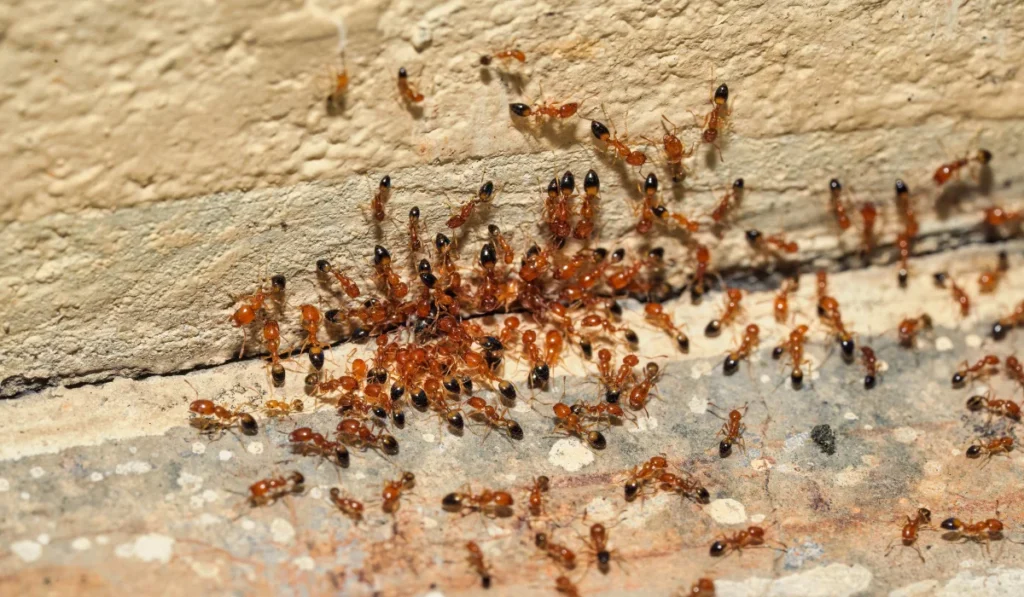
Fire ants forage for many types of food, including other small animals and food scraps around homes. Outdoor pet food, residue near a grill, dropped food around a patio, and exposed garbage can give workers another place to forage.
You can reduce those opportunities by bringing pet food inside when it is not being used, cleaning outdoor dining and grilling areas, and keeping household waste covered. These steps are most useful around patios, doors, walkways, and other areas where you would rather not have active foraging ants.
Food Does Not Determine Where Every Mound Forms
Finding fire ants around food does not mean that food caused the colony to establish nearby. Workers can leave a nest and search the surrounding area for resources, which means the food source you notice may be some distance from the mound.
Your lawn also contains insects and other natural food sources that cannot realistically be removed. For that reason, sanitation can reduce avoidable foraging around the home, but it cannot prevent every fire ant colony from becoming established on the property.
Why Fire Ant Mounds Become More Noticeable After Rain
Fresh fire ant mounds often get a homeowner’s attention after wet weather. Rain changes soil conditions, which can make newly moved soil easier to notice. Weather can also affect one of the most significant ways fire ants spread to new areas: reproductive flights.
Waynes’ fire ant information states that swarming begins in spring and can continue through late fall. These flights are especially common a day or two after rain that follows a dry period. Winged males and females leave established colonies during these events.
Reproductive Flights Can Start New Colonies
During a reproductive flight, male and female fire ants mate in the air. The males die afterward, while queens that successfully reach the ground shed their wings and enter the soil. A surviving queen can then attempt to establish a new colony.
This reproductive cycle helps explain why fire ants in Panhandle yards can show up in areas where you did not previously see a mound. A colony may have already been present and become more visible after the weather changed, or a new queen may have reached the property following a reproductive flight.
Rain itself does not create a fire ant problem. Instead, certain rain events can coincide with changes in mound activity and with the reproductive behavior that allows fire ants to spread.
Why Fire Ant Mounds Keep Coming Back
A mound is the part of a fire ant nest you can see, but most colony activity occurs below the surface. Flattening the loose mound soil changes its appearance without confirming that the colony beneath it is gone.
When new mounds appear, several things may be happening. An existing colony may remain active below ground, another colony may already be present elsewhere on the property, or a queen from a reproductive flight may establish a separate nest.
A Clean Yard Can Still Have Fire Ants
Fire ants do not require a dirty or poorly maintained yard. Suitable soil, moisture, food, warm weather, and the widespread presence of imported fire ants across the region can all contribute to recurring activity.
Instead of judging the problem by one mound, watch for patterns across the property. Pay attention to areas where mounds repeatedly form, locations that stay damp, recently disturbed soil, and changes you notice after rain. Those observations can help show whether activity is limited to one area or spread throughout the lawn.
How to Make Your Property Less Favorable to Fire Ants
You cannot prevent every fire ant from reaching your property, especially in an area where imported fire ants are already established. You can, however, reduce some of the conditions that make high-use parts of your yard more appealing to foraging workers.
Keep food residue off patios and grilling areas, remove pet food after feeding, and keep garbage containers closed. These habits are especially useful near doors, play areas, outdoor seating, and other places where frequent ant activity would create a problem.
Manage Irrigation Without Keeping Soil Constantly Wet
Water your lawn based on the needs of your grass rather than keeping the soil continually wet. Proper irrigation supports your lawn while avoiding unnecessary moisture during otherwise dry conditions.
Pay attention to places where water regularly collects or where irrigation keeps the soil damp longer than the rest of the yard. Moisture alone does not determine whether a colony will form, but it can contribute to favorable soil conditions.
Watch Recently Disturbed Soil
Landscaping, planting, and grading can leave areas of loose or recently worked soil. Monitor those parts of your property for new mound activity, especially after changes in the weather.
A new landscape project does not cause fire ants, but disturbed ground can provide suitable nesting areas when colonies are already established in the surrounding region.
Give Active Mounds Space
Avoid kicking, digging into, or repeatedly disturbing a mound to see whether it is active. Fire ants defend their nests and can deliver repeated stings. Waynes’ fire ant information identifies painful stings, welts, and allergic reactions among the concerns associated with these ants.
Use extra caution when a mound appears beside a walkway, mailbox, garden bed, play area, or pet space. These locations make accidental contact with the colony more likely.
Managing Fire Ants in Panhandle Properties
Managing fire ants in Panhandle properties works best when you look at the entire yard rather than one mound at a time. Reducing exposed food, managing irrigation, and monitoring disturbed soil can address some conditions around your home, but those steps cannot prevent every nearby colony or newly mated queen from reaching your property.
When mounds continue to appear in multiple areas, property-wide fire ant control can address the broader problem. Waynes’ fire ant service is designed to address active fire ant mounds and help prevent additional mound formation across treated lawn areas. The application is water activated, so the treatment process accounts for the way the product must move into the treated area before reaching full effectiveness.
If fire ants are repeatedly showing up around the parts of your yard your family uses most, Waynes Pest Control can help assess the activity and determine an appropriate service for your property. You can also contact Waynes to discuss fire ant treatment for your Florida Panhandle home.