
If you spot a wasp near your porch or window on a warm December afternoon, you may wonder: do wasps die in the winter, or does Alabama stay warm enough for them to remain active? The answer depends on the type of wasp and its role within the colony.
Most worker wasps and males do not survive from one season to the next. Fertilized queens are different. They can spend winter in protected locations and begin new colonies when spring temperatures rise. Alabama’s mild spells can also make winter wasp activity more noticeable than homeowners expect.
Winter conditions vary across the state, from the Gulf Coast to North Alabama, so cold weather alone does not tell you whether a nest is still active. Knowing what happens to workers, queens, and nests can help you decide when a winter sighting is normal and when repeated activity deserves closer attention.
Do Wasps Die in the Winter in Alabama?
For most social wasps, winter marks the end of the colony’s yearly cycle. Workers and males die off as the season changes, while fertilized queens leave the colony and find protected places to spend the colder months. That means the answer to do wasps die in the winter is yes for most members of the colony, but not for every wasp.
The distinction between the colony and the queen matters. An abandoned nest does not mean every wasp associated with it died. A surviving queen can overwinter elsewhere and begin a new colony in spring instead of restarting the previous nest with the same workers.
Waynes’ field guidance follows this pattern for yellowjackets, describing their colonies as annual and typically abandoned during winter. Queens then begin the next nesting cycle as conditions warm.
| What You See | What Usually Happens in Winter |
| Worker wasps | Most die as the annual colony ends |
| Male wasps | Most die before or during winter |
| Fertilized queens | Can survive in protected overwintering sites |
| Old social-wasp nests | Often become inactive as the colony ends |
| Occasional winter wasp | May be an overwintering individual responding to warmer conditions |
Where Do Wasps Go in the Winter?
When you ask where do wasps go in the winter, it is easy to picture the entire colony sheltering together until spring. With many social wasps, the colony does not survive that way. Instead, the seasonal colony breaks down while fertilized queens seek protection from exposure.
An overwintering wasp queen may shelter in a protected natural location or around a structure. A queen that finds cover near a house can remain unnoticed for much of the season, then become visible when temperatures rise. That helps explain why you may occasionally see a slow-moving wasp near a window, attic space, shed, or another sheltered area during winter.
Do Wasps Hibernate?
People often describe this winter survival as hibernation, but overwintering is the more useful term. The surviving queen remains sheltered through the colder period and later becomes responsible for starting a new colony.
Seeing a single wasp indoors does not automatically mean a full colony is active inside your home. Pay attention to the pattern instead. One isolated wasp is very different from repeated insects entering and leaving the same soffit, wall opening, attic gap, or hole in the ground.
What Happens to Paper Wasps, Yellowjackets, and Hornets?
Wasps, yellowjackets, and hornets are often grouped together in everyday conversation, but their nests and behavior differ. Correct identification becomes especially helpful when you are trying to understand winter activity around your Alabama home.
Paper Wasps in Winter
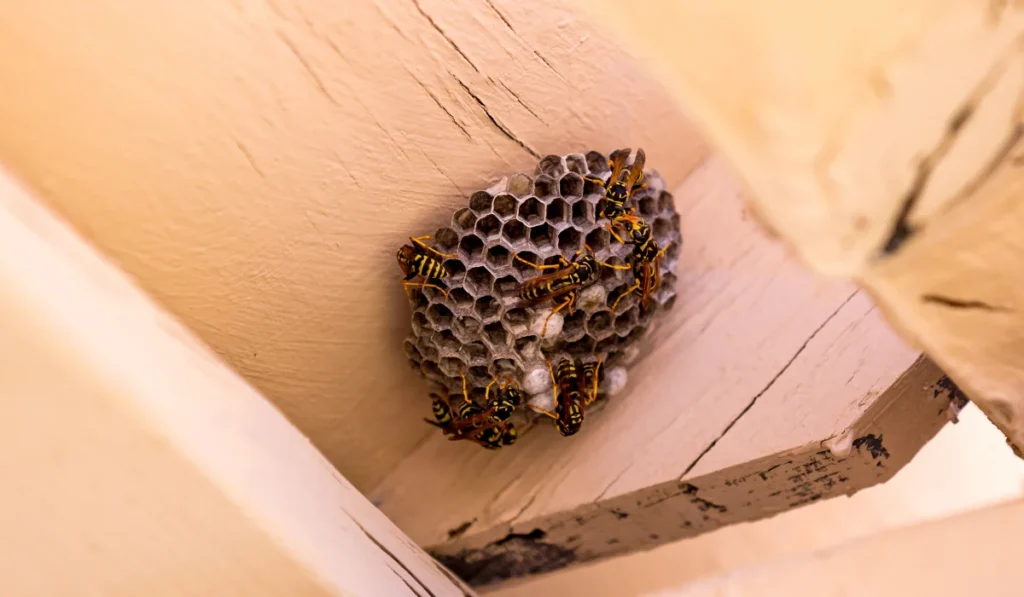
Paper wasps build the familiar open-celled nests often found beneath eaves, porch ceilings, railings, and other protected surfaces. Their colonies follow a seasonal cycle, so an old nest that remains attached during winter does not mean the same colony is still living there.
The females that become the next generation’s queens are the part of the life cycle that can carry through winter. They spend the colder period away from the active summer colony and begin new nesting activity when conditions become favorable again.
If you find an exposed paper nest during winter, look for actual activity before deciding what it means. A dry nest with no wasps moving around it presents a different situation from repeated insects appearing around the same part of your house.
Yellowjackets in Winter
Yellowjackets commonly build nests in protected locations, including the ground and structural spaces. Waynes’ pest information describes their colonies as annual colonies that are abandoned in winter, with surviving queens beginning new nests during the following spring.
The Alabama Cooperative Extension System is a useful source for understanding yellowjacket biology under Alabama conditions. Alabama has documented unusual cases in which yellowjacket colonies persisted beyond the normal annual pattern under favorable conditions, which makes the state’s mild winters an important part of the conversation.
Those unusual colonies should not lead you to assume that every yellowjacket nest remains active through winter. They are an exception to the typical cycle. If yellowjackets continue entering and leaving the same location during winter, however, the activity is worth identifying rather than assuming the next cold night will solve it.
Hornets in Winter
Hornet colonies also follow a seasonal pattern, and winter generally brings an end to the year’s active colony. A nest may remain visible after the insects are gone, especially when it is attached to a tree, building, or other exposed surface.
The practical question is whether the nest is active now. If you continue to see insects around a nest or concealed entrance, avoid disturbing it. Waynes’ field guidance notes that hornets and yellowjackets can defend their nesting areas aggressively when disturbed.
Can Alabama’s Mild Winters Keep Wasps Active?
Alabama does not have one uniform winter climate. Conditions near Mobile and the Florida Panhandle differ from those around Birmingham, Huntsville, and other inland or northern areas. The NOAA National Centers for Environmental Information maintains long-term climate records that show why it is more accurate to think about winter conditions locally rather than treat the entire state as having the same temperatures.
A stretch of mild weather can make wasps visible at a time when you expect them to be gone. That does not necessarily mean the previous summer’s colony remains intact. Individual overwintering wasps can respond to warmer conditions, and sheltered locations around a home can provide more protection than an exposed outdoor site.
Yellowjackets create another Alabama-specific consideration because unusually favorable conditions can sometimes allow colonies to persist longer than the standard annual cycle. Repeated winter activity from the same location is more meaningful than one wasp appearing on a warm afternoon.
Why You May Find a Wasp Inside During Winter
Finding a wasp inside your home in January can seem like evidence of a hidden nest, but that is not always the case. A queen or other surviving individual may have entered a sheltered space before winter and later become active when the surrounding area warms.
Heated indoor spaces can also make an overwintering wasp visible before outdoor conditions would normally encourage activity. You may find one near a bright window because it has become active and is moving toward light.
The number and location of sightings provide useful clues. One wasp near a window calls for a different response than several wasps appearing repeatedly in the same room or insects moving through a consistent opening around the roofline or wall.
Should You Remove a Wasp Nest During Winter?
A wasp nest in winter may look easy to handle because there is little visible movement. Before approaching it, make sure you understand whether it is truly inactive and what type of stinging insect built it. An exposed paper wasp nest with no activity is not the same as a yellowjacket nest hidden behind siding or inside a wall.
Avoid poking, sealing, knocking down, or otherwise disturbing a nest when wasps are still active. If insects are using a concealed opening, closing that entrance without understanding the nest location can create a different problem rather than solve the original one.
Stinging insects deserve sensible caution. The Centers for Disease Control and Prevention reported that hornet, wasp, and bee stings caused 788 deaths in the United States from 2011 through 2021, averaging 72 deaths per year. Most winter sightings do not signal an immediate danger, but an active nest should be handled with the insect’s defensive behavior in mind.
Handling Wasps Through Alabama’s Mild Winter
So, do wasps die in the winter when Alabama barely freezes? Most workers and males in annual social-wasp colonies do not survive into the next season, while fertilized queens can overwinter in protected locations and start new colonies in spring. Mild weather can bring occasional activity, and Alabama’s climate can sometimes create unusual conditions for yellowjackets.
Your best clue is the pattern around your home. An old nest with no activity is different from wasps repeatedly entering a wall, attic, soffit, or ground opening. Watching where the insects are coming from can help you avoid disturbing an active colony.
If winter wasp activity keeps returning or you cannot identify the nesting area safely, Waynes Pest Control can help determine what you are seeing and what response fits the situation. You can contact Waynes to schedule help with wasps or other stinging insects around your Alabama home.