
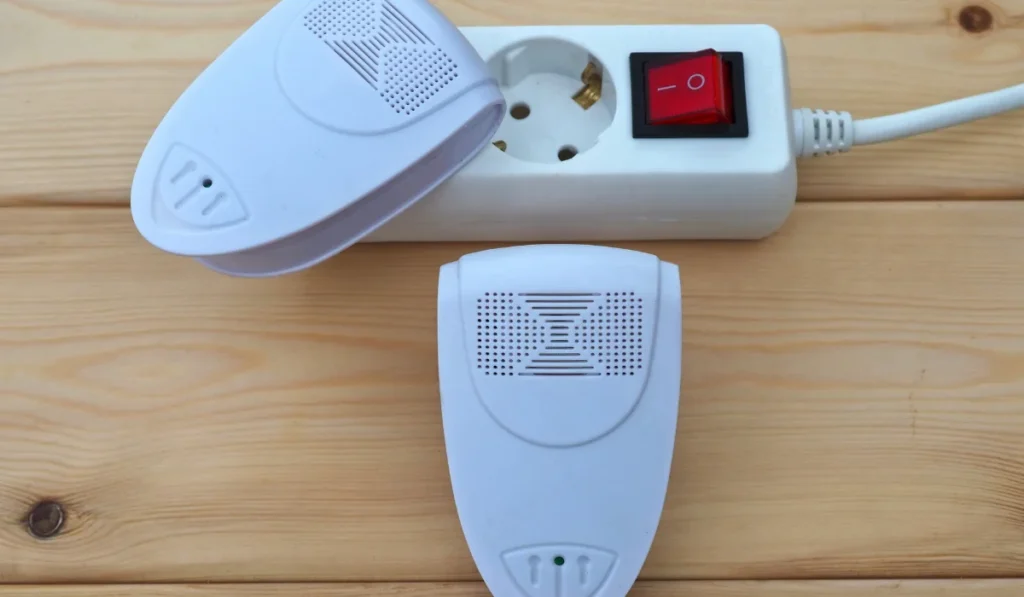
Ultrasonic pest repellers sound like an easy answer to a frustrating problem. You plug a small device into an outlet, it produces a high-frequency sound you cannot hear, and mice, cockroaches, spiders, or other pests are supposed to leave. When you want a low-effort way to deal with unwanted pests, that promise can be appealing.
The problem is that ultrasonic pest repellers do not address the conditions that allow pests to live in your home. Even when a pest reacts to sound, a short-term behavioral change is not the same as lasting control. A mouse can change its route without leaving the structure, and a cockroach can move deeper into cabinetry or another hidden area.
That distinction matters for homeowners across Alabama, Tennessee, Mississippi, and the Florida Panhandle, where pest activity can remain steady through long stretches of warm weather. Before you rely on an electronic pest repeller, it helps to understand what these devices are designed to do, why their results are inconsistent, and which pest-control methods address the source of the problem.
How Ultrasonic Pest Repellers Are Supposed to Work
Ultrasonic pest repellers produce high-frequency sound intended to disturb or discourage pests. The idea is simple: some animals can detect frequencies outside the normal range of human hearing, so the device attempts to make the surrounding area less comfortable without creating noticeable noise for you.
What Ultrasonic Pest Repellers Are Designed to Do
Most ultrasonic pest control devices plug directly into a standard wall outlet and operate continuously. Manufacturers market them for pests such as mice, rats, cockroaches, spiders, and other insects.
Their appeal comes from convenience. You do not need to locate a nest, set a trap, or make structural changes before using the device. You simply plug it in and expect the sound to discourage pests from remaining nearby.
Why Pest Behavior Matters
A pest detecting an unfamiliar sound does not mean it will leave your home. A mouse may change its travel route, while an insect may avoid one exposed area. Those reactions can make the device appear effective even when the pest remains elsewhere in the structure.
This distinction is especially important with pests that spend much of their time in concealed spaces. If a pest moves behind a wall, beneath an appliance, or deeper into cabinetry, seeing less activity in the room does not confirm that the infestation has been controlled.
Repelling a Pest Is Different From Controlling It
Ultrasonic pest repellers are designed to influence pest behavior, but they do not remove the factors that allow pests to survive. Food, moisture, shelter, nesting areas, and structural entry points can all remain available after the device is plugged in.
That leads to the question homeowners should ask when evaluating ultrasonic pest repellers: Are the pests actually gone, or have they simply become less visible in one part of the home? Effective pest management requires evidence that the underlying problem is being addressed, not just a temporary change in where you notice activity.
Do Ultrasonic Pest Repellers Work?
The available evidence does not support relying on ultrasonic pest repellers as a primary method of pest control. The Federal Trade Commission has historically challenged unsupported advertising claims involving ultrasonic pest-control devices, which is a useful reminder that marketing language should not be treated as proof of performance.
The issue is not whether a pest can detect or react to a particular sound. The more useful question is whether the device produces consistent, lasting control under normal household conditions.
A mouse that avoids one cabinet may still be living behind a wall. A cockroach that disappears from an exposed counter may have shifted closer to a sink, appliance, cabinet void, or another protected area. If you see less activity for several days, it can be tempting to conclude that the pest is gone when the population may still be present elsewhere.
Some devices may create a temporary disturbance. That is different from solving the infestation. Effective pest management has to account for where pests are entering, what they are feeding on, where they are hiding, and whether the conditions supporting them remain unchanged.
Why Ultrasonic Pest Control Struggles Inside a Home
Ultrasonic pest control becomes more complicated once you move from the idea of a device to the layout of a real house. Homes contain walls, cabinets, furniture, appliances, insulation, doors, attics, crawl spaces, and other areas that can affect where sound travels.
Pests often use those protected spaces rather than remaining in open rooms. A plug-in device may sit several feet away from the places where the pest spends most of its time.
Sound Does Not Reach Every Hiding Place Equally
High-frequency sound is affected by distance and physical barriers. You should not assume that a device plugged into a kitchen outlet has the same effect inside wall voids, behind cabinetry, beneath appliances, in insulation, or in another closed room.
That matters because many household pests rely on concealed routes. Mice can travel behind walls and along covered edges. Cockroaches often hide close to food, warmth, and moisture, including spaces around appliances, plumbing, and cabinets.
If the sound is strongest in an open room but the pest spends much of its time in protected areas, the device is not addressing the places where the infestation is established.
Moving a Pest Does Not Remove It
A change in pest activity can give you a false sense that the problem has been solved. If you stop seeing a mouse near the pantry, for example, the animal may have started using another route. Unless you identify its entry point and confirm that activity has stopped, you do not know whether it has actually left.
The same principle applies to insects. A cockroach that avoids an exposed area may still have access to hidden shelter, food residue, and moisture nearby. Reducing visible activity in one room does not confirm that the broader population is under control.
For pest control to work, the goal has to be broader than making one location less comfortable.
Food, Water, Shelter, and Entry Points Still Matter
Ultrasonic pest repellers do not seal a gap around a utility line, fix a damaged door sweep, clean food debris, dry a damp cabinet, or reduce clutter. Those conditions can continue supporting pest activity even when a device is running.
Consider a mouse entering a Tennessee home through a structural gap during cooler weather. A plug-in repeller may change where the mouse travels, but it cannot close the opening. In the same way, cockroaches around a warm, damp kitchen can continue to find what they need unless moisture, food access, and hiding areas are addressed.
Ultrasonic Repellers Versus Proven Pest-Management Methods
Ultrasonic pest repellers focus on one possible stimulus: sound. A more dependable pest-management strategy looks at the entire situation, including pest identification, entry points, food and water sources, shelter, and ongoing activity.
The University of California Integrated Pest Management Program uses an integrated pest management approach that combines identification, prevention, monitoring, and pest-specific control. Instead of relying on a single device, this approach addresses the conditions that allow pests to survive.
| Method | What It Addresses | Main Limitation |
| Ultrasonic pest repeller | Attempts to disturb pests with sound | Does not remove food, moisture, shelter, or entry points |
| Exclusion | Blocks structural entry routes | Requires accurate inspection and proper repairs |
| Sanitation and moisture correction | Reduces food and water sources | Does not remove every established pest by itself |
| Trapping and monitoring | Helps locate and reduce activity | Must be matched to the pest and used correctly |
| Professional pest management | Combines inspection, prevention, monitoring, and pest-specific control | Requires an assessment of the property and pest problem |
The difference is practical. Exclusion can stop a rodent from entering through a gap. Sanitation can reduce accessible food. Moisture correction can make an area less favorable for cockroaches and other pests. Monitoring can show whether activity is actually declining.
Those steps provide information you can act on instead of leaving you to judge effectiveness based only on whether you have seen a pest recently.
What to Do Instead of Relying on an Ultrasonic Pest Repeller
Start with identification. Different pests require different responses, and a treatment plan for mice should not look the same as one for German cockroaches, ants, spiders, or mosquitoes. If you misidentify the pest, you can spend time addressing the wrong problem while the actual source remains untouched.
Inspect Where Pest Activity Is Happening
Check the areas where you see pests or signs of activity. Look for openings around doors, pipes, vents, utility penetrations, and other structural gaps. Also check for food debris, pet food, standing water, plumbing leaks, clutter, and protected areas where pests could hide or nest.
For rodent problems, the Centers for Disease Control and Prevention provides guidance that emphasizes preventing entry, limiting access to food, and using appropriate trapping practices. Those steps address how rodents enter and survive inside a structure rather than attempting to make one room uncomfortable.
Account for Regional Pest Conditions
Local conditions should shape your approach. Cooler periods can push rodents toward structures in Tennessee and northern Alabama. Warm, humid areas around kitchens and plumbing can support cockroach activity, while standing water around properties in the Gulf Coast region and Florida Panhandle can contribute to mosquito problems.
That is why a single plug-in device is a poor substitute for pest identification and inspection. The source of a mouse problem may be an exterior opening, while a cockroach issue may center on access to moisture, food, and protected hiding areas.
Monitor Whether the Problem Is Actually Improving
Do not assume a pest problem is gone simply because you have not seen activity for a few days. Look for pest-specific evidence such as droppings, gnaw marks, live insects, trap activity, or recurring damage.
Monitoring helps separate a real reduction in pest activity from a temporary change in behavior. It also gives you better information about where pests are active and whether the steps you have taken are working.
Making the Right Pest-Control Choice for Your Home
Ultrasonic pest repellers offer a simple promise, but household pest problems usually involve several factors at once. Access, food, moisture, shelter, and pest behavior all influence whether an infestation continues. High-frequency sound does not correct those conditions, and a temporary change in activity should not be confused with long-term control.
If pests continue showing up around your Alabama, Tennessee, Mississippi, or Florida Panhandle home, focus on finding the source rather than relying on a plug-in device alone. The team at Waynes can inspect your property, identify the pest, and look for the conditions contributing to the problem. When you are ready to discuss pest activity around your home, contact Waynes to schedule service and get a pest-specific plan built around what is actually happening on your property.