Skip to content


Closely tied to aquatic environments, the cottonmouth in Florida is a venomous snake that must be treated with caution and left undisturbed. It can also show up near yards, sheds, drainage areas, and waterfront properties when food, shelter, or water are nearby.
The safest rule is simple: do not handle or corner a snake you think may be a cottonmouth. Back away, keep pets and children clear, and call for help if the snake is near the home.
Key Takeaways
- Cottonmouths are venomous snakes found throughout Florida.
- They are often confused with nonvenomous water snakes.
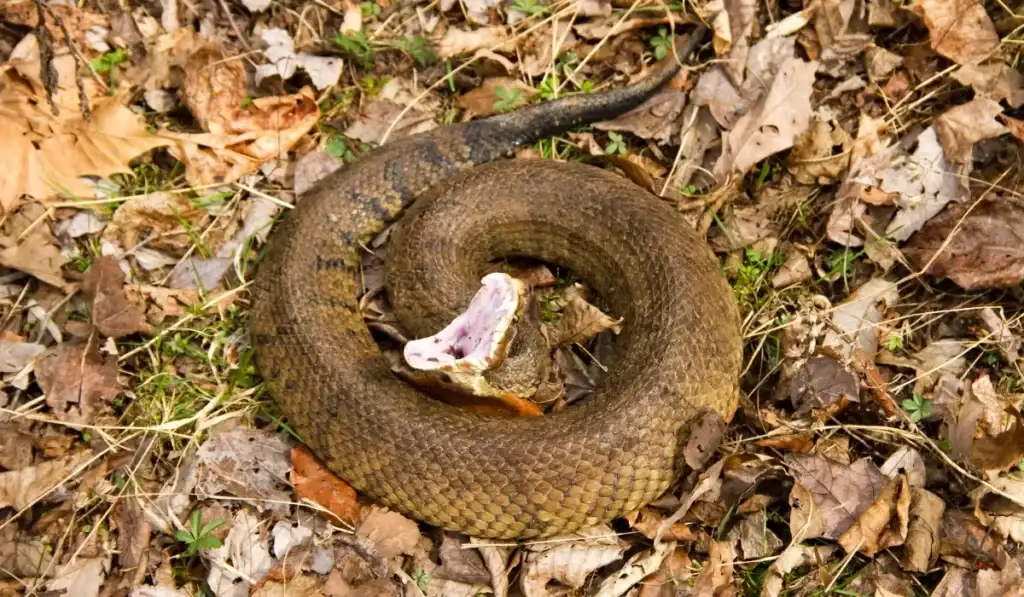
- Cottonmouths have thick bodies, blocky heads, vertical pupils, and a pale mouth they may show when threatened.
- Most bites happen when snakes are stepped on, handled, or intentionally disturbed.
- Waynes provides wildlife removal services in Florida and across the Southeast.
What Is a Cottonmouth?
As Florida’s most aquatic venomous snake, the cottonmouth can be found throughout the state. These venomous pit vipers are commonly referred to as water moccasins due to the large amount of time they spend around water.
Most adult cottonmouths seen in Florida are around three feet long, though some can grow larger. Adults are usually dark brown, olive, or nearly black, and their crossband pattern may be faint or hard to see. Younger cottonmouths often have more visible bands and a yellowish tail tip.
How to Identify a Cottonmouth in Florida
Cottonmouth identification can be tricky because several nonvenomous water snakes look similar at a glance. Do not get close to check details. Use these traits only from a safe distance or from a clear photo.
Common cottonmouth traits include:
- Thick, heavy body
- Blocky or triangular-looking head
- Dark brown, olive, or black coloring
- Faint or visible crossbands
- Vertical pupils
- Facial pits between the eyes and nostrils
- Eyes that are harder to see from above because of the brow ridge
- A white or pale mouth lining shown during a defensive display
Why Cottonmouths Are Called Water Moccasins
The name “water moccasin” comes from the snake’s strong connection to wet habitats. Cottonmouths often live near water because they feed on fish, frogs, small mammals, birds, lizards, and other animals found in those environments.
You may find cottonmouths near:
- Ponds
- Lakes
- Swamps
- Marshes
- Rivers and creeks
- Ditches and drainage areas
- Wetlands
- Retention ponds
- Waterfront yards
- Low, damp areas with cover
A cottonmouth can also move across dry ground, especially when traveling between wet areas or seeking food and shelter.
Cottonmouth or Harmless Water Snake?
Many Florida snake scares come from misidentification. Nonvenomous water snakes are common, and they may flatten their heads or act defensively when frightened. That can make them look more dangerous than they are.
Helpful differences include:
- Cottonmouths usually have heavier, thicker bodies.
- Cottonmouths have vertical pupils; water snakes have round pupils.
- Cottonmouths have facial pits; water snakes do not.
- Cottonmouth eyes may be hidden from above by a brow ridge.
- Water snakes are often more slender and may have more visible patterning.
Again, do not move closer to confirm these features. If the snake is near a door, garage, pet area, pool deck, or walkway, keep distance and call a professional.
Are Cottonmouths Aggressive?
Cottonmouths have a reputation for being aggressive, but that reputation is often exaggerated. The Florida Museum’s Florida cottonmouth guide explains that they avoid direct contact with people and pets, and most bites happen when snakes are intentionally disturbed or accidentally stepped on.
A cottonmouth may stand its ground, coil, vibrate its tail, or open its mouth to show the pale lining. That display is a warning, not an invitation to get closer. Give the snake space and let it move away.
What to Do If You See a Cottonmouth
If you see a possible cottonmouth, stay calm and increase distance. Most snake problems get worse when people try to catch, kill, or scare the snake away.
Safe steps include:
- Back away slowly.
- Keep children and pets indoors or away from the area.
- Do not touch, trap, or corner the snake.
- Watch where the snake goes from a safe distance if you can.
- Call a wildlife professional if the snake is near the home or a high-traffic area.
If the snake is in a natural area and not threatening people or pets, the safest option is often to leave it alone.
What to Do After a Cottonmouth Bite
A cottonmouth bite can be serious. Treat any suspected venomous snakebite as a medical emergency.
The UF/IFAS emergency snakebite action plan recommends calling the Poison Control Center’s national hotline at 1-800-222-1222, which connects callers with the nearest poison center. In an emergency, call 911.
Do not:
- Cut the bite area
- Try to suck out venom
- Apply ice
- Use a tourniquet
- Drink alcohol
- Try to catch the snake
Move away from the snake, stay as calm and still as possible, remove tight jewelry or clothing near the bite area, and get medical help quickly.
Why Cottonmouths Come Near Homes
Cottonmouths usually come close to homes because the property has water, shelter, prey, or easy hiding places. Florida Panhandle homes near ponds, wetlands, drainage ditches, wooded edges, or heavy landscaping may see more snake activity than open, dry yards.
Conditions that can attract snakes include:
- Rodent activity
- Frogs or fish near water features
- Tall grass
- Dense shrubs
- Brush piles
- Woodpiles
- Yard debris
- Gaps under sheds or decks
- Open crawl space access
- Standing water or drainage areas
Reducing those conditions can make your property less attractive to snakes and the animals they hunt.
How to Make Your Yard Less Snake-Friendly
You cannot remove every snake from the outdoors, and you should not try to handle venomous snakes yourself. You can reduce the conditions that make snakes comfortable near the home.
Helpful steps include:
- Keep grass trimmed around the house.
- Remove brush piles, leaf piles, and yard debris.
- Store firewood off the ground and away from the home.
- Seal gaps under sheds, decks, and crawl spaces.
- Keep garage doors closed when not in use.
- Repair damaged door sweeps and screens.
- Reduce rodent activity around the property.
- Avoid placing pet food outside overnight.
- Keep walkways and pool areas clear of clutter.
These steps also help reduce other pests that can attract snakes, including rodents, frogs, and insects.
When to Call Waynes
Call us if a suspected cottonmouth is near your home, garage, shed, pool area, crawl space, or a place where people and pets move often. At Waynes, our wildlife removal services include inspection, safe and humane removal when appropriate, entry-point work, and prevention education for homeowners across the Southeast, including Florida.
For Florida Panhandle homes, our Florida pest control services help address pest and wildlife conditions that can make a property more attractive to snakes, including rodent activity and exterior access points.
If you are dealing with a snake near your home, contact Waynes and we’ll help you decide the safest next step.
FAQs About Cottonmouths in Florida
Are cottonmouths common in Florida?
Yes. Cottonmouths occur throughout Florida and are most often associated with wet habitats such as swamps, ponds, lakes, marshes, rivers, creeks, and drainage areas.
Are cottonmouths the same as water moccasins?
Yes. “Water moccasin” is another common name for the cottonmouth. The name is often used because these snakes are strongly associated with water.
How can I tell if a snake is a cottonmouth?
Cottonmouths are usually thick-bodied, dark, and blocky-headed. They have vertical pupils, facial pits, and may show a pale mouth when threatened. Many nonvenomous water snakes look similar, so do not approach a snake to check.
What should I do if my dog finds a cottonmouth?
Move your dog away immediately and keep distance from the snake. If your dog may have been bitten, contact a veterinarian or emergency animal hospital right away.
Does Waynes remove cottonmouths in Florida?
Waynes provides wildlife removal services in Florida and across the Southeast. If you see a suspected cottonmouth near your home or another high-traffic area, contact Waynes so we can help you determine the safest next step.