Most spiders that turn up inside a Huntsville home are harmless, but a few are not. Knowing the difference starts with looking at the right features: body shape, web style, eye arrangement, and where the spider tends to settle. Getting that identification right keeps your response proportional to the actual situation.
Key Takeaways
Field Guide · Huntsville, ALCommon house spiders in Huntsville
Most indoor spiders pose no real concern, but a few do. Eye and body traits separate them.
1Brown Recluse
Fiddle marking, six eyes in pairs
IDHas a fiddle-shaped marking and six eyes arranged in three distinct pairs.
WhereCracks, crevices, and stacked boxes; hunts at night.
NoteActivity peaks in spring and early summer. Huntsville sees higher populations than southern Alabama.
2Black Widow
Shiny black, red hourglass
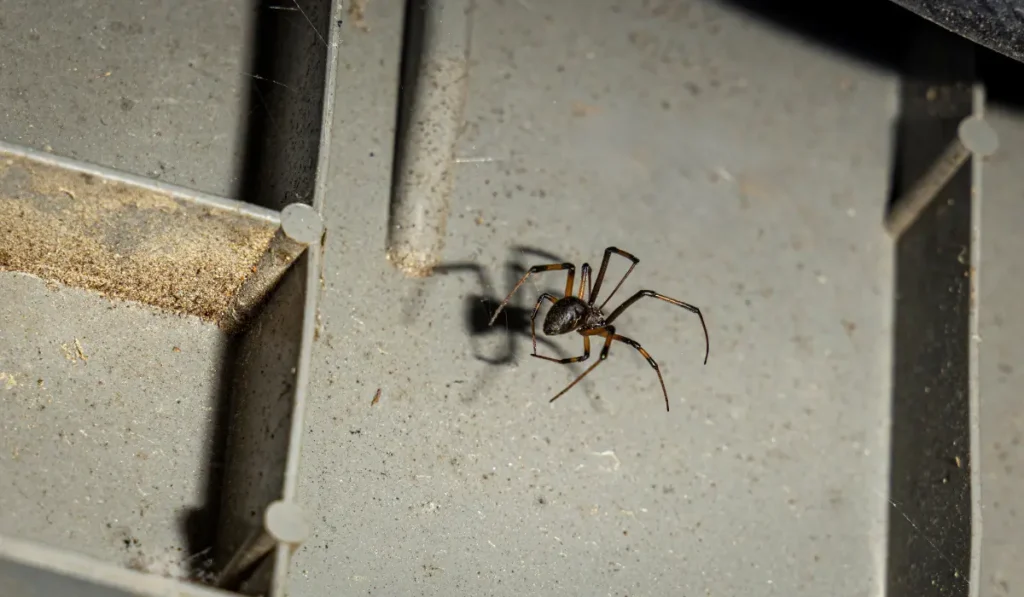
IDFemale is shiny black with a red hourglass marking on the underside of the abdomen.
WhereSheltered spots near structures; stacked wood and overgrown shrubs.
3Southern House Spider
Light brown, up to three-quarters inch
IDLight brown, long-legged, slender. Male has eight eyes in a single cluster.
WhereUndisturbed corners, closets, basements, and upper room edges.
NoteFrequently mistaken for a brown recluse. Its eye arrangement reliably tells them apart.
4American House Spider
Grayish-brown, chevron markings
IDGrayish to brownish with chevron-like markings on the abdomen, just over a quarter inch.
WhereTangled webs in corners near windows, baseboards, and storage.
NoteOne of the most common cobweb spiders indoors across the Southeast.
5Cellar Spiders
Long thin legs, loose webs
IDHave unusually long, thin legs and build loose, irregular webs in dark corners.
WhereDark corners indoors; sometimes called daddy longlegs spiders.
NoteThey rarely bite people and pose no real risk. Their appearance can be startling.
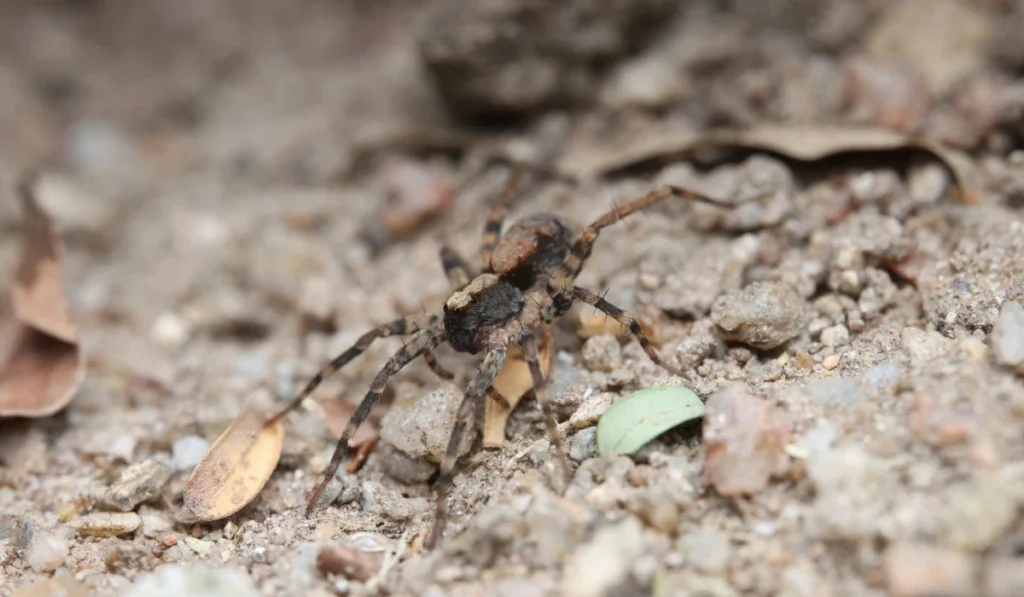
6Wolf Spiders
Ground-dwelling hunters, no webs
IDGround-dwelling hunters that do not build webs and move at night.
WhereCross open floors at night in search of prey.
NoteTheir size can be startling, but they pose little health risk.
- Many spiders that show up indoors look similar at first glance, so knowing key features like eye count, eye arrangement, and body shape can help you tell harmless species apart from the few that may pose a concern.
- Only a small number of spider species carry venom that is seriously concerning to people, making accurate identification an important first step before deciding on next steps.
- Reducing the insects that spiders feed on inside your home is one of the most practical ways to lower spider activity over time.
- Webs, egg sacs, and where you find spiders in or around your home all offer useful clues for narrowing down which species you are dealing with.
How to Identify Common House Spiders in Huntsville
A few key traits, including body color, markings, web style, and size, can narrow down what you are dealing with before you decide on next steps.
Species You Are Most Likely to Encounter Indoors
The American house spider is grayish to brownish with chevron-like markings on its abdomen and a body length of just over one-quarter inch. It is one of the most common cobweb spiders found indoors across the Southeast and tends to build tangled, irregular webs in undisturbed corners near windows, along baseboards, and in storage areas.
The southern house spider (
Kukulcania hibernalis) is larger, reaching up to three-quarters of an inch in body length. It is light brown, long-legged, and slender-bodied, and it is frequently mistaken for a brown recluse. The male southern house spider has eight eyes arranged in a single cluster, while the brown recluse has six eyes arranged in three distinct pairs. That eye arrangement is one of the most reliable ways to tell them apart.
Cellar spiders have unusually long, thin legs and build loose, irregular webs in dark corners. They are sometimes called daddy longlegs spiders, though that name more commonly applies to harvestmen in the South. Despite their appearance, cellar spiders are harmless and rarely bite people.
Wolf spiders are ground-dwelling hunters that do not build webs. They move through spaces at night in search of prey and are often noticed only when they cross open floors. Their size can be startling, but they pose little health risk.
The Joro spider stands out by size. Adult females can reach up to 1 1/4 inches in body length with long legs. They build large, spiral, wheel-shaped orb webs that are sometimes gold-colored and are far more common outdoors than indoors.
Where Spider Activity Shows Up Around Huntsville Homes
American house spiders and southern house spiders both favor undisturbed corners, closets, basements, and the upper edges of rooms where their webs can anchor securely. Fresh webs with intact strands suggest active residents. Dusty or collapsed webs may indicate older, abandoned sites.
The brown recluse does not rely on a web to catch prey. It builds small silk retreats in cracks and crevices and hunts at night, which means you may not notice it until you disturb a hiding spot. Storage areas with stacked boxes and seldom-moved items are the spaces most worth checking, particularly in Huntsville and the rest of northern Alabama, where brown recluse populations tend to be higher.
Outdoors, larger orb-weaving species like the Joro spider are easier to spot. Their webs can stretch across open spaces and are hard to miss once they reach full size.
Entry Points Spiders Use to Get Inside
Spiders follow gaps and openings that connect the outdoors to your living space. Cracks around windows, door frames, and foundation edges are the most common entry points for cobweb spiders looking for quiet interior corners. Because spiders tend to follow the insects, they eat, the same gaps that let insects in also invite the spiders that feed on them. Sealing those openings reduces both.
Why Common House Spider Problems Develop in Huntsville
Misidentifying a spider can turn a harmless encounter into unnecessary worry, or cause you to overlook a species that deserves attention. Understanding where spiders settle and what draws them indoors helps you spot the right clues before jumping to conclusions.
What Attracts Spiders Into Your Home
Spiders follow their food supply. Where insects gather indoors, spiders set up nearby. Cluttered, undisturbed spaces provide both anchor points for webs and cover for hunting spiders that move through without leaving any webbing at all.
Debris piled near the foundation supports spider populations outdoors before they move inside.
Black widows in Alabama favor sheltered spots close to structures, including stacked wood, overgrown shrubs, and gaps along exterior walls. Keeping those areas clear reduces the habitat available to spiders near your entry points.
Seasonal Activity and What It Means for Identification
Brown recluse activity tends to peak in spring and early summer.
Mating season across the south-central United States runs from April through early July, during which females may produce multiple egg sacs containing roughly 50 eggs each.
That seasonal increase in movement brings more brown recluses into living spaces and makes accurate identification more pressing during those months. Huntsville homeowners are more likely to encounter brown recluses than those in southern Alabama, where populations are generally lower.
Risks From Common House Spiders in Huntsville
Getting identification right matters because an incorrect call can go two ways: unnecessary worry over a harmless cellar spider, or a missed warning sign on something that actually warrants action.
Health Risks From Common House Spiders
In Alabama,
five spider species are considered potentially harmful: the black widow, the northern black widow, the brown recluse, the Chilean recluse, and the Mediterranean recluse.
The vast majority of what people find indoors belongs to none of those categories. Most suspected spider bites turn out to have other causes entirely, and many bites attributed to brown recluses occur in areas where those spiders are rarely present. Accurate identification keeps your response proportional to the real risk.
Property Issues From Spider Activity
Most common house spiders do not cause structural damage. The visible problems they leave behind are mostly cosmetic: accumulated webbing along ceilings, behind furniture, and in storage areas.
Some species deposit egg sacs on walls and stored items, and a single sac can contain hundreds of eggs. Knowing which spider left those sacs behind tells you how seriously to take the situation and what to expect next.
When to Take a Closer Look
Pay closer attention when you notice egg sacs on walls or structural surfaces, when spiders keep appearing in living areas rather than isolated storage zones, or when you cannot identify the spider with confidence.
Any time you spot a spider with a fiddle-shaped marking on its back or a red hourglass marking on the underside of its abdomen, confirm the identification before deciding how to proceed.
Professional Spider Control for Common House Spiders in Huntsville
Accurate identification is the starting point for any effective control plan. Many common species look alike, and a mix-up can lead to wasted effort or a missed warning sign. A trained eye makes the difference between a harmless cellar spider and a species that deserves closer attention.
Reducing What Draws Spiders Indoors
Indoor spiders follow the insects that get inside. Sealing gaps around doors, windows, and utility entry points limits the food supply that draws spiders deeper into your home.
Keeping interior spaces free of clutter removes the sheltered hiding spots web-building species prefer and makes it easier to spot activity before it grows.
Storing items in sealed plastic containers rather than open cardboard boxes removes nesting opportunities for spiders and shelter for the insects they feed on. Regular vacuuming in low-traffic areas, including behind stored items, clears egg sacs and webs before populations have a chance to establish.
Why Control Starts With Inspection
Southern house spiders, cellar spiders, wolf spiders, brown recluses, and black widows each behave differently and respond to different approaches.
A professional inspection identifies which species are present, where activity is concentrated, and what conditions inside and outside your home are supporting them. That information guides the right combination of steps rather than a one-size-fits-all treatment.
Proper identification also prevents wasted effort. Treating the wrong target leaves the actual problem unaddressed while the activity you were trying to eliminate continues.
What to Expect During Professional Spider Treatment
A Waynes service professional will examine your home for webs, egg sacs, and the spiders themselves. Identifying the species on-site determines whether the spider poses a genuine risk or is simply a nuisance.
If the spiders found are non-venomous house spiders or cellar spiders, the plan focuses on exclusion and habitat changes. If a species of concern is identified, the approach is adjusted accordingly.
Treatment targets the conditions that support spider activity, not just the spiders visible at the time. Reducing insect entry is a core part of the process because spiders will return if the food source remains.
What to Expect From a Waynes Pest Control Spider Plan in Huntsville
Waynes Pest Control has served more than 150,000 customers across Alabama, Mississippi, Tennessee, and the Florida Panhandle for over 50 years. As a member of the EPA’s Environmental Stewardship Program, Waynes builds every control plan around what the inspection actually reveals.
Ongoing monitoring keeps spider populations low by continuing to address the insect prey that attracts them indoors in the first place. Heavy infestations take more than one visit to bring under control, and the plan accounts for that.
Identifying Common House Spiders in Huntsville
Body shape, web style, eye arrangement, and overall size are the traits that help you tell one species from another and separate harmless house spiders from the few that deserve extra caution.
Most spiders you encounter indoors are not a serious concern, but a correct identification keeps you from overlooking one that may be. If you are unsure what you are seeing, or if spiders keep showing up around your home,
contact Waynes Pest Control in Huntsville for a professional evaluation backed by more than 50 years of experience.
Frequently Asked Questions
How Can I Tell a Harmless House Spider From a Potentially Dangerous One?
Start with the web. Many common house spiders build tangled, irregular webs in corners and along ceilings. Next, look at body size, leg length, and coloring. The brown recluse has a distinct fiddle-shaped marking on its back and six eyes arranged in three pairs rather than the eight eyes most spiders have. The black widow female is shiny black with a red hourglass marking on the underside of her abdomen. When in doubt, avoid handling the spider and reach out to a pest professional for a closer look.
What Should I Do If I Find a Spider I Cannot Identify?
Try to capture a clear photo that shows the spider’s body, legs, and any visible markings without disturbing it. A photo gives a pest professional enough detail to narrow down the species and decide whether any follow-up action is needed.
Why Do Spiders Keep Appearing Inside My Home?
Spiders follow their food. When insects find a way indoors, spiders may follow. Gaps around doors, windows, and utility openings serve as entry points for both. Reducing the conditions that attract insects inside can also help lower the number of spiders you see over time.
When Should I Call a Professional About Spiders?
If you are seeing spiders repeatedly in living areas, find egg sacs on walls or stored items, or suspect the species may be one that warrants caution, professional help is worthwhile. A trained service professional can identify the spider accurately, assess activity levels in and around your home, and recommend appropriate next steps tailored to what they find.