Skip to content

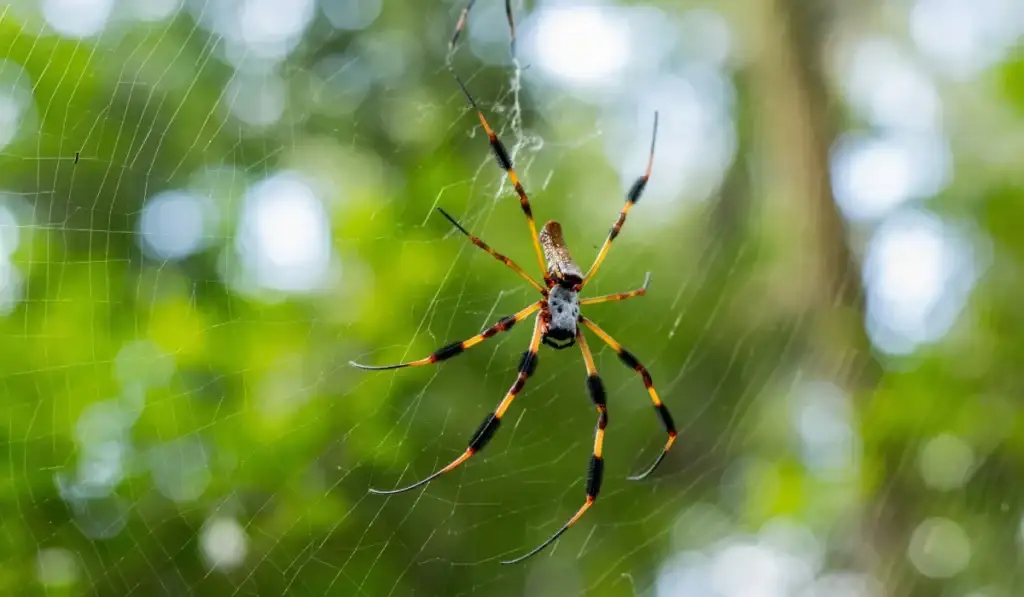
In Florida, the term “banana spider” typically describes the golden silk orb-weaver. This prominent spider is recognized for its impressive size, elongated legs, and the massive, golden-tinted webs it constructs across garden paths, porches, shrubs, and trees.
These spiders can look intimidating, but they are not usually a serious threat to people. In most cases, the bigger issue is where they build their webs.
If banana spiders are showing up near patios, pool areas, entryways, sheds, or outdoor living spaces, identification can help you decide whether to leave them alone, move webs carefully, or call for help when spider activity keeps returning.
Key Takeaways
- In Florida, “banana spider” usually refers to the golden silk orb-weaver.
- Female banana spiders are much larger and brighter than males.
- Their large golden webs are often found around trees, shrubs, porches, and outdoor structures.
- They help reduce flying insects but can become a nuisance around walkways and patios.
- Waynes provides spider pest control in the Florida Panhandle.
What Is a Banana Spider in Florida?
The common name “banana spider” can be confusing because it is used for different spiders in different places. In Florida, the name usually refers to the golden silk orb-weaver, Trichonephila clavipes.
The UF/IFAS guide to common Florida spiders explains that the golden silk orb-weaver is commonly known as the banana spider in Florida and is known for golden-colored silk.
You may also see older sources call this spider Nephila clavipes. That name is outdated, but it still appears online, in older books, and in some pest-control or nature guides.
How to Identify a Banana Spider
Banana spiders are easiest to identify by their size, color, and web. The female is the one most homeowners notice. She is large, bright, and usually sits in the web where insects are likely to fly through.
A banana spider may have:
- A silvery or pale head area
- A long, narrow body
- Yellow, orange, tan, or brown coloring
- Long legs with dark and orange-brown banding
- Dark tufts or “brushes” on parts of the legs
- A large web with a yellow or golden tint
- A smaller male nearby in the same web
Females are among the largest non-tarantula-like spiders in North America, while males are much smaller and easy to miss. That size difference is one reason people often think they are seeing different spider species in the same web.
Where Banana Spiders Build Webs
Banana spiders build large orb webs in places where flying insects are likely to pass through. In Florida, they are often seen outdoors where trees, shrubs, fences, and structures give the web enough support.
Common web locations include:
- Shrubs and hedges
- Trees and low branches
- Garden edges
- Trails and wooded edges
- Fence lines
- Porches and patios
- Pool cages and outdoor seating areas
- Sheds and exterior structures
In the Florida Panhandle, giant banana spiders construct webs that can become a frequent nuisance near swimming pools and patio areas. That is the issue most homeowners run into: the spider may be beneficial, but the web placement can get in the way.
Are Banana Spiders Dangerous?
Banana spiders are not classified among the primary spider species of medical significance in Florida. They can bite if handled, pinched, or trapped, but they are not aggressive toward people. Still, avoid grabbing or handling any spider.
Why Banana Spiders Show Up Around Homes
Banana spiders follow food and web support. If your property has flying insects and enough structure for a large web, it may attract orb-weaving spiders. The spider itself may not be the root problem. If webs keep returning in the same places, there may be steady insect activity nearby.
What Banana Spiders Eat
Banana spiders feed on insects that get caught in their webs. That can include flies, moths, small wasps, bees, beetles, and other flying insects. Because of this, they can be useful around gardens and wooded areas.
The challenge is location. A banana spider in a back corner of the yard may be helpful. A banana spider across a walkway, pool screen, or porch entrance can become a daily nuisance.
Banana Spider or Joro Spider?
Some Florida homeowners may wonder if a large orb-weaver is a Joro spider because both can be large, colorful, and web-building. Banana spiders and Joro spiders are related, but they are not the same.
The golden silk orb-weaver is long-established in Florida. Joro spiders have gained attention in parts of the Southeast, but a large yellowish spider in a Florida yard is often a golden silk orb-weaver or another local orb-weaver, not automatically a Joro spider.
If you are unsure, focus on the web, body shape, leg markings, and location. A clear photo can also help with identification.
How to Reduce Banana Spider Webs Around Outdoor Spaces
You do not need to eliminate every banana spider from the yard. Start by clearing webs from the places people use most often.
Helpful steps include:
- Remove webs from walkways, porches, and seating areas.
- Trim shrubs and branches away from doors and paths.
- Reduce insects around exterior lights when practical.
- Keep outdoor trash sealed.
- Move stored items away from walls and corners.
- Clean pool cages, patios, and lanais regularly.
- Check play areas and outdoor furniture before use.
- Reduce clutter around sheds and storage areas.
If webs keep returning, the issue may be tied to lighting, insects, landscaping, or other pest activity that makes the area attractive.
When to Call Waynes
Call us if banana spiders or other spiders keep building webs around your porch, pool cage, garage, shed, or outdoor living area. Waynes provides spider pest control in Alabama, Mississippi, Tennessee, and the Florida Panhandle, and frequent spider activity often means there is also a steady insect food source nearby.
For homeowners in the Panhandle, our Florida pest control services help address spiders and other common pests by focusing on the conditions that bring pests close to the home.
If spider webs are making it harder to use your outdoor spaces, contact Waynes for a quote and we’ll help you decide the right next step.
FAQs About Banana Spiders in Florida
Are banana spiders common in Florida?
Yes. Golden silk orb-weavers, commonly called banana spiders in Florida, are common outdoors, especially around trees, shrubs, gardens, wooded edges, and structures that support large webs.
Do banana spiders bite?
Banana spiders can bite if handled or trapped, but they usually avoid people. Do not handle them with bare hands.
Are banana spiders good to have around?
They can be beneficial because they eat flying insects. The problem is usually web placement near walkways, porches, pool cages, patios, or doors.
Why are banana spider webs so big?
Banana spiders build large orb webs to catch flying insects. Their webs can stretch across open spaces between branches, shrubs, fences, and outdoor structures.
Does Waynes treat banana spiders in Florida?
Yes. Waynes provides spider pest control in the Florida Panhandle. We can inspect spider activity, look for insect sources and web-building areas, and recommend the right next step for your home.