
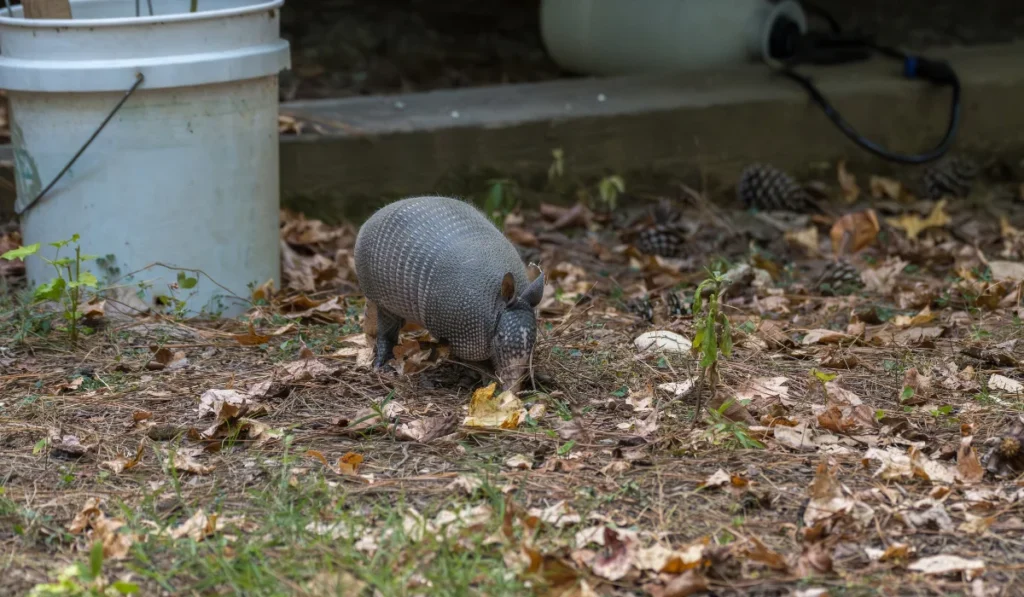
An armadillo in Florida can leave lawns, garden beds, and mulched areas covered with shallow holes almost overnight. These armored mammals dig while searching for insects, larvae, worms, and other soil-dwelling invertebrates.
Although most armadillo activity starts outdoors, their rooting and burrowing can affect flower beds, vegetable gardens, patios, walkways, sheds, and areas near the foundation. If you are noticing disturbed soil or a burrow close to your home, armadillos may be the reason.
Key Takeaways
- Florida armadillos are usually nine-banded armadillos.
- They dig for insects and other invertebrates in the soil.
- Damage often appears as shallow holes, torn turf, disturbed mulch, or burrows.
- Moist soil and lush vegetation can make yards more attractive to armadillos.
What Armadillos Live in Florida?
The armadillo most homeowners see in Florida is the nine-banded armadillo. The UF/IFAS guide to baiting the nine-banded armadillo describes this species as invasive in Florida and notes that armadillo feeding activity can damage lawns, gardens, nurseries, sports fields, and other managed landscapes.
A nine-banded armadillo has:
- A hard, armored shell
- A long pointed snout
- Short legs with strong claws
- A tapered tail
- Small eyes and ears
- Grayish or brownish coloring
- A low, rounded body shape
Armadillos are usually seen at night, early morning, or late evening. During the day, they may stay inside burrows or hidden areas unless disturbed.
Why Armadillos Dig in Florida Yards
Armadillos dig because they are looking for food. They use their nose and claws to root through soil, mulch, turf, and loose ground while searching for insects and other invertebrates.
Florida yards may attract armadillos when they have:
- Moist soil
- Heavy irrigation
- Lush turf
- Grubs, worms, larvae, or soil insects
- Mulch beds
- Dense ground cover
- Fallen fruit
- Brush or debris piles
- Quiet areas near sheds, patios, or foundations
The Florida Fish and Wildlife Conservation Commission’s armadillo profile explains that moist soil and lush vegetation can bring earthworms and insect larvae closer to the surface, which may make lawns easier for armadillos to dig.
Signs of Armadillo Activity
Armadillo damage can look different from mole, gopher, raccoon, or wild pig damage. The most common clue is repeated shallow digging across the lawn or landscape bed.
Look for:
- Small shallow holes in turf or mulch
- Torn-up flower beds
- Disturbed soil around shrubs
- Digging near patios, walkways, or foundations
- Burrow openings near structures or thick cover
- Tracks or low trails through soft soil
- Damage that appears overnight
The UF/IFAS guide to identifying wildlife damage in yards notes that armadillo foraging often creates many shallow holes one to two inches wide and up to six inches deep as they search for food in the upper layers of soil.
Armadillo Burrows Around Homes
A few feeding holes are frustrating. A burrow near a structure is more concerning. Armadillos may dig burrows under brush, decks, sheds, patios, crawl space edges, or other protected areas.
Armadillo burrows may appear near:
- Foundation edges
- Sheds
- Decks
- Thick shrubs
- Wooded edges
- Brush piles
- Retaining walls
- Crawl space openings
- Fence lines
A burrow can create soil movement and may weaken nearby landscaped areas, walkways, or small structures if activity continues. Do not block a burrow without knowing whether the animal is inside. That can trap wildlife and make the problem worse.
Are Armadillos Dangerous?
Armadillos usually avoid people and pets. They are not aggressive animals, but any wild animal can scratch or bite if cornered, trapped, or handled. The safest rule is to keep distance and avoid direct contact.
You should also avoid touching armadillos because they are wild mammals and can carry health risks. If a pet has contact with an armadillo, call your veterinarian for guidance.
For homeowners, the bigger concern is usually property damage rather than direct danger. Rooting, digging, and burrowing can damage lawns, garden beds, irrigation areas, and landscaping.
Armadillo or Another Animal?
Several animals can dig in Florida yards. Correct identification matters because the right next step depends on the animal.
Armadillos
Armadillos usually create many small, shallow holes while foraging. The holes often appear scattered across turf, mulch, or garden beds.
Moles
Moles create raised surface ridges and small soil mounds because they tunnel underground. Their damage is usually more ridge-like than hole-like.
Pocket Gophers
Pocket gophers push soil into crescent-shaped mounds. The actual tunnel opening is usually plugged, so you may not see an open hole.
Wild Pigs
Wild pigs create larger, rougher areas of torn-up ground. Their rooting damage is usually much more extensive than typical armadillo foraging.
If you are not sure what caused the damage, take photos of the holes, burrows, tracks, and surrounding area before disturbing the site.
When Are Armadillos Most Active?
Armadillos are most active at night, especially when soil conditions make digging easier. Florida’s warm climate allows activity throughout the year, though homeowners may notice more damage after rain, irrigation, or periods when insects and soil invertebrates are easier to reach.
You may see more activity:
- Overnight
- After lawn watering
- After rainfall
- Around soft mulch beds
- Near irrigated turf
- Around gardens or loose soil
- Near fallen fruit or food sources
- In quiet areas with heavy cover
Because damage often happens while people are asleep, many homeowners notice the signs before they ever see the armadillo.
How to Reduce Armadillo Damage
The goal is to make the yard less attractive and reduce access to sensitive areas. You do not need to remove every natural food source, but you can reduce the conditions that make digging easier near the home.
Helpful steps include:
- Avoid overwatering the lawn.
- Water gardens in the morning so soil can dry later in the day.
- Remove fallen fruit from the yard.
- Reduce brush, debris, and dense ground cover near the home.
- Store firewood and materials off the ground when possible.
- Repair gaps under sheds, decks, and crawl space areas.
- Protect small garden beds with properly installed barriers.
- Keep trash and pet food secured.
UF/IFAS Extension’s nuisance wildlife guidance notes that partially buried slanted fencing can help exclude armadillos from certain areas, though trapping can be difficult and Florida rules apply to nuisance wildlife handling.
When to Call Waynes
Call us if armadillos are digging up your lawn, damaging flower beds, burrowing near a structure, or returning after you remove the visible damage. At Waynes, our wildlife removal services include inspection, safe and humane removal when appropriate, entry-point work, and prevention education for homeowners across the Southeast.
For Florida Panhandle homes, our Florida pest control services help address pest and wildlife conditions that may attract nuisance animals, including food sources, exterior access points, and activity around the home.
If armadillo damage is showing up around your lawn, garden, shed, or foundation, contact Waynes and we’ll help you decide the safest next step.
FAQs About Armadillos in Florida
Are armadillos common in Florida?
Yes. Nine-banded armadillos are found throughout Florida and are common in many residential, wooded, landscaped, and suburban areas.
What does armadillo damage look like?
Armadillo damage often looks like small, shallow holes scattered across turf, mulch, or garden beds. They may also dig burrows near sheds, decks, foundations, brush piles, or other protected areas.
Why do armadillos dig in my yard?
Armadillos dig while searching for insects, worms, larvae, and other invertebrates in the soil. Moist lawns, soft mulch, and lush vegetation can make digging easier.
Should I fill an armadillo burrow?
Do not fill or block a burrow unless you know it is inactive. Blocking an active burrow can trap wildlife and make the problem worse. A professional inspection can help determine the right next step.
Does Waynes remove armadillos in Florida?
Waynes provides wildlife removal services in Florida and across the Southeast. If you are seeing armadillo digging or burrows near your home, contact Waynes so we can inspect the activity and recommend a safe plan.