
A faint scratching or rustling noise coming from inside your walls is not something to ignore. Certain ant species nest inside wall voids and structural wood, and the sounds they produce while tunneling or moving can be audible, especially after dark.
Knowing what to look for and how to respond keeps a manageable problem from becoming a costly one for Chattanooga homeowners.
Key Takeaways
- Certain ant species can nest inside walls, and you may hear faint sounds as they move or chew through wood in those spaces.
- Ants in walls can go unnoticed for a long time because nests are often hidden in voids that are difficult to access without a closer look.
- Regular inspections of key areas in your home, including crawl spaces and attics, can help you spot activity before nests become well established.
- Not every scratching noise in a wall comes from ants. Narrowing down the source is an important first step before deciding how to respond.
How to Identify Ants in Your Walls in Chattanooga
If you hear faint scratching or rustling sounds coming from inside your walls, ants may have built nests there. Not every scratching noise means a full colony has moved in, but certain signs can help you determine what is causing the activity and where it is centered.
The Two Species Most Likely to Nest Inside Walls
Carpenter ants are the species most associated with audible wall noise. They build nests within wood, including both water-damaged wood and, over time, sound dry wood.
Their tunneling galleries follow the grain of the wood and leave tunnel walls that are clean and smooth, which sets them apart from termite damage. They do not eat wood but excavate it to build nesting chambers, and that excavation is what produces the sounds you may hear.
Odorous house ants can also nest indoors in wall gaps, particularly near heaters or water pipes where warmth is available year-round. Outdoors, they nest in shallow mounds in soil and under rocks and wood before finding their way inside. Knowing which species you are dealing with matters because the nests, signs, and control approaches differ between the two.
Signs That Point to an Active Nest in the Wall
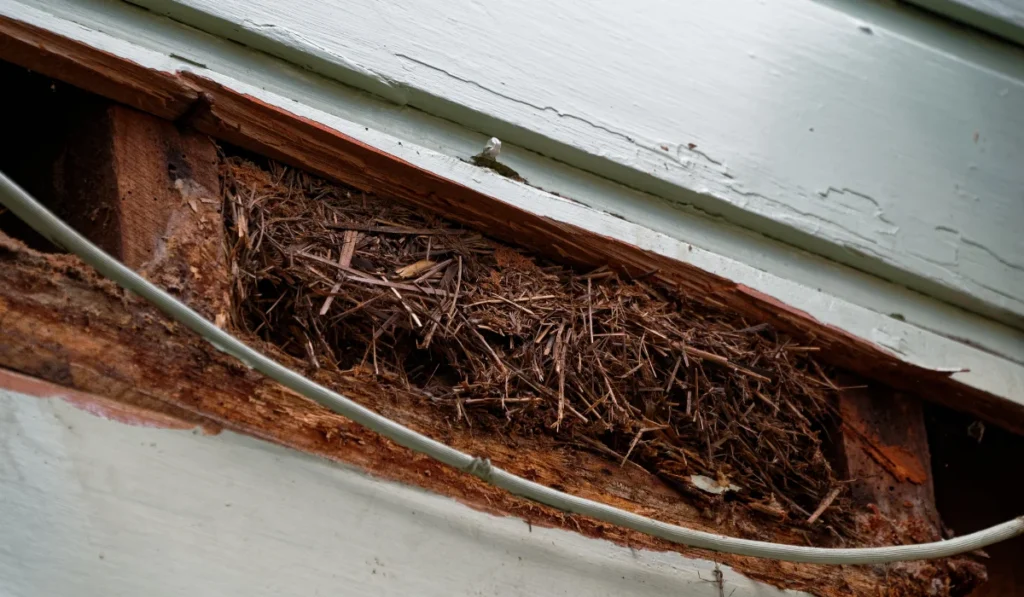
With a mature colony inside a structure, you can hear rustling or gnawing sounds coming from the wood or void where the ants are nesting. As they expand their nest, they push out piles of fiber-like wood debris and frass that resemble pencil shavings. These small piles along baseboards, near hollow doors, or beneath exit holes in wood are one of the most reliable signs that a nest is close by.
Finding large numbers of winged ants indoors is a strong indicator that a nest exists inside your home. Finding only one or two winged queens does not carry the same weight. Those individuals may have simply entered while searching for a nesting site rather than emerging from an established colony inside the structure.
Where to Look for Activity Around Your Chattanooga Home
Indoors, carpenter ants favor warm, moist locations, including wall voids, areas under flooring, and spaces near hot water pipes or heating systems. Attics, crawl spaces, subfloors, fascia board voids, and hollow doors are all worth checking when you suspect wall activity.
Outdoors, carpenter ants nest in tree stumps, firewood, fence posts, and wooden retaining walls before moving toward the structure. Following foraging trails between those outdoor nesting spots and your home’s exterior is one of the most effective ways to confirm that ants are traveling inside to establish a secondary nest.
Why Ant Problems Develop Inside Walls in Chattanooga
Ants do not move into walls at random. The conditions inside your home, including moisture, available wood, and connected outdoor nesting sites, determine how attractive your walls are as a nesting location.
Moisture Is the Primary Draw
Carpenter ant nests in structures typically start in moist or decayed wood, and the existence of a colony inside a wall is often a sign that there is or has been a water problem. Leaky pipes, poor drainage near the foundation, and inadequate ventilation in crawl spaces or attics can all create the conditions carpenter ants look for. Damage from wood-rotting fungi in areas with persistent moisture can be as structurally threatening as the ant activity itself.
Chattanooga’s humid summers make moisture management especially important for homeowners. Wall cavities and crawl spaces that trap humidity provide exactly the kind of environment carpenter ants establish satellite colonies in before expanding further into the structure.
Outdoor Colonies That Move Indoors
Many carpenter ant infestations inside walls start as satellite colonies connected to a larger outdoor nest. Carpenter ants nest in tree stumps, stacked firewood, fence posts, and wooden retaining walls before finding their way toward the home.
Argentine ants nest in mulch and leaf litter near foundations and can move indoors when outdoor conditions shift. Both species are capable of establishing themselves close to entry points before getting inside.
Carpenter ants are most active at night, which is why the scratching sounds you hear may be more noticeable after dark. Using a flashlight to follow foraging trails at night back toward the wall can help pinpoint where the nest is centered.
Risks From Ants in Your Walls
When scratching or rustling sounds persist inside your walls, the concern goes beyond annoyance. The species behind the noise determines how urgently you need to act.
Structural Damage From Carpenter Ants
Carpenter ants do not eat wood, but they excavate it extensively to build nesting galleries. Over time, tunneling in key structural timbers can compromise the integrity of those members. Because nests are tucked inside concealed spaces, the scope of the damage is rarely visible from outside. The sounds may be the only early warning sign you get before the damage becomes significant.
Tapping on a suspected section of wall and listening for a hollow sound is a basic field check. Wood that sounds hollow where it should sound solid is worth investigating further, particularly in areas where moisture problems have occurred in the past.
Hidden Nests That Grow Undetected
Ants nesting inside wall voids, subfloors, attics, and hollow doors can establish themselves over extended periods without any outward sign beyond the sounds they produce.
Foraging trails from those hidden nests may extend into kitchens and other food-accessible areas, which means you may notice ants at the surface while the actual colony remains out of reach. Cleaning up visible trails does not address the nest itself.
Professional Ant Control for Chattanooga Homes
Addressing ants behind your walls starts with understanding where they nest and what conditions drew them in. A structured approach that covers prevention, inspection, and professional treatment gives you the clearest path forward.
Reduce Moisture Before Anything Else
Because carpenter ant nests in structures almost always involve moist or decayed wood, addressing the moisture source is a necessary part of any lasting solution.
Fix leaky pipes, improve drainage near your foundation, and replace wood that has started to soften or decay.
Keeping crawl spaces, attics, and wall cavities dry with proper ventilation makes your home less appealing as a nesting site and limits the conditions that allow satellite colonies to establish.
Why Control Starts With Locating the Nest
Carpenter ant nests in homes can appear in roofs, underneath shingles, in fascia or soffit voids, in floor or wall voids, and in similar hard-to-reach locations.
That range of possibilities is why inspection matters before treatment begins. Surface-level applications miss the problem entirely when the colony is inside a wall cavity or above a finished ceiling.
A professional inspection identifies evidence of nesting that homeowners typically overlook, including frass accumulation in crawl spaces, exit holes in wood, and foraging trail patterns that point toward the nest location.
Reaching a colony inside a wall may require drilling small holes to access the void directly, which calls for specialized skill and equipment.
What to Expect During Professional Ant Treatment
A Waynes service professional will begin by pinpointing the nest location. Since nests may occupy various concealed spaces, the inspection phase determines where treatment needs to focus. Locating the actual nest is the critical step because surface-level efforts alone will not resolve the problem when the colony is inside the structure.
Treatment is paired with moisture management recommendations to address the underlying condition that made your home attractive in the first place. Without correcting the moisture issue, the same conditions remain available to future colonies.
What to Expect From a Waynes Pest Control Ant Plan in Chattanooga
Waynes Pest Control has served more than 150,000 customers across Tennessee, Alabama, Mississippi, and the Florida Panhandle for over 50 years. As a member of the EPA’s Environmental Stewardship Program, Waynes approaches every service with the care and integrity your home deserves.
A thorough control plan accounts for both current activity and the conditions that invited carpenter ants in the first place. The plan pairs treatment with practical steps to limit moisture and remove outdoor nesting material near the structure, reducing the likelihood that the problem returns.
Bottom Line on Ants in Your Walls in Chattanooga
Scratching or rustling sounds coming from your walls can point to ants nesting inside the structure.
Carpenter ants tunnel through wood to build their galleries, and that activity is audible, especially at night when they are most active. Identifying the source early matters because the longer a colony stays inside a wall, the more wood it works through.
Because reaching a nest inside a wall typically requires drilling and specialized equipment, contact Waynes Pest Control in Chattanooga to schedule an inspection rather than attempting to treat the problem on your own.
Frequently Asked Questions
Can Ants Really Make Noise Inside Walls?
Yes. Carpenter ants produce faint rustling or crinkling sounds as they move through and excavate wood within walls or ceilings. The noise is more noticeable at night when the house is quiet and the ants are most active.
How Can I Tell If the Sound Is Ants or Another Pest?
Look for other clues alongside the sound. Small piles of coarse sawdust or frass near baseboards, hollow doors, or along walls are a strong indicator of carpenter ant activity. The presence of winged ants indoors is another reliable sign. A professional inspection can confirm the source and rule out other possibilities, including termites or rodents.
Where Do Ants Build Nests Inside a Home?
Nests may appear in wall voids, subfloors, crawl spaces, attics, fascia or soffit voids, hollow doors, and areas near moisture sources such as pipes or drainage problems. Moist or decaying wood is the most common starting point, though established colonies can extend galleries into sound, dry wood over time.
Should I Try to Treat Wall-Nesting Ants on My Own?
Reaching a colony inside a wall often requires drilling into wood and wall voids and applying treatment directly into the nest area. This calls for specialized skill and equipment. Attempting it without professional knowledge risks missing the colony entirely and causing unnecessary damage to your home.