
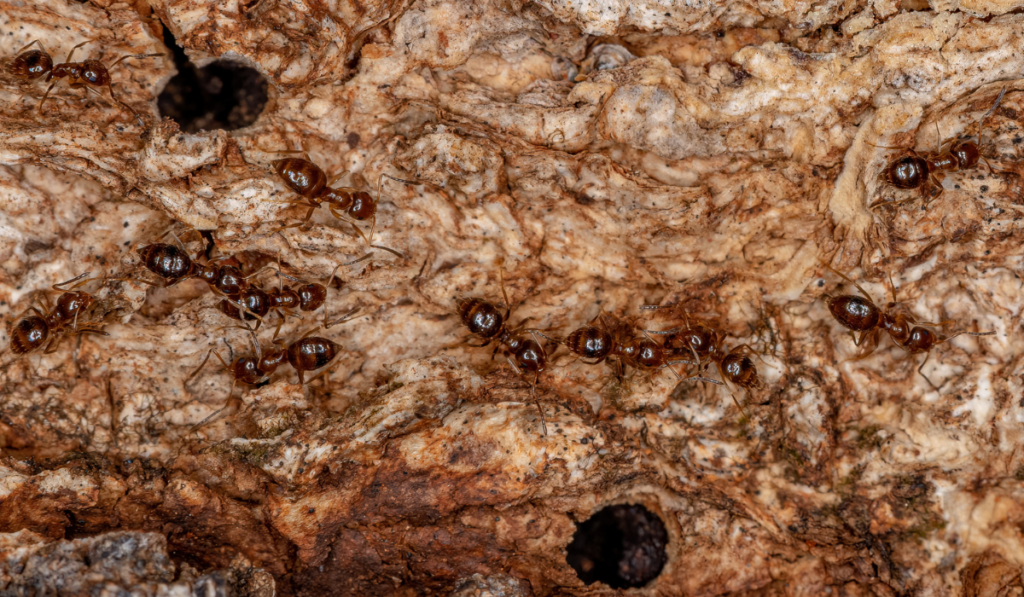
Discover the types of ants in Alabama that invade homes, from fire ants to carpenter ants, and how to reduce infestations with prevention methods.
Key Takeaways
- Alabama hosts more than a dozen ant species capable of invading homes, damaging structures, or delivering painful stings.
- Fire ants are the most medically significant ant in Alabama, capable of forming colonies with millions of workers.
- Carpenter ants do not eat wood but excavate it for nesting, causing structural damage over time.
- Tiny ants like odorous house ants, Argentine ants, and pharaoh ants are drawn indoors by food, leaky pipes, and warmth.
- Sealing entry points, fixing moisture problems, and removing food sources reduce ant pressure before professional treatment is needed.
Which Ant Species Are Common in Alabama Homes
Alabama’s warm, humid climate supports a wide range of ant species year-round. The state sits in the southeastern United States, a region where forested areas, damp soil, and mild winters create ideal nesting conditions for dozens of species. According to the Alabama Cooperative Extension System, identifying the exact species in your home is the first step toward controlling it, because different species nest in different locations and respond to different control methods.
Not every ant you see is a threat. Some species stay outdoors and rarely interact with your home. Others nest in wall voids, under slabs, and inside wooden structures. Knowing which ant species you are dealing with shapes every decision that follows.
How Ants in Alabama Find Their Way Inside Your Home
Ants enter homes through entry points most homeowners never notice. Gaps around pipes, cracks in foundations, torn door sweeps, and openings near air conditioners all function as highways. The three biggest attractants are food sources, water, and warmth. Leaky pipes under sinks, uneaten pet food left on the floor, and unsealed trash cans draw scouts indoors. Once a scout finds a resource, it lays a pheromone signal trail back to the colony, and workers follow in numbers.
Ant colonies in Alabama can range from a few hundred individuals to several million. Fire ant colonies, for example, can hold up to 500,000 workers. The larger the colony, the more pressure it places on surrounding territory, including your home. Addressing food sources and nesting sites early reduces the volume of ants attempting entry.
Fire Ants in Alabama: Painful Stings and Large Colonies

Fire ants are the most medically important ant species in Alabama. Identified by their reddish brown color and aggressive behavior, these insects build dome-shaped mounds in soil, open lawns, and disturbed ground. A single colony can hold hundreds of thousands of workers, and disturbing a mound triggers an immediate, coordinated defensive response. Their stings are painful and can cause allergic reactions in sensitive individuals.
Fire ant mounds are most visible after rain, when workers push fresh soil upward. They appear along fence lines, near foundations, and in compost bins or leaf piles. Keep children and pets away from any mound. Multiple stings from a disturbed colony require prompt attention, especially for anyone with a known venom allergy.
Carpenter Ants in Alabama: Structural Damage from Wood-Nesting Species

Carpenter ants are the largest ant species commonly found in Alabama homes, typically measuring half an inch or longer. Black ants of this size moving through a kitchen or along a wall at night are a reliable sign of an active colony nearby. Unlike termites, carpenter ants do not consume wood. They excavate it, pushing out wood shavings and frass as they hollow galleries for nesting. Over time, this causes structural damage comparable to moisture rot.
Carpenter ants nest in dead trees, fallen trees, tree stumps, and any wood in your home that has been softened by water damage. Wooden structures near plumbing, roof leaks, or standing water are at the highest risk. If you find wood shavings near baseboards or window frames, a carpenter ant nest may already be active inside the wall. Treatment targets the colony directly, not just the foraging workers you see.
Tiny Black Ants in Alabama: Odorous, Pavement, and Little Black Ant Species

Several species of tiny ants in Alabama look nearly identical to the untrained eye. Odorous house ants, little black ants, and pavement ants all measure under 3 mm and invade kitchens, bathrooms, and pantries in large numbers. Telling them apart requires close inspection, but their behavior provides useful clues.
How Odorous House Ants Behave in Alabama Kitchens

Odorous house ants get their name from the rotten coconut smell they release when crushed. They are dark brown to black, roughly 1/16 inch long, and among the most common ants nest in wall voids and under floors near moisture. These ants pursue sweet foods, trailing along countertops, baseboards, and inside cabinets. Colonies are large and can split under pressure, making store-bought baits unreliable for full control.
Where Pavement Ants Nest in Alabama Homes

Pavement ants build small piles of displaced soil along sidewalks, driveways, and foundation edges. They are dark brown to black with parallel lines on their head and thorax. Indoors, they nest under slabs, inside insulation, and beneath floors. They eat nearly anything, including grease, sweet foods, and other insects, which makes kitchens and pantries primary targets. Their colonies grow slowly but persist for years without professional ant control.
What Little Black Ants in Alabama Look Like

Little black ants are among the smallest ant species in Alabama, measuring roughly 1/16 inch and jet black in color. They have two distinct body parts visible to the naked eye, with three distinct body parts confirmed under magnification. Colonies nest in wooded areas, under bark, and inside wall voids of homes near wooded areas. They trail along edges and follow the same paths repeatedly, making foraging lines visible on baseboards and walls.
Argentine Ants in Alabama: Massive Supercolonies from South America

Argentine ants are an invasive species originally from South America that now dominate large sections of the southeastern United States. What sets them apart is their colony structure. Instead of competing with neighboring colonies, Argentine ant colonies merge into supercolonies spanning entire city blocks. A single supercolony can contain millions of ants moving fluidly across connected nesting sites.
Argentine ants are light brown and small, roughly 1/8 inch long. They nest in damp soil near moisture sources and move indoors through any available entry point. They contaminate pantry items and trail across countertops in dense, fast-moving lines. Because of their supercolony structure, treating one nest has little impact. Effective control requires treating multiple nesting sites simultaneously using a coordinated ant colony approach.
Pharaoh Ants in Alabama: Tiny Ants That Nest Deep Inside Structures

Pharaoh ants resist most store-bought treatments because their colonies fragment and relocate when disturbed. They are tiny, roughly 1/16 inch, and pale yellow to reddish brown in color. Unlike most ants that nest in soil or wood, pharaoh ants nest deep inside structures. Wall voids, inside insulation, behind electrical outlets, and within appliances are all common nesting sites. Colonies fragment when disturbed, a process called budding, which spreads the infestation to new locations.
Pharaoh ants are a serious problem in multi-unit housing because they travel through plumbing and electrical channels between units. They eat sweet foods, proteins, and fats. Standard ant sprays applied directly to trails cause budding and worsen the infestation. Effective treatment requires slow-acting bait that workers carry back to the colony before it takes effect.
Acrobat Ants and Dark Rover Ants in Alabama

Two additional species round out the list of ant types found in Alabama homes.
How Acrobat Ants in Alabama Defend Their Nests
Acrobat ants raise their abdomen over their thorax when threatened, which is the behavior that gives them their name. They are light brown to dark brown, about 1/8 inch long, and nest in moist or decayed wood, including door frames, window sills, and wood damaged by previous carpenter ant or termite activity. They enter homes through gaps around pipes and wires. Controlling acrobat ants requires locating and treating the nest, not just the foraging trail.
Where Dark Rover Ants Nest in Alabama Homes
Dark rover ants are dark brown, about 1/16 inch long, and nest in soil, mulch, and leaf piles around foundations. They nest near moisture sources, including leaky pipes and air conditioner condensate lines. Indoors, they trail along baseboards and are frequently mistaken for odorous house ants. The key distinction is behavior: rover ants do not produce an odor when crushed. They respond to perimeter treatments applied to their nesting sites in the soil around the home’s foundation.
When to Call Professional Ant Control in Alabama
DIY ant control works on minor, surface-level incursions from a single species nesting outdoors. It rarely resolves infestations rooted in wall voids, under slabs, or in structural wood. If you see ant activity inside your home for more than two weeks despite store-bought treatment, a professional inspection is the right next step.
Certain species require professional-grade products and targeted delivery methods. Pharaoh ants require slow-acting bait placed at multiple interior sites. Carpenter ants require locating the nest inside wood. Fire ant colonies in soil require direct colony treatment rather than surface contact products. Applying the wrong treatment to any of these species either fails or worsens the infestation.
Waynes has served Alabama homeowners for more than 50 years, and our technicians work within the EPA’s integrated pest management framework, which prioritizes targeted treatments over broad-scale application. The goal is to address the colony and the conditions that invited it, not just the ants you see on the surface.
How to Reduce Ant Pressure Around Your Alabama Home
Prevention reduces the population pressure that drives ants indoors. Target food sources, nesting sites, and entry points at the same time. No single action replaces professional treatment for an established infestation, but these measures reduce the likelihood of one developing.
- Store food in sealed containers and never leave uneaten pet food in bowls overnight.
- Fix leaky pipes under sinks and around appliances to remove moisture that attracts nesting colonies.
- Remove leaf piles, dead trees, fallen trees, and tree stumps from the yard to cut down on outdoor nesting sites.
- Install door sweeps on exterior doors and seal gaps around utility lines and pipes entering the foundation.
- Keep trash cans and recycling bins sealed and positioned away from the home’s exterior walls.
- Trim vegetation away from the foundation to remove trails that connect outdoor nesting sites to your home.
These steps do not remove ants from your property. Ants live in every Alabama yard. The goal is to make your home a poor target compared to the outdoor environment.
Bottom Line on Types of Ants in Alabama
Alabama’s climate supports a diverse range of ant species, and several of them move into homes, damage structures, or deliver painful stings. Fire ants, carpenter ants, Argentine ants, pharaoh ants, odorous house ants, pavement ants, acrobat ants, dark rover ants, and little black ants are all active across the state. Each species nests differently, responds to different treatments, and poses a different level of risk. Identifying the exact species you are dealing with is the foundation of any effective control plan.
If ant activity in your Alabama home persists beyond a few days, or if you find wood shavings, mounds near the foundation, or trails inside walls, contact Waynes for a professional inspection. Every little thing matters. A LOT.
Frequently Asked Questions
What are the most dangerous ants in Alabama?
Fire ants are the most medically significant ant species in Alabama. Their stings are painful and can trigger severe allergic reactions. Carpenter ants pose a structural risk over time by excavating wood for nesting. Pharaoh ants are a concern in homes and multi-unit buildings because they contaminate food and are difficult to control without professional treatment.
What are the tiny ants in my Alabama kitchen?
Tiny ants in Alabama kitchens are most often odorous house ants, little black ants, or pharaoh ants. Odorous house ants are dark brown and smell like rotten coconut when crushed. Pharaoh ants are pale yellow to reddish brown and roughly 1/16 inch long. Both are drawn to sweet foods and moisture. Identifying the species determines which treatment approach will work.
How do I get rid of fire ants in my Alabama yard?
Controlling fire ants requires treating the colony directly, not just the mound surface. Broadcast bait applied across the yard targets foraging workers who carry it back to the colony. Individual mound treatments work on visible mounds but do not address satellite colonies nearby. For large or recurring infestations, professional ant control delivers more consistent results than store-bought products alone.
Are carpenter ants in Alabama as damaging as termites?
Carpenter ants do not eat wood, but they excavate it for nesting and cause real structural damage over time. Termites consume wood continuously, which accelerates damage, but carpenter ants left untreated for years can hollow out significant sections of structural timber. Both warrant professional inspection and treatment when found active inside a home.
When is ant season in Alabama?
Ant activity in Alabama peaks in spring and summer when colonies expand and foraging increases. Fire ants become most visible after spring rains. Carpenter ants swarm in late spring. However, species like pharaoh ants and odorous house ants remain active indoors year-round because they nest inside climate-controlled structures. Alabama’s mild winters mean ant pressure rarely stops entirely.